
Last updated November 17, 2026
 Wrought iron
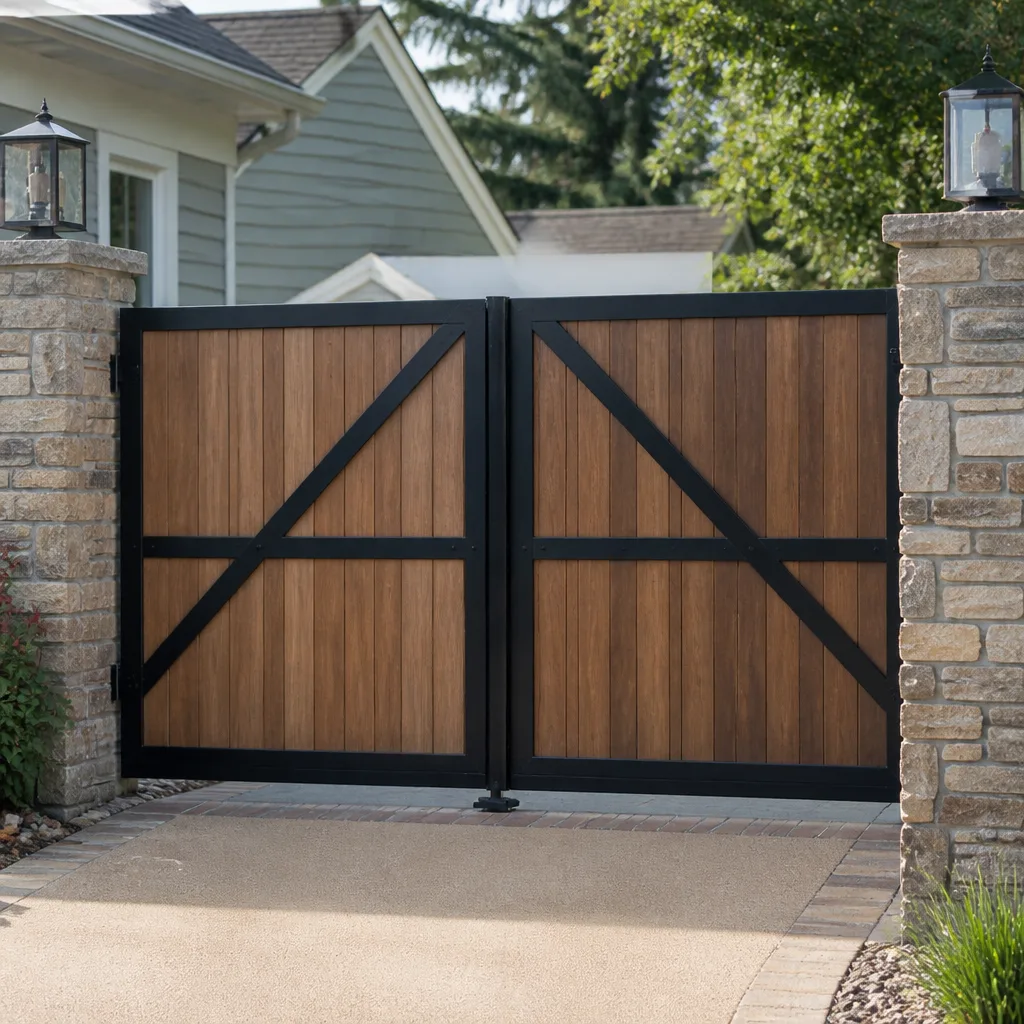 Wood & steel frame
 Farm & ranch
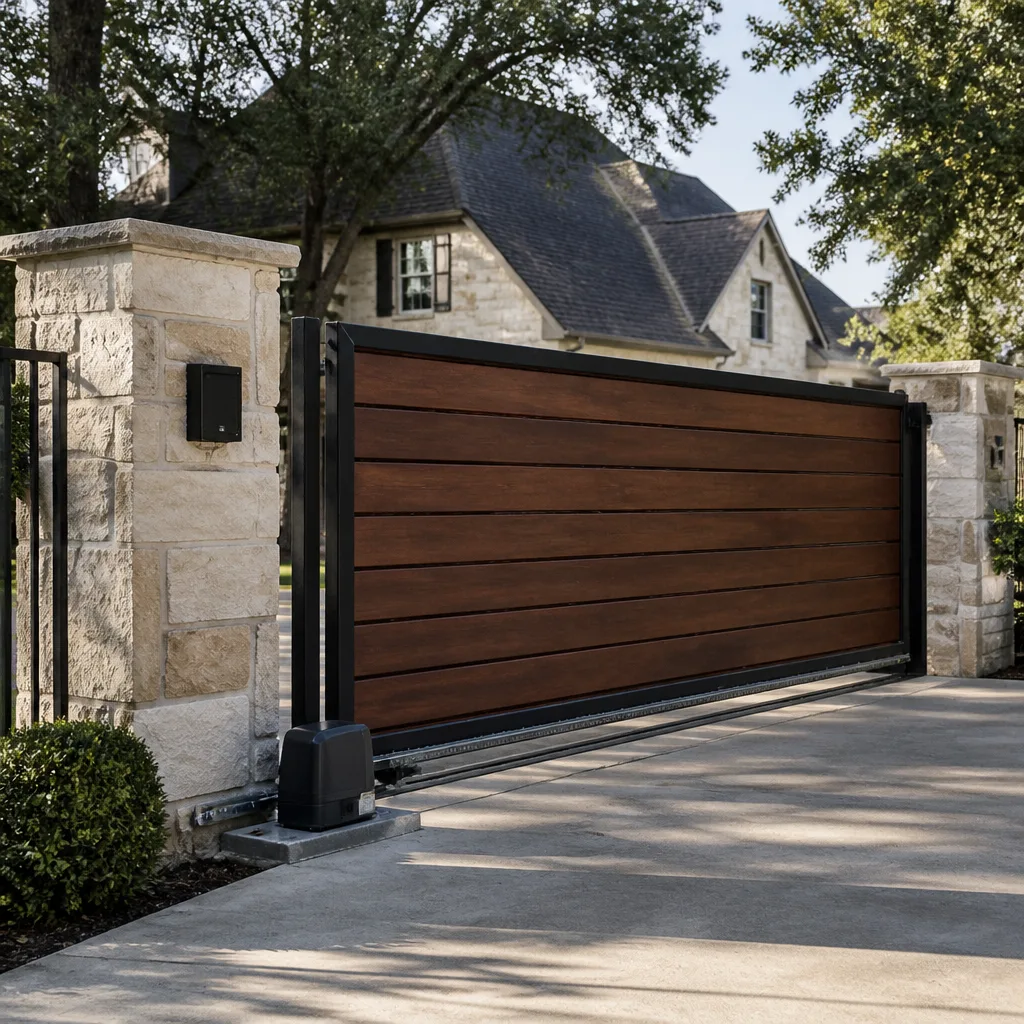 Sliding driveway gates
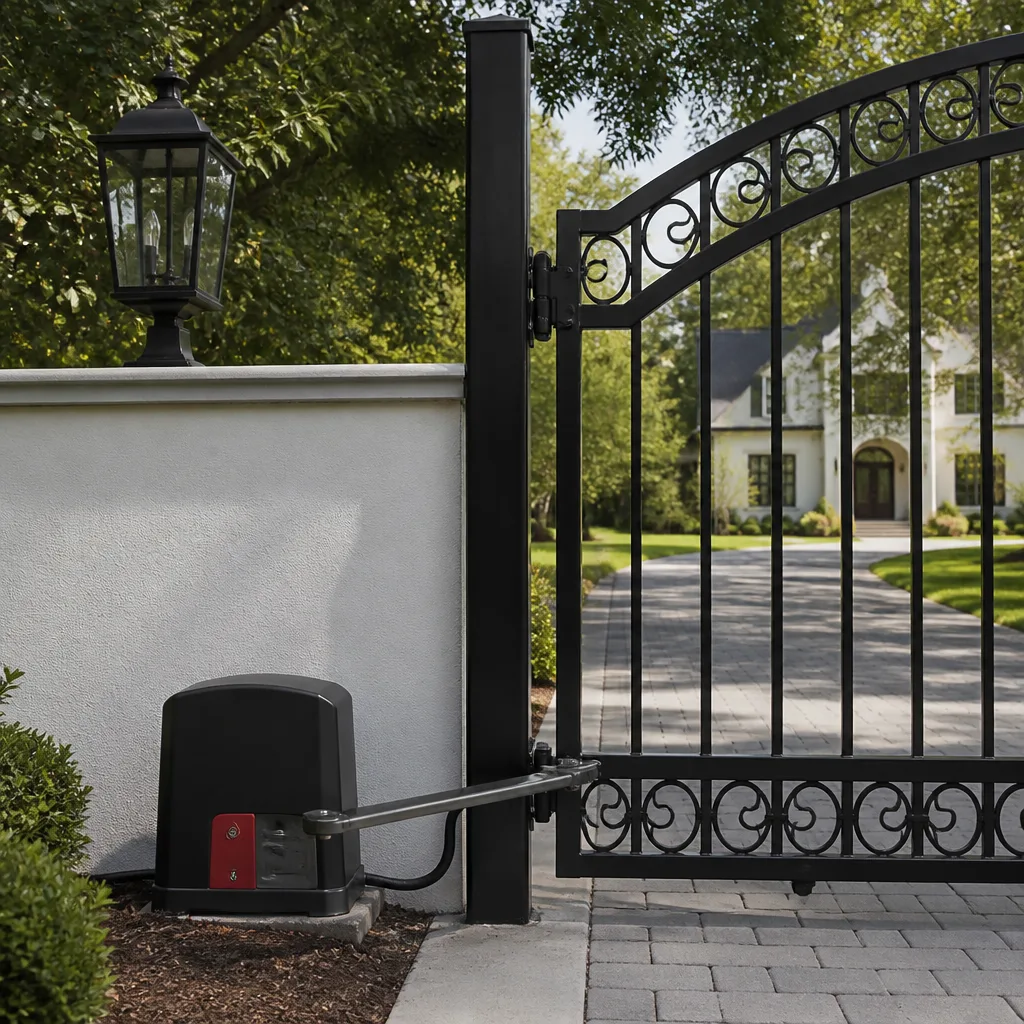 LiftMaster operators
Free on-site gate assessment - hinges, posts, and your LiftMaster or Nice gate operator checked before anything is quoted
The assessment is free and the quote is the invoice.
Get your free estimateDIY vs Professional Gate Repair: What’s Safe to Do Yourself
Few homeowners realize that a standard residential gate operator holds enough stored spring tension or capacitor charge to break a wrist or throw a grown adult off a ladder. That is a genuine line, and we won’t pretend otherwise. But here’s what most gate guides get wrong: they lump every repair into one “call a professional” pile, which leaves capable homeowners paying for ten-minute fixes they could have handled with a screwdriver. In this guide, we’ll draw the safety lines honestly, walk through the three repairs any careful homeowner can complete in under an hour, and show Boulder City residents exactly where a “simple” fix becomes a warning sign of something bigger.
Quick Answer
Adjusting limit switches, realigning photo-eye sensors, and replacing a battery backup are safe for most homeowners to do themselves with basic tools. Anything involving spring tension, high-voltage wiring, the gate’s structural frame, or an opener motor that sparks, smokes, or runs hot crosses into territory that can cause serious injury. When in doubt, that repair belongs to a trained technician.
Styles & brands we work with
- Wrought iron
- Wood & steel frame
- Farm & ranch
- Sliding driveway gates
- LiftMaster operators
Table of Contents
- The definitive safe-vs-unsafe repair list
- Three repairs you can safely do yourself, step by step
- Where DIY crosses into voiding the warranty
- When a “simple” repair points to a bigger problem
- What to gather and what not to touch before a technician arrives
- How Boulder City conditions affect DIY repairs
- Common mistakes to avoid
- When to call a professional
The Definitive Safe-vs-Unsafe Repair List
Most disagreement about what homeowners should tackle comes from liability, not from injury data. We’ve looked at the actual failure points. Here’s the honest split, based on real risk rather than an agenda.
Safe to do yourself
- Replacing the battery backup in the operator head
- Realigning or cleaning photo-eye sensors
- Adjusting limit switches (open and close stop points)
- Cleaning and lubricating hinges, tracks, and rollers
- Clearing debris from a track or gate path
- Checking and resetting a tripped breaker (once, then call us)
- Replacing a remote battery or reprogramming a keypad
Not safe to do yourself
- Adjusting, releasing, or replacing counterbalance springs
- Replacing gate chain or cable that carries tension
- Any repair inside the operator’s electrical housing or on the capacitor
- Welding, straightening, or cutting the gate frame
- Relocating a gate post or re-setting loose concrete footings
- Wiring the operator’s power run or safety-loop ground wiring
The dividing line isn’t complexity. It’s stored energy. Tasks where energy is either absent or low voltage stay in the homeowner’s column. Tasks where stored tension or line voltage can release without warning don’t.
Three Repairs You Can Safely Do Yourself, Step by Step
These are the three most common calls we get in Boulder City that turn out to be homeowner-solvable. Each takes under an hour. None involve stored spring tension or high-voltage wiring.
1. Realigning photo-eye sensors
A gate that reverses for no reason or refuses to close is usually a misaligned photo-eye, not a failed motor. The sensors sit near the gate move path, aligned with each other across the opening. When a shovel, dog, or spring windstorm in Boulder City knocks one out of line, the operator thinks something is in the way and stops.
- Power the operator off at the wall switch or breaker.
- Look at the LED on each photo-eye unit. One should be solid; the other may blink. Solid-on means aligned.
- Loosen the mounting bracket of the misaligned eye by a quarter turn.
- Gently angle the eye until both LEDs are solid, then retighten.
- Wipe the lens with a dry cloth to clear dust and desert grit.
- Restore power and cycle the gate twice to confirm.
Tools: Small Phillips or flathead screwdriver, a dry cloth. Total time: 10-15 minutes.
2. Adjusting limit switches
If the gate stops too soon or slams the post, the limit switch is out of position. On a Ghost Controls or Mighty Mule arm operator, the limit is usually set via a cam or a screw under the arm housing. On most lift-style openers, it’s on the side rail. Check your operator’s manual for the exact adjustment point before touching anything.
- Bring the gate to the open position.
- Locate the open limit cam or screw per the manual.
- Loosen it one turn, move the gate to the correct stop point by hand, then re-tighten.
- Repeat for the closed limit.
- Run the gate through three full cycles and watch for drift.
Tools: Correct-size wrench or screwdriver for your brand. Total time: 20-30 minutes.
3. Replacing the battery backup
When the gate stops opening during a power flicker, the battery is often the culprit. On a DoorKing or Elite operator, the battery is a plug-in unit inside or under the operator head.
- Power down the operator.
- Open the access panel (usually two bolts or a twist latch).
- Disconnect the two battery leads, noting which color goes where.
- Lift out the old battery and set in the replacement from your operator’s spec sheet.
- Reconnect leads in the same orientation, restore power, and test open/close in manual then auto mode.
Tools: Correct replacement battery, no specialty tools. Total time: 15 minutes.
If any of those three steps reveals something else – a burning smell, a spark at the terminal, a gate that won’t hold position by hand – stop there. That’s your signal to bring in a trained technician, and our Gate Repair in Winchester team sees the same pattern across the region.
Where DIY Crosses Into Voiding the Warranty
The warranty line is usually clearer than homeowners expect. Nearly every operator manufacturer, including the nine brands we’re trained on, draws it in the same place: sealed enclosures and structural hardware.
- Voided immediately: Opening the operator’s sealed electrical housing, cutting into factory wiring, or altering the motor assembly. Any of these ends the motor warranty on the spot, on every brand we know.
- Voided immediately: Welding or modifying the gate frame. Some gate warranties terminate on any modification to the hinge points or frame welds.
- Voided immediately: Changing the safety-edge wiring or bypassing the photo-eye interlock. This also violates code.
- Usually safe: Battery replacement, limit adjustment, photo-eye alignment. These are called out in most owner’s manuals as user-serviceable.
What about an existing service agreement with a gate company? Most agreements stay intact as long as the homeowner’s work doesn’t touch the components the agreement covers. If yours covers the motor and you open the motor housing to save a service call, you’ve likely just cost yourself more than the call was worth. Read the fine print before you pick up a tool, and if any of it is unclear, a free second opinion on a written estimate is cheaper than a voided warranty.
When a “Simple” Repair Points to Something Bigger
Some repairs look simple and aren’t. Here are the tells we’ve learned to watch for – signs a task that appears weekend-sized is actually the visible edge of a structural or electrical problem.
The gate has drifted out of square
If the gate is dragging on the ground at the latch side, the hinge post has probably shifted – not the hinges. Boulder City’s expansive clay soils and the freeze-thaw swings across the McCullough Range put real lateral pressure on gate posts. If re-hanging the gate fixes it for a week and then it sags again, the post footing has failed and no hinge adjustment will hold. That’s a pour-and-reset job, not a screwdriver job.
The operator runs hot, clicks, or smells like warm plastic
Any of those three means the motor is drawing more current than it should. On a lift-style opener that could be a failing capacitor. On a swing-arm operator it could be a controller board failing. Both are inside the sealed housing. Both are hands-off.
The gate reverses within three inches of closing, every time
When a gate reverses late in the close cycle, the photo-eye isn’t the issue. That pattern typically points to a limit switch that has drifted or an operator force setting that needs recalibration. If adjusting the limit cam doesn’t cure it, do not increase the force setting to force the gate through. That’s the exact setting that keeps a gate from crushing a person, and turning it up to solve a symptom is how injuries happen.
A hinge weld has cracked
A hairline crack in a gate hinge weld isn’t cosmetic. On a six-foot steel gate, a single hinge failure means several hundred pounds of gate leaning where it shouldn’t. If you see rust streaks running from a weld seam, that weld is loading in a way it wasn’t designed to. That’s a welder’s job, and it’s the kind of work our team handles on-site.
The pattern to remember: if fixing the symptom doesn’t stick, the symptom wasn’t the problem. Adjusting the gate without addressing the underlying post or motor issue just delays the bigger repair. For a deeper dive on how professionals isolate these failures, see our Gate Motor & Opener in Winchester guide.
What to Gather and What Not to Touch Before a Technician Arrives
Homeowners often make a technician’s job harder by trying harder. Here’s the short version of what helps and what hurts while you’re waiting for a visit.
What to gather
- Photos of the operator head, the gate post at the hinge side, and the photo-eye mounting points
- The operator brand and model number (stamped on the housing or inside the access panel)
- The gate’s approximate width and weight if you know it
- A written description of the symptom – “reverses at half-close” beats “doesn’t work”
- Any warranty paperwork or prior service records
- Your gate’s power source location (breaker panel, dedicated circuit)
What not to touch
- Do not open the operator’s electrical housing
- Do not loosen a hinge bolt to “see if it helps”
- Do not try to release a spring to relieve tension
- Do not override the photo-eye by taping over a lens
- Do not increase the force setting to push a stuck gate through
- Do not attempt to jump a dead operator from a car battery or extension cord
One more: if the gate is stuck half-open and unsafe to leave that way, say so when you call. That’s a case where a technician should come see it directly rather than wait.
How Boulder City Conditions Affect DIY Repairs
Boulder City homes have specific conditions that change what a DIY repair looks like compared to the rest of the country. Understanding them helps homeowners know which failures are seasonal and which are structural.
- Desert grit in photo-eyes: Spring and early summer winds off the Eldorado Valley drive fine dust into every exposed lens. Expect to clean photo-eyes every two to three months, not once a year. This alone explains most reverse-on-close calls we get from Boulder City.
- Clay-soil post shift: Expansive clay under Boulder City gate posts heaves in the wet winter and shrinks in the dry summer. A gate that drags in February and clears in June is telling you the footing is moving – not the gate hardware.
- Prolonged heat on operator housings: Summer highs near 110 degrees stress capacitors and battery backups more than most homeowners realize. If your operator is more than three years old and hasn’t had a battery check, that’s the seasonal tune-up worth scheduling before the worst heat hits.
- Solar-charged operators: Many Boulder City properties run solar-charged operators on gates far from the house. A dead gate isn’t always a dead operator – sometimes it’s a dead panel or a sulfated battery. Check the panel first; that part is DIY-safe.
- Wind-loaded gates: Ridge-line properties take gusts that strain hinges and limit settings disproportionately. If your gate stays true through spring and drifts every fall, wind loading is a real factor in the repair plan.
Boulder City code and HOA requirements for safety edges vary by community, and DIY wiring of a safety edge is one of the repair categories we’d put firmly in the call-a-professional column. If you’re planning a repair that touches the safety circuit, see our Gate Installation in Winchester guide for how new safety edges are spec’d and wired.
Common Mistakes to Avoid
- Turning up the force setting to hide a symptom. A gate that’s fighting debris or a drifted limit will crush through that resistance – including a child, a pet, or a bicycle. Never adjust force to solve a stuck gate.
- Opening the operator housing to “just take a quick look.” Even unplugged, the capacitor inside an operator can hold charge for hours. That’s a stored-energy hazard no homeowner needs to invite.
- Using WD-40 on gate tracks and hinges. In Boulder City’s dusty spring winds, WD-40 attracts grit and turns into a grinding paste. Use the lubricant your operator manual specifies.
- Assuming a sagging gate is a hinge issue. In the clay soils of Boulder City, the hinge is usually the innocent party – the post footing has shifted and needs a reset, not a hinge replacement.
- Taping over a photo-eye to get the gate to close “for now.” That defeats the entire safety system. A car, a child, or a dog can be on the other side and the gate will not stop.
- Bypassing a service agreement call to save a few dollars. Most agreements cover the components you’d void by opening the sealed housing. Reading the fine print first is worth more than a single repair call.
- Trying to weld a cracked hinge without knowing the gate’s weight load. A hairline weld crack means the gate frame is loading somewhere it wasn’t designed to. That’s a structural question, not a weld-it-and-see job.
When to Call a Professional
Three situations call for a trained professional without exception: any repair involving spring tension, counterbalance cables, or the operator’s sealed electrical housing; any repair where the gate frame, hinge post, or footing has moved; and any symptom you’ve fixed twice and it came back. There are also softer cases: if your operator is on a brand you aren’t sure about, if the gate has drifted more than an inch out of square, or if your service agreement predates you buying the home and you’re not sure what it covers – all reasons to have a certified technician look at it. Ironworks Gate Co. Boulder City offers free estimates in Boulder City. Call (888) 276-7609. Our technicians have up to 13 years of experience and are trained on nine leading gate-automation brands, so the correct fix is made on the first visit, whatever is on the driveway. Every completed job carries the 90-Day Done Right Promise: if it isn’t right, we come back and make it right, in writing.
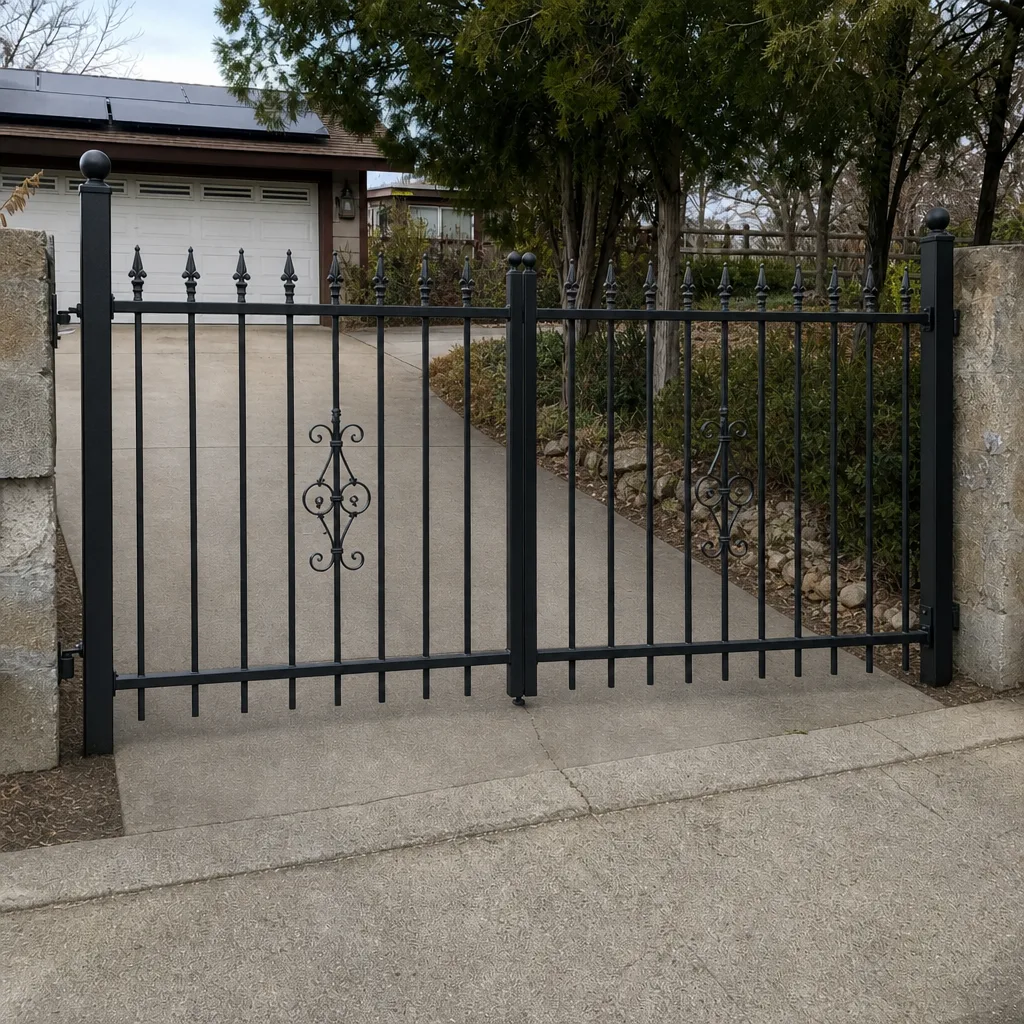
See the difference
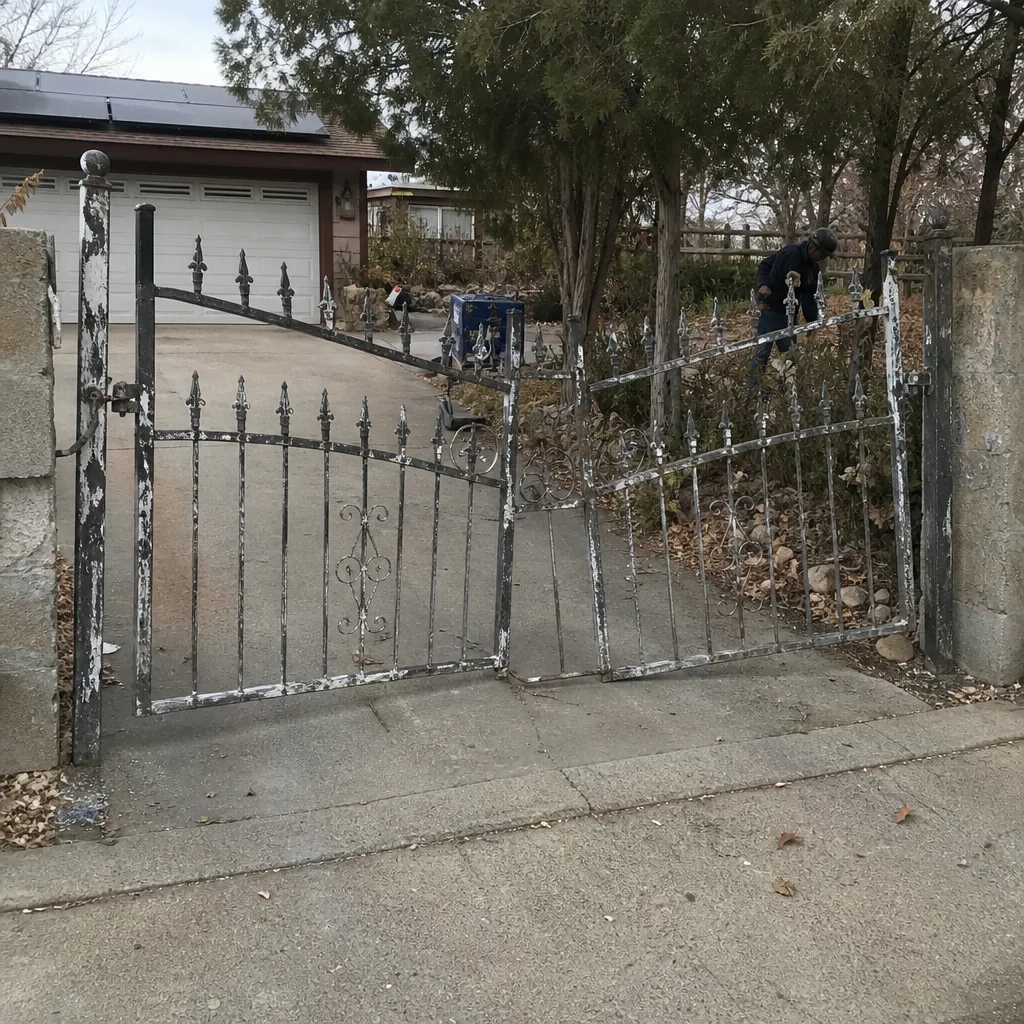 Before
 After
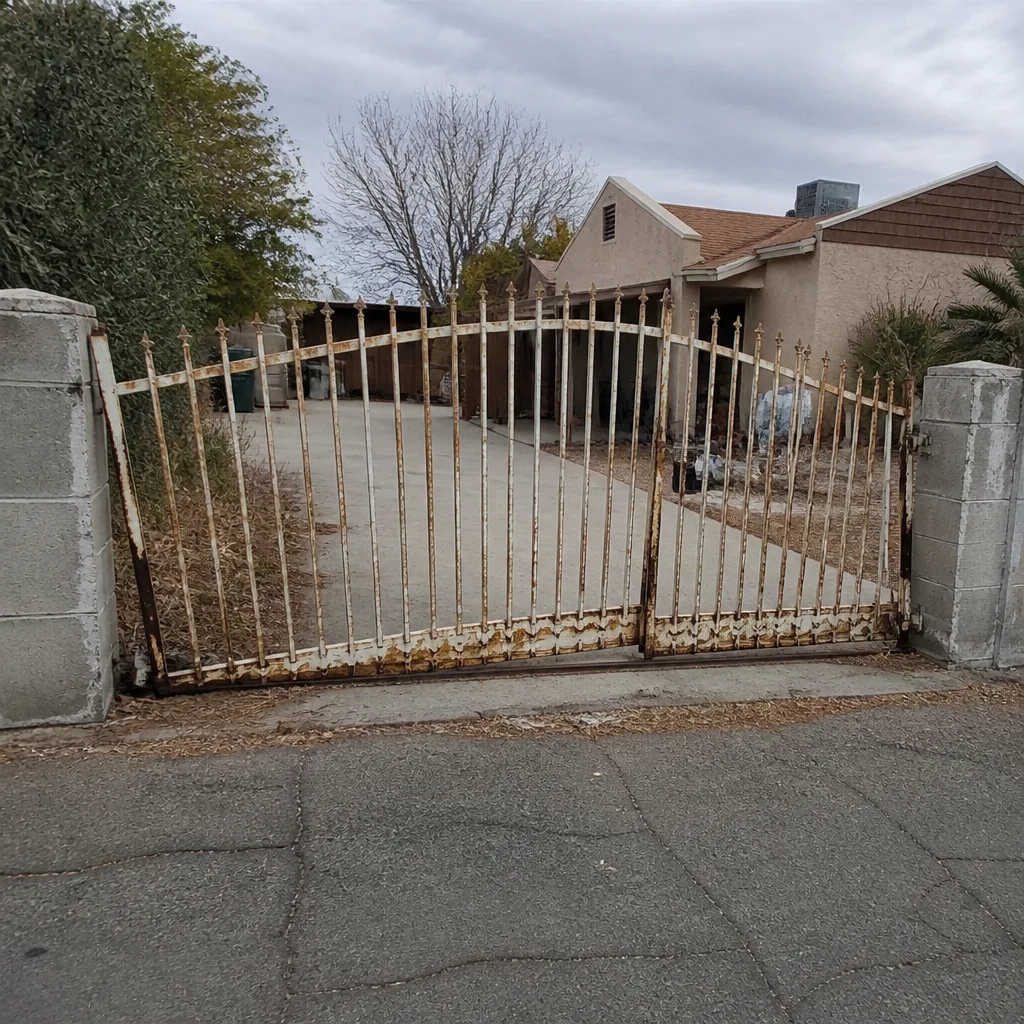 Before
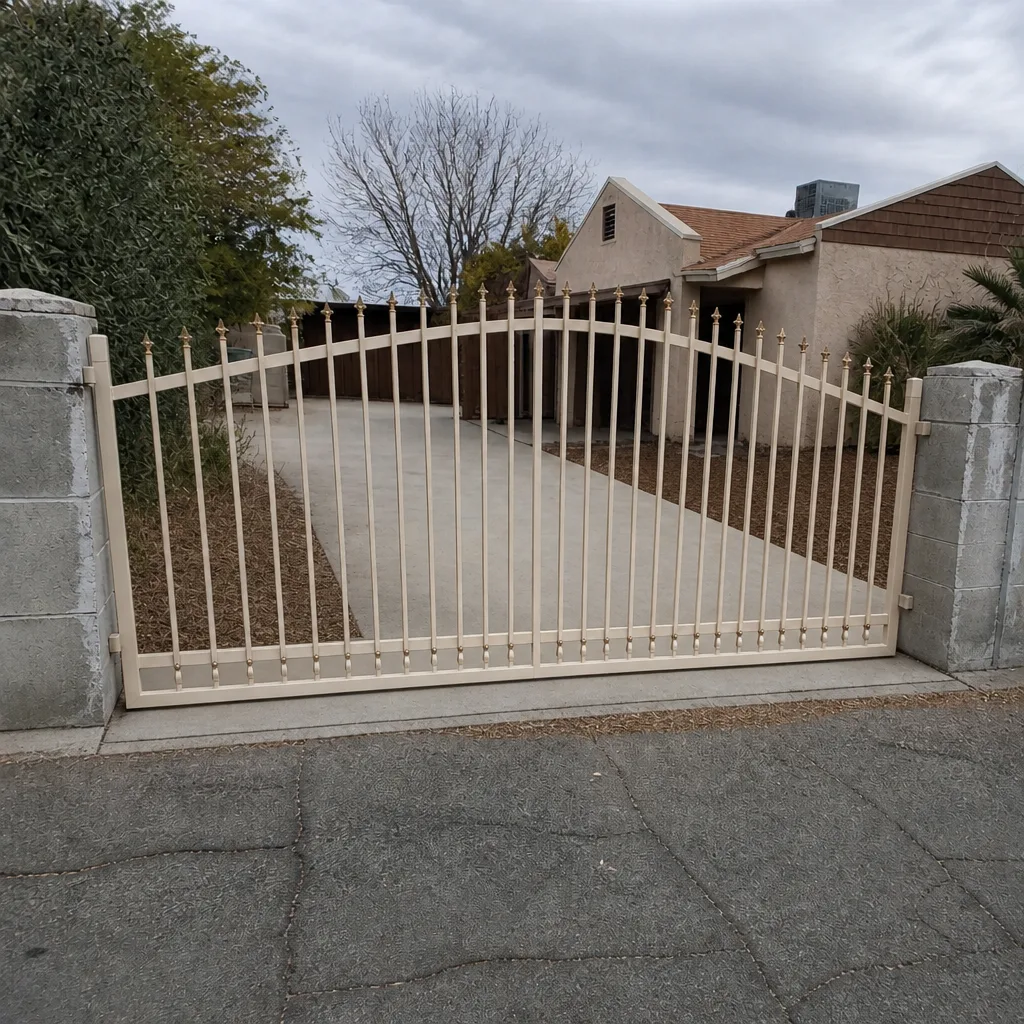 After
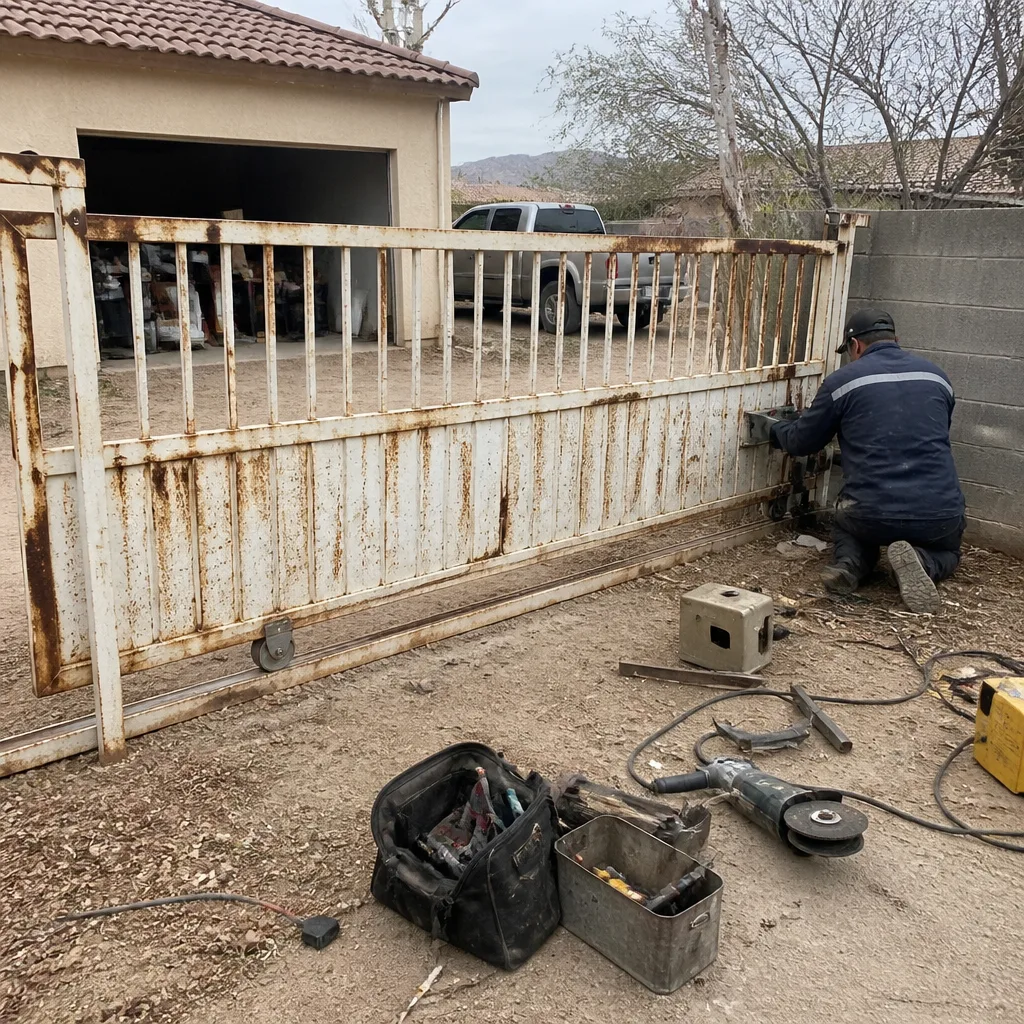 Before
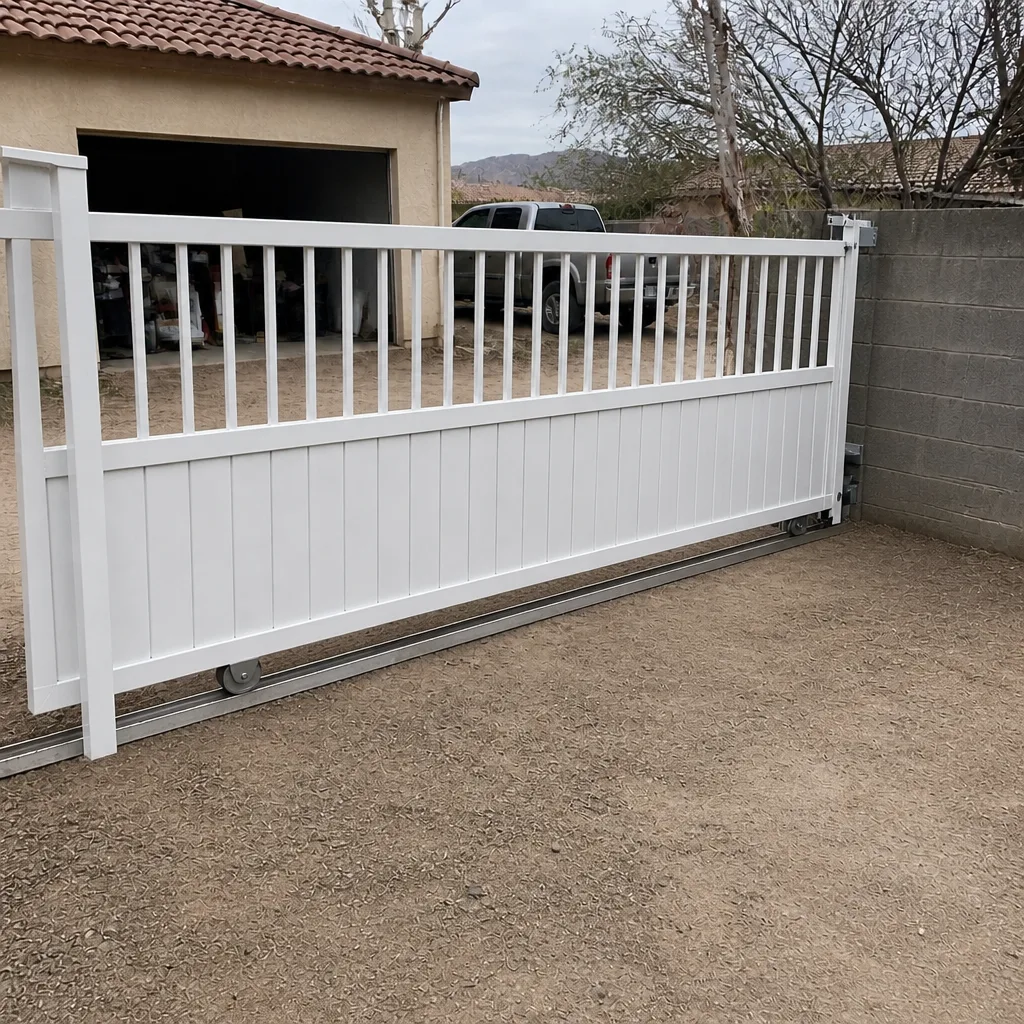 After
Frequently Asked Questions
Yes, adjusting limit switches is a homeowner-safe repair on nearly every residential operator brand, including Ghost Controls and Mighty Mule. The adjustment point is a cam or screw on the arm or rail, and the owner’s manual specifies the exact location. If adjusting the limits doesn’t cure the drift, that’s the moment to call us at (888) 276-7609 for a free estimate.
Realigning an existing photo-eye does not void the warranty, and neither does cleaning the lens. Replacing the photo-eye with a non-OEM part or rewiring the safety loop can void it on most brands and may violate code. If you’re not sure which category you’re in, a free second opinion on a written estimate is the right next step – call (888) 276-7609.
A gate that reverses even with a clean, aligned photo-eye usually has a limit switch that has drifted, not a photo-eye problem. In Boulder City, spring winds that coat the lenses are often blamed when the real cause is a limit cam that moved during the winter’s clay-soil post shift. That’s a diagnostic worth a professional visit – call (888) 276-7609 and we’ll read the pattern before you spend more time on the wrong part.
Yes, replacing the battery backup is a homeowner-safe repair and takes about 15 minutes on most residential operators, including DoorKing and Elite units. The battery is a plug-in component inside or under the access panel, and no specialty tools are needed. If the new battery doesn’t bring the gate back to life, the issue is elsewhere – call us for a free estimate.
They aren’t, in any meaningful sense – counterbalance springs on residential gates hold enough stored tension to break a wrist or hand if released incorrectly. There is no homeowner-safe spring adjustment. If a spring has broken, is visibly bent, or you can hear it creak under load, stop and call (888) 276-7609 for a certified technician.
Have the operator’s brand and model number, a short description of the symptom (“reverses at half-close,” “won’t open from the keypad”), and photos of the gate post at the hinge side and the operator housing. Mention if the gate is stuck half-open and unsafe to leave. That information alone saves a diagnostic step. Call (888) 276-7609 and a live person answers, day or night.
The Bottom Line
Most gate repair guides err on one side: they either tell homeowners to touch nothing or they walk them through repairs that can genuinely hurt. The honest split falls along stored energy – spring tension, capacitor charge, line voltage, structural load. Adjusting limit switches, realigning photo-eyes, and swapping a battery backup are safe and worth doing yourself. Springs, motor internals, frame welds, and footing resets belong to a trained technician, and no amount of weekend confidence changes that. If you’ve fixed the symptom twice and it keeps coming back, that’s the signal it wasn’t the problem. For anything past the safe list, Ironworks Gate Co. Boulder City offers free estimates in Boulder City, with upfront pricing agreed before a single bolt is turned and the 90-Day Done Right Promise in writing behind every job. See how the whole picture fits together on our Ironworks Gate Co. Boulder City home page.
When you’re ready, call (888) 276-7609 for a free estimate. A live person answers every call, day or night, and we’ll give you a straight answer on whether it’s a repair you can safely do yourself or one that belongs with us.
Written by the team at Ironworks Gate Co. Boulder City.