
Last updated November 17, 2026
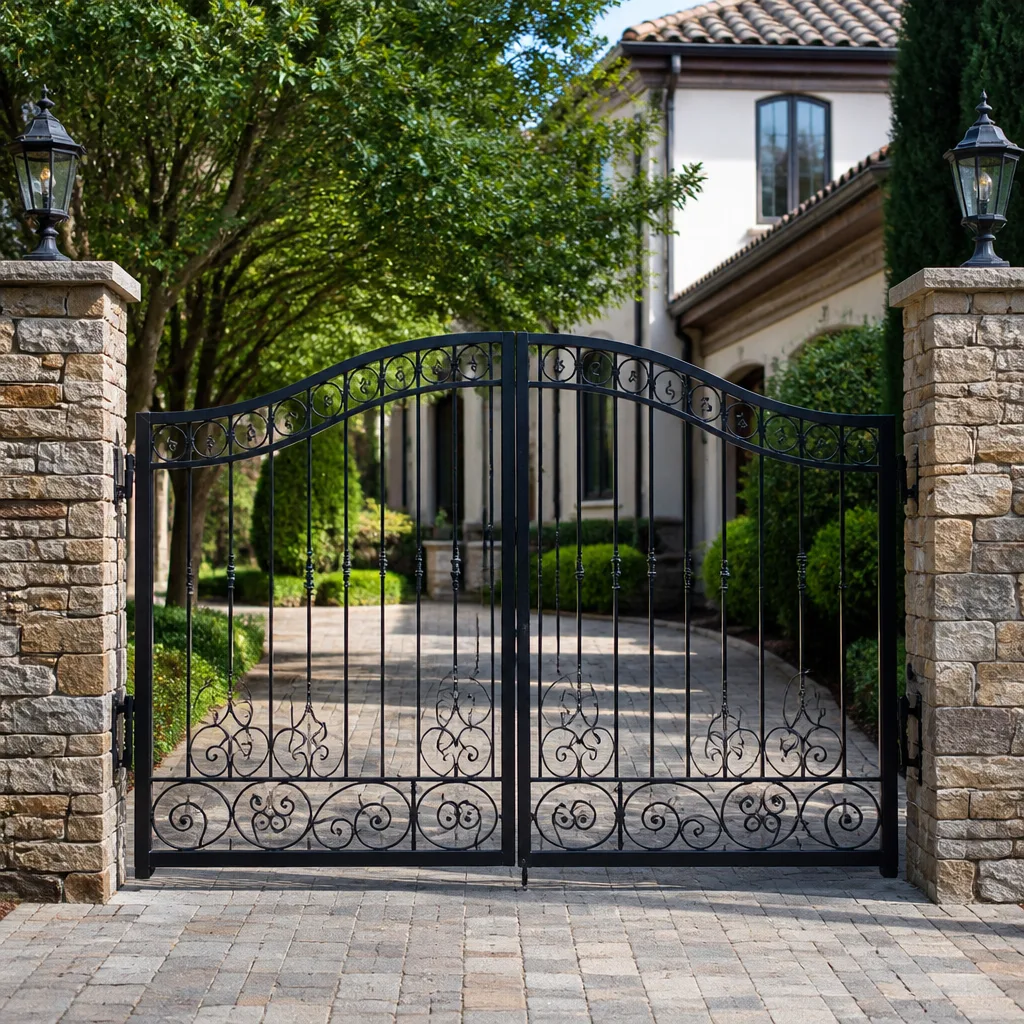 Wrought iron
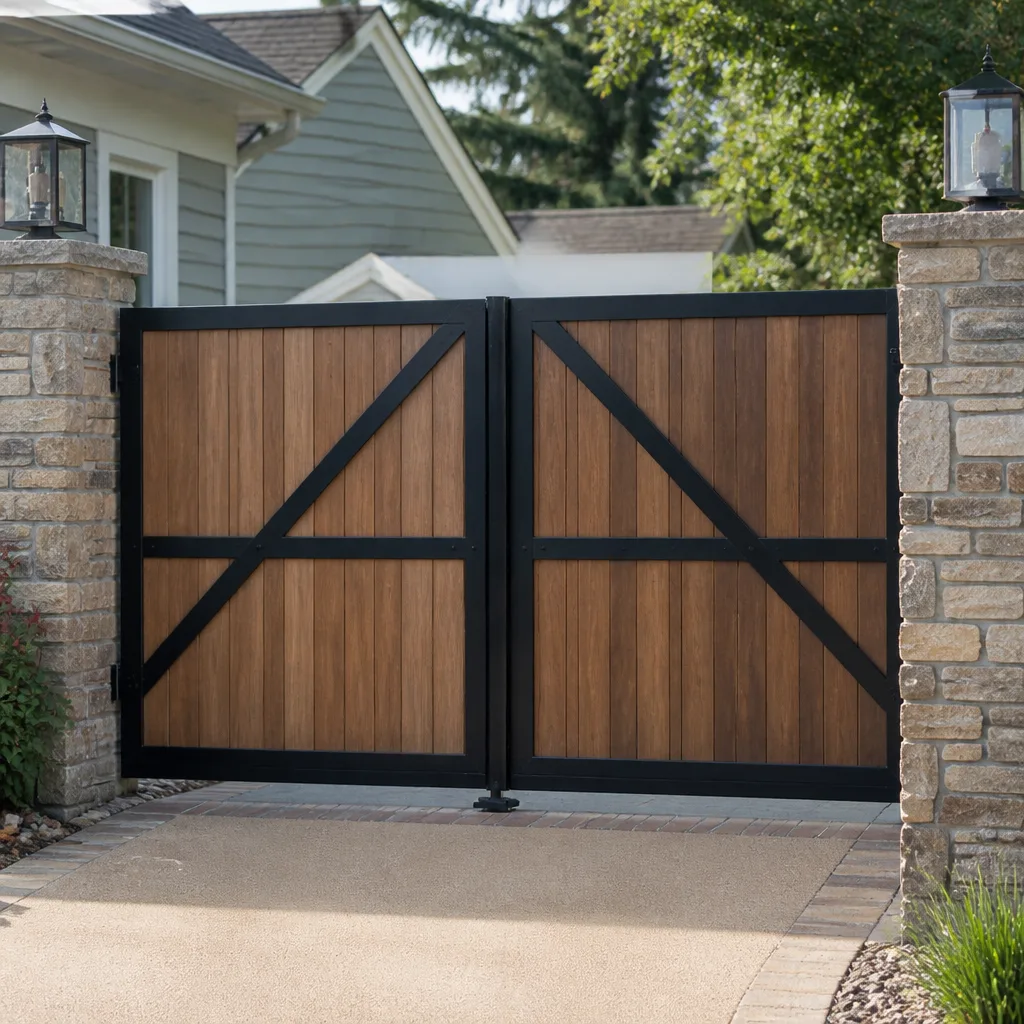 Wood & steel frame
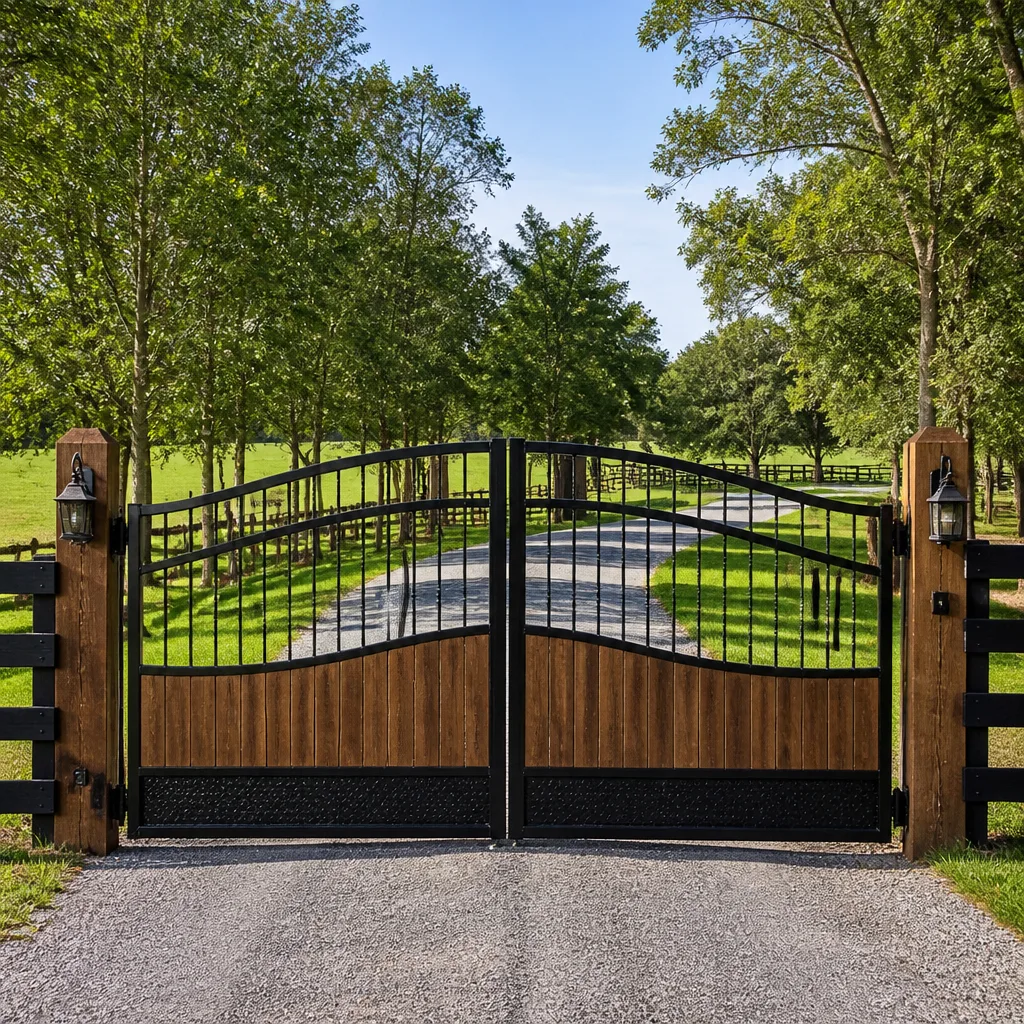 Farm & ranch
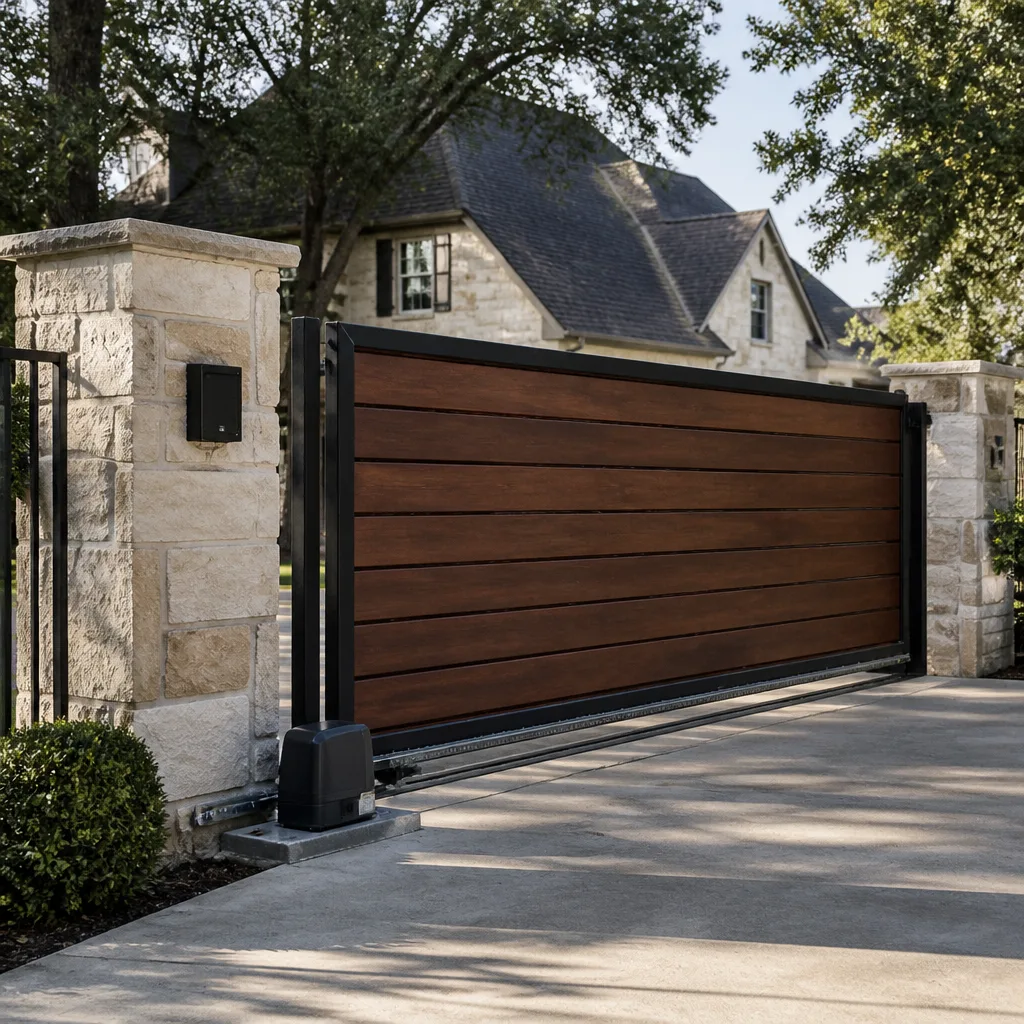 Sliding driveway gates
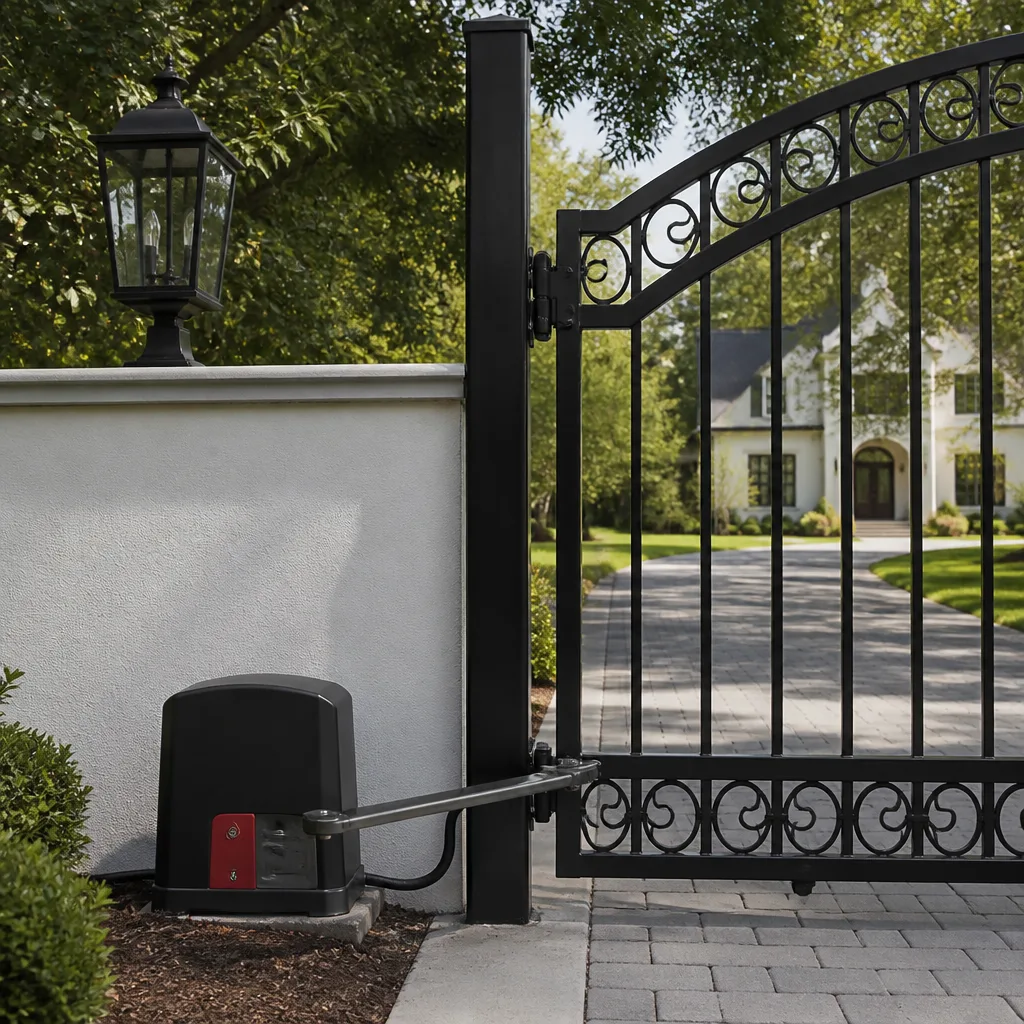 LiftMaster operators
Free on-site gate assessment - hinges, posts, and your LiftMaster or Nice gate operator checked before anything is quoted
The assessment is free and the quote is the invoice.
Get your free estimateDIY vs Professional Gate Parts & Welding: What’s Safe to Do Yourself
Here’s the part most welding videos skip: a clean-looking bead on a gate hinge can hold fine for eighteen months. Then a stress cycle you never see propagates the crack, and a 400-pound gate drops that hinge onto a car, a fence, or a child standing in the driveway. At that point the question of whether the repair was “good enough” stops being mechanical and becomes a legal one. We’ve opened plenty of gates in Boulder City where the crack was already there, quietly spreading under a weld someone made in their own garage. This guide separates the gate work you can genuinely handle yourself from the welding and parts work that belongs to a trained professional – and shows you how to read a welding quote so you’re not paying for guesswork.
Quick Answer
You can safely handle cosmetic touch-up painting, tightening loose hardware, and replacing hinge bolts with the correct grade of fastener. You should not touch structural welds, hinge collar welds, or any joint bearing the weight of the gate leaf. Those are load-bearing connections on a machine that weighs hundreds of pounds and moves every single day, and a hidden flaw in one of them doesn’t announce itself until it fails. Structural gate welding in Boulder City belongs to a trained welder; cosmetic upkeep is yours to keep.
Styles & brands we work with
- Wrought iron
- Wood & steel frame
- Farm & ranch
- Sliding driveway gates
- LiftMaster operators
Table of Contents
- The weld types in a gate, and why each matters
- What you can genuinely do yourself
- The hidden risk of the wrong filler metal
- Liability after a gate incident in Nevada
- How to read a welding quote like a pro
- When to stop and call someone
- Common mistakes to avoid
The Weld Types in a Gate, and Why Each Matters
Not every weld on a driveway gate is the same job. There are three you’ll see on a typical ornamental or steel-frame gate, and each asks something different of the person doing the work.
Structural MIG welds carry the load. These are the joints where the frame meets the post brackets, where the hinge straps are tied into the vertical stiles. They take weight, and they take the repeated push and swing of a gate that opens dozens of times a day. A proper structural MIG weld on a gate needs correct wire selection for the base metal and enough penetration to fuse the full thickness of the joint – not just the surface.
Ornamental fillet welds join the decorative pickets, scrollwork, and lighter bars to the frame. These aren’t carrying the gate’s weight, but a fillet weld with poor fusion will crack and let a picket go loose or fall entirely. On gates in Boulder City’s dry heat, that cracking starts faster than most people expect.
Collar welds wrap around hinge pins, pivot barrels, and gate-frame connection points. They’re the smaller-looking joints that do some of the heaviest lifting, tying the hinge hardware to the gate’s structure. Undercut on a collar weld – where the weld eats into the base metal instead of building on it – weakens the joint right where the gate’s full weight transfers every time it swings. That’s a joint that can fail slowly and then all at once.
Each of these needs the right machine, the right wire or rod, and the right heat setting. Getting one wrong isn’t a question of a messy bead; it’s a question of whether the weld will still be there in three years.
What You Can Genuinely Do Yourself
We’re not going to tell you to put the tools down for everything. Some gate upkeep is genuinely homeowner work, and we’d rather you do it well than skip it. Here’s the honest list of what’s safe in your hands.
- Cosmetic touch-up painting. Spot-priming bare metal and repainting a fading finish is safe and worth doing. In Boulder City’s sun, paint on a west-facing gate oxidizes faster than on a shaded one, and keeping up with it protects the steel.
- Tightening loose hardware. A wobbly handle, a loose latch plate, a bracket that’s worked free over a season – grab the right socket or wrench and snug it down. Don’t overtighten; you’ll strip threads or warp a bracket.
- Replacing hinge bolts with correct grade fasteners. If a hinge bolt has backed out or corroded, replacing it is a reasonable task – as long as you use a fastener of the same grade and finish as what came out. Grade 5 or Grade 8, depending on what the gate was built with. A hardware-store bolt of unknown grade is how a hinge starts to walk.
- Cleaning out debris. Leaves, grit, and desert dust packed into the gate’s travel path or around the hinges do real damage over time. A brush and a few minutes twice a year go a long way.
What’s not on this list is the structural stuff: re-welding a hinge strap, patching a cracked frame joint, or “just tacking” a brace back on. That last one is the repair we see go wrong most often – a quick tack that looks like it’ll hold and doesn’t carry the load the original weld did. If you want to understand how that connects to the automation that drives the gate, our gate motor and opener service covers what a motor stresses when a weld starts to give.
The Hidden Risk of the Wrong Filler Metal
This is where DIY welding gets genuinely dangerous, and it’s the point most homeowners never hear.
Matching filler metal to base metal isn’t optional. Weld a galvanized post with the wrong wire and you get porosity and a weak joint that also releases fumes you don’t want to breathe. Weld stainless to mild steel without the right rod and the joint can develop a corrosion cell that eats the weld from the inside. Weld a high-strength steel frame with a mild-steel filler and the weld can end up with lower tensile strength than the base metal it’s joining – which means the joint looks perfect and holds until it doesn’t.
That under-matched weld is the one we find most often on gates around Boulder City. It looks clean. It passed a visual check. It may hold for a year, maybe two. Then a stress cycle from the gate’s daily swing finds the weak point, and the crack propagates. There’s no warning and no creak before it lets go.
Choosing the right filler means knowing the gate’s base metal, its thickness, and how the joint will carry load. That’s a decision made by a welder who’s seen the inside of a gate after it failed – not by a homeowner reading a wire chart on a phone.
Liability After a Gate Incident in Nevada
When a gate fails and causes damage or injury, the question shifts from “is it fixed?” to “who is responsible?” And in that conversation, the repair history matters.
If your gate drops or a joint fails and there’s a resulting injury or vehicle damage, a homeowner’s insurance adjuster will look at the repair history. They’ll ask who did the structural work, whether it was performed by a licensed professional, and whether there’s documentation. A gate that was self-repaired with an undersized tack and then failed can become a coverage dispute – and worse, a personal liability exposure. That’s not a scare tactic; it’s how claims get handled.
This isn’t about whether you’re a skilled hobbyist. It’s about whether the repair is documented to a professional standard. A licensed welder provides a written scope: what was welded, with what filler, to what code. That documentation protects you if the worst happens. We think about that when we work on any gate in Boulder City. An adjuster doesn’t know your neighbor’s opinion of your welding; they know the paper trail, and a handyman’s verbal “I fixed it” isn’t a paper trail.
How to Read a Welding Quote Like a Pro
Most homeowners can’t tell a thorough gate welding quote from a vague one, and generalist handymen count on that. Here’s what a professional’s written scope of work should include that a verbal “I’ll take care of it” never will.
- The specific weld joints being repaired. Not “fix the gate” – the hinge collar on the drive-side post, the frame joint at the top rail. A quote that names the joints is a quote from someone who looked at them.
- Base metal and filler selection. What the gate is made of and what filler will be used. This is the single most important line on a welding quote and it’s the one most often missing.
- Whether the gate will be re-hung or realigned afterward. A weld repair that doesn’t include re-hanging the gate can leave it swinging out of square, which stresses the new weld immediately.
- Hardware replacement included or not. Hinge pins, collars, and fasteners should be listed separately so you know what’s new.
- A written price settled before work starts. Not an hourly estimate that grows on the invoice. A firm number you’ve agreed to.
- What warranty covers the weld. A good welding job carries a guarantee in writing. Ours is the 90-Day Done Right Promise – if it isn’t right, we come back and make it right.
If a handyman won’t put the filler and the joints on paper, that’s your answer. A proper gate installation quote tells you the same story about how a job should be scoped – you can see the shape of it on our gate installation page.
When to Stop and Call Someone
Some signs are your signal to put the tools down and make the call. Any of these on a Boulder City gate is worth a professional look before you touch a welder.
- The gate sags, drags, or swings out of square after any repair attempt.
- A crack reappears at a joint you or someone else already “fixed.”
- You find undercut, porosity, or a weld that’s clearly not fusing to the base metal.
- A hinge collar or load-bearing joint shows any separation, however small.
- The gate’s weight transfers hard onto one hinge or one post bracket.
- You can’t identify the base metal or choose the correct filler for it.
When a weld repair has to be redone, it’s often because the original job didn’t get the filler right or skipped re-hanging the gate. Getting it right the first time saves the second repair entirely. A gate that won’t close true is worth a full look, and that starts with honest gate repair, not a patch that buys a season. If the gate has automation on it, an out-of-square gate will fight the motor – you’ll find that story in our gate repair service.
Common Mistakes to Avoid
- Assuming a clean weld is a strong weld. The most dangerous welds we find look perfect from the outside. If the filler wasn’t matched to the base metal, the failure is already scheduled.
- “Just tacking” a brace or hinge back on. A quick tack doesn’t carry the load of a proper structural weld. It holds long enough to give you confidence, then lets go.
- Using hardware-store bolts of unknown grade. Hinge bolts need the right grade to hold a gate’s weight. The wrong fastener is how a hinge starts to walk, and then sags.
- Skipping re-hanging the gate after a weld repair. A repaired joint on an out-of-square gate is stressed twice as hard from day one.
- Welding galvanized or plated steel without stripping and prep. In Boulder City’s dry climate and monsoon-season humidity swings, an improperly prepped galvanized joint corrodes from the inside. Zinc fumes are also a genuine health hazard, not a nuisance.
- Letting a handyman quote verbally and never writing it down. The written scope is your protection. A verbal promise has no bearing on the invoice or on an insurance claim.
- Ignoring the automation. A repaired gate still needs its motor checked if the gate was fighting it. The motor doesn’t care that the weld looks fine.
When to Call a Professional
Call a professional welder the moment the work is structural. That means hinge collars, frame joints, gate-post brackets, and anything that carries the gate leaf’s weight. It also means any time you can’t positively identify the base metal and match a filler to it, or the gate has started to sag. Those aren’t jobs to feel your way through.
Our team works on gates across Boulder City and the surrounding neighborhoods, from the older estate gates on the hillside lots to the newer driveways closer to the center of town. We bring the correct machine, the right filler, and a written price before any work starts. If you’ve had a repair go wrong, we’ll tell you plainly what failed and what it takes to set it right. Ironworks Gate Co. Boulder City offers free estimates in Boulder City – call (888) 276-7609. We’re a gate specialist, not a generalist, and we stand behind every job with our written 90-Day Done Right Promise.
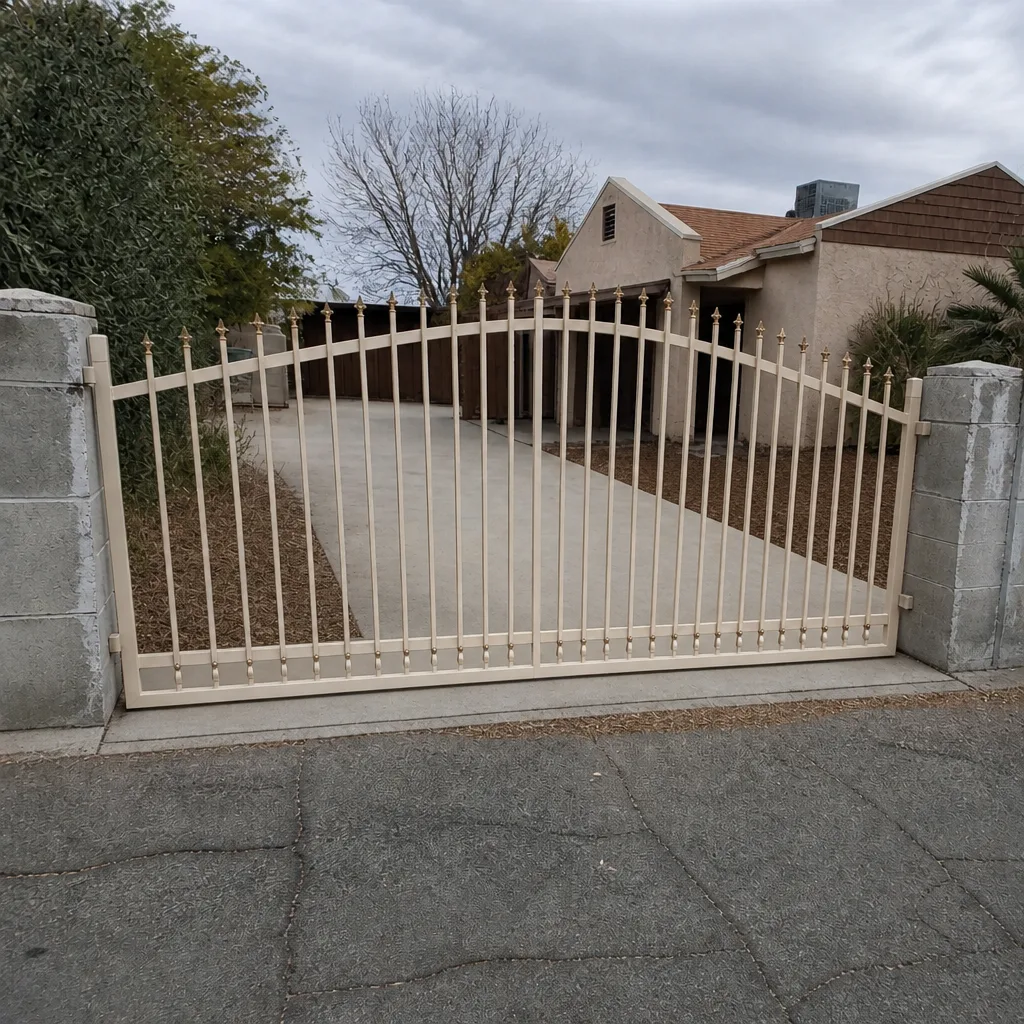
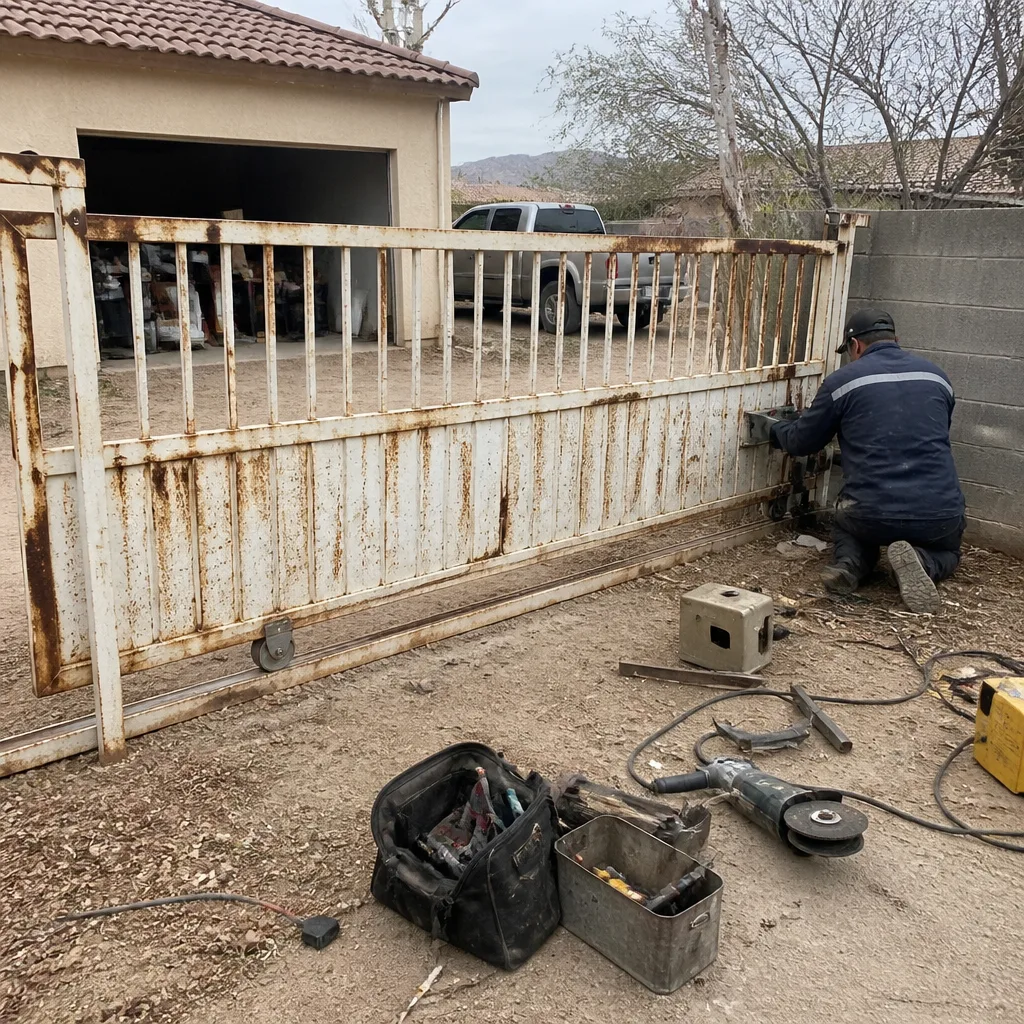
See the difference
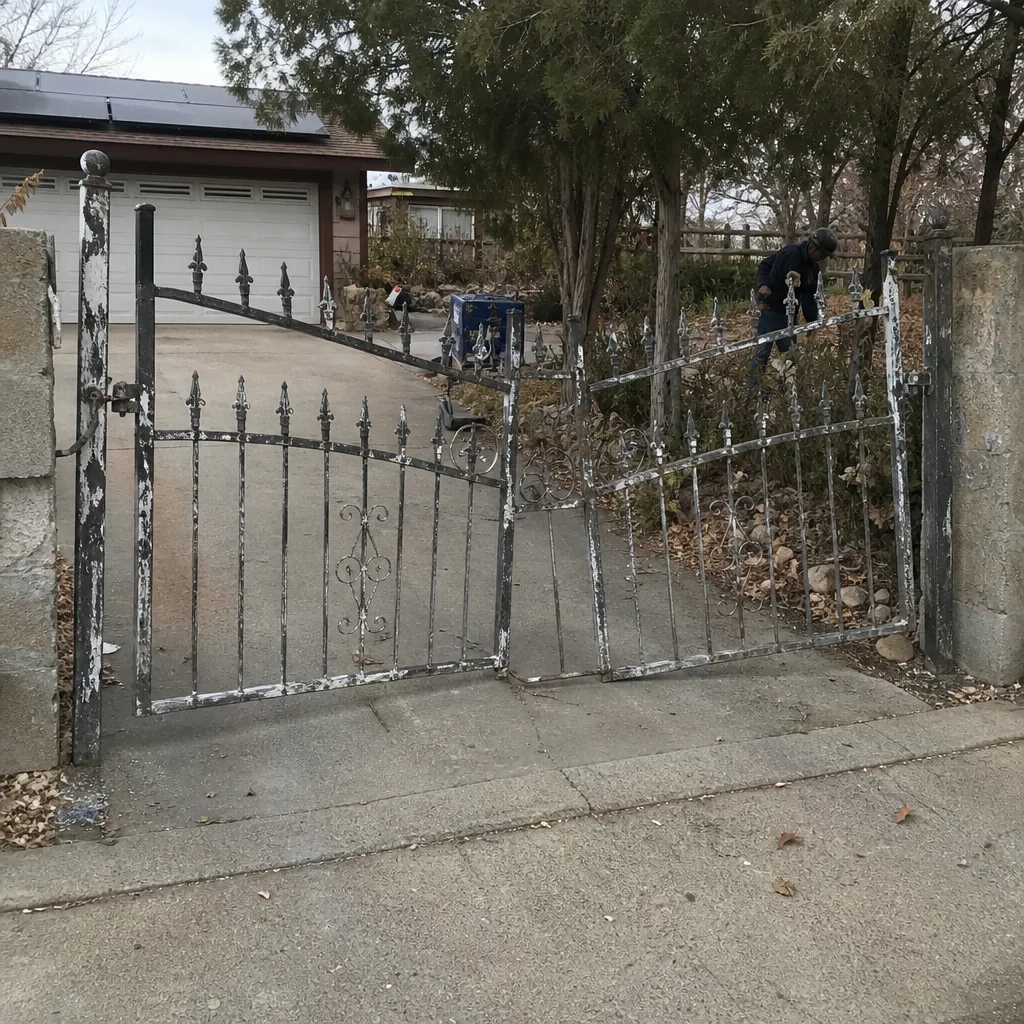 Before
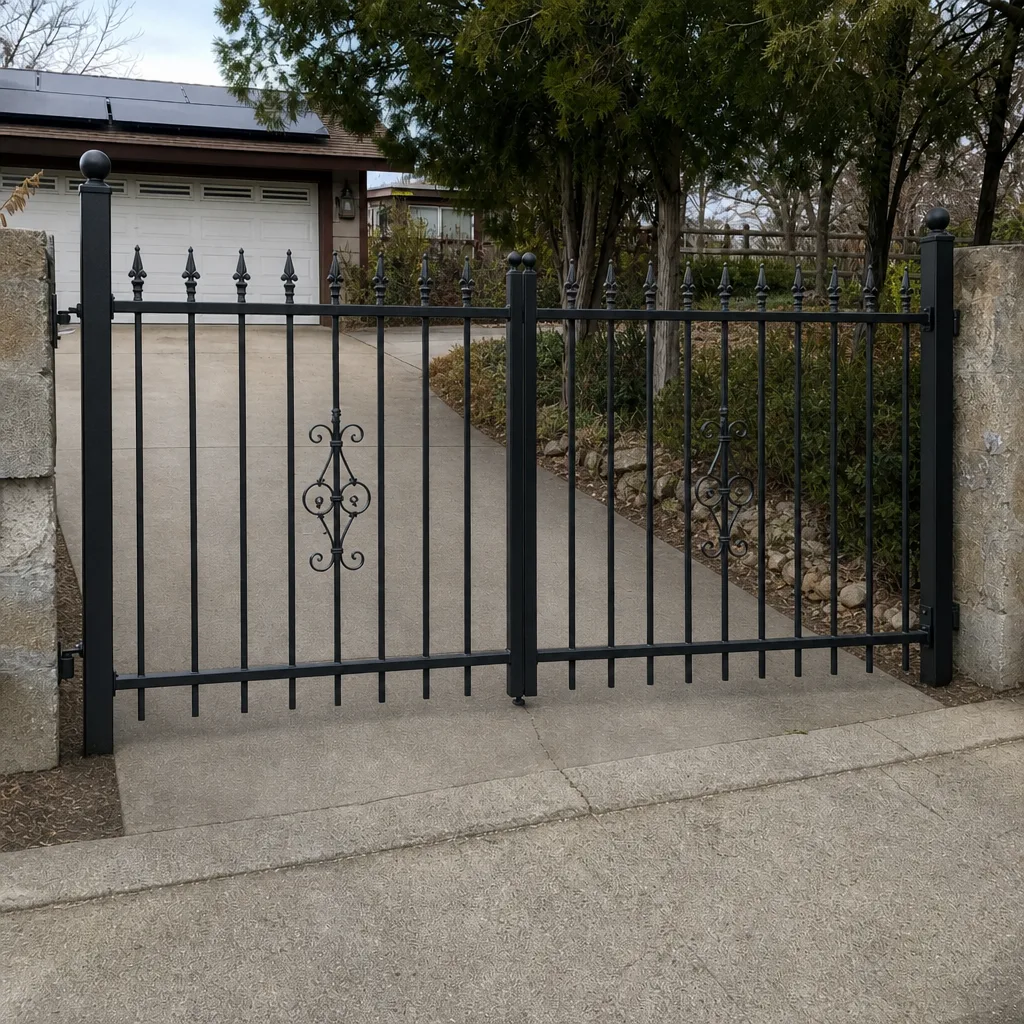 After
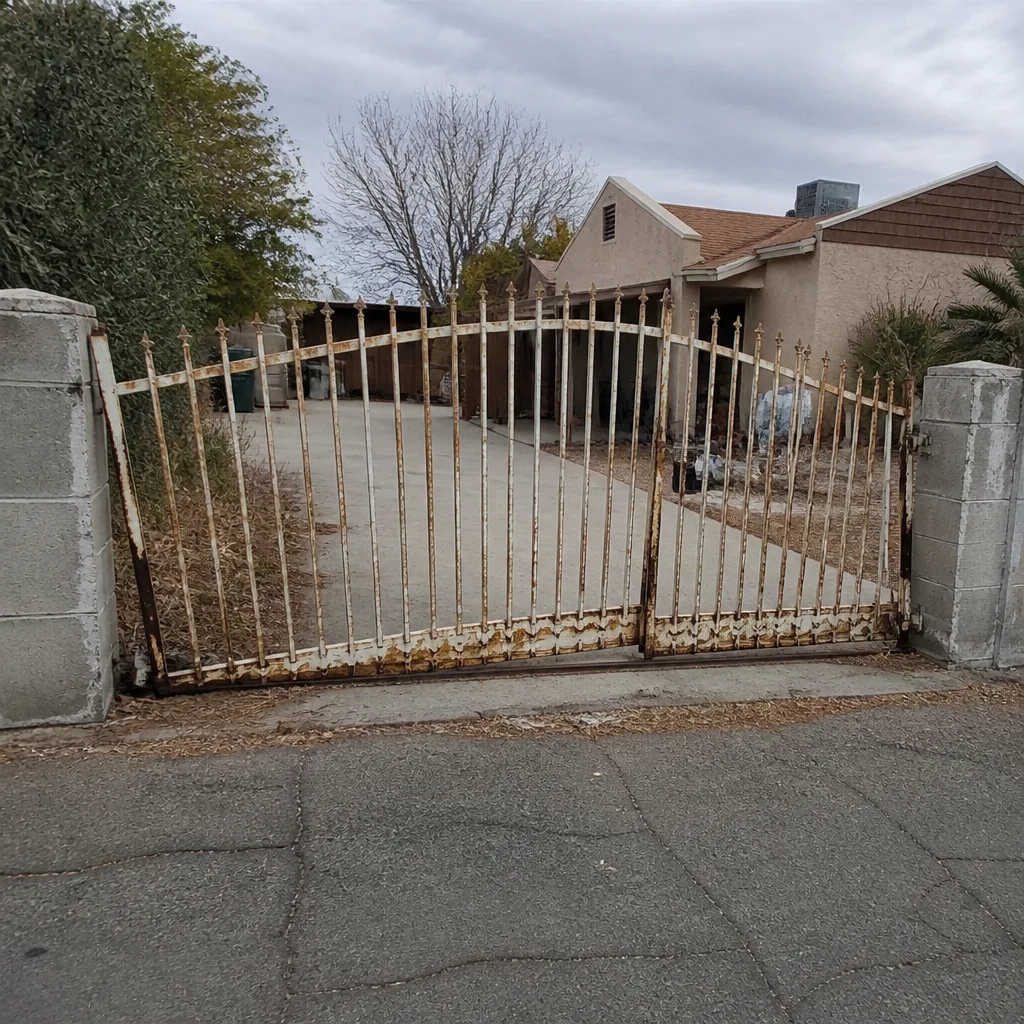 Before
 After
 Before
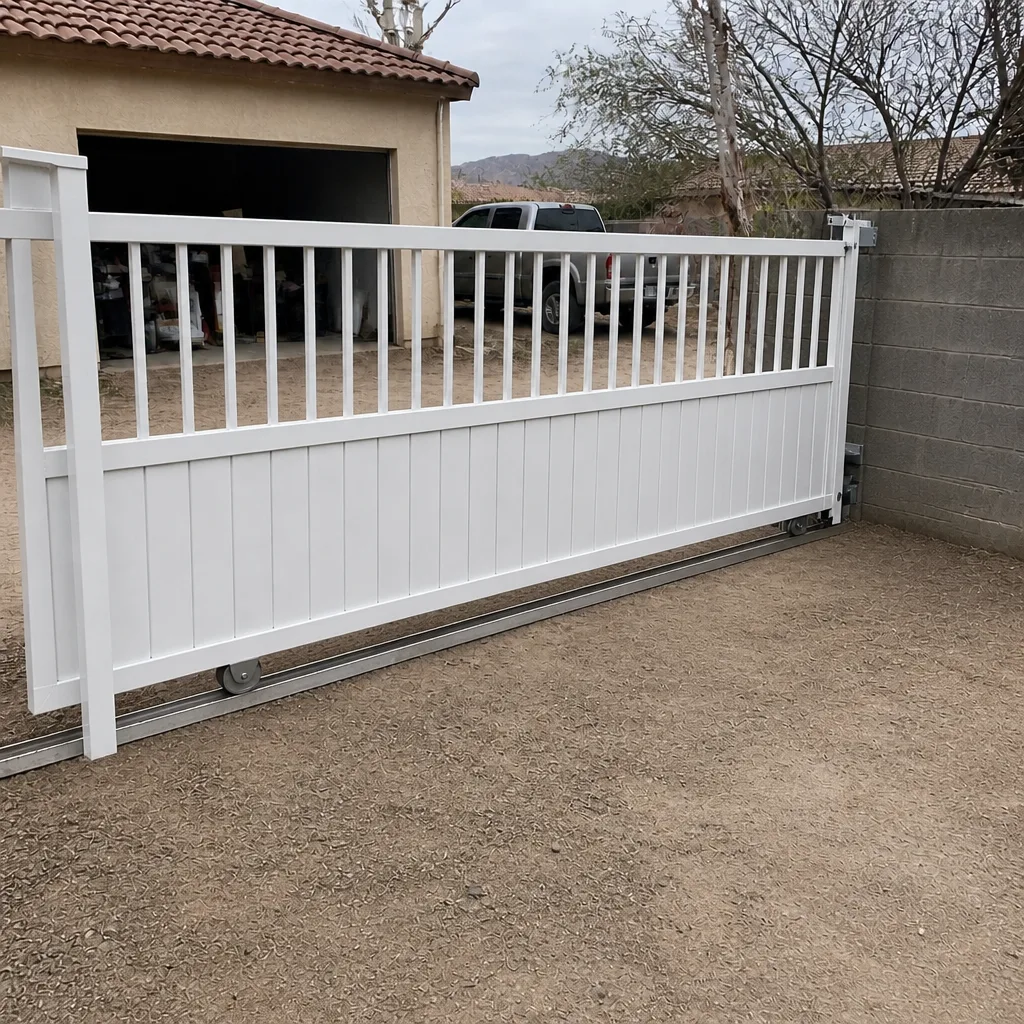 After
Frequently Asked Questions
No. A hinge collar or hinge strap weld carries the gate’s full weight, and it has to be fused properly with the correct filler metal for the base metal. An undercut or under-matched weld can hold for a year before it fails without warning. Call a trained welder for structural hinge work.
Cosmetic touch-up painting, tightening loose hardware, cleaning debris from the gate’s travel path, and replacing hinge bolts with the correct grade fastener are all safe homeowner tasks. Anything that involves welding a structural joint or diagnosing a cracked frame belongs to a professional.
The wrong filler can produce a weld with lower tensile strength than the base metal it joins, so the joint looks clean and holds until a stress cycle cracks it. Matching filler to base metal is a judgment a trained welder makes by knowing the steel.
It can. If a gate repair fails and causes injury or property damage, an insurance adjuster will look at who performed the structural work and whether there’s documentation. A licensed welder’s written scope protects you; a verbal “I fixed it” doesn’t.
Cost depends on the joint, the base metal, and whether the gate needs re-hanging. That’s exactly why the price should be quoted in writing before work starts. Call (888) 276-7609 for an exact quote – estimates are free.
Yes. A weld repair on a gate with automation should always include checking the motor, because an out-of-square gate stresses its opener. We service LiftMaster, FAAC, BFT, Linear, and other major opener brands, and we’ll tell you plainly whether the motor needs attention.
The Bottom Line
DIY gate work has a real place: paint, hardware tightening, debris cleanup, and hinge bolts done with the correct grade fastener. The moment the work is a structural weld, a hinge collar, or a frame joint, it belongs to a trained welder with the right filler and a written scope. That’s not a sales pitch – it’s the difference between a weld that holds and one whose failure is already scheduled. If a gate in Boulder City has a questionable repair or a crack that keeps coming back, it deserves a professional look. We’re here for the work that has to be right the first time, backed in writing, with a price agreed before a single bolt is turned. Reach the Ironworks Gate Co. Boulder City team when you’re ready.
Contact
Have a gate repair that needs a real answer, not a patch? Call Ironworks Gate Co. Boulder City at (888) 276-7609 for a free estimate. A live person answers every call, 24 hours a day, 7 days a week, and every job is backed by our written 90-Day Done Right Promise.
Written by the team at Ironworks Gate Co.