
Last updated November 17, 2026
 Wrought iron
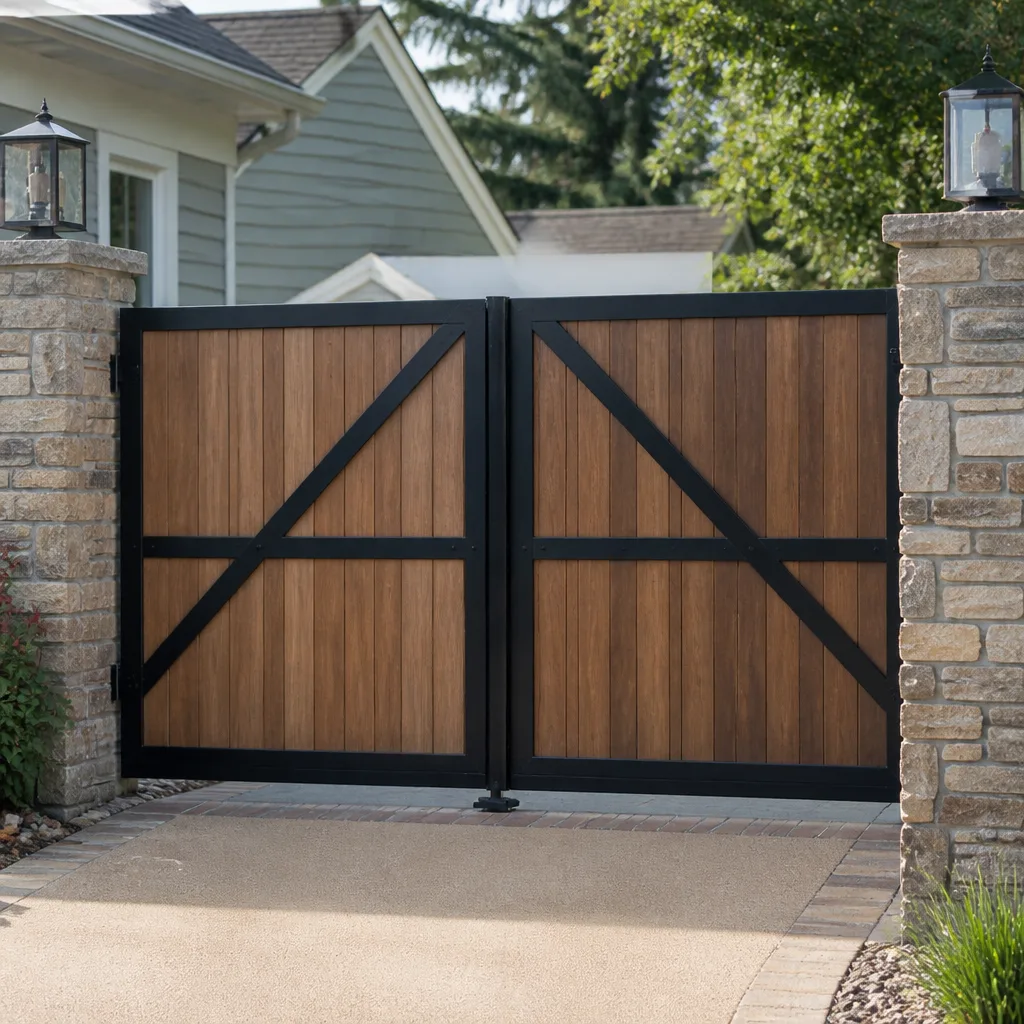 Wood & steel frame
 Farm & ranch
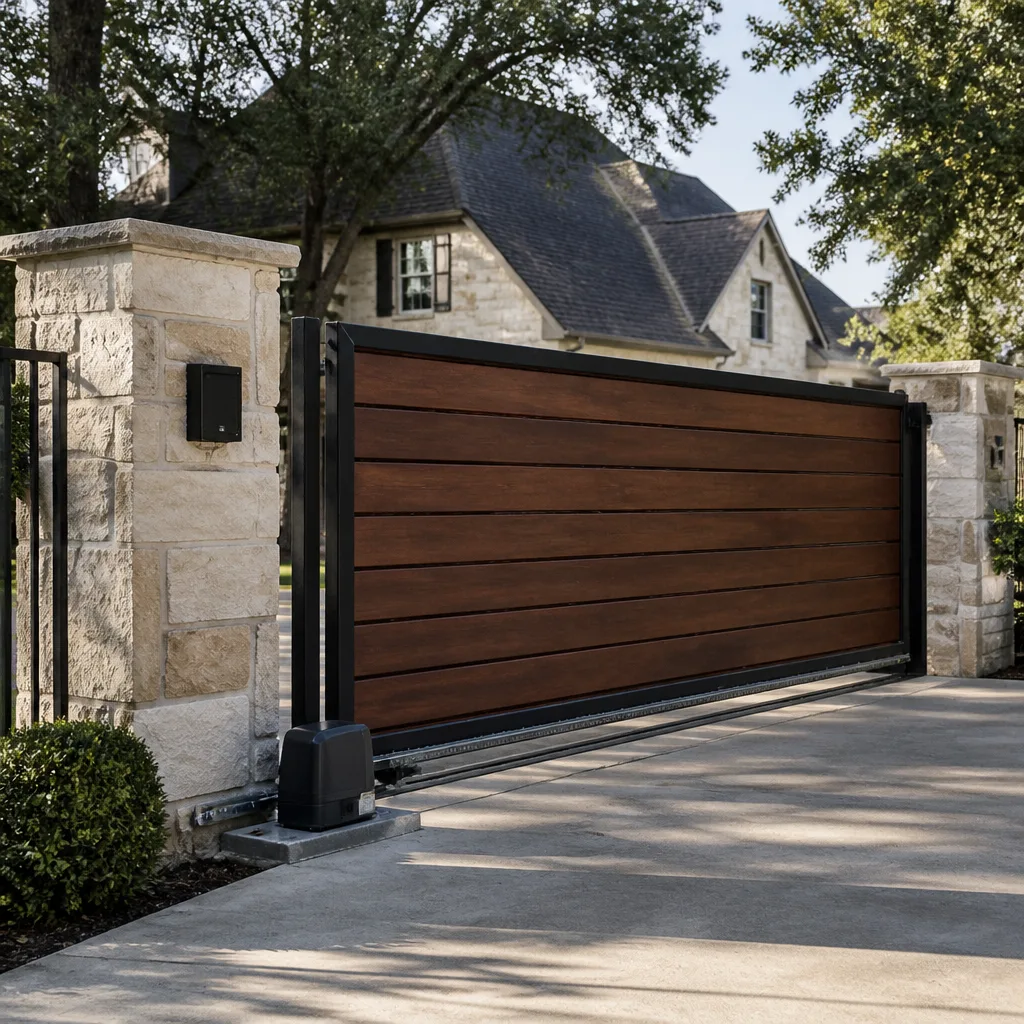 Sliding driveway gates
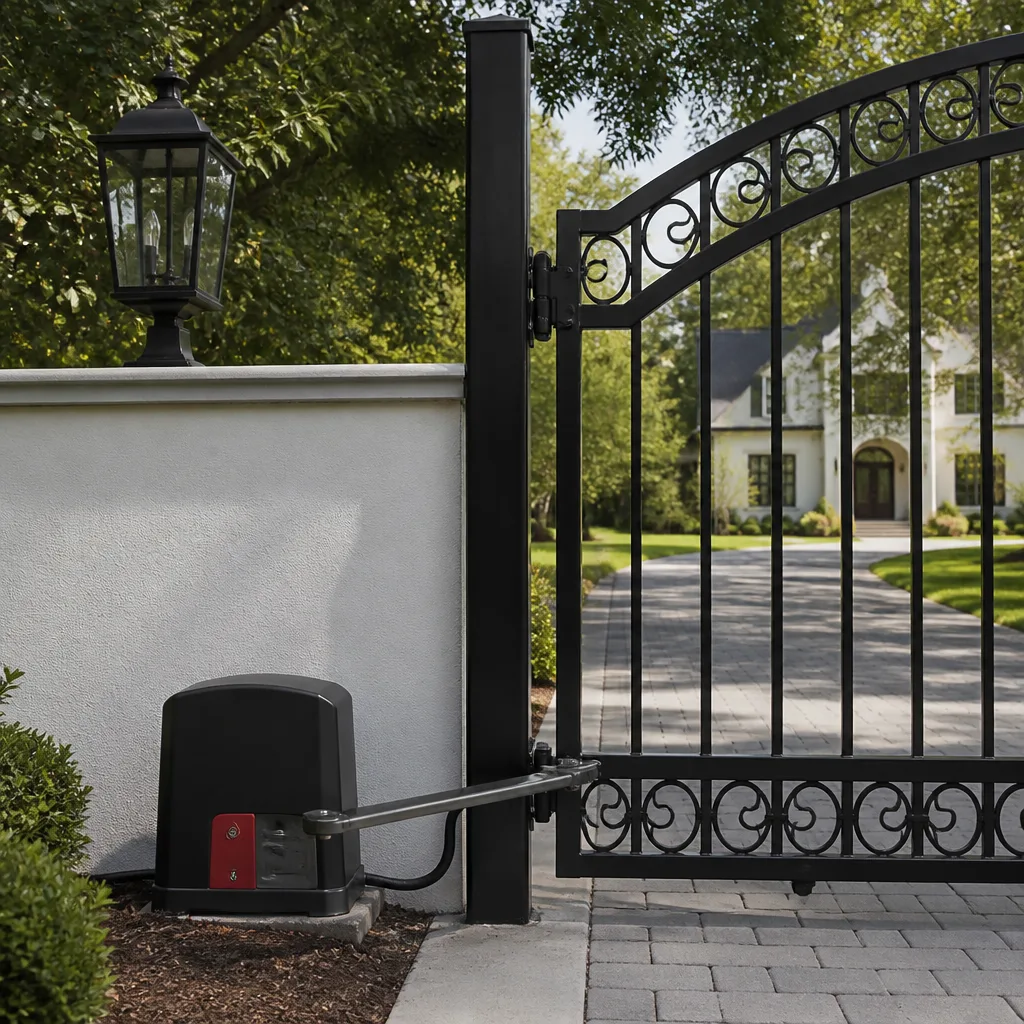 LiftMaster operators
Free on-site gate assessment - hinges, posts, and your LiftMaster or Nice gate operator checked before anything is quoted
The assessment is free and the quote is the invoice.
Get your free estimateDIY vs Professional Gate Motor & Opener: What’s Safe to Do Yourself
Here’s the part almost nobody mentions in the DIY gate opener debate: in Nevada, a homeowner can legally buy a gate motor, wire it up, and install it themselves. That’s true. What isn’t discussed nearly as often is what happens if that opener injures someone and the entrapment protection wasn’t set to UL 325 standards. At that point the liability sits with the homeowner, not the manufacturer, and not the installer, because there was no installer. We’ve worked on gates across Boulder City long enough to see both sides of this. This guide draws the line where it actually belongs: not at skill, but at safety code, warranty, and legal exposure. By the end you’ll know exactly which tasks a competent homeowner can do, and which ones you shouldn’t touch.
Quick Answer
Installing a gate opener yourself is legal in Nevada, but a DIY install only stays safe and defensible if it meets UL 325 entrapment protection requirements, and most homeowners can’t verify that without training. A mechanically competent homeowner can safely mount a pre-wired unit to an existing post, program remotes, and swap a backup battery. Anything involving 120V connection, new low-voltage wiring in conduit, or fresh sensor placement should be done by a licensed technician, both because it’s genuinely dangerous and because most opener warranties are voided by unverified installation.
Styles & brands we work with
- Wrought iron
- Wood & steel frame
- Farm & ranch
- Sliding driveway gates
- LiftMaster operators
Table of Contents
- What UL 325 entrapment protection actually requires
- Tasks a mechanically competent homeowner can safely handle
- Tasks that require licensed work regardless of skill level
- The warranty void risk nobody reads until it’s too late
- Honest cost comparison: sticker price vs. real cost
- Why Boulder City conditions change the calculation
- Common mistakes to avoid
- When to call a professional
What UL 325 entrapment protection actually requires
UL 325 is the safety standard for gate operators, and the part that matters most to homeowners is entrapment protection. It’s a set of rules about what a gate must do when something gets in its path. A compliant installation on a sliding or swinging gate needs the opener paired with validated entrapment protection devices: photoelectric sensors, edge sensors, or a combination, correctly placed and correctly tested. “Installed” and “compliant” are not the same thing. The gate can cycle, the remote can work, and the opener can still be non-compliant if the sensors aren’t wired to trip the reverse on contact.
What compliant installation actually looks like in practice:
- Photoelectric sensors positioned so the beam covers the full swing or slide path, at the height and offset the manufacturer specifies, not at whatever height was convenient.
- Edge sensors on the leading edge of the gate, wired and verified to reverse the operator, not just mounted to look correct.
- Force and speed settings programmed to the manufacturer’s spec, then tested by physically obstructing the gate through the full cycle.
- A written record of the test. This is the part most DIY installs skip entirely. If a gate is ever involved in an injury, the documentation trail from a certified installation matters.
Testing isn’t a checkbox. On a LiftMaster or FAAC unit, the reverse function has to be verified with an actual obstruction at multiple points in the cycle, and the operator settings are locked in after that. In Boulder City, sun exposure and temperature swings can affect sensor alignment over time, so the baseline has to be right on day one. If the thought of verifying all of this yourself sounds uncomfortable, that’s a reasonable reaction. It’s a code question, not a skill question.
Tasks a mechanically competent homeowner can safely handle
There’s a real set of tasks you can do yourself with confidence, and we don’t want to pretend otherwise. If you’re comfortable with basic tools and you follow the manual, these are within reach.
- Mounting a pre-wired unit to an existing post. If the post is already there, the wiring is already run, and you’re replacing like for like, bolting the new motor to the existing mounting plate is straightforward. Check the bolt torque in the manual and use the specified hardware.
- Programming remotes and keypads. Adding a remote, setting up a keypad code, adjusting travel limits within the manufacturer’s range: all of this is normal homeowner territory. Just keep the manual.
- Replacing a battery backup. A failed backup battery is a common cause of a gate that opens once and won’t close. Swapping it is a five-minute job, and it’s worth doing before you assume something bigger has failed.
- Routine visual inspection. Look at the sensors. Make sure they’re aimed correctly and not blocked by a limb, a bag of fertilizer, or a car parked in the beam. Wipe them clean. This costs nothing and prevents a lot of service calls.
- Manual release operation. Know how to use the release key so you can move the gate by hand during a power outage. Every homeowner should practice this once.
The pattern here is that everything on this list touches the operator without touching the electrical supply or the safety verification. If a task requires a meter, a conduit bender, or a call to your electrician, stop and read the next section. For genuine repair work beyond these items, our Gate Repair in Winchester service is a useful reference for the scope of what typically needs a technician.
Tasks that require licensed work regardless of skill level
This is where the line gets bright. Regardless of how handy you are, the following tasks belong to a licensed electrician or a certified gate technician. It’s not about intelligence or confidence. It’s about what’s safe and what’s defensible if something goes wrong.
- Any 120V connection to the opener. Running the line voltage to the operator, installing the disconnect, wiring into the panel. This is electrical work and it’s regulated for a reason.
- New low-voltage wiring in conduit. Sensors, keypads, and safety edges all run low-voltage, but the run itself has to be in conduit, properly buried, and pulled to code. Bad low-voltage work is a common cause of intermittent failures that are miserable to diagnose.
- Sensor mounting on a new installation. On an existing setup, replacing a failed sensor is not the same as placing one on a new install. The placement needs to satisfy the entrapment protection requirements, and that’s a code decision.
- Force and speed calibration on a new operator. This is the safety-critical step that determines whether the reverse function works. It has to be set and verified, not eyeballed.
- Any welding or structural mount work. A post that isn’t square, a hinge that’s fatigued, a mounting plate on failing steel: all of this affects whether the opener performs or fails early. Welding on a gate is skilled trade work.
We say this plainly because we’ve been called out to correct it. Gates that were installed with good intentions and quiet, dangerous shortcuts. If you’re close to needing motor work and you want to understand the full scope, our Gate Motor & Opener in Winchester page lays out what a proper installation involves.
The warranty void risk nobody reads until it’s too late
Here’s a fact buried in the owner’s manuals of most major opener brands: the manufacturer warranty is typically void on units installed by anyone other than a certified technician. That’s true for LiftMaster, it’s true for FAAC, and it’s generally true across the board. The manufacturer doesn’t care that you’re mechanically capable. What they care about is whether the unit was installed to specification by someone who can attest to it.
What that means in practice: the operator fails twelve months in, well inside the warranty period, and you call the manufacturer expecting a replacement. They ask who installed it. You installed it. The claim is denied. You bought the unit, you ate the cost of the install, and now you’re paying again for a technician to come out and replace the unit you already paid for once. The same trap applies to Mighty Mule units that hobbyists sometimes buy at big-box stores. Reading the fine print before you buy is worth ten minutes of your time.
The same protection applies to labor. A written guarantee on the installation itself is what stands behind the job when the manufacturer warranty runs out. Ironworks’ own Ironworks Gate Co. Boulder City home page outlines how the 90-Day Done Right Promise works on every job, which is a labor guarantee, not a parts warranty. Both matter. Only one of them is available on a DIY install.
Honest cost comparison: sticker price vs. real cost
The sticker-price comparison makes DIY look like an obvious win. The opener costs the same either way. The professional install has a labor cost on top. So the “savings” looks clean. What the comparison misses is what happens when something goes wrong, and something usually does within the first two years.
Here’s the honest frame:
- DIY sticker cost: opener plus any hardware plus your weekend. On paper, lowest.
- DIY real cost: opener plus hardware plus your time plus the risk of a voided warranty plus the cost of a technician to redo the install if the safety verification wasn’t right plus the cost of a second opener if the first one fails a warranty claim.
- Professional sticker cost: opener plus install labor. Higher on paper.
- Professional real cost: opener plus install labor, with a written labor guarantee behind the job and a manufacturer warranty that stays intact, and a compliant install you can point to if there’s ever a question.
The other thing people don’t factor in is the cost of getting it wrong on safety. A non-compliant install that injures someone is not a $400 problem. It’s a legal problem, and it’s yours, not the manufacturer’s, because they can show their manual said to use a certified technician. We’d rather you spend the labor and not need it than save the labor and discover the consequence. Our Gate Installation in Winchester page lists what a proper install includes. We also run a $89 seasonal tune-up and a standing $50 off any repair over $250, which takes some of the sting out of the labor cost.
Why Boulder City conditions change the calculation
Boulder City isn’t a generic install environment, and the local conditions tilt the recommendation further toward professional work than it might in a milder climate. Three specific factors matter here.
First, the summer heat. Gate operators sit in full sun and their internal components run hot even on a good day. On a DIY install where the motor is mounted too close to an unshaded metal post, that heat gets trapped and shortens the life of the unit dramatically. We see this repeatedly in Boulder City: a unit installed correctly from an electrical standpoint but doomed by placement. A certified technician notices it on day one.
Second, the wind. Boulder City gets real gusts, and a gate that opens and closes on a windy day is a gate under force it wasn’t designed for. That makes the reverse-force calibration more important, not less, because the operator has to distinguish between wind resistance and an obstruction. Getting that setting wrong on a DIY install is a common failure we’re called out to fix.
Third, the local install base. A lot of Boulder City gates are older than the operators on them, and a motor that tests fine on a new gate behaves very differently on a hinge that’s been pulling for twenty years. If the gate structure isn’t ready for the operator, the operator fails early and the warranty claim gets complicated. Our technicians have up to 13 years of experience with these older installs, and we’ve seen what happens when a new motor goes onto a tired gate.
Common Mistakes to Avoid
- Skipping the entrapment test. The opener cycles, the remote works, so the job is done. It isn’t. The reverse function has to be tested with an actual obstruction at multiple points in the cycle, and there’s no way to verify it from the driveway.
- Mounting the operator against unshaded metal. In Boulder City heat this traps thermal load and shortens the motor’s life substantially, and it’s the failure we’re most often called out to diagnose on a two-year-old DIY install.
- Reading the warranty after the failure. The manual said certified technician. The manufacturer’s answer will be no. Read the warranty before you buy the unit, not after.
- Wiring low-voltage runs without conduit. It works for a few months and then starts failing intermittently, usually right when the gate is in the middle of a cycle. Diagnosis is genuinely painful.
- Replacing the operator on a failing hinge or post. A new motor on a tired gate is a new motor that’s about to be tired. The structure has to be sound before the operator goes on.
- Assuming the manual’s default settings are safe. The force and speed settings that ship with the unit are a starting point, not a compliance answer. They have to be calibrated and verified on the actual gate.
- Letting a sensor fall out of alignment and ignoring the symptom. A gate that opens normally but won’t close is often just a sensor that got nudged by a car or grown over by a shrub. Check the beam before you assume the motor is going.
When to Call a Professional
If you’re replacing like for like on an existing post with wiring already run and you’re mechanically competent, the safe homeowner tasks in this guide are yours. The moment the job involves any 120V connection, new wiring, sensor placement on a fresh install, or a gate that’s older than the operator, that’s when a call is the cheaper and safer decision. We also recommend a professional for any Boulder City install where the post or hinge is in doubt, because the operator is the wrong place to learn the gate structure was failing. Ironworks Gate Co. Boulder City offers free estimates in Boulder City; call (888) 276-7609. Live person, no voicemail tree, no callback queue.
See the difference
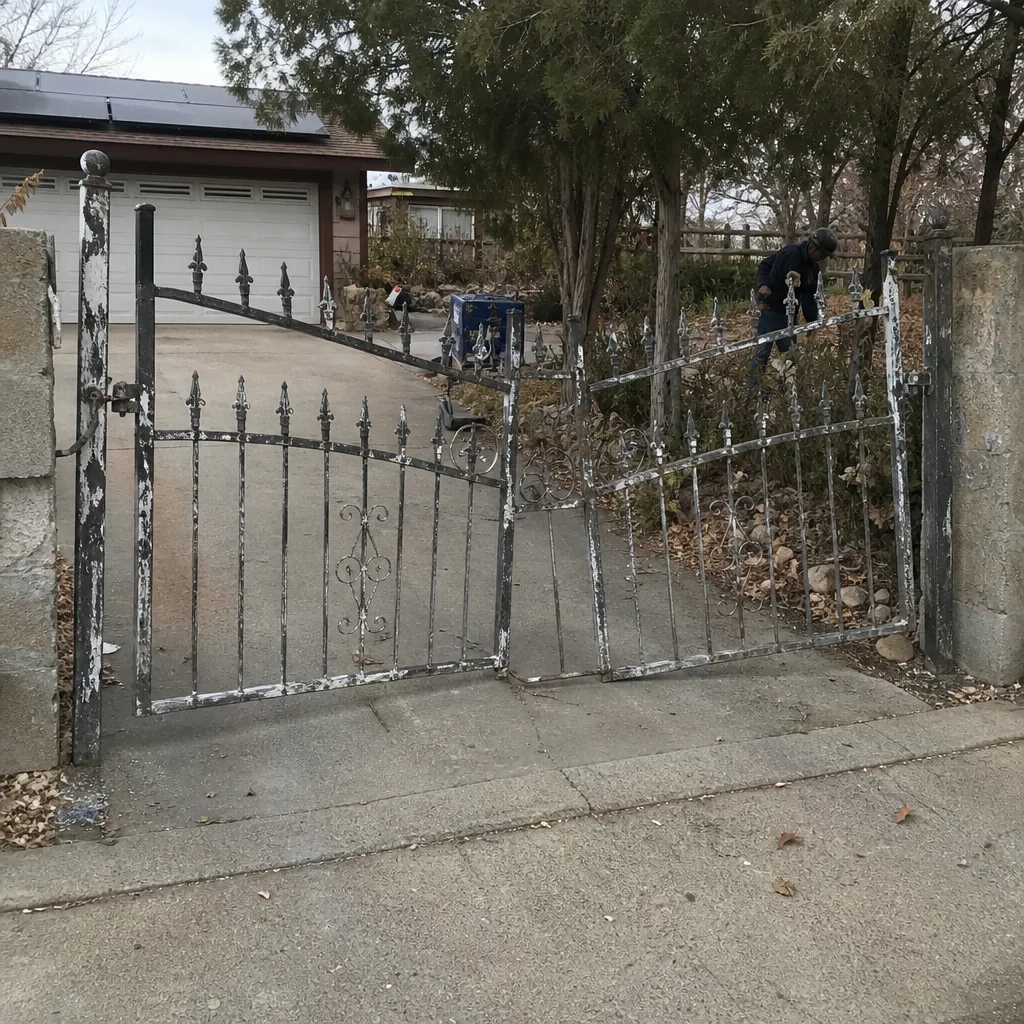 Before
 After
 Before
 After
 Before
 After
Frequently Asked Questions
Yes, a homeowner can legally install a gate opener themselves in Nevada as long as the electrical work is done to code and the installation meets UL 325 requirements. The liability question is what changes if something goes wrong: if a self-installed opener injures someone and the entrapment protection wasn’t to standard, the exposure sits with the homeowner. Call (888) 276-7609 for a free second opinion on any written estimate.
Yes. Adding remotes, programming keypad codes, and adjusting travel limits within the manufacturer’s range are normal homeowner tasks and don’t require a technician. Keep the manual. Replacing the backup battery is also a straightforward job. Call us if the programming isn’t sticking and you want a free estimate on diagnosis.
On most major brands, yes. LiftMaster, FAAC, and the other leading brands typically void the manufacturer warranty on units installed by anyone other than a certified technician, and the fine print is in the manual. Homeowners usually discover this after a failure, not before. Call (888) 276-7609 for a free estimate on a compliant install.
We won’t quote a range that isn’t real for your specific gate, because the cost depends on the operator, the gate type, and whether the electrical work is already in place. The right first step is a free estimate on the specific install, and Ironworks will give you a written upfront price before a single bolt is turned. Call (888) 276-7609.
It requires the operator to be paired with validated entrapment protection devices, correctly positioned and correctly tested, with the reverse function verified by physically obstructing the gate through its cycle. It also requires documentation of that test. A unit can cycle, the remote can work, and the install can still be non-compliant. Call (888) 276-7609 for a free second opinion on any existing install.
For emergency repairs (a gate stuck open, a gate that won’t close, a failed operator at an access-critical entry), call us and we’ll tell you straight on the phone what’s possible. Live person answers 24 hours a day, 7 days a week. New installs, gate motor replacement, and access control work are scheduled, not same-day, because they need measuring and the right parts ordered. Call (888) 276-7609.
The Bottom Line
The DIY vs. professional question for gate openers is usually framed around cost. The frame that actually matters is liability. A homeowner can legally install a gate opener in Nevada, but a self-install that doesn’t meet UL 325 entrapment protection standards puts the exposure on the homeowner, not the manufacturer. The mechanically competent homeowner can safely handle pre-wired mounting on an existing post, remote programming, battery swaps, and inspection. Anything involving 120V, new wiring, sensor placement on a fresh install, or work on an older gate needs a licensed technician. The manufacturer warranty on most major brands is typically voided by a non-certified install, which turns a $0 labor savings into a replacement-opener cost inside the first two years. In Boulder City, heat, wind, and an older gate stock tilt the call further toward professional. Done right, backed in writing, is the standard we hold to on every job.
Written by the team at Ironworks Gate Co. Boulder City.
If you’re ready for a free estimate on a gate opener install, a repair, or a second opinion on a written quote, call (888) 276-7609. Ironworks Gate Co. Boulder City offers upfront pricing before any work starts, a written 90-Day Done Right Promise, and a live person answering every call, 24 hours a day, 7 days a week. Standing offers include $50 off any repair over $250, a free second opinion on any written estimate, an $89 seasonal tune-up, and a permanent 5% senior and veteran discount.