
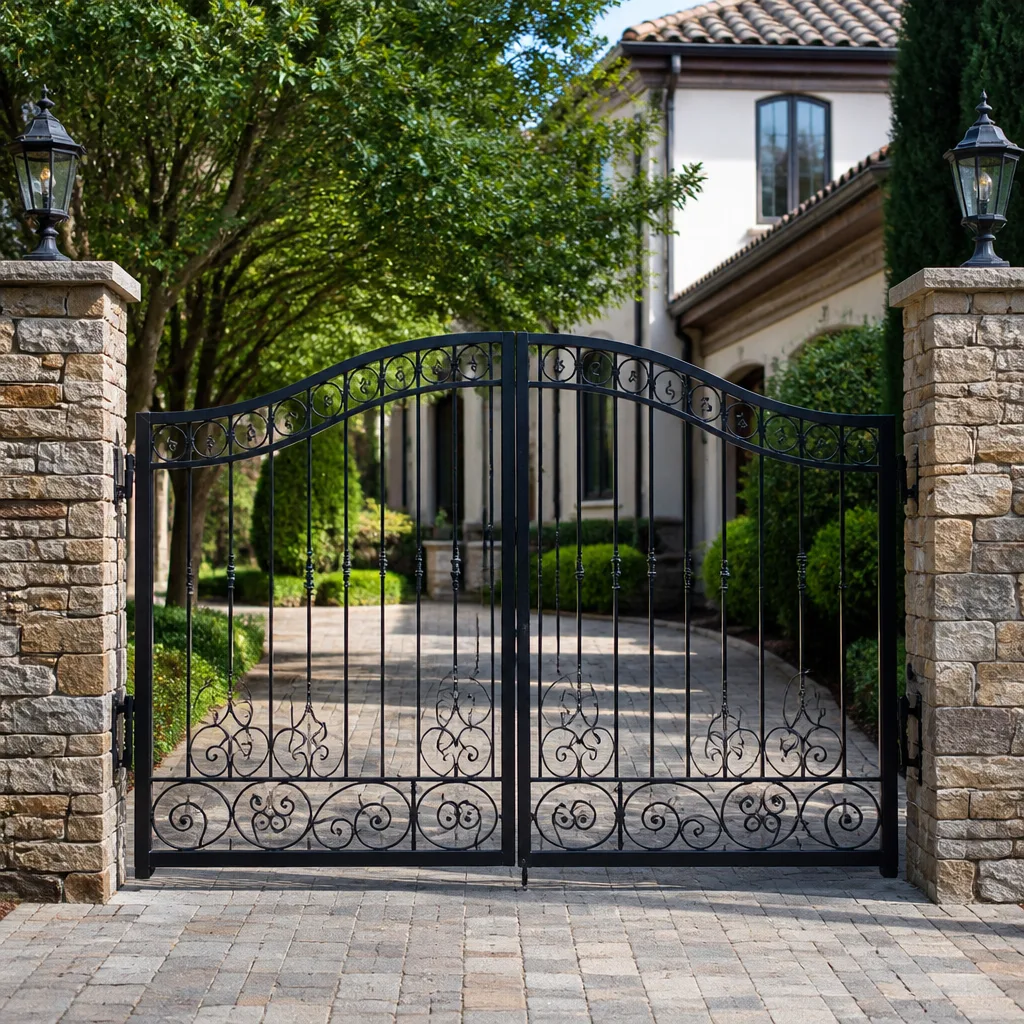
 Wrought iron
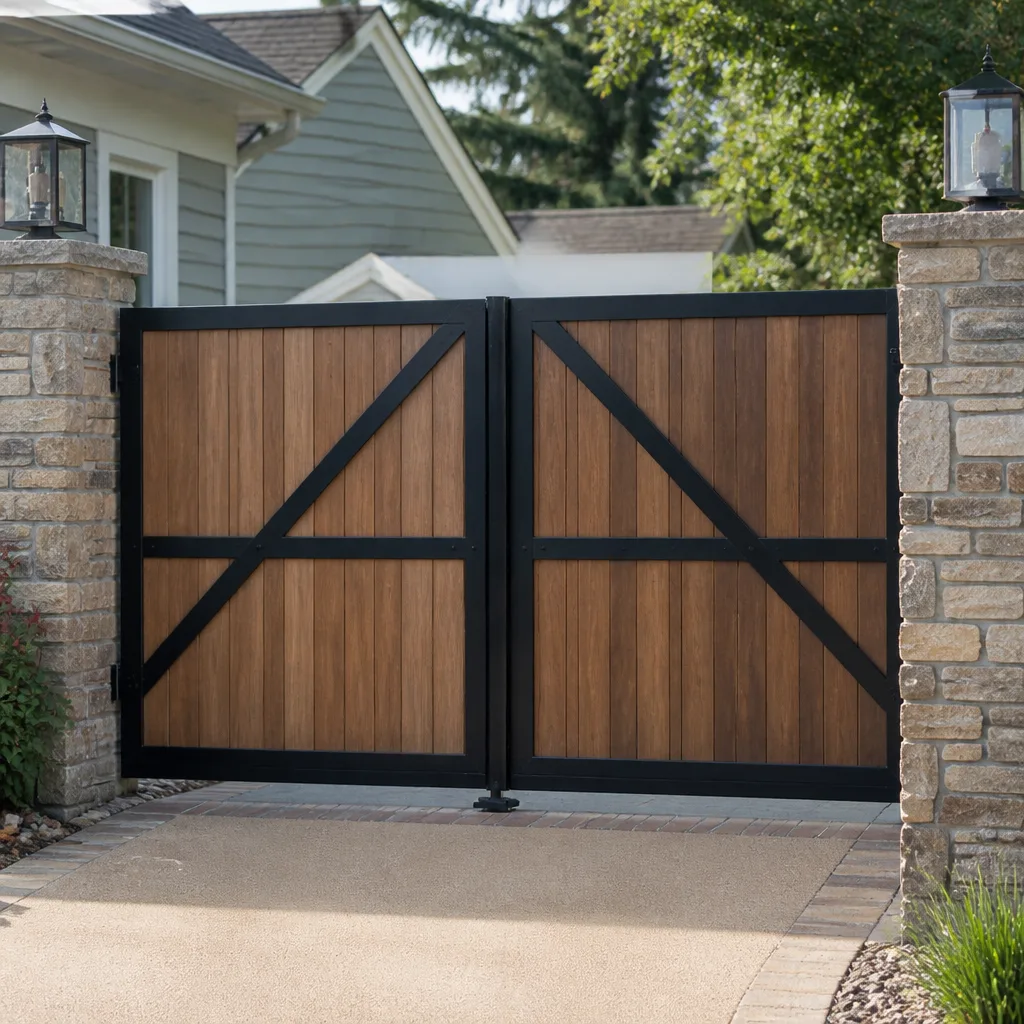 Wood & steel frame
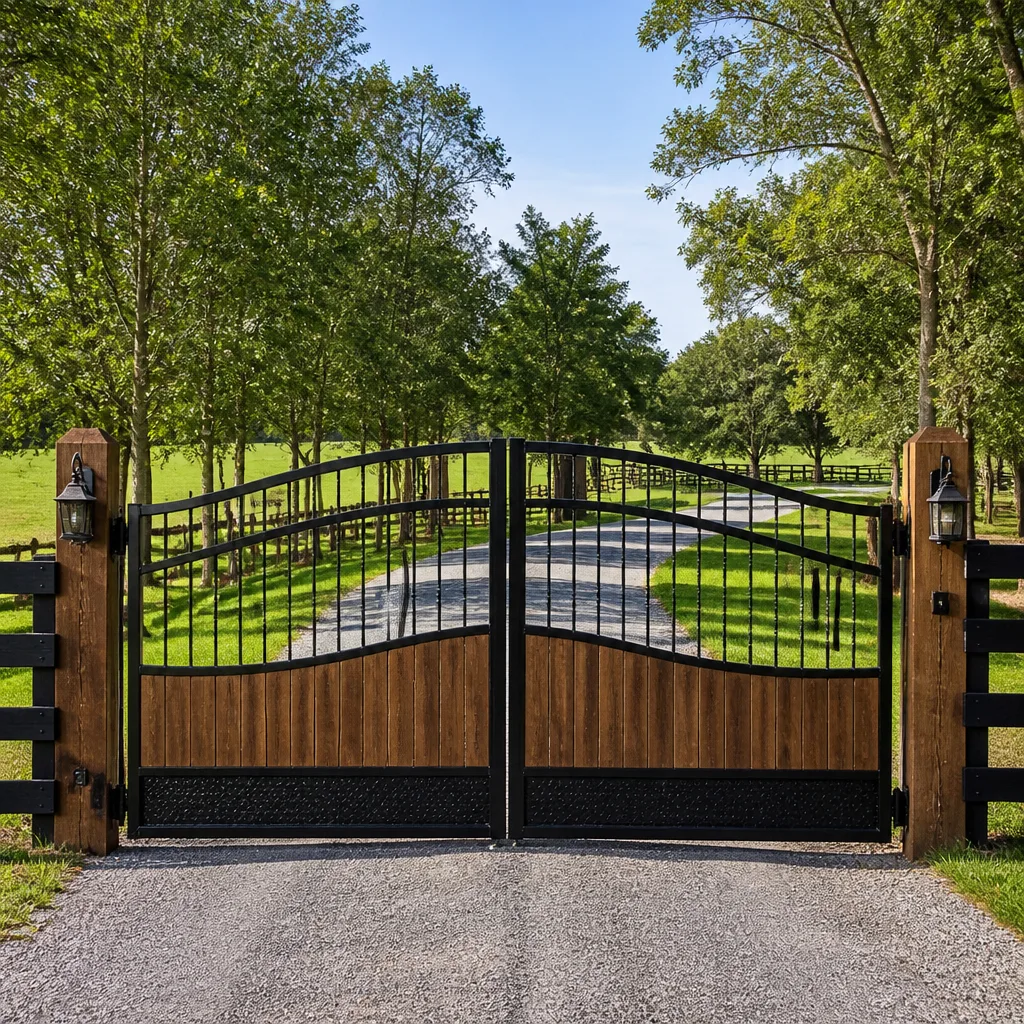 Farm & ranch
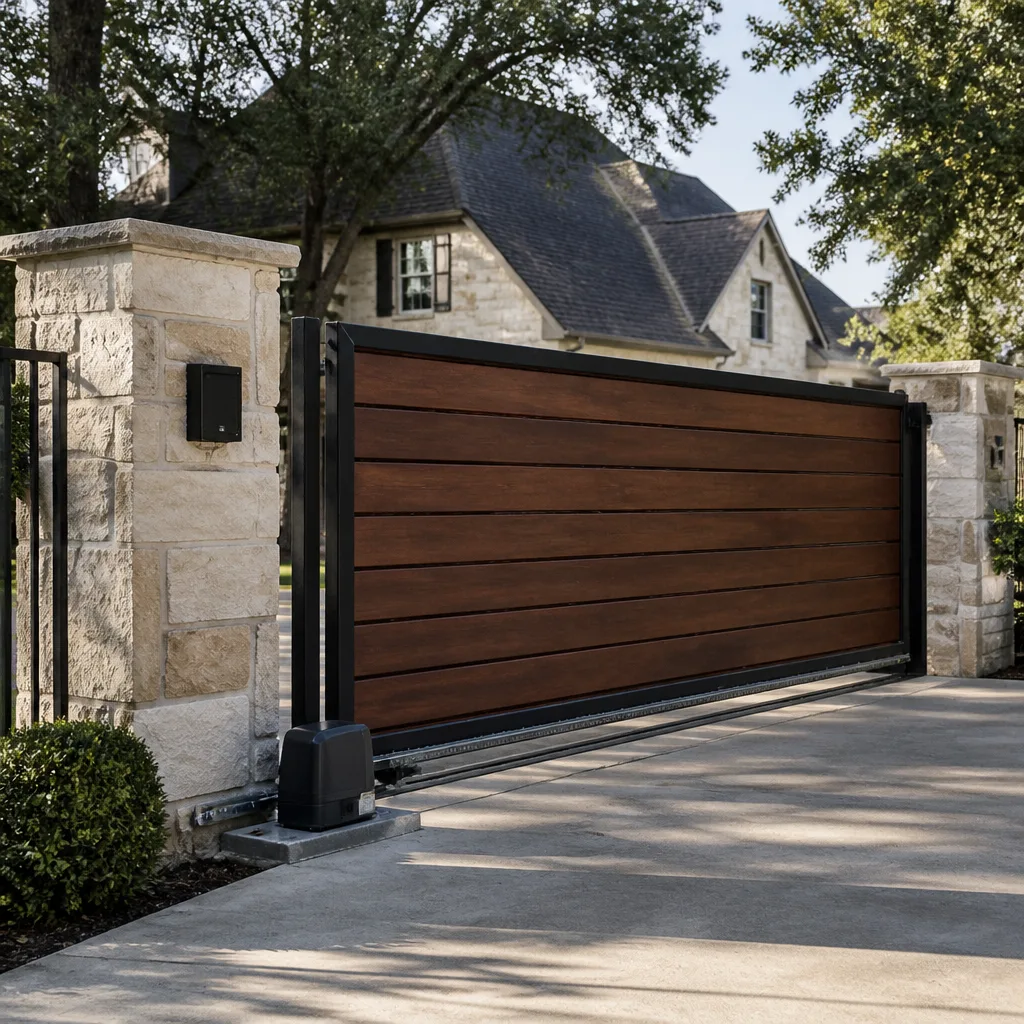 Sliding driveway gates
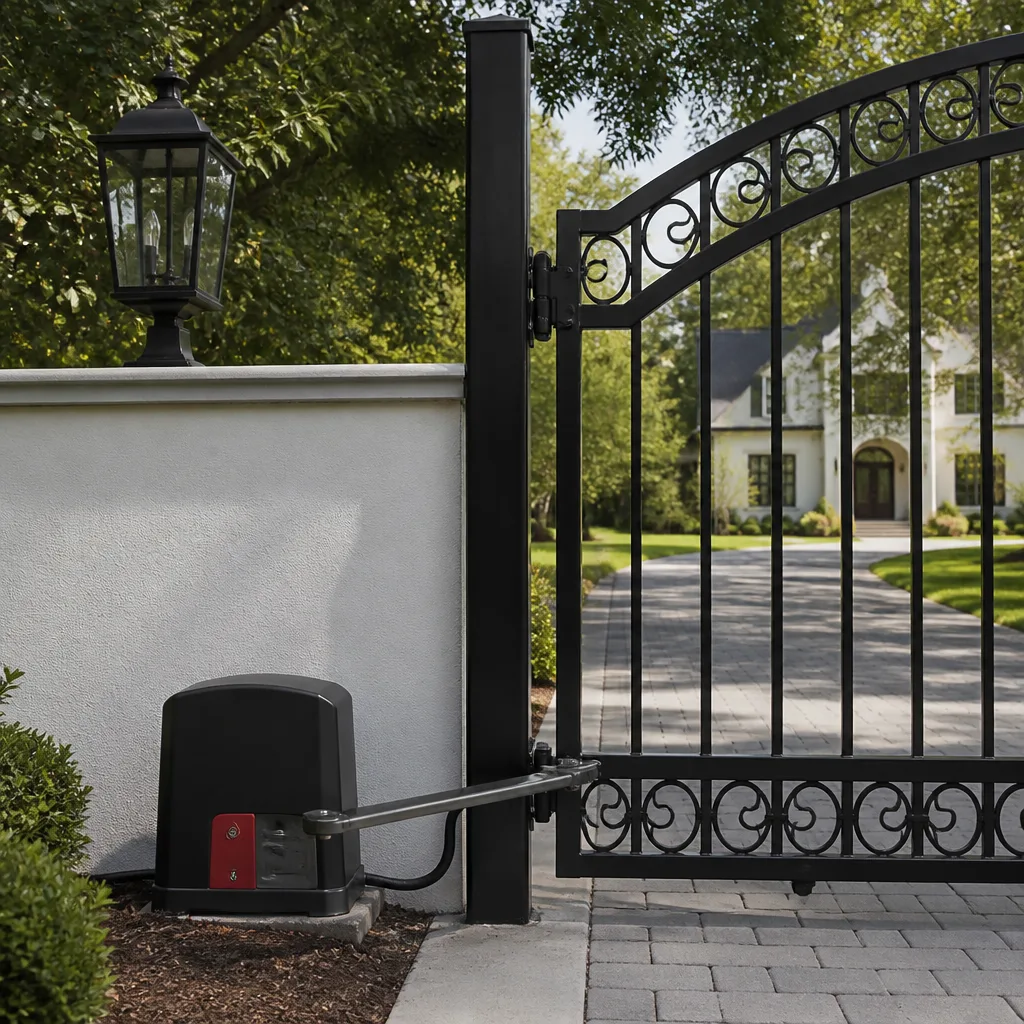 LiftMaster operators
Free on-site gate assessment - hinges, posts, and your LiftMaster or Nice gate operator checked before anything is quoted
The assessment is free and the quote is the invoice.
Get your free estimateStyles & brands we work with
- Wrought iron
- Wood & steel frame
- Farm & ranch
- Sliding driveway gates
- LiftMaster operators
See the difference
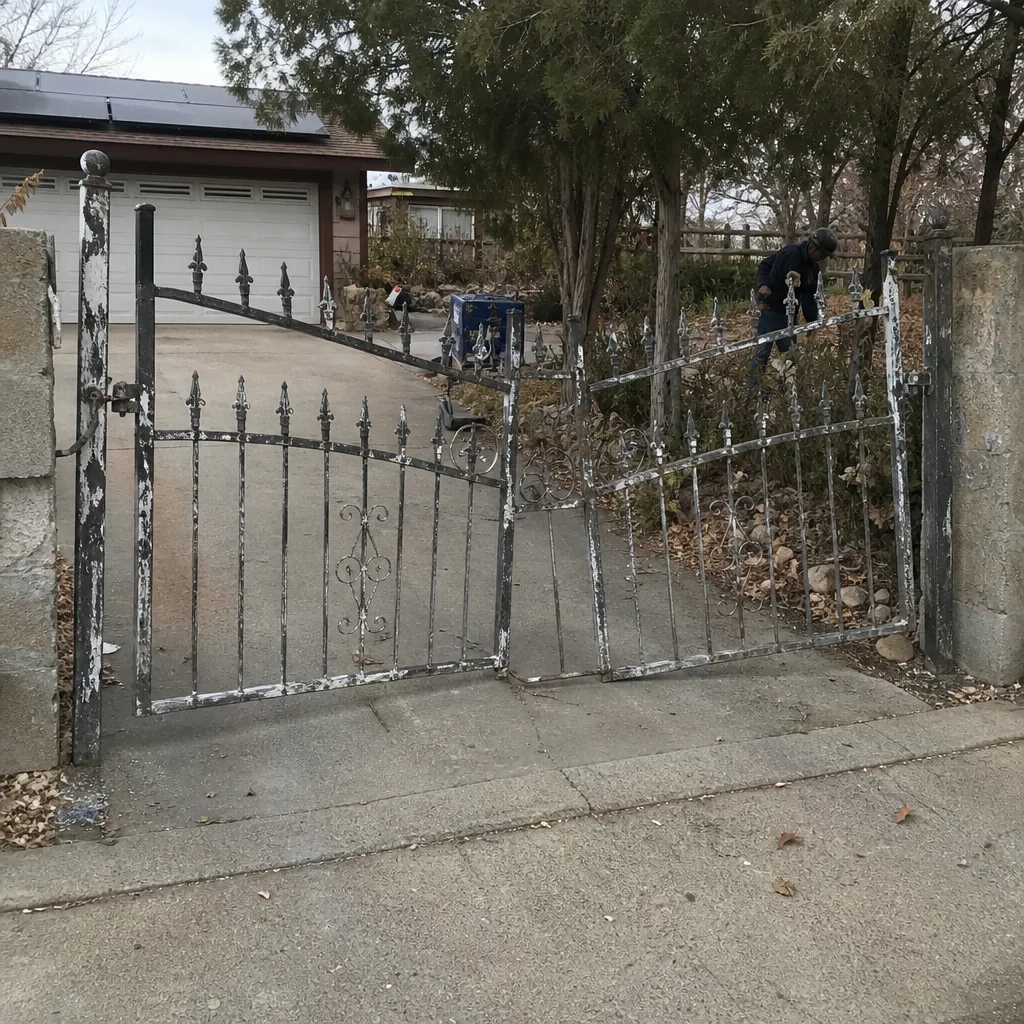 Before
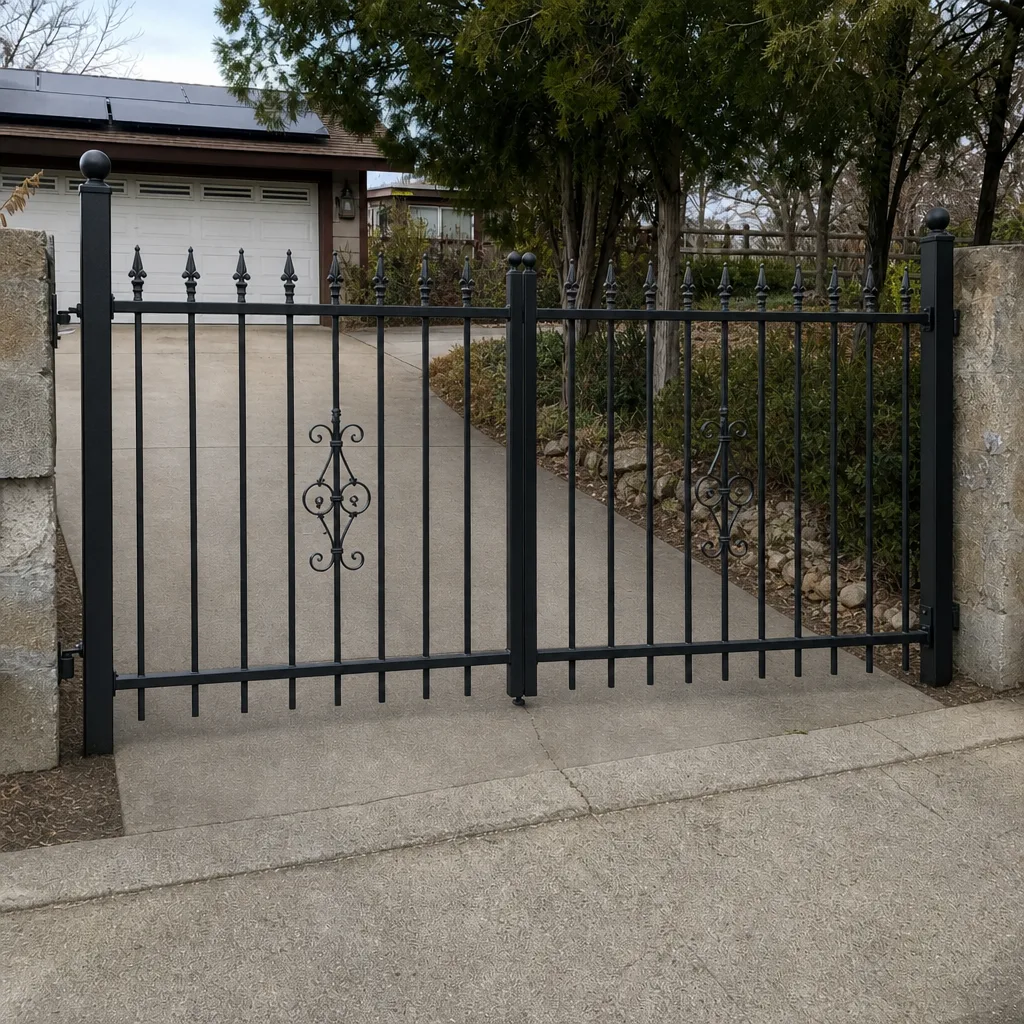 After
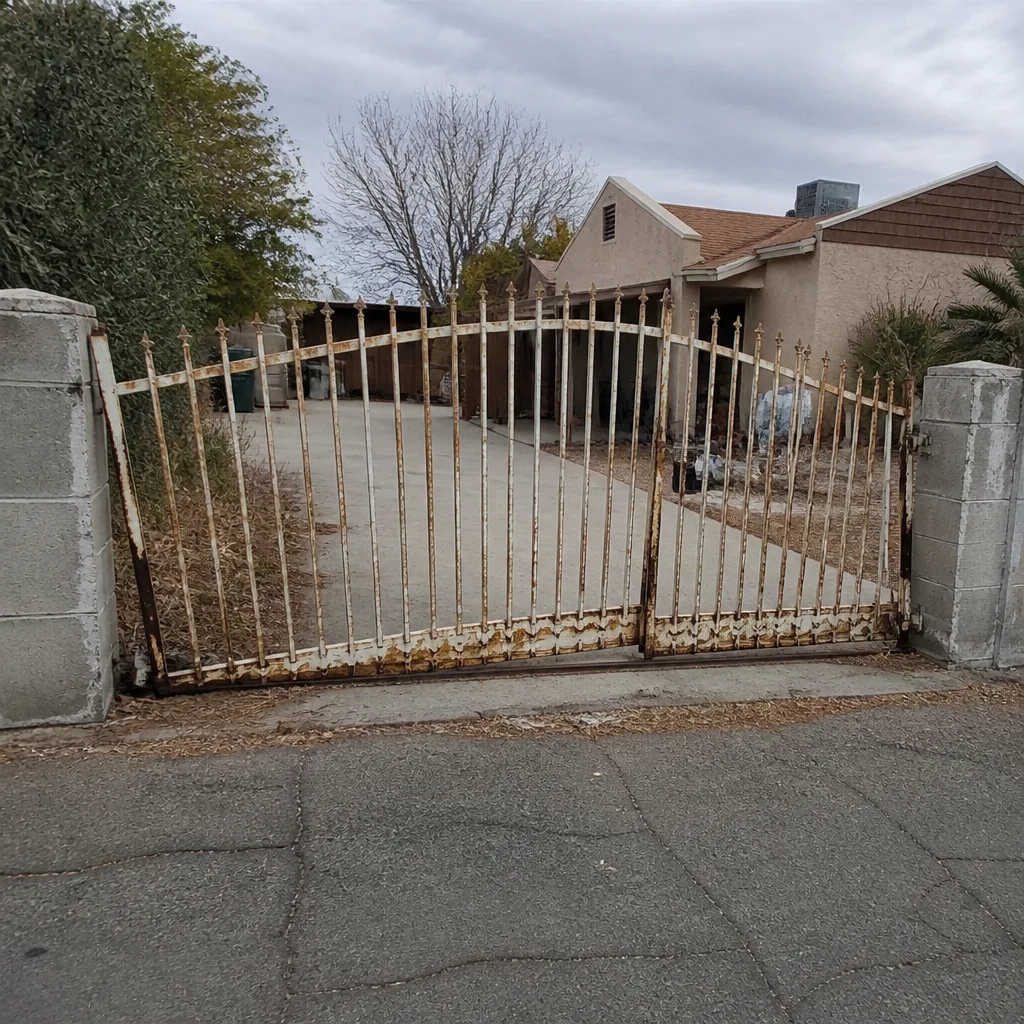 Before
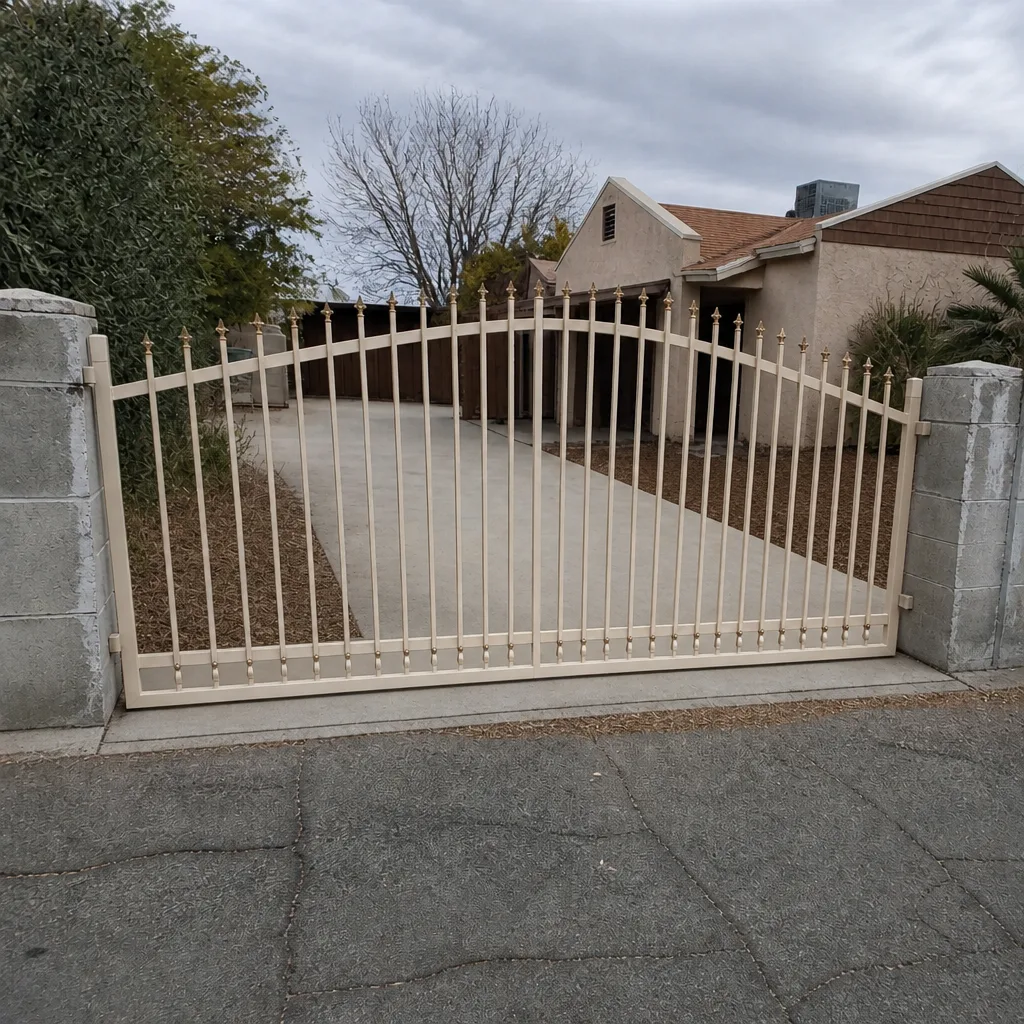 After
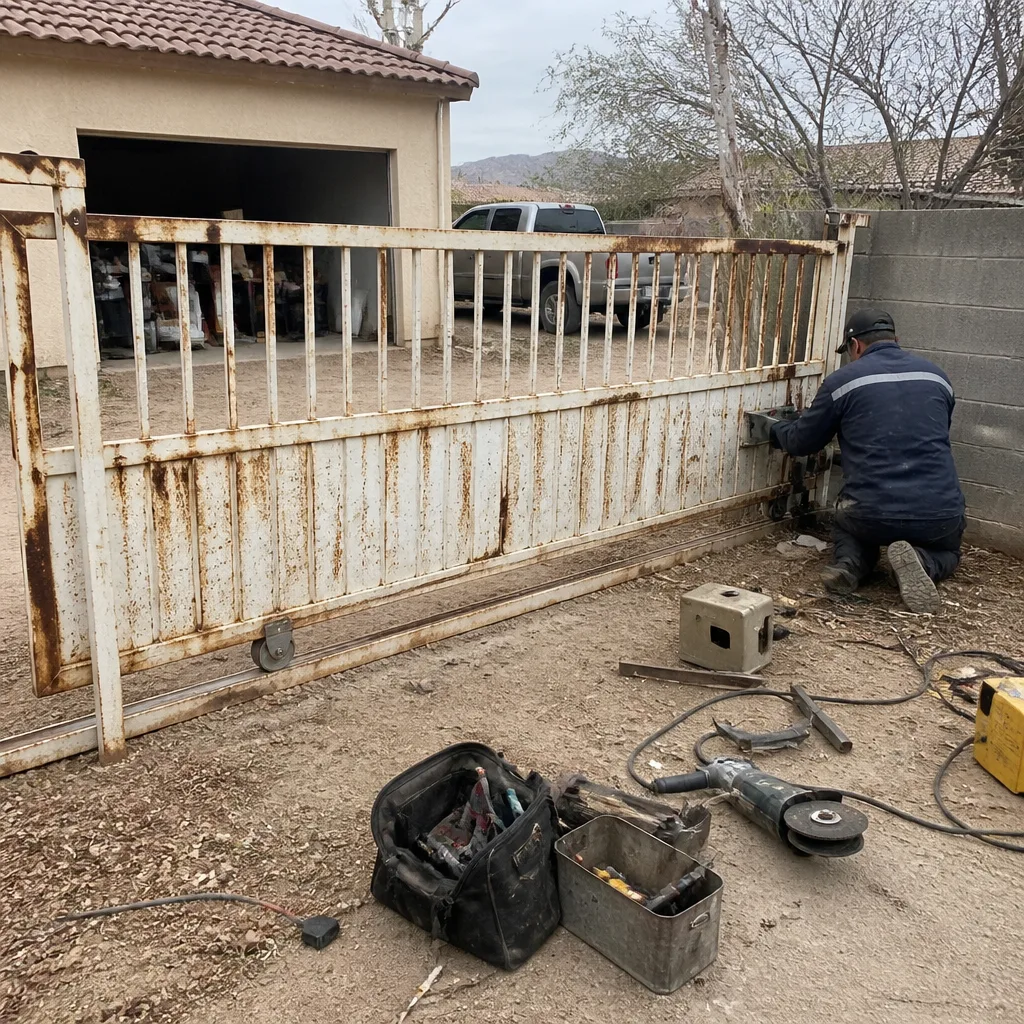 Before
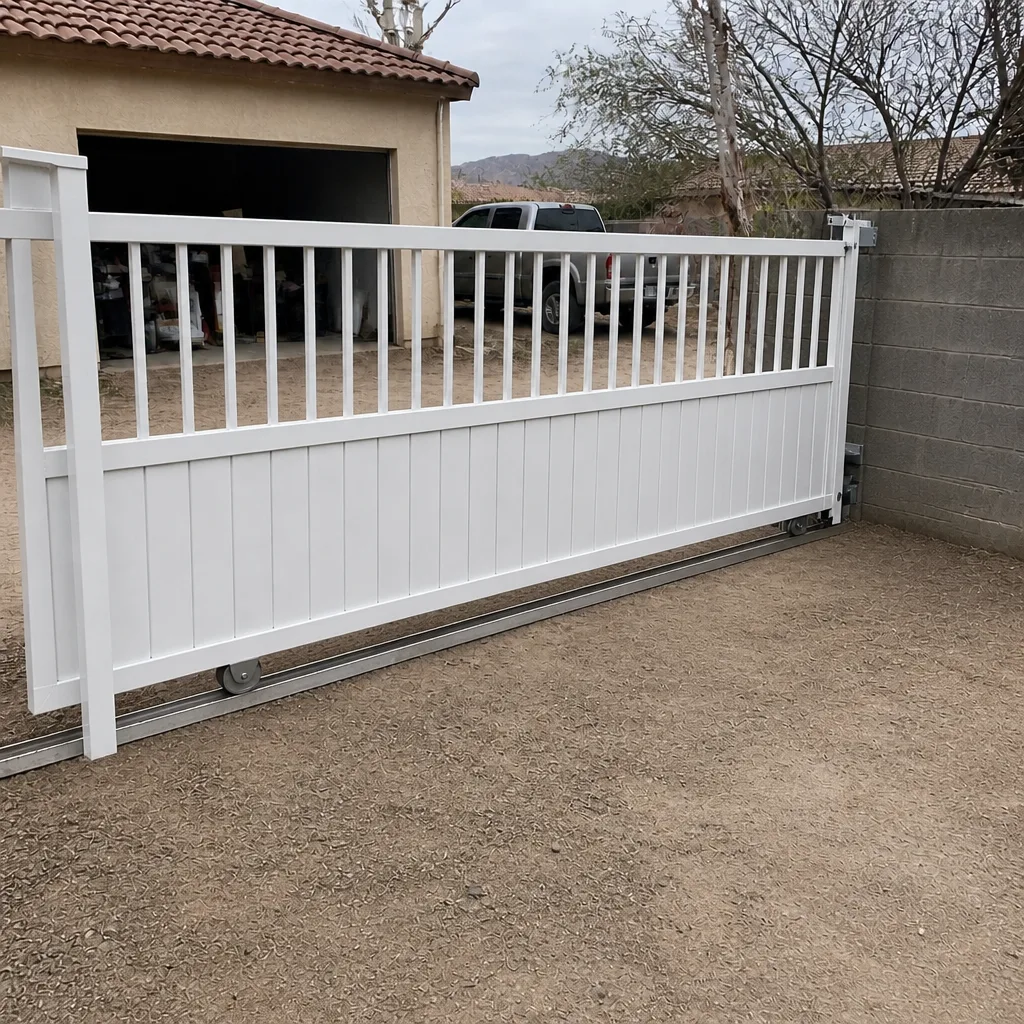 After
Why Won’t My Automatic Gate Open in Boulder City, NV?
In Boulder City, an automatic gate that won’t open is most often a mechanical problem, not an electrical one: 108°F summer afternoons expand the steel frame just enough to bind it against its stop or knock the obstruction sensor out of calibration, so the motor shuts down and looks dead. If your gate works fine before noon and refuses to budge between 1 and 4 p.m., suspect heat expansion before you suspect the motor. Tracking down the exact cause usually takes a trained eye, and that’s what we do. Call (888) 276-7609 and a live person will pick up, day or night.
Key Takeaways
- Heat is the first thing to rule out in Boulder City: steel and wood both move with temperature, and a gate that clears its stop by an eighth of an inch in the morning can have zero clearance by 3 p.m.
- Three non-thermal causes are worth checking before you call: power at the outlet, the control-board fault code, and anything sitting in the gate’s path.
- We’re trained on nine opener brands, so we read the fault code correctly on the first visit instead of swapping parts until something works.
- Every job comes with our written 90-Day Done Right Promise. If it isn’t right, we come back and make it right.
Why does heat make a gate stop opening in Boulder City?
Steel expands roughly 1/16 of an inch per 10 feet for every 50°F of temperature rise. That sounds like nothing until you picture a 16-foot driveway gate on a slider in the historic core: a gate that closes with a clean 1/8-inch gap at 8 a.m., when it’s 78°F, has essentially no gap left by 2 p.m. at 108°F. The frame grows, the gate pinches against its stop or its track, and the opener’s obstruction sensor reads the extra resistance as a blockage. The motor stops. The gate won’t open. And it will do it again the next hot afternoon, right on schedule.
That’s why the time of day matters so much. Ask yourself when the gate failed. If it fails in the middle of the afternoon and works the next morning, you’re looking at thermal expansion. If it fails at 6 a.m. in January, you’re not.
The four questions that narrow it down before anyone touches a wrench
We’ve walked hundreds of driveways in Boulder City, and this short sequence sorts the thermal cases from the electrical ones faster than any tool in the truck.
- What time of day does it fail? Afternoon-only failures point to expansion. Failures that happen at any hour, in any season, point to power, the control board, or a physical obstruction.
- What’s the temperature when it fails? Above 100°F is our expansion zone. Below 100°F, we look elsewhere first.
- Does the gate move at all, or is it completely locked? A gate that strains, hums, or moves an inch and stops is usually an obstruction sensor or a bind. A gate that does nothing is usually power or the motor itself.
- Does the manual release work? Pull the release and push the gate by hand. If it moves freely, the problem is in the automation. If it’s stiff by hand too, the problem is in the gate, and the opener is just reporting it.
Why wood gates in the historic core fail the same way
The 1930s bungalows built for Hoover Dam workers have a version of this problem that has nothing to do with steel. Wood moves across the grain and along it through a predictable seasonal cycle, and in Boulder City’s low humidity it dries hard and fast. A sun-dried panel shrinks across its width, the frame racks, and the gate starts binding against the latch or dragging on a hinge. Homeowners often assume the opener is failing, and sometimes the opener is fine. It’s the gate that has moved. Repairs here are part restoration, part code compliance, because historic-district and HOA rules mean we match original wood and iron rather than swap in modern vinyl or aluminum. Some of those gates still carry hand-forged iron hinges and latches that nobody makes anymore, and we fabricate replacements on-site rather than force modern hardware into a 90-year-old gate.
What to check before you call
Three things are worth a look, and none of them involve opening anything up.
- Power at the outlet. It sounds obvious, and it’s the cause more often than anyone likes to admit. A tripped breaker or a loose plug on a dusty exterior outlet will stop a gate cold.
- The control-board fault code. Most openers blink an LED in a pattern that names the fault. The catch is that the pattern means different things on different brands, and guessing is how people end up buying a motor they didn’t need.
- Anything in the gate’s travel path. Boulders don’t need to be big. A rock, a root that has crept into the track, a dropped branch, or a parked car that nudged the stop is enough.
If all three are clear and the gate still won’t open, the next step is a proper diagnostic. That’s where we come in. Our technicians have up to 13 years of experience, and because we’re certified on nine gate-automation brands, including LiftMaster, FAAC, BFT, and Mighty Mule, we know exactly what that blinking LED is saying before we start. The correct fix on the first visit is cheaper than the wrong fix twice. When you’re ready, you can reach us through our Gate Repair page, or simply call.
A square deal on the repair
Here’s what gate repair typically runs in Boulder City, so there are no surprises on the bill:
| Service | Typical Price Range | What It Covers |
|---|---|---|
| Diagnostic visit | $89-$150 | Fault-code read, full cycle test, written findings |
| Obstruction sensor recalibration | $120-$220 | Realigning sensor, adjusting travel limits |
| Stop or track adjustment (thermal bind) | $150-$300 | Re-setting clearance, adjusting hinges or track |
| Wood panel or hinge repair | $200-$450 | Reframing, hinge re-hang, or on-site fabrication |
| Control board or motor repair | $180-$340 | Board replacement or motor service, brand-specific |
These are ranges, not quotes. The number that matters is the one we give you before we start. Our current offers include $50 off any repair over $250, a free second opinion on any written estimate, and $89 seasonal tune-up, plus a standing 5% Senior and Veteran discount. Most jobs are done in a single visit. Every job carries the written 90-Day Done Right Promise, so if the gate fails again within 90 days, we come back and fix it. No paperwork, no arguing.
When to stop diagnosing and call someone
Gate openers combine high-tension mechanisms, live wiring, and moving steel that can weigh hundreds of pounds. If you find yourself reaching for a wrench near the motor or the operator arm, or wondering whether that exposed wire is live, that’s the moment to stop and call. It’s not worth your back or your hands. A background-checked, uniformed technician can be out and have a real answer for you, and a live person answers the phone 24 hours a day, seven days a week. No voicemail tree, no waiting until Monday.
If you’d like to know more about us first, our home page lays out how we work.
FAQs
The most common cause in Boulder City is heat-related thermal expansion of the steel frame binding against the gate’s stop, which trips the obstruction sensor and shuts the motor down. Three non-thermal causes are worth checking too: power at the outlet, the control-board fault code, and an obstruction in the gate’s travel path. If all three are clear, call (888) 276-7609 for a diagnostic.
Yes. Steel expands about 1/16 of an inch per 10 feet for every 50°F of temperature rise, so a gate with clean clearance in the morning can have no clearance at all by midafternoon in July. The opener reads the bind as a blockage and refuses to open. A simple adjustment usually fixes it for a fraction of what a motor replacement would cost. Call for a free estimate and we’ll tell you straight.
A morning-versus-afternoon pattern is a heat expansion signature, not an electrical fault. The gate and its frame move with temperature, and the highest heat of the day is when clearances shrink to zero. We see this constantly on Boulder City driveways between noon and 4 p.m. in summer. Call (888) 276-7609 and we’ll get it diagnosed and adjusted.
Repair is almost always cheaper when the cause is mechanical, and in Boulder City it usually is. A sensor recalibration or stop adjustment runs $120 to $300, while an unnecessary motor replacement can cost several times that. That’s why we read the fault code first instead of guessing. Call for a free second opinion on any estimate you’ve already received.
If you’d rather have it looked at, Ironworks Gate Co. Boulder City offers a no-pressure assessment in Boulder City, with upfront pricing settled before any work begins and a live person ready to take your call. Reach us at (888) 276-7609 for a free estimate and we’ll get your gate opening again.
Written by the team at Ironworks Gate Co. Boulder City, serving Boulder City, NV.