
Last updated November 17, 2026
 Wrought iron
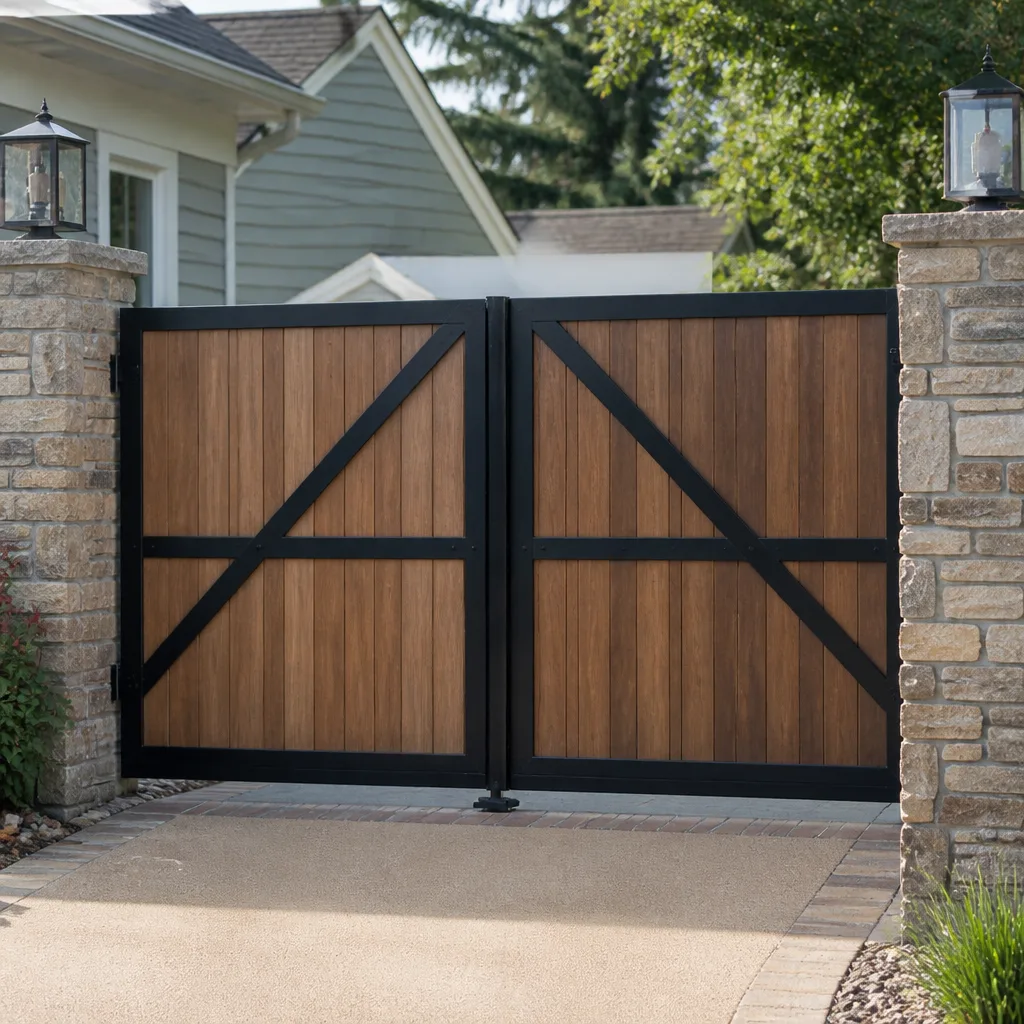 Wood & steel frame
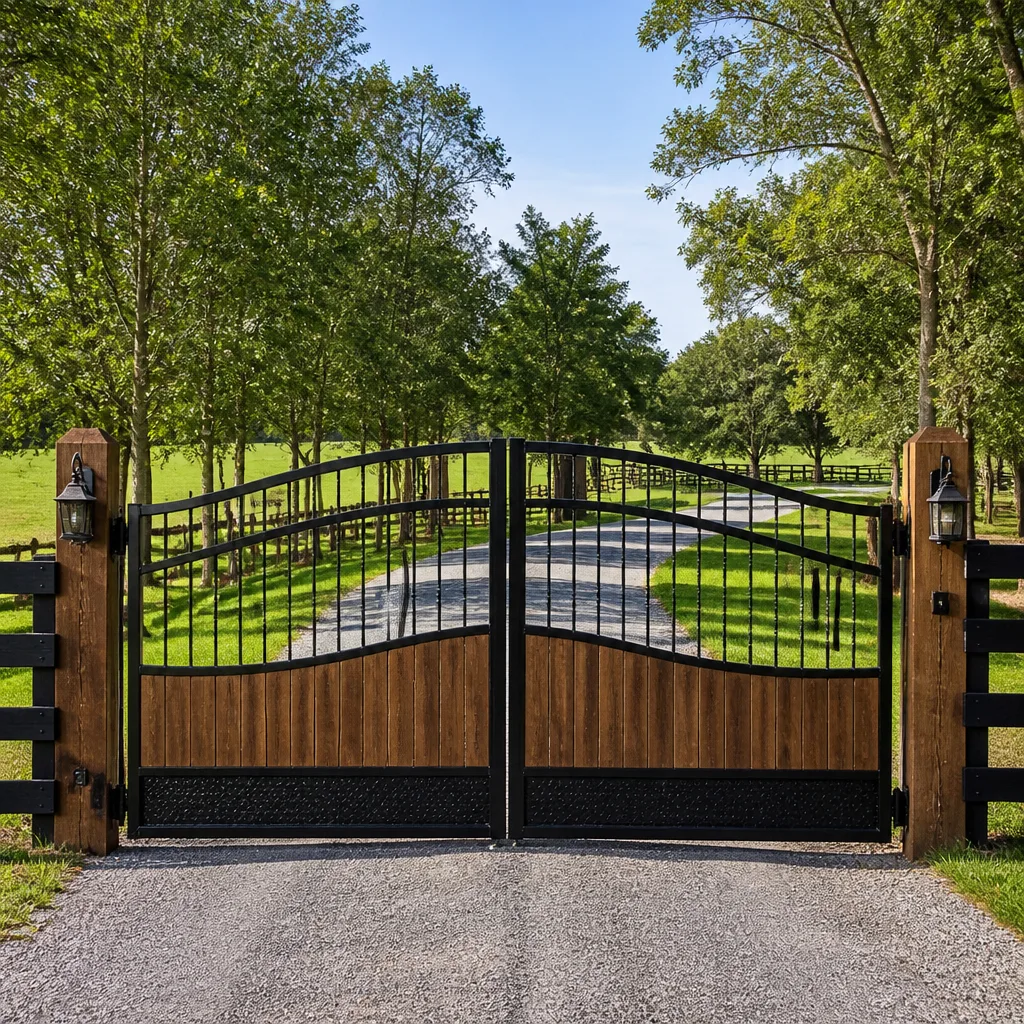 Farm & ranch
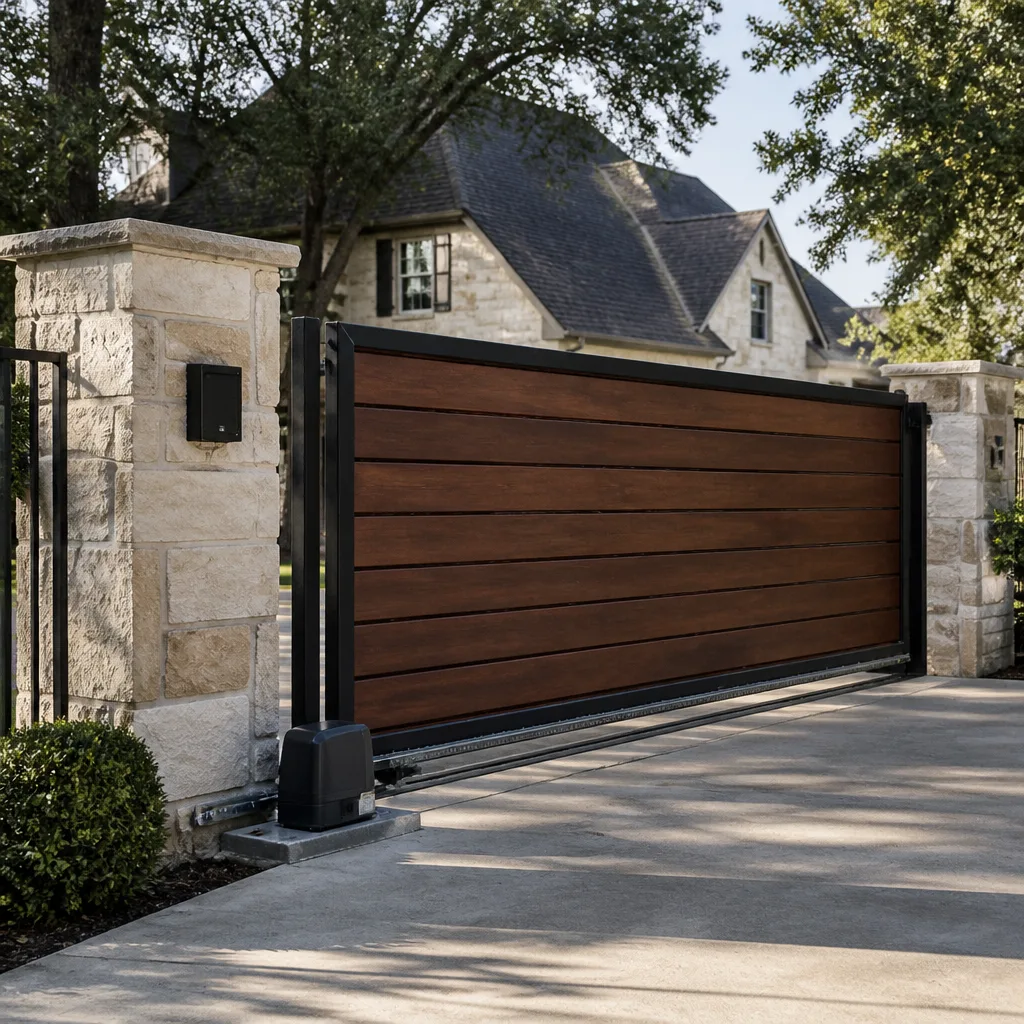 Sliding driveway gates
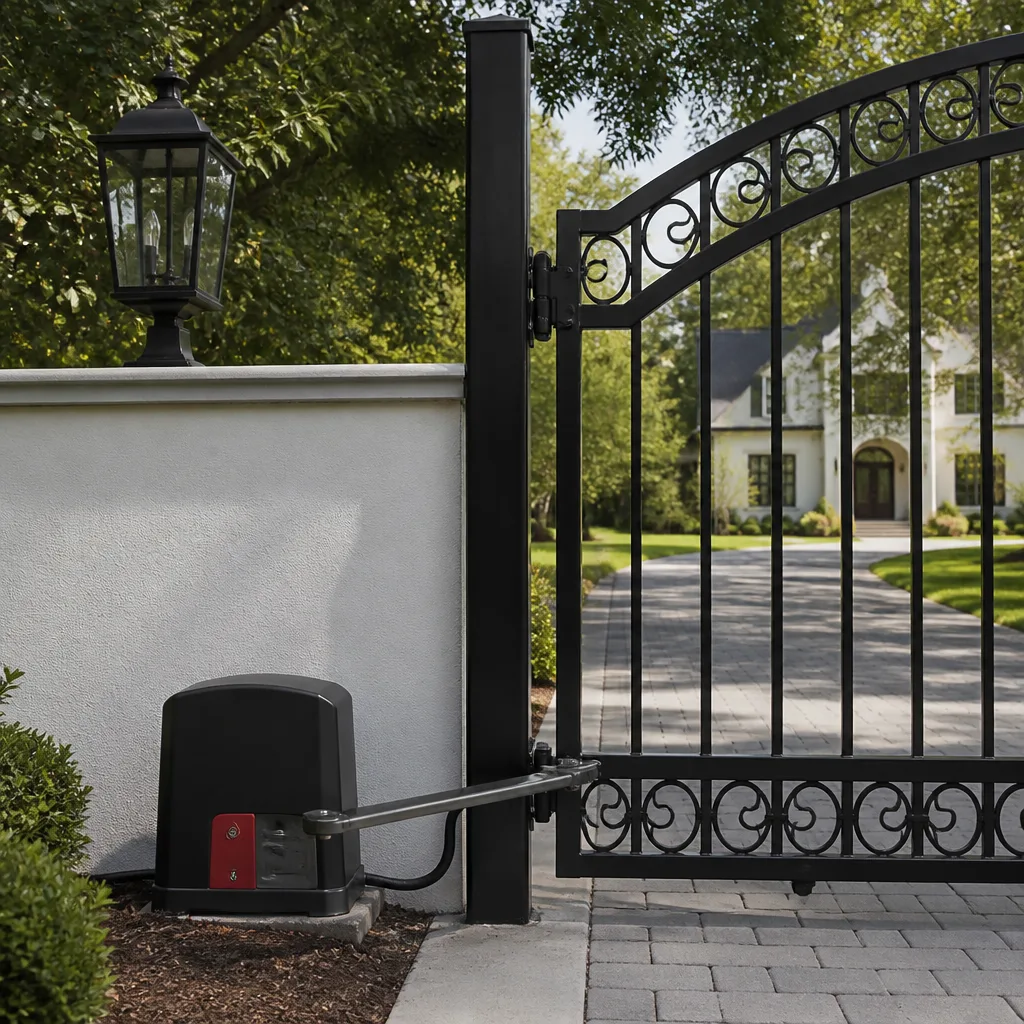 LiftMaster operators
Free on-site gate assessment - hinges, posts, and your LiftMaster or Nice gate operator checked before anything is quoted
The assessment is free and the quote is the invoice.
Get your free estimateHow Long Does Gate Motor & Opener Take? Timelines and What to Expect
Here’s the number that surprises most homeowners: a straight swap of an existing opener for the same model on a gate that’s already wired and mechanically sound takes about two hours. An opener installation on a gate that was never set up for automation runs closer to six. The gap between those two figures isn’t the motor, the brand, or the technician’s speed. It’s everything that wasn’t scoped before the truck pulled up. We’ve seen gates left half-finished at 5 PM because a conduit run was assumed and never confirmed. This guide breaks down the real timelines by scenario, explains what “site readiness” actually means in practice, and shows Boulder City homeowners how to avoid the surprises that stretch a two-hour job into a two-day one.
Quick Answer
A gate motor and opener installation typically takes 2 to 3 hours as a like-for-like replacement on a prepared gate, 4 to 6 hours as a retrofit on an existing manual gate, and a full day or more for a new installation on a newly built gate. Add 45 minutes for programming and safety testing, and budget extra scheduling time if your Boulder City jurisdiction requires an inspection for automated gates. The single biggest factor is site readiness: conduit, power, and a square gate.
Styles & brands we work with
- Wrought iron
- Wood & steel frame
- Farm & ranch
- Sliding driveway gates
- LiftMaster operators
Table of Contents
- The Three Scenarios: Which Job Are You Actually Booking?
- What “Site Readiness” Means in Practice
- The Power Run: Where Hours Disappear
- Programming and Testing: The 45 Minutes Nobody Budgets
- The Inspection Step and Clark County Scheduling
- Multi-Gate Properties: Why It’s Not Simple Addition
- Boulder City Factors That Affect Your Timeline
- How to Prepare Before the Technician Arrives
The Three Scenarios: Which Job Are You Actually Booking?
Almost every timeline question comes down to which of three jobs you’re actually scheduling. They sound similar on the phone. They are not similar in labor.
1. Replacement on an existing wired gate. The old opener comes off, a new one goes on, and the existing conduit, outlet, and control wiring are reused. This is the two-hour job. If the failed unit is a LiftMaster that’s being replaced with another LiftMaster, mounting points and programming often carry over with minimal modification.
2. Retrofit on an existing manual gate. The gate swings, but nothing was ever installed to move it. This is the four-to-six-hour job. The gate has to be checked for square, hinges inspected for wear, and a mounting point established for the operator arm. Then the power and control runs begin.
3. New installation on a new gate. Nothing exists yet. The gate, posts, and operator are all being set. This is a full day or more, and it overlaps with the gate installation itself. Our Gate Installation in Winchester guide covers how that scope is sequenced when the gate and the motor are coordinated together.
In Boulder City, the retrofit is the most common scenario we see. Many properties here were built decades before automation was standard, and the gate has been opened by hand for years. Knowing which category you’re in before you call is the difference between a two-hour quote and a six-hour one.
What “Site Readiness” Means in Practice
Site readiness is the tradesman’s shorthand for three things: is there power within reach, is there a path to run the wire, and is the gate mechanically sound? When all three are true, the job flies. When any one is false, the clock starts eating hours.
- Conduit already run: The wire path from the power source to the operator is in place. Saves 1 to 3 hours. If it isn’t, the technician is trenching, drilling, or surface-mounting, and that is a different job than the one quoted.
- 120V outlet within reach: “Within reach” usually means within about 10 feet of the operator, depending on the model. Saves 2 to 4 hours when it’s there, because the alternative is running a new circuit from the panel.
- Gate mechanically square: The gate hangs true, swings freely, and the hinges aren’t sagging. Saves 1 to 2 hours and, more importantly, saves the motor from fighting a gate it was never meant to move.
When a Boulder City gate is out of square or the hinges are worn, the operator installation can’t proceed until the mechanical issues are corrected. We’ve seen this add a full return visit to a job that was quoted as a single afternoon. That’s why our Gate Repair in Winchester work is often scheduled alongside automation jobs, not after them.
The honest move is to have someone look at the gate before the install day, not on it. That’s what scoping is for.
The Power Run: Where Hours Disappear
Ask any installer what kills a timeline and the answer isn’t the motor. It’s the wire.
A dedicated 120V circuit to the gate location is the single biggest variable in the entire job. When it exists and is functioning, the work is straightforward. When it doesn’t, the technician has to determine where the circuit will come from, whether the panel can support it, and how the wire will physically travel from that point to the gate. That last question is the one that can turn a morning into a week.
- Confirm the circuit exists. Locate the panel, confirm there’s a spare breaker, and verify the run is dedicated, not shared with an outdoor light or sprinkler pump.
- Plan the wire path. Direct burial, conduit, or overhead? Each takes different time. Direct burial in Boulder City’s desert soil is not the same as direct burial in soft loam.
- Account for the terrain. A path that crosses a concrete patio, a retaining wall, or mature landscaping adds hours. A path along a fence line usually doesn’t.
- Schedule the electrical work separately if needed. When the circuit doesn’t exist, the electrical run may be a separate trade and a separate appointment. That’s normal, and it’s better to know before install day.
This is the step most timelines omit because it’s the least glamorous. It’s also the one that most often makes a “two-hour job” run all day.
Programming and Testing: The 45 Minutes Nobody Budgets
Once the motor is mounted and powered, the job isn’t done. The programming and testing phase typically adds 40 to 45 minutes, sometimes more on smart openers, and it should never be compressed. This is where the gate becomes safe and usable.
- Entrapment testing: The operator must reverse or stop when it meets an obstruction. This is a safety function, not a convenience feature, and it takes real time to verify across the full swing or slide path.
- Remote enrollment: Each remote or keypad has to be paired to the operator. Two remotes take less time than six.
- Limit setting: The open and close limits have to be dialed in precisely. On a DoorKing or Elite operator this is quick. On some sliding models it’s fiddly.
- App pairing on smart openers: If you want phone control, this is where it happens. Wi-Fi signal at the gate matters, and a weak signal at the far end of a Boulder City property can eat extra minutes.
- Walk-through: The technician shows you how to use the manual release, what to do if power fails, and how the controls work. This is the last 5 minutes and the most important 5 minutes.
Our Gate Motor & Opener in Winchester work builds this testing phase into every quote. A gate that opens but doesn’t reverse on obstruction is not a finished gate.
One safety note worth saying plainly: gate operators are powerful machines that can cause serious injury if adjusted wrong. Entrapment protection, safety edges, and photo eyes are not optional. This is not a step to shortcut or handle yourself.
The Inspection Step and Clark County Scheduling
Some automated gate installations require an inspection by the local jurisdiction. This step isn’t the installer’s fault, and it’s not the installer’s call. It’s the jurisdiction’s, and it adds calendar time to your project even when the work itself is done.
In practice, this means the timeline for a permitting-required job includes a gap between “installation complete” and “inspection passed.” That gap might be a few days or a couple of weeks depending on the jurisdiction and the inspector’s schedule. Nailing down what Boulder City and the broader Clark County area require for your specific gate is part of a proper scope conversation. It’s a question worth asking before install day, not after.
Homeowners who plan around the inspection step are never surprised by it. Homeowners who don’t are the ones calling on a Friday wondering why the gate can’t be used yet.
Multi-Gate Properties: Why It’s Not Simple Addition
If you have two gates, the time isn’t double. It’s more complicated than that, and the complexity runs both directions.
Two gates on one property often share a power source and control wiring, which can make the second gate faster than a stand-alone install because the infrastructure is already in place. That’s the good news. The bad news is that integrated systems need coordination: the shared controller, the access points, the keypads, and any intercom or entry system all have to be programmed to work together. On a Boulder City estate property with a main driveway gate and a secondary pedestrian or service gate, this integration piece can add 1 to 2 hours on top of the second gate’s own installation time.
The pattern we see: two gates that use a single operator and a shared control setup run about 1.3 to 1.6 times the single-gate time, not double. Two fully independent gates with independent operators and independent power runs run closer to the simple sum. The difference is integration overhead, and it’s a conversation to have while scoping, not while installing.
Boulder City Factors That Affect Your Timeline
The timeline isn’t just about the gate. Local conditions matter, and Boulder City has a few of its own.
- Desert heat: Summer installation work on a sun-exposed gate is slower, and it should be. Technicians pace the work, and that’s the right call.
- Dust and grit: Seasonal wind and dust accelerate wear on hinges, rollers, and operator components. On an older gate, this often means a mechanical correction gets added to what started as an automation job. Our gate motor & opener service and our Ironworks Gate Co. Boulder City home base page both speak to how we sequence that correction.
- Older properties: Many Boulder City gates were hung before automation was standard. Older posts and footer conditions sometimes require repair before a motor can be mounted.
- Terrain: Sloping driveways and long runs from the house to the gate affect the power run duration more than they affect the operator installation itself.
None of these is a deal-breaker. All of them affect the calendar, and knowing which apply to your property helps you read a quote accurately.
How to Prepare Before the Technician Arrives
A little information on your end can shorten the visit. Here’s what actually helps.
- Identify the existing operator. Note the brand and model, or take a photo of the data plate. If it’s a LiftMaster, Mighty Mule, DoorKing, or Elite, telling us in advance helps us confirm the correct replacement on the first visit.
- Locate the electrical panel and any gate-related breakers. Know where the panel is and whether there’s a dedicated circuit to the gate area.
- Test the gate by hand. Open and close it manually and note whether it swings freely, sticks, or drags. That single observation tells us whether we’re looking at a pure automation job or an automation-plus-repair job.
- Count your remotes, keypads, and access points. Programming time scales with the number of devices that need to be paired.
- Clear access to the gate and the panel. Vehicles, stored materials, and landscaping that block access add time.
- Ask about permitting up front. Confirm whether the installation requires inspection in your jurisdiction before install day.
Common Mistakes to Avoid
- Assuming “two-hour job” without a site check. A quote given sight-unseen is a best guess. A quote given after a site walk is a plan. Confirm what was scoped.
- Not confirming the power circuit. The single biggest source of timeline overruns. Ask before install day whether the circuit exists and is dedicated.
- Booking a same-day install on a gate that hasn’t been checked for square. A gate out of square adds hours and, worse, adds wear to a brand-new operator.
- Skipping the entrapment testing walk-through. This is a safety function. If the technician doesn’t test it and show you, ask them to.
- Forgetting the inspection scheduling window. On permitted jobs in the Boulder City and Clark County area, the inspection step adds calendar time. Plan for it.
- Buying the motor before the gate is assessed. A heavy or out-of-square gate may need a different operator, and a mismatched machine is a half-finished job every time.
- Assuming multi-gate properties are simple addition. Shared wiring and integration complicate the timeline in ways a simple per-gate figure won’t capture.
See the difference
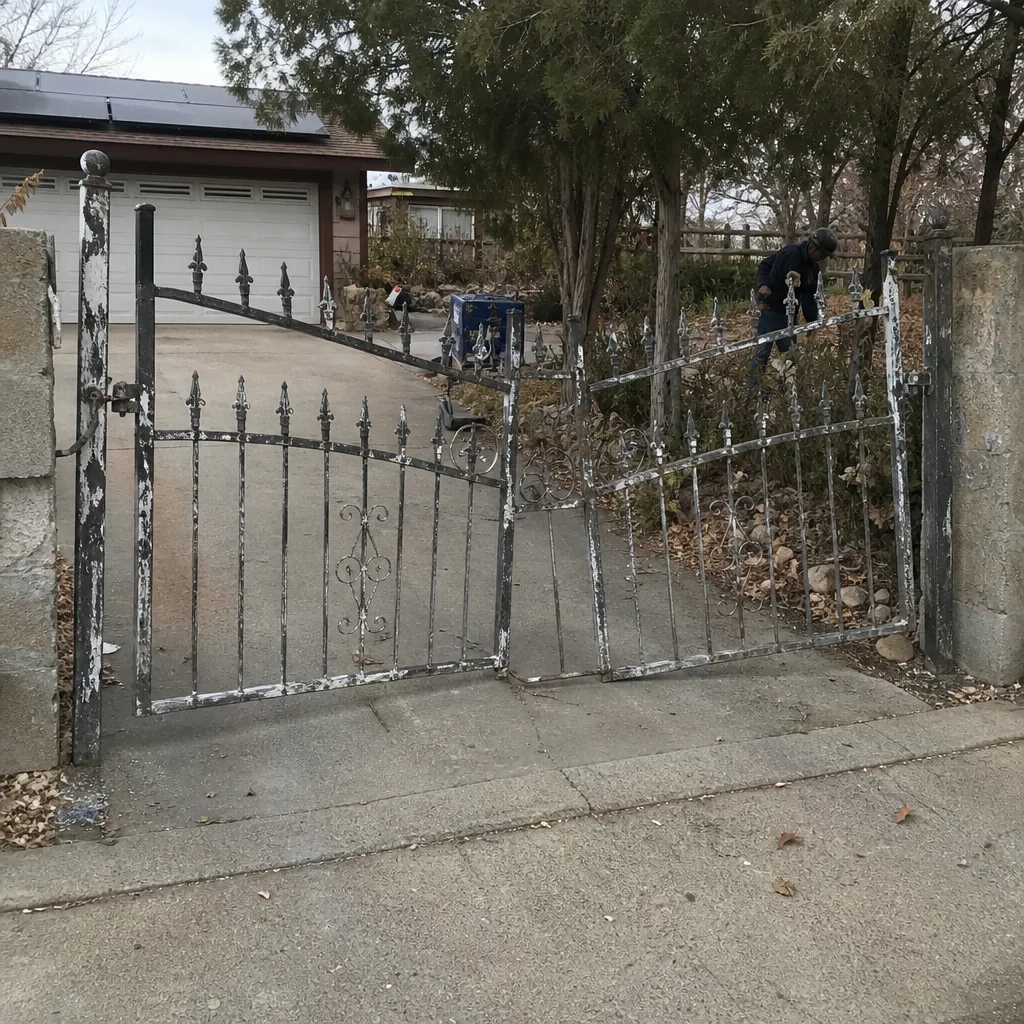 Before
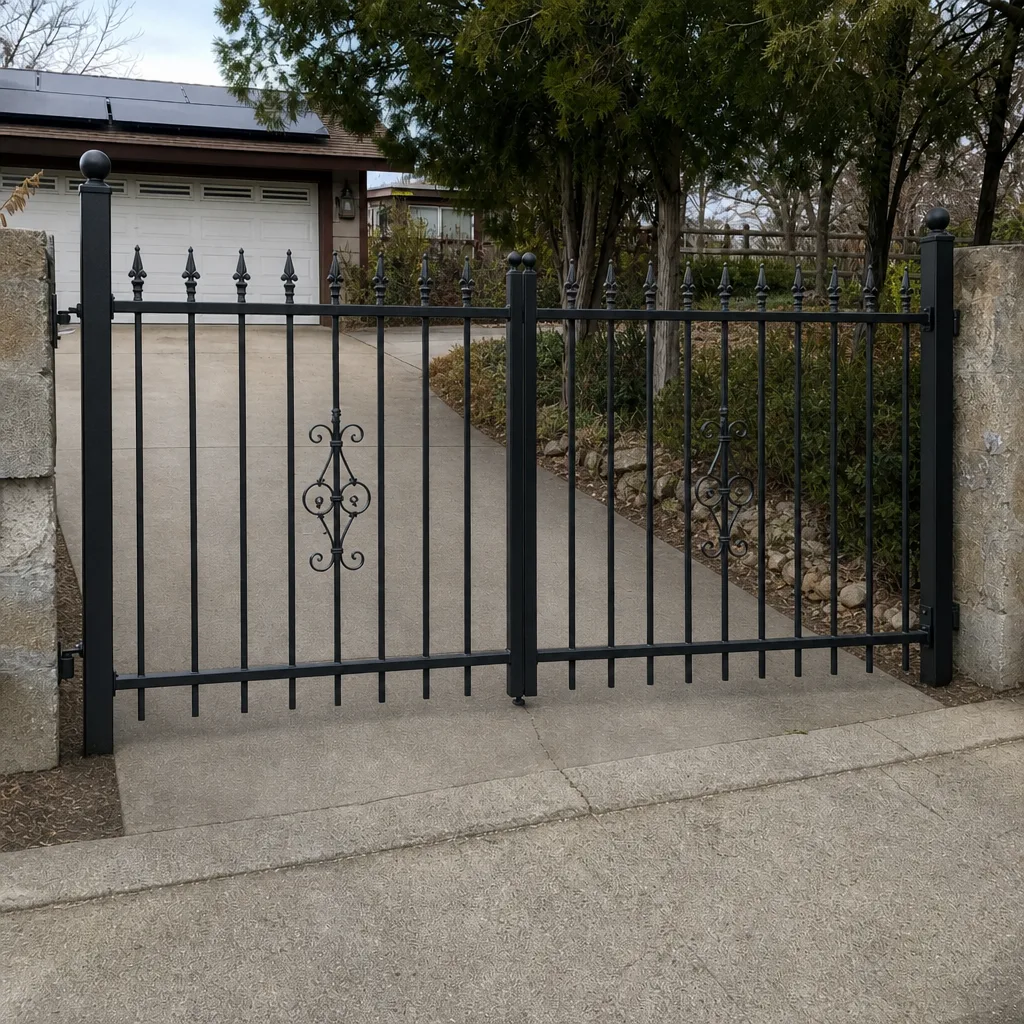 After
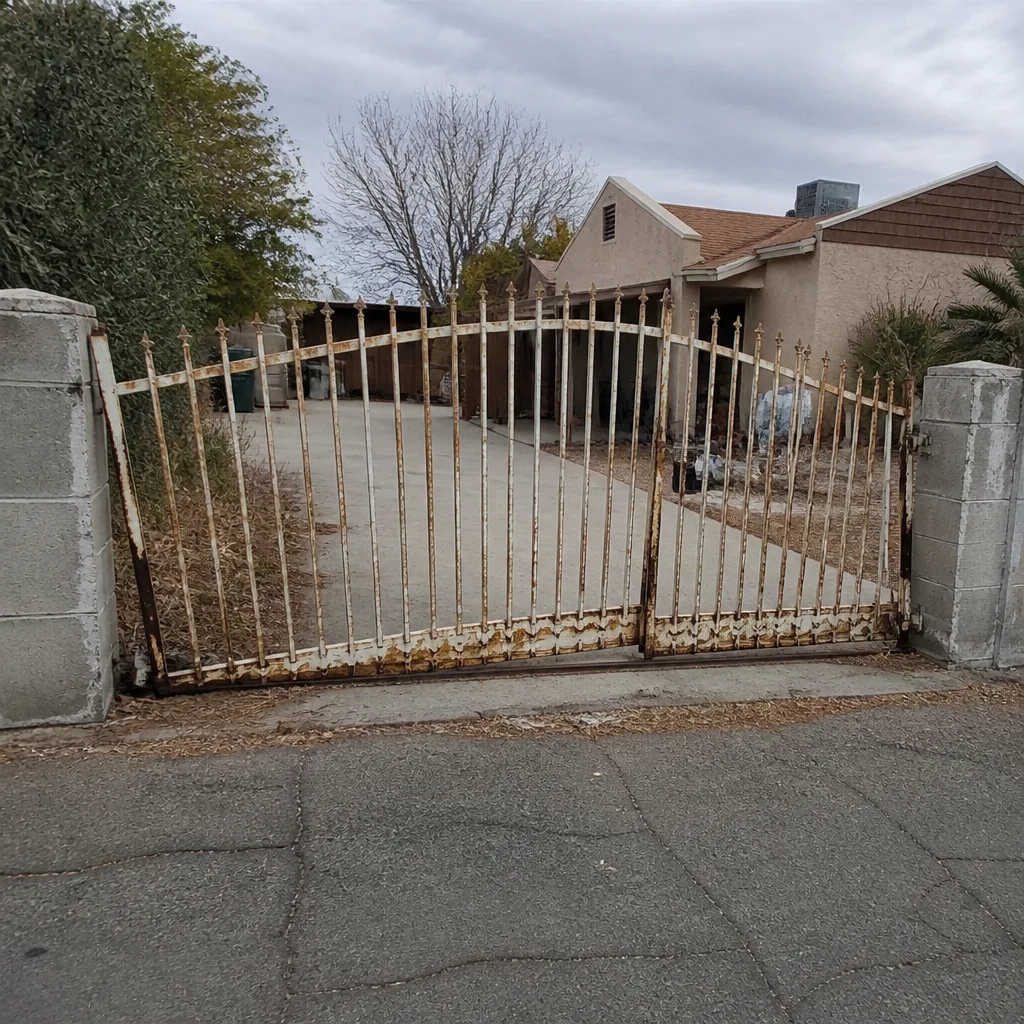 Before
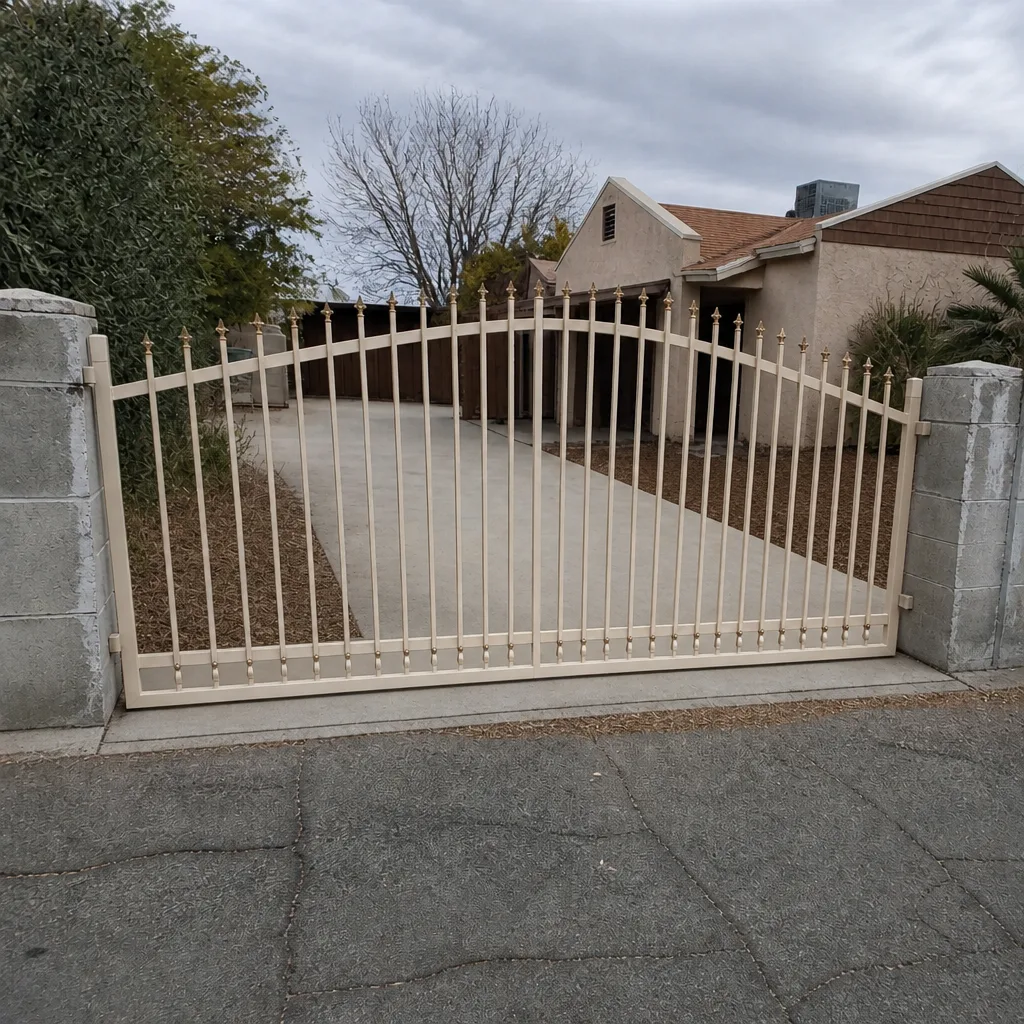 After
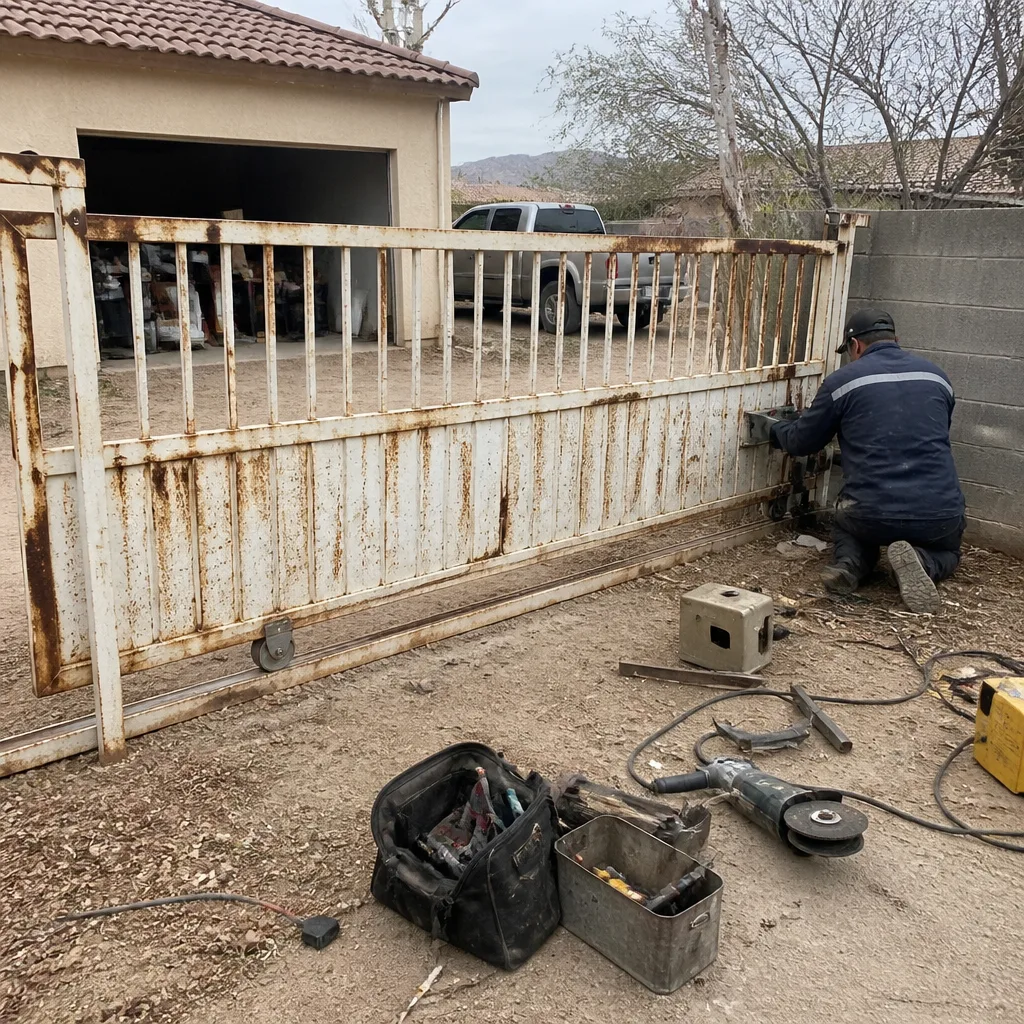 Before
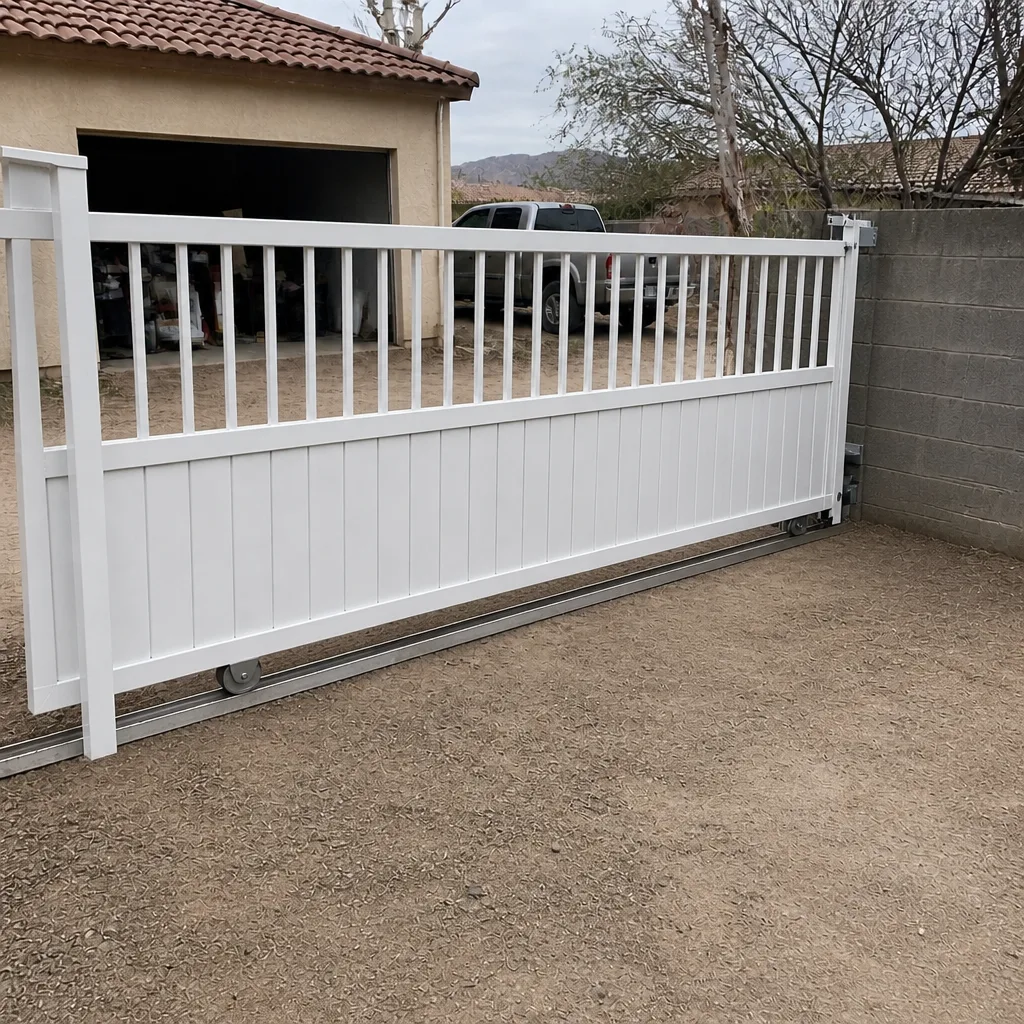 After
When to Call a Professional
Some things are worth doing yourself. Gate operators aren’t one of them. If your existing unit has failed and the gate won’t move, if you’re considering automating a manual gate, if you need multiple gates integrated, or if the gate itself is out of square or sagging, that’s a professional scope. The entrapment protection, the wiring, and the limits all have to be right, and none of them tolerates shortcuts.
Ironworks Gate Co. Boulder City offers free estimates in Boulder City – call (888) 276-7609. We scope the job before we quote it, so the time on the quote is the time on the job. A live person answers the phone, day or night, and every job is backed by our written 90-Day Done Right Promise.
Frequently Asked Questions
A replacement on a wired, prepared gate usually takes 2 to 3 hours. A retrofit on a manual gate runs 4 to 6 hours. A new installation on a new gate can take a full day or more. Add about 45 minutes for programming and safety testing, and plan for inspection scheduling if your job requires it. Call (888) 276-7609 for a free estimate based on your specific gate.
Most jobs are completed in a single visit when the site is ready: power in place, conduit run, gate mechanically sound. When any of those three is missing, the site readiness assessment catches it and the scope is adjusted before the work begins, not in the middle of it. Call (888) 276-7609 to schedule a site check.
Site readiness means three things: a 120V outlet within reach of the operator, a wire path (conduit or direct burial) already run, and a gate that swings true. When all three are in place, the timeline is short. When any are missing, the job expands by hours or by a return visit.
Yes. The power run, entrapment testing, safety edges, photo eyes, and all the programming and testing are part of the scope we handle. If the electrical circuit needs to be brought in from the panel and that work requires a separate trade, we’ll say so up front. Call (888) 276-7609 and we’ll walk through your specific setup.
Smart openers add app pairing and Wi-Fi verification to the programming step. On a property where the gate is far from the router, this step takes longer. Budget an extra 15 to 30 minutes over a standard opener. The rest of the job is the same.
Take a photo of your existing operator’s data plate, locate the electrical panel, and test the gate by hand to see whether it swings freely. Clear access to the gate and the panel. Those steps save time on the visit and help ensure the correct motor goes on the first time. Call (888) 276-7609 with any questions before install day.
The Bottom Line
How long a gate motor and opener installation takes is decided before the technician arrives. Site readiness is the whole game: power, wire path, and gate condition. Replacement on a prepared gate is a couple of hours. Retrofit on a manual gate is closer to six. New installation on a new gate is a day or more, and multi-gate properties add integration time that isn’t simple math. Programming and testing add about 45 minutes and should never be skipped. The inspection step, where required, adds calendar time rather than labor time.
The way to protect your timeline is to have the job scoped properly, with an upfront price agreed before any work starts and no surprises on the bill. That’s the standard Ironworks Gate Co. Boulder City works to. Call (888) 276-7609 for a free estimate and a written quote you can count on. Background-checked technicians, certified on nine major opener brands, and a 90-Day Done Right Promise on every job. Done right – and backed in writing.
Written by the team at Ironworks Gate Co. Boulder City.