
Last updated November 17, 2026
 Wrought iron
 Wood & steel frame
 Farm & ranch
 Sliding driveway gates
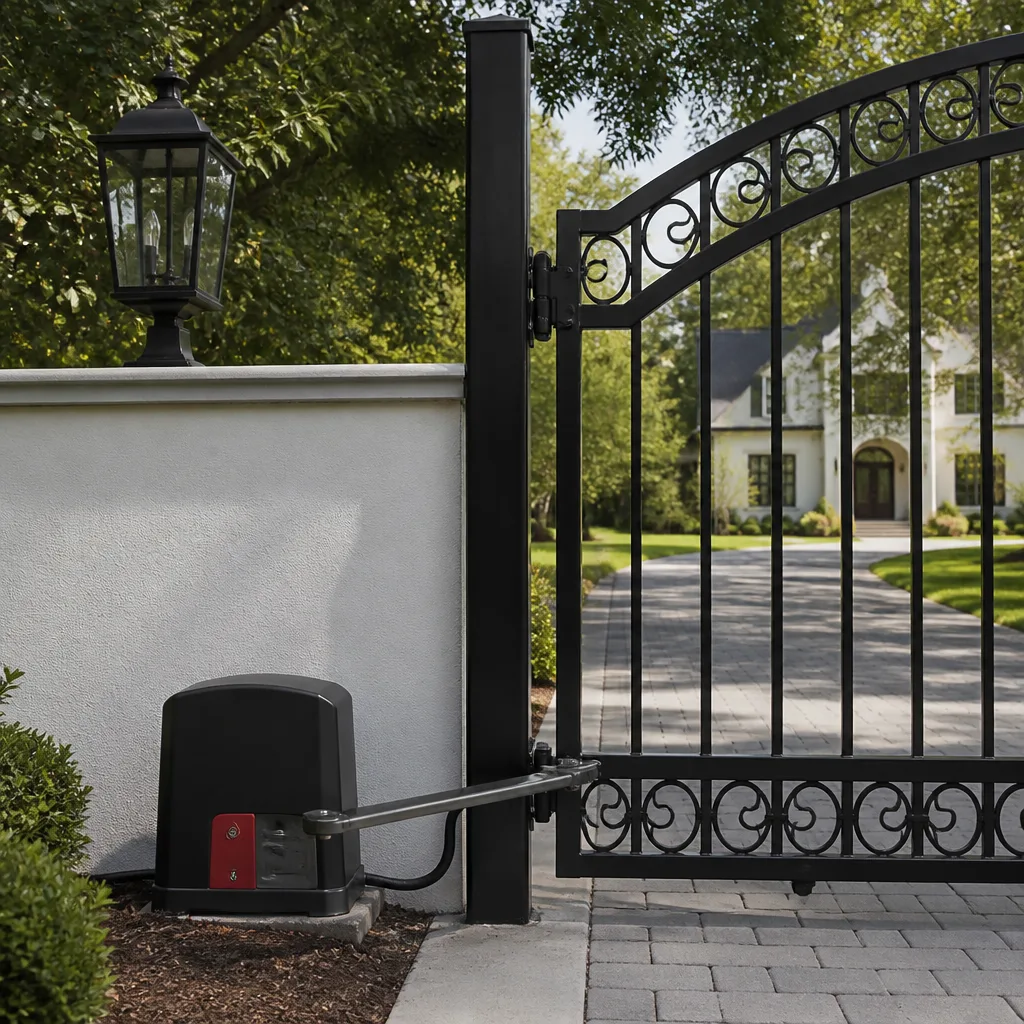 LiftMaster operators
Free on-site gate assessment - hinges, posts, and your LiftMaster or Nice gate operator checked before anything is quoted
The assessment is free and the quote is the invoice.
Get your free estimateGate Access Control Warning Signs Every Homeowner Should Know
A gate that opens six seconds slower than it did last spring isn’t just a motor problem. It may be a control board drawing excess current, and that’s a fire risk, not just an inconvenience. Most homeowners call us when the gate finally stops dead – by then, the small electronic clues have been talking for months. In our experience across Boulder City, the obvious mechanical flags get all the attention while the quieter electrical ones get ignored until a repair that would have cost a few hundred dollars turns into a major rebuild. This guide covers the electronic warning signs that actually predict access control failure, why “mostly working” is the most dangerous state a gate can be in, and how a simple paper log can save you real money.
Quick Answer
The five electronic warning signs that predict gate access control failure are: erratic remote range that battery replacement doesn’t fix, phantom openings with no command given, keypad codes that work only some of the time, a control board that runs warm or hums, and safety edges that trigger on nothing. Any one of these means the low-voltage side of your system is degrading, and the cheapest repair window is right now.
Styles & brands we work with
- Wrought iron
- Wood & steel frame
- Farm & ranch
- Sliding driveway gates
- LiftMaster operators
Table of Contents
- Mechanical Signs vs. Electronic Signs
- The Five Electronic Warning Signs That Precede Failure
- Why “Mostly Works” Is More Dangerous Than “Stopped”
- What Erratic Remote Range Really Tells You
- False Triggers and Phantom Openings
- How to Keep an Incident Log That Actually Helps
- Why Boulder City Gates Age Differently
- When to Bring in a Professional
Mechanical Signs vs. Electronic Signs
Homeowners are trained to hear the gate. A grinding hinge, a shudder on the return swing, a wheel that’s worn flat – these are mechanical and they announce themselves. We’ve watched Boulder City homeowners catch those early for years, and that’s good instinct. The trouble is the electronic half of an access control system makes almost no sound. It fails quietly, sometimes over a full season, until the day the arm won’t move.
The control board is where a gate’s brain lives. It manages the low-voltage commands from remotes, keypads, loop detectors, safety edges, and the phone entry system. It also regulates the current going to the motor. When any component on that board starts to draw more current than it should, a few unglamorous things happen in order:
- Commands take longer to register, or register on the second press instead of the first.
- The board runs warmer than normal to the touch, or a faint hum appears that wasn’t there before.
- Remotes start fighting each other for range, and one will stop working entirely.
- Safety devices get twitchy and report obstacles that aren’t there.
None of that sounds like a crisis. That’s exactly the trap. A motor replacement is straightforward and predictable. A board that’s been cooking itself for months can take relays, capacitors, and the receiver module with it, and the bill reflects it. The cheap window is while the gate still works.
The Five Electronic Warning Signs That Precede Failure
In our experience, these five signs are the consistent early warning set on modern gate operators, whether you’re running a FAAC, a Viking, or a Linear unit on the driveway. What each one looks and sounds like matters more than the label.
- Erratic remote range. Your remote used to open the gate from a hundred feet down the drive. Now you’re six feet from the keypad, sometimes pressing twice, sometimes holding it longer. It works, then it doesn’t, then it works again. This is the most-missed sign because it’s easy to blame on the remote itself.
- Keypad codes that work “sometimes.” The code registers, the gate hesitates for two or three seconds, then opens. Or it works perfectly for a week and fails twice on a Tuesday. That delay is the control board thinking longer than it should, not the keypad wearing out.
- Phantom openings. You come home and the gate is open. No one drove through. No neighbor triggered it. Something in the input chain – a loop detector, a safety edge, a stuck relay – issued a command the board acted on and shouldn’t have.
- Safety edges that trigger on nothing. The gate reverses mid-swing as if an obstacle appeared in its path. No branch, no car, no child. On Boulder City systems where a safety edge is wired into the loop, a failing edge sends constant false “obstacle” signals, and the board reverses every time.
- A board that hums or runs warm. With the power on and the gate idle, put the back of your hand a few inches from the control housing. If you feel distinct warmth or hear a low hum, the board is drawing current it shouldn’t – and that’s the fire-risk category, not the inconvenience category.
If two or more of these are present at once, the system is telling you it’s failing. Call us at (888) 276-7609 for a free estimate, and we’ll have it checked before the low-voltage side takes the motor with it.
Why “Mostly Works” Is More Dangerous Than “Stopped”
A gate that has completely stopped gets respect. You call someone, you fix it, you move on. A gate that mostly works gets ignored – and a mostly-working gate is statistically the more dangerous one. Here’s why.
The safety devices on a modern operator are exactly as reliable as the board reading them. When a board is flaky, the safety edge may not report an obstacle in time. The loop detector may not register a car in the swing path. The sensor that stops the gate from closing on a person may hesitate for half a second just once, on the day someone is standing in the wrong place. A gate that won’t open is an inconvenience. A gate that opens without warning, or fails to reverse when it should, is an injury waiting for the right afternoon.
There’s a second angle, and it’s about diagnostics. A dead system gives a technician one clear signal: “something has failed, right here.” A mostly-working system gives a technician nothing to find – until it’s found mid-failure. That’s why Boulder City homeowners who call us with a fully dead gate usually get a cheaper, faster visit than the ones who call with “it’s been acting weird for a while.” The weird ones hide their cause. Sometimes the only way to catch a fault is to be there the moment it happens.
Living with intermittent behavior isn’t thrift. It’s a bet that the failure will happen somewhere harmless. Our technicians have up to 13 years of experience with these systems, and the patterns are consistent: intermittent today, dangerous tomorrow. That’s the whole reason we insist on the 90-Day Done Right Promise on every job – because a fix isn’t a fix if it comes back next month.
What Erratic Remote Range Really Tells You
This is the single most misunderstood sign on the whole list, so it gets its own section. When the remote gets erratic, the homeowner almost always replaces the battery. Sometimes twice. The problem, in our experience, is that the battery was never the issue.
Three things degrade remote range, and they look identical from the driver’s seat:
- A weak battery. This is the cheap one, and it’s the one everybody tries first.
- A dirty or loose antenna. If the antenna wire on the operator has worked loose from its connector, or corrosion has taken hold at the terminal, range drops sharply. That’s a five-dollar fix, but only if you know to look.
- A failing receiver or control board. The receiver is the part of the board that listens for your remote’s signal. When it drifts out of tune, it hears the remote faintly and intermittently, and the effect is exactly the same as a dying battery.
Here’s the tell: if a fresh battery and a visually clean antenna don’t fix the range within a day, the problem is on the board, and no battery in the world will solve it. That’s the point where a lot of homeowners stop and just live with it, buying themselves a much larger repair later. On BFT and Linear systems specifically, the receiver/board relationship is tight, and a weak receiver can take the rest of the board down with it.
If the remote has gotten moody, call (888) 276-7609 for a free second opinion on any written estimate. We’ll tell you honestly whether it’s the battery, the antenna, or something bigger.
False Triggers and Phantom Openings
A gate that opens on its own at 2 a.m. isn’t a ghost story. It’s a warning that something in the input chain is commanding the board to open, and it’s happening because that input isn’t reporting accurately. This is a security warning sign, first and foremost, but it’s also a very specific diagnostic.
False triggers come from a short list of sources:
- A stuck or failing loop detector under the driveway. The loop reads “vehicle present” when there isn’t one, and the gate opens to let it out.
- A shorted safety edge or a pinched wire that’s touching the frame. The board reads “obstacle” and reverses.
- A failing receiver picking up background noise from a nearby radio, a wireless device, or the neighbor’s system.
- A relay on the control board that sticks closed and holds the “open” command after it should have released.
- A keypad wired into the same input line that’s failing slowly and sending stray pulses.
Whichever source it is, the practical problem is the same: your gate is opening for people who aren’t you, on a schedule nobody set. If you have a keypad and no one standing at it, you may as well have left a door unlocked. That’s worth fixing. Call (888) 276-7609 for a free estimate, and we’ll trace the input chain until we find the exact source.
How to Keep an Incident Log That Actually Helps
Here’s something homeowners almost never hear: a technician diagnosing an intermittent gate needs pattern data, not vague descriptions. “It’s been acting up for a while” tells us nothing. “It failed twice on Tuesday, once Thursday morning right after the sprinklers ran, and opened on its own at 2 a.m. Saturday” tells us a great deal. The best thing you can do between now and the service visit is to write it down.
You don’t need an app. You need a piece of paper on the fridge, or a note in your phone. Here’s the simple template we recommend to every Boulder City homeowner we work with:
- Date and time of the incident.
- What happened: gate opened on its own, gate failed to close, gate reversed mid-swing, remote didn’t work, keypad delayed, etc.
- Weather: sunny, rain, high wind, cold snap. (Any pattern tied to weather is diagnostic gold.)
- What was happening at the time: sprinklers running, neighbor’s gate moving, a truck on the street, a delivery making a U-turn in the driveway.
- Which control was used: remote, keypad, phone entry, interior button, or none (phantom).
- Any sound or behavior noted: hum, click, hesitation, second press needed, etc.
Two weeks of entries is enough to hand a technician a genuine pattern instead of a shrug. It’s the single most useful thing a homeowner can do to shorten a diagnosis, and it costs nothing but the discipline of writing things down. For access control issues especially, this log is the difference between a same-visit fix and a return visit that no one wants.
Why Boulder City Gates Age Differently
Gates in Boulder City live a particular kind of life. The desert climate does specific work on electronics that homeowners from wetter parts of the country don’t expect. The daily swing between cool nights and hot afternoons puts stress on solder joints and capacitors on the control board, and the fine dust that blows off the open lots settles into the housing until it acts as an insulator. That combination is why a board in Boulder City can run warmer than its twin in a coastal climate, and why a slightly underperforming system here tends to fail faster.
The historic district adds a second layer. Older estate gates on the properties near downtown were often fitted with modern operators after the gate was hung, and the wiring ran through whatever path was available at the time. That’s fine when it was done correctly. But wiring that runs close to irrigation lines, or through a conduit that’s aged and pulled loose, is more exposed to moisture and to the kind of intermittent faults we spend our days tracking down. When we service a gate in the historic district, we check the power run and the low-voltage wiring as carefully as the board itself.
We’ve seen the same pattern on the outskirts near the state park and along the neighborhoods off Buchanan. Salt from the occasional road treatment, dust from the open desert, and the summer heat all shorten the life of connections on the gate housing. If you’re in Boulder City and your gate is showing any of the signs in this guide, you’re not imagining it – the environment here accelerates the failure curve. Call (888) 276-7609 for a free estimate and we’ll tell you what we’re seeing on your system. Our Gate Repair in Winchester service sees many of the same conditions on the other side of town.
Common Mistakes to Avoid
- Replacing the remote when the board is failing. A new remote never fixes a weak receiver. If a fresh battery and clean antenna haven’t restored range within a day, the fix is on the board.
- Ignoring a phantom opening because “it only happened once.” It happened once so far. Phantom openings are a security sign, and the next one won’t happen when you’re home to see it.
- Living with a slow gate for a full season. Here in Boulder City, a full season of a slow gate is a full season of the control board drawing excess current. That’s the fire-risk timeline, not the cosmetic one.
- Describing symptoms vaguely to a technician. “It’s been acting weird” is the description that leads to return visits. A written log of dates, weather, and behaviors turns the same visit into a single-visit fix.
- Skipping the safety edge test because the gate opens fine. A gate that opens is not the same as a gate that reverses. Test the safety edge monthly, and if it triggers on nothing, treat it as a failing component.
- Assuming the sprinklers and the gate aren’t talking to each other. In Boulder City, irrigation lines and gate wiring often run in the same trench. A gate that fails only during irrigation cycles is telling you exactly where the fault is.
- Calling a handyman for a low-voltage problem. Access control work is electronics, not carpentry. Our technicians are trained on Gate Motor & Opener in Winchester systems from nine major brands, including FAAC and Viking, precisely because the correct fix depends on knowing the specific board. A generalist chasing a low-voltage fault is a good way to make it worse.
See the difference
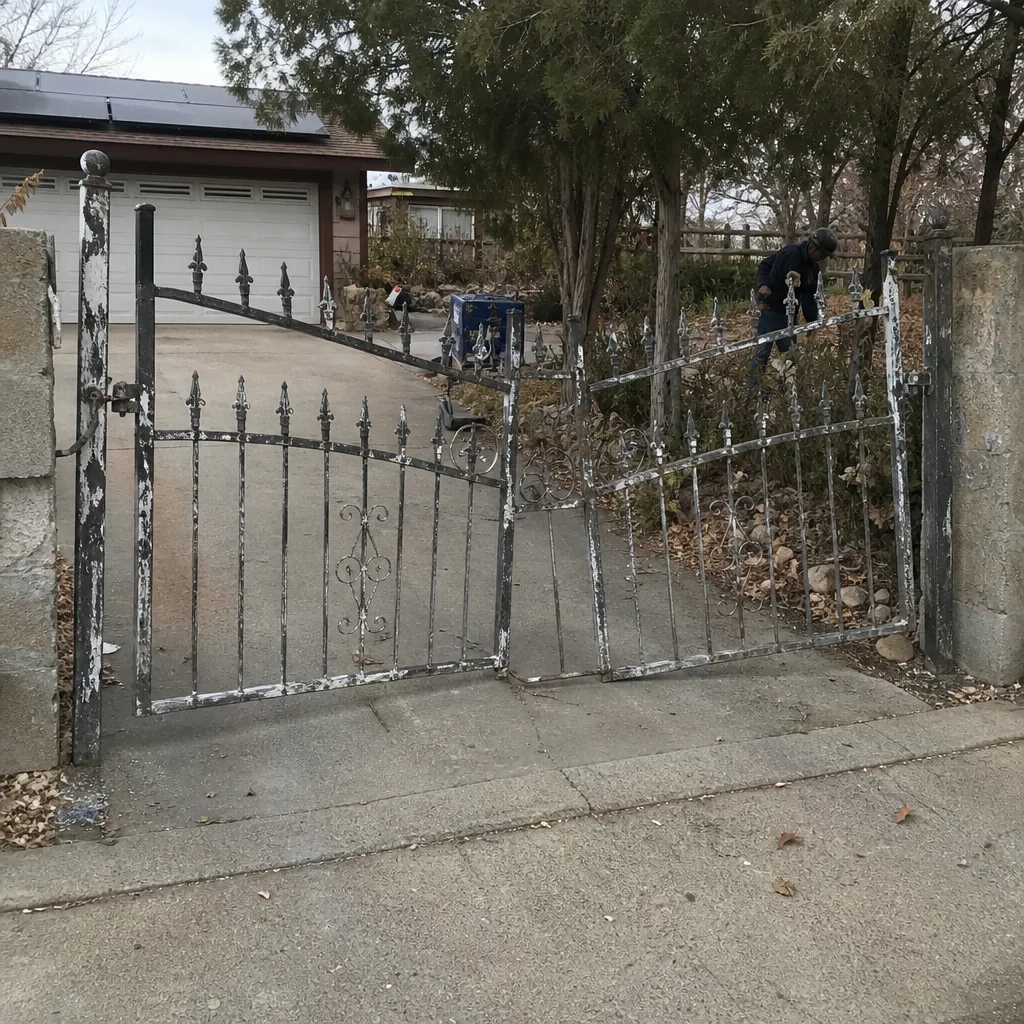 Before
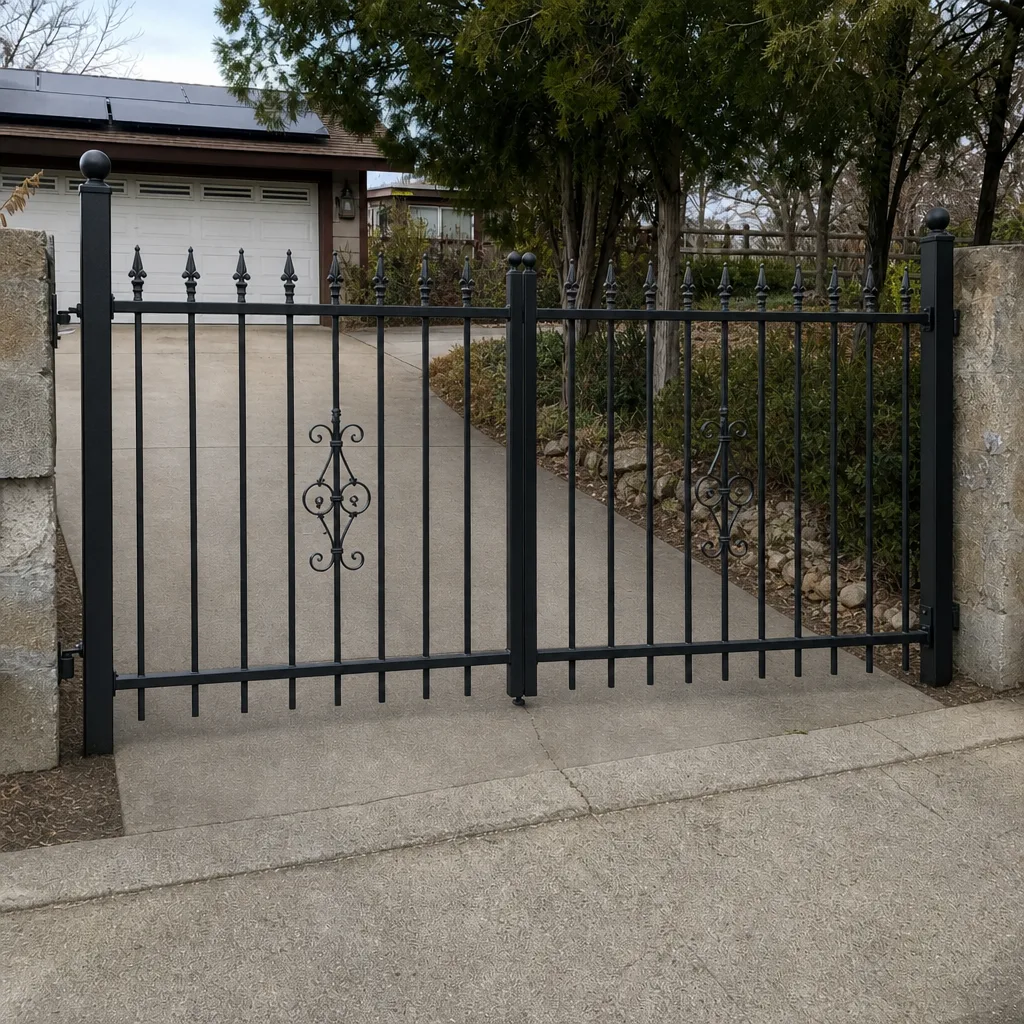 After
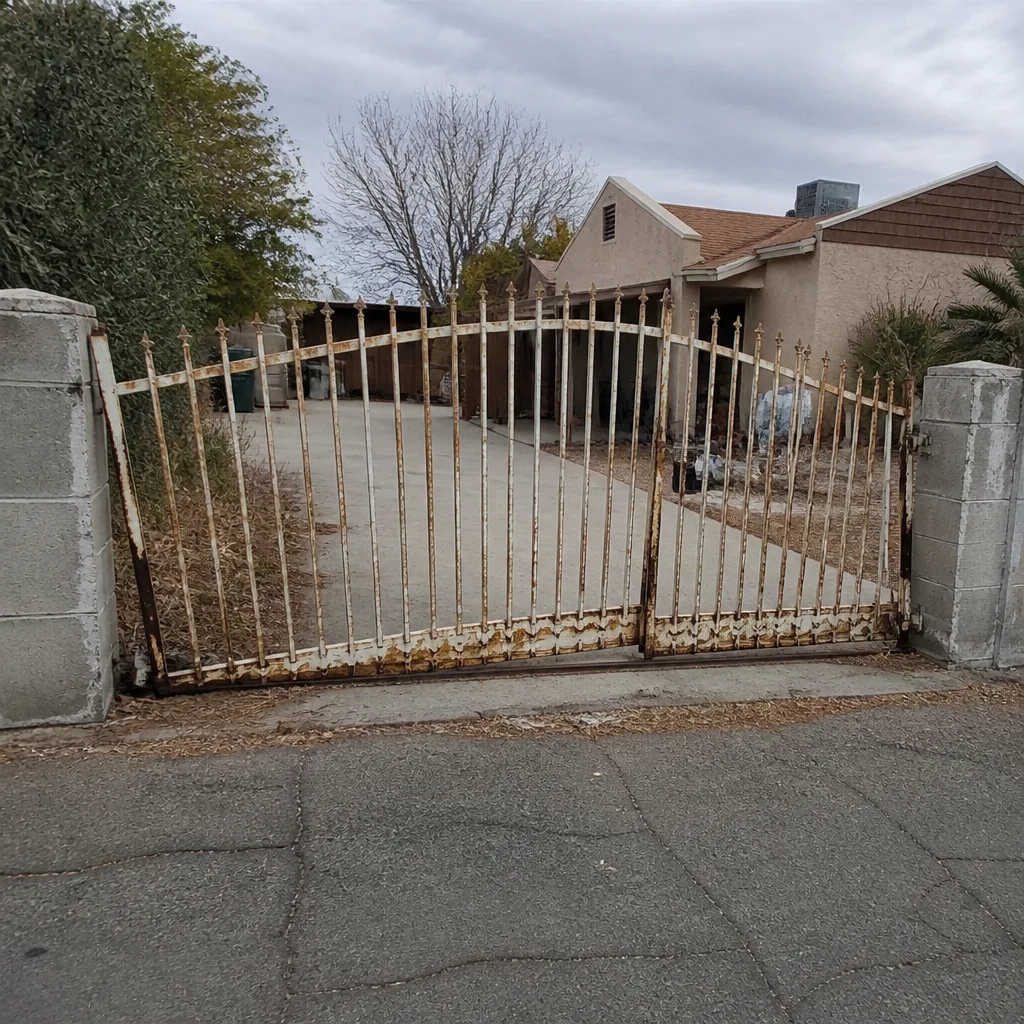 Before
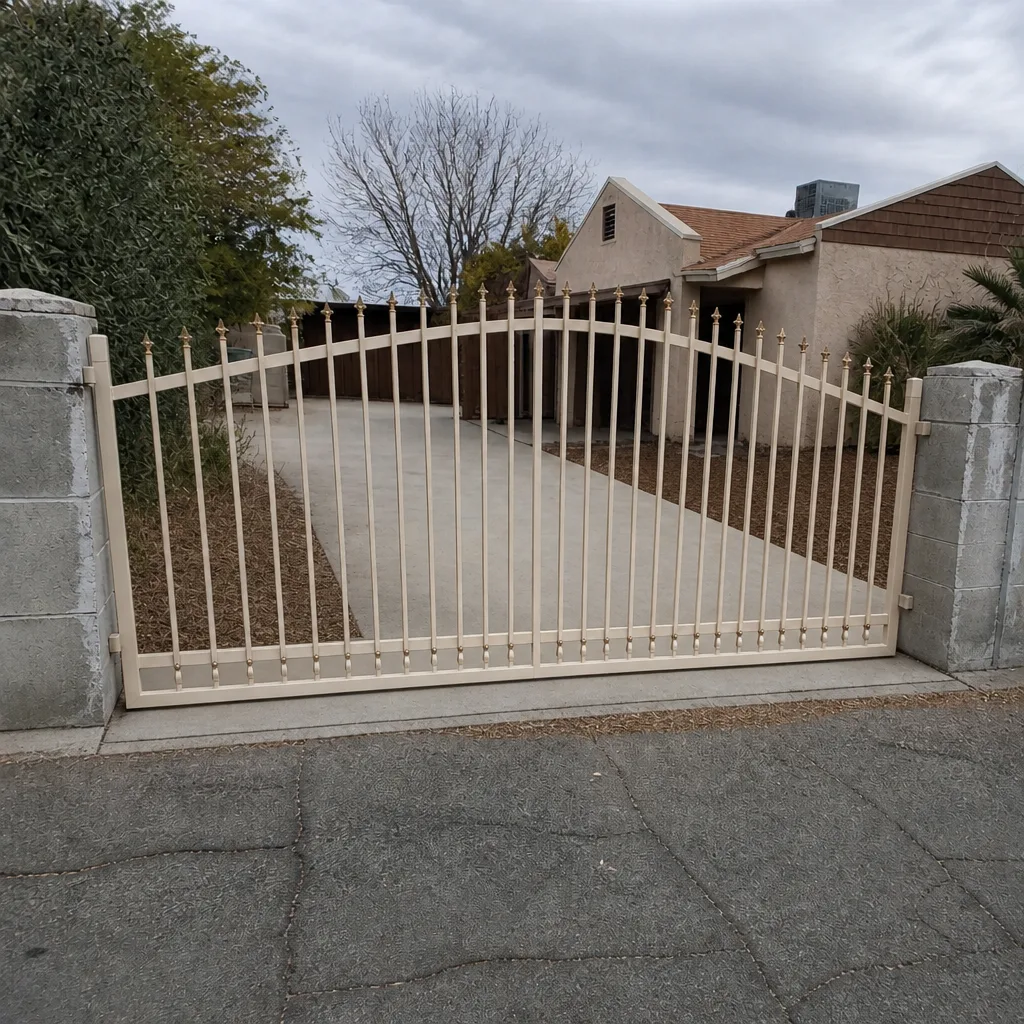 After
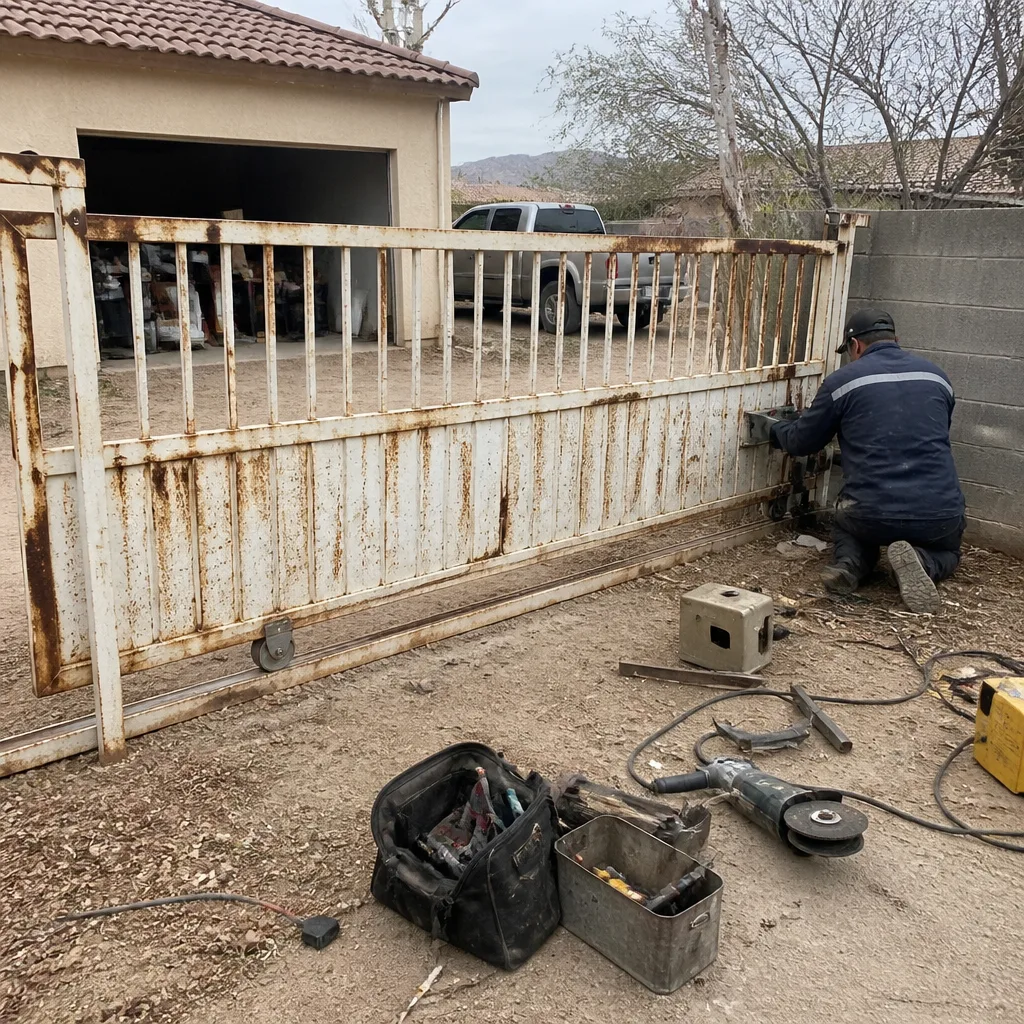 Before
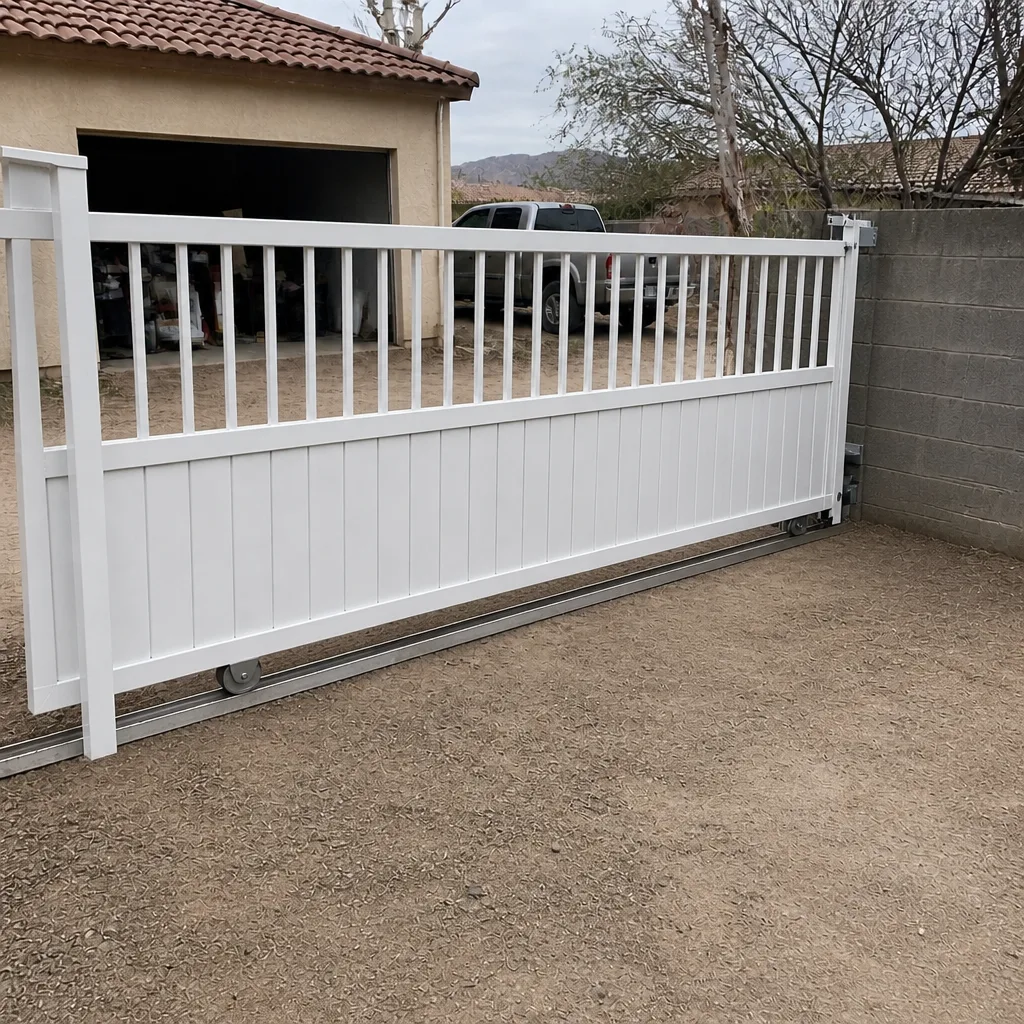 After
When to Call a Professional
Call us if you’ve noted any two of the five electronic signs above in the past month. Call us if the gate has opened without command even once. Call us if the remote range has dropped and a fresh battery didn’t restore it. Call us before you buy a new remote, a new keypad, or a new operator – because those are the three purchases homeowners most often make for the wrong reason. And call us if the safety edge has triggered on nothing at all, even once. That one’s the injury-risk signal, and it doesn’t wait for a convenient weekend. Ironworks Gate Co. Boulder City offers free estimates in Boulder City – call (888) 276-7609. A live person answers every call, 24 hours a day, 7 days a week, and the price is settled before a single bolt is turned.
Frequently Asked Questions
The earliest reliable signs are erratic remote range that a fresh battery doesn’t fix, keypad codes that hesitate before registering, and a control board that hums or runs warm with the gate idle. Any of these means the low-voltage side is degrading, and the cheapest time to address it is the moment you notice. Call (888) 276-7609 for a free estimate before a board failure takes the motor with it.
Phantom openings come from something in the input chain – a stuck loop detector under the driveway, a shorted safety edge, a failing receiver, or a relay on the control board that’s sticking closed. The desert environment here accelerates those faults, because dust and thermal cycling stress the connections. It’s a security issue, and it’s worth tracing to a specific source rather than ignoring. Call (888) 276-7609 for a free estimate and we’ll find the exact fault.
In our experience, yes. A stopped gate can’t open when someone’s standing in the way, but a mostly-working gate can fail to reverse when a person or a car is in the path. The safety devices are only as reliable as the board reading them, and a failing board can hesitate for a fraction of a second at exactly the wrong moment. Call us at (888) 276-7609 and we’ll assess the risk honestly.
Probably not, if a fresh battery didn’t fix it. That range drop usually means a weak receiver on the control board or a loose or corroded antenna. On FAAC and Linear systems especially, a weak receiver that goes unaddressed can take other components with it. Call (888) 276-7609 for a free second opinion on any written estimate, and we’ll tell you what we actually find.
Yes. Safety edges, loop detectors, control boards, keypads, and the full low-voltage side of an access control system are core parts of what we do. Our technicians are trained on nine major automation brands, so we make the correct fix on the first visit wherever possible. Call (888) 276-7609 for a free estimate – the price is agreed before any work starts, and every job is backed in writing with the 90-Day Done Right Promise.
Cost depends entirely on what’s failing – a battery is a few dollars, a receiver replacement is modest, and a full control board replacement is a real repair. The reason we push for early diagnosis is that waiting usually multiplies the bill. We quote and agree the price before a single bolt is turned, so you’ll know the number before anyone touches the gate. Call (888) 276-7609 for a free estimate.
The Bottom Line
The signs that predict an access control failure aren’t the loud ones. A slow gate is a motor question; erratic remote range, keypad hesitation, phantom openings, false safety-edge triggers, and a warm control board are all electronic questions, and they arrive long before the gate stops dead. Treat them as the warning they are. Keep a simple log of incidents, don’t replace hardware before you know what’s actually failing, and call when two or more signs are present. For a free estimate, a second opinion on any written estimate, or an $89 seasonal tune-up in Boulder City, call (888) 276-7609. Our technicians have up to 13 years of experience, we’re trained on nine brands, and every job is backed in writing. The right time to save the board is while it still works – and that time is now.
For the full range of what we do across the area, see Ironworks Gate Co. Boulder City home, Gate Installation in Winchester, and our related guide on Gate Motor & Opener in Winchester. For a repair on the other side of the valley, our Gate Repair in Winchester page covers what we see there.
Written by the team at Ironworks Gate Co. Boulder City.