
Last updated November 17, 2026
 Wrought iron
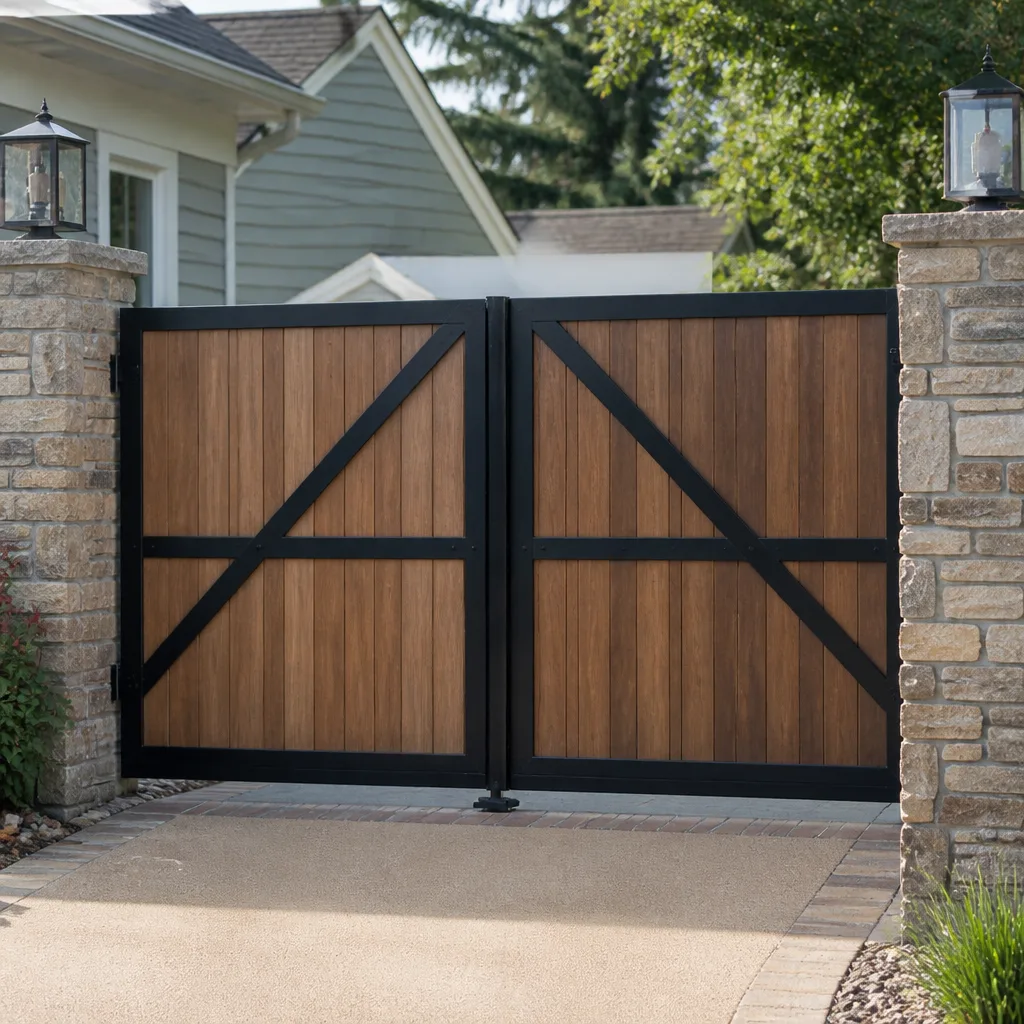 Wood & steel frame
 Farm & ranch
 Sliding driveway gates
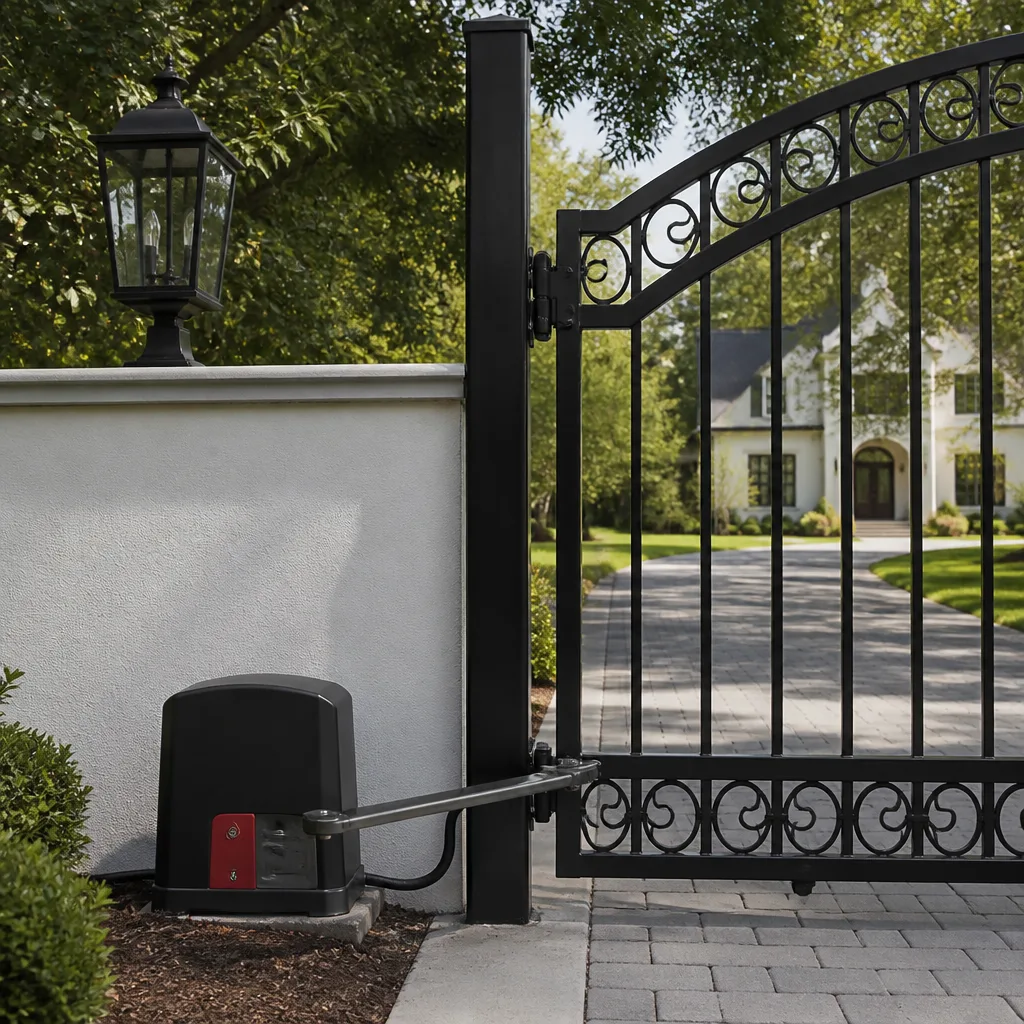 LiftMaster operators
Free on-site gate assessment - hinges, posts, and your LiftMaster or Nice gate operator checked before anything is quoted
The assessment is free and the quote is the invoice.
Get your free estimateGate Installation Maintenance Schedule: What to Do and When
Nearly every new gate operator gets set up in a single afternoon: limits dialed in, remote paired, chain tensioned, and the installer is off the property. Then the gate starts its real life, cycling hundreds of times while the hardware settles, and no one comes back to check the settings against reality. The first adjustment on a new gate should happen at the 30-day mark, once the gate has cycled enough times to reveal its true operating resistance. That visit almost never happens. In Boulder City, where we see new ironwork pushing through the same desert cycles of heat and blowing grit that break in hinges faster than anywhere else in the valley, this guide starts at day one, because that’s where the schedule that matters begins.
Quick Answer
A new gate needs four checks in year one: a 30-day adjustment visit after the hardware settles, a 90-day lubrication and hardware check, a 6-month fastener and post-leveling check, and a full 12-month inspection covering the operator, welds, and safety devices. After the first year, annual service is enough for most residential gates. Skipping the break-in checks is the single most common reason a gate that was installed correctly starts misbehaving within a season.
Styles & brands we work with
- Wrought iron
- Wood & steel frame
- Farm & ranch
- Sliding driveway gates
- LiftMaster operators
Table of Contents
- Why the First Year Is Different From Every Other Year
- The Complete First-Year Schedule, Month by Month
- Normal Settling vs. a Foundation Problem
- Lubrication Schedules by Gate Type and Material
- Warranty Registration and Your Maintenance Log
- The Annual Inspection: What It Should Cover
- Boulder City Climate and Your Gate
- Common Mistakes to Avoid
Why the First Year Is Different From Every Other Year
A gate is a machine built from parts that have never worked together before. The hinges have paint and tight tolerances. The operator chain or arm has factory grease. The concrete pads are still curing. Nothing is broken in yet, and that means the gate is not operating at its final resistance. An installer sets the operator limits and force settings against a gate that will change within a few weeks.
Most maintenance guides skip this entirely. They assume you’re past it and talk about yearly checks. But the industry-standard service schedules for gate motors and openers themselves call for an adjustment visit at 30 days precisely because the hardware has settled by then. The operator’s force sensing is the part that suffers when nobody comes back. Set too tight on day one, a modern operator may reverse on a gate that’s become slightly heavier after settling, and that reverse looks like a failure. It’s a setting, not a broken machine.
Boulder City’s conditions compress the timeline. Summer temperatures push metal through expansion the hardware hasn’t seen, and the wind that funnels through the Eldorado Valley deposits fine dust into hinge pins and slide tracks. In our experience, a new gate here reaches its settled state sooner than in milder climates. Treat the break-in period as a firm three-month window, not an open-ended grace period.
The Complete First-Year Schedule, Month by Month
Here’s the schedule we follow for every new installation, and the one we recommend whether we hung the gate or not.
- Day 1 (at installation): limits set, force tested, safety edges and photo eyes verified, manual release tested, remote and keypad paired, and all documentation handed over. Confirm the installer actually walks you through the manual release; you’ll need it the first time the power goes out.
- Day 30: adjustment visit. Check hinge tightness, chain or arm alignment, limit position, force sensitivity, and that the gate closes fully and flush. Re-torque fasteners.
- Day 90: lubrication pass on hinges, rollers, and tracks, plus a hardware inspection for anything that loosened during the settling period. This is also the point to confirm post plumb.
- Month 6: fastener check and post-leveling verification, plus a look at gate clearance (the gap under the gate and at the latch side). Concrete cracks or post movement show up here.
- Month 12: full annual inspection. Operator service, weld inspection, battery backup check, safety device test, and a written record for your file.
After the first year, most residential gates fall into an annual rhythm, with lubrication and a visual check every six months if you use the gate heavily or have a long driveway with frequent cycles. If you’re installing a new opener rather than a complete gate, our gate installation service can walk you through the same timeline and what changes when only the operator is new.
Normal Settling vs. a Foundation Problem
All new gates settle. Posts shift a fraction as the concrete cures and the soil compacts. What matters is the kind of settling you see and how quickly it develops. Telling the two apart early is how you catch a real problem while it’s still a warranty matter.
Normal settling looks like:
- A slight change in latch alignment you can fix with an adjustment, not a rebuild.
- Minor cracks in the concrete pad near the post, not widening over weeks.
- A gate that drags by a fraction at the far end until the operator is re-tuned.
- Hardware that needs re-torquing at the 30 and 90 day points.
A foundation problem looks like:
- A post that has tilted noticeably out of plumb in one direction.
- Concrete that has lifted, separated from the post, or cracked wider than a hairline across the pad.
- A gate that binds at the same point every cycle regardless of adjustment.
- Gaps appearing between the post base and the slab, or a creaking sound at the post as the gate moves.
Boulder City’s soil is caliche in many parts of town, and that hardpan can resist normal compaction while letting water channel alongside a pier. A post set in caliche that wasn’t properly drilled can move sideways in a way a normal gate on standard soil won’t. If you see a post leaning after the 6-month check, have it looked at before the operator is blamed for a symptom the foundation is causing.
Lubrication Schedules by Gate Type and Material
Lubrication is where identical schedules go wrong. A swing gate’s hinges and a slide gate’s rollers need different products and different intervals, and the material changes what’s appropriate. A thin oil on an iron hinge and a lithium grease on an aluminum carriage are not interchangeable.
Swing gates (single and double):
- Hinges: a few drops of light machine oil every 90 days, moving to every six months after the first year. Wrought iron hinges take oil; painted steel hinges benefit from a lithium grease applied sparingly.
- Latch and strike: dry lubricant (like graphite) every six months; grease attracts grit that can jam the latch.
- Operator arm (where fitted): follow the brand. LiftMaster and FAAC arms usually want lithium grease on the pivot points at the annual service.
Slide gates:
- Carriage rollers: grease every six months, more often if the gate runs on exposed track where dust collects. Boulder City’s wind-blown grit makes this the single most skipped task.
- Chain and sprocket: chain lubricant monthly during the break-in year, then quarterly. A dry chain on a slide gate is the fastest route to a stretched chain.
- Guide rollers and stop points: inspect and grease at the annual inspection.
Overhead gates:
- Track and rollers: inspect for buildup quarterly and wipe clean; grease only where the manufacturer specifies.
- Torsion hardware: do not lubricate or adjust this yourself, especially on overhead gate hardware. Springs store enormous energy and a false move can cause serious injury. Have a trained technician handle it.
By material: wrought iron takes oil and graphite freely; aluminum wants lighter products to avoid attracting grit; steel tube gates, especially painted, need hinge and latch hardware oiled to prevent rust seizing bolts. Viking and Linear operators are common on aluminum slide gates, and their arm or chain requirements are specific to the model.
Warranty Registration and Your Maintenance Log
The time to build the paper trail is at installation, before anything goes wrong. A warranty claim with no registration and no service records is a fight you don’t want. Here’s what to capture on day one:
- Operator brand and model number: record it from the label, not from your memory. It’s the first thing any service tech asks for.
- Serial number and purchase date: register the operator with the manufacturer online. Most brands require this within 30 days to honor the full warranty.
- Installation date and the installer’s name: the day the gate went into service.
- All product manuals and warranty cards: keep them in one folder, physical or digital, with the invoice.
- A maintenance log: a simple notebook or spreadsheet works. Date, service performed, who did it, what was found. Every visit goes in, including your own lubrication passes.
Why it matters more than it seems: many operator warranties are prorated and depend on documented maintenance. When a five-year-old operator fails at year three, the difference between a claim and a rejection is often whether the annual service record exists. Keep the log current. It’s also the fastest way to tell a real failure from a setting drift when a new technician arrives.
The Annual Inspection: What It Should Cover
The annual inspection is the cornerstone of the schedule after year one. It should be done by the installing contractor or a qualified specialist, and it should produce a written record. Here’s what it needs to cover:
- Operator: force settings, limit positions, battery backup, manual release, and the control board’s fault memory if the model has one.
- Safety devices: photo eyes, safety edges, and reversing function. Test them by hand; don’t assume.
- Hardware: hinges, rollers, bearings, chains, sprockets, arms, and fasteners. Re-torque and replace anything worn.
- Welds and structure: a visual and physical inspection of every weld, especially at hinge points and post connections. Boulder City freeze-thaw cycles and summer heat stress welds on older ironwork.
- Posts and foundation: plumb check, concrete condition, and evidence of movement since the last visit.
- Finish: rust spots, paint failure, and touch-up needed. A spot of rust caught in year two is a five-minute fix; in year eight it’s a refabrication.
- Access control: keypad, remote batteries, and any intercom or entry hardware.
This inspection should take an hour or more and produce a written report. If a service tech is done in fifteen minutes, they haven’t covered it. In Boulder City, where we’ve seen a 12-year-old Viking operator fail six months after a skipped inspection, the report is your early warning system.
Boulder City Climate and Your Gate
Boulder City’s climate puts a gate through more than most of Southern Nevada. Summer highs push metal through significant expansion, and the wind off the Eldorado Valley grinds fine silica into every moving part. Winter doesn’t bring much snow, but the overnight freeze-thaw cycles in January and February work on concrete and welds the same way they do anywhere colder.
What this means for your schedule:
- Shorten the lubrication interval on exposed track slide gates to every four months after year one.
- Check the concrete pad at every annual inspection for hairline cracks. Cracks that grow across the pad in Boulder City’s caliche-rich soil can indicate a settling problem.
- Inspect welds on any gate more than ten years old each spring, before the summer heat.
- Keep the operator’s control board sheltered from the sun; panel overheating is a preventable failure.
For the homeowners in Boulder City we serve, the practical result is that the break-in period matters more, not less. If you had your gate installed anywhere in the historic district or out toward the lake, the schedule above is the minimum, not a suggestion.
Common Mistakes to Avoid
- Skipping the 30-day adjustment. The single most costly mistake. The operator is set against a gate that changes within a month, and a force setting that’s never revisited is how a new gate reverses on its own and gets blamed for a failure.
- Assuming the install is the end of the job. A gate that works great on the day it’s installed hasn’t been tested by a full season. Boulder City’s summer alone is enough to reveal hardware that wasn’t torqued right.
- Using the wrong lubricant. Grease on a hinge that needs oil, or oil on a chain that needs grease, attracts grit and accelerates wear. Match the product to the part, not just the gate.
- Never registering the warranty. By the time a component fails in year three, the registration window has often closed. Do it the week the gate goes in.
- Ignoring a leaning post. A little lean is settling. A steady lean is the concrete moving. Have it inspected before the operator gets blamed for the symptom.
- Letting a handyman adjust safety devices. Photo eyes and safety edges are life-safety hardware. They need a trained technician who knows the operator’s testing procedure, which is why we handle these in our gate repair work with the right training and tools.
- Trying to service an overhead spring or torsion assembly yourself. These store enough energy to cause serious injury. Leave them to a trained tech, full stop.
See the difference
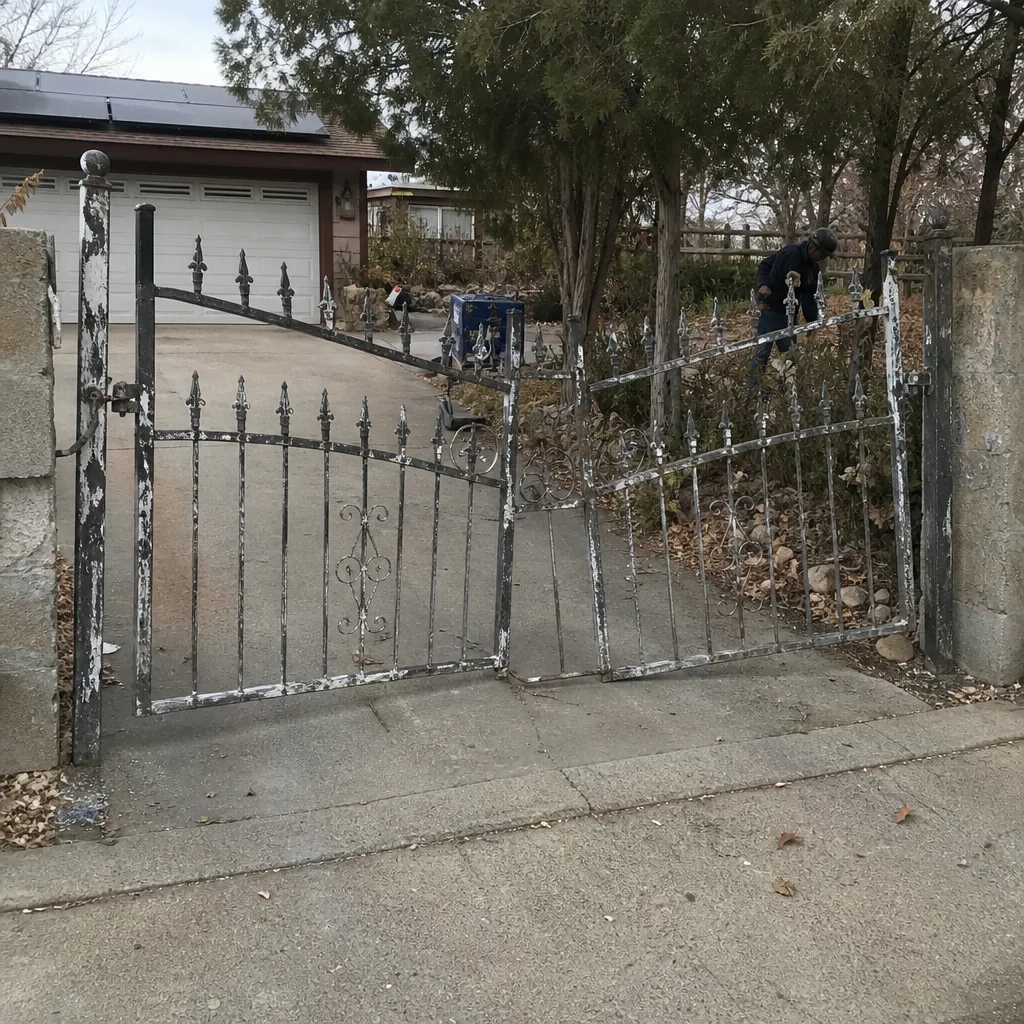 Before
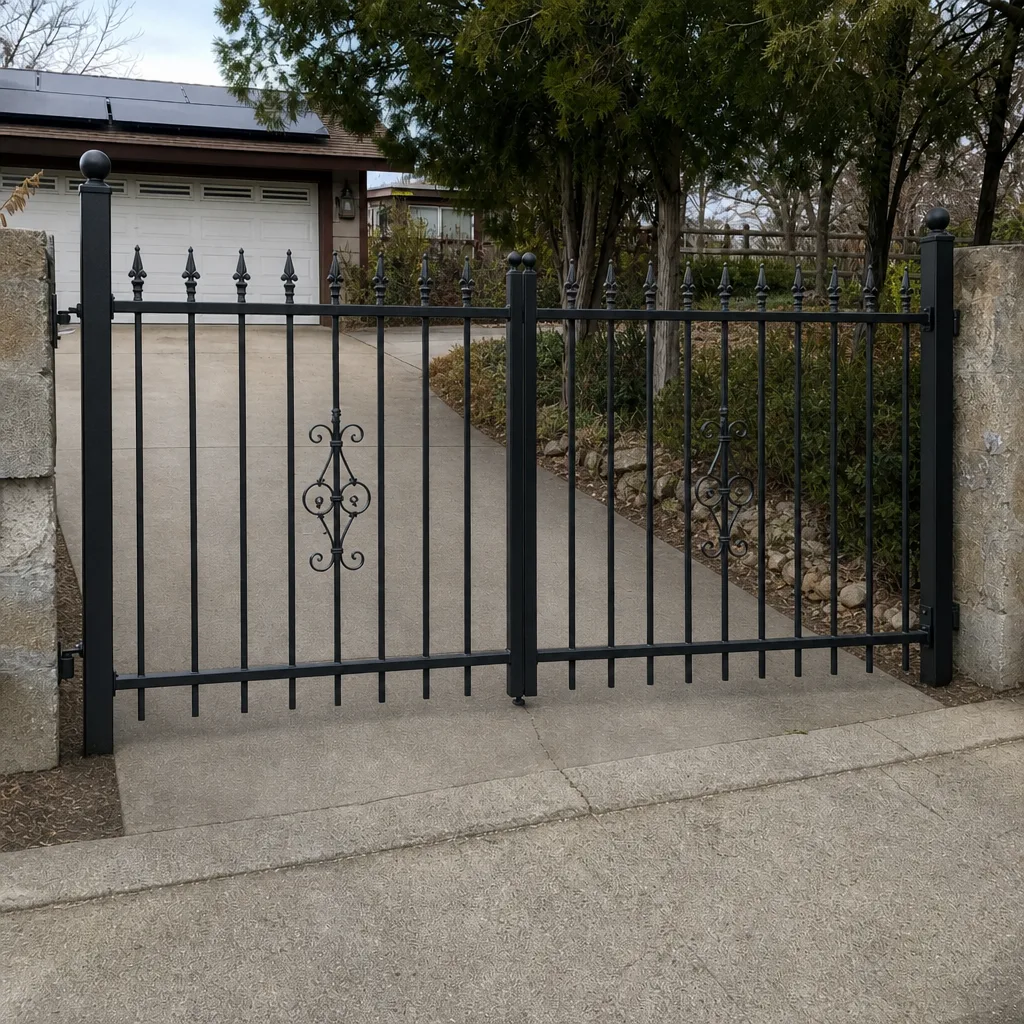 After
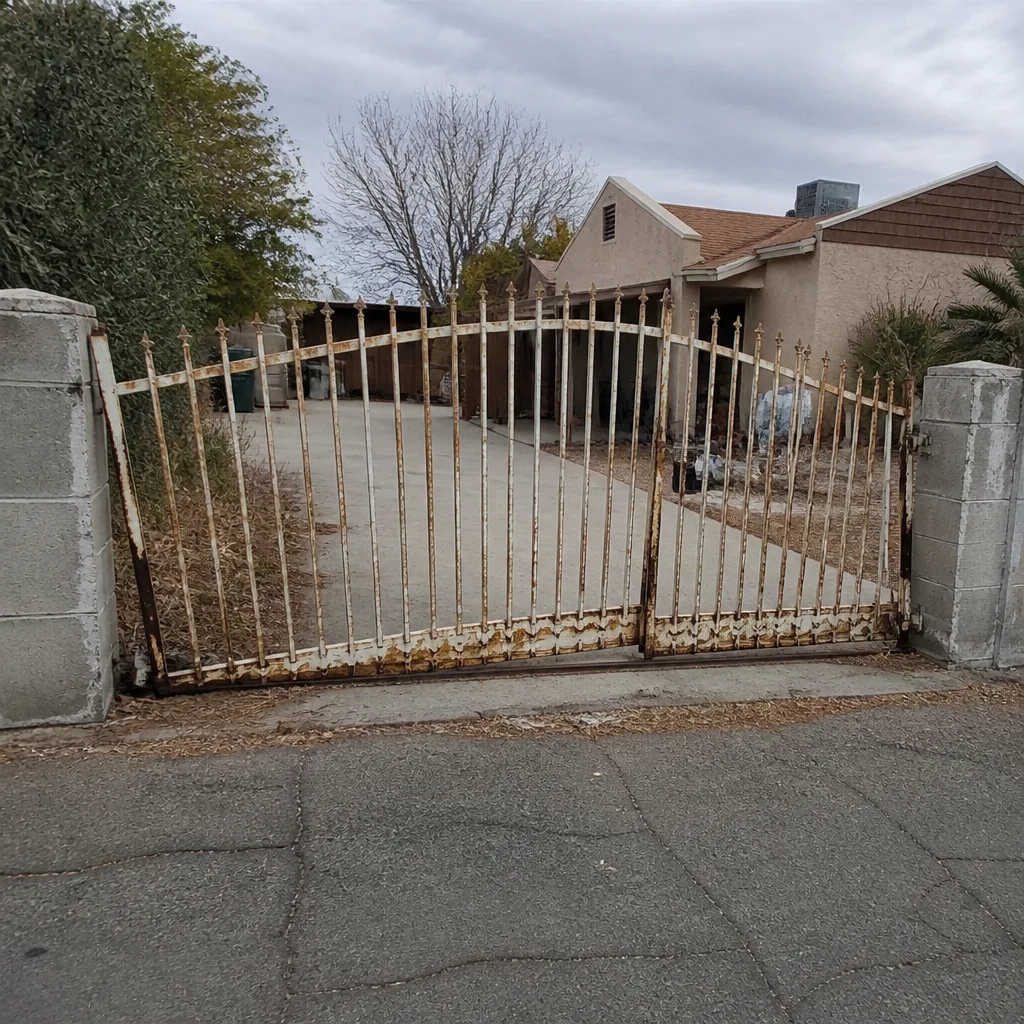 Before
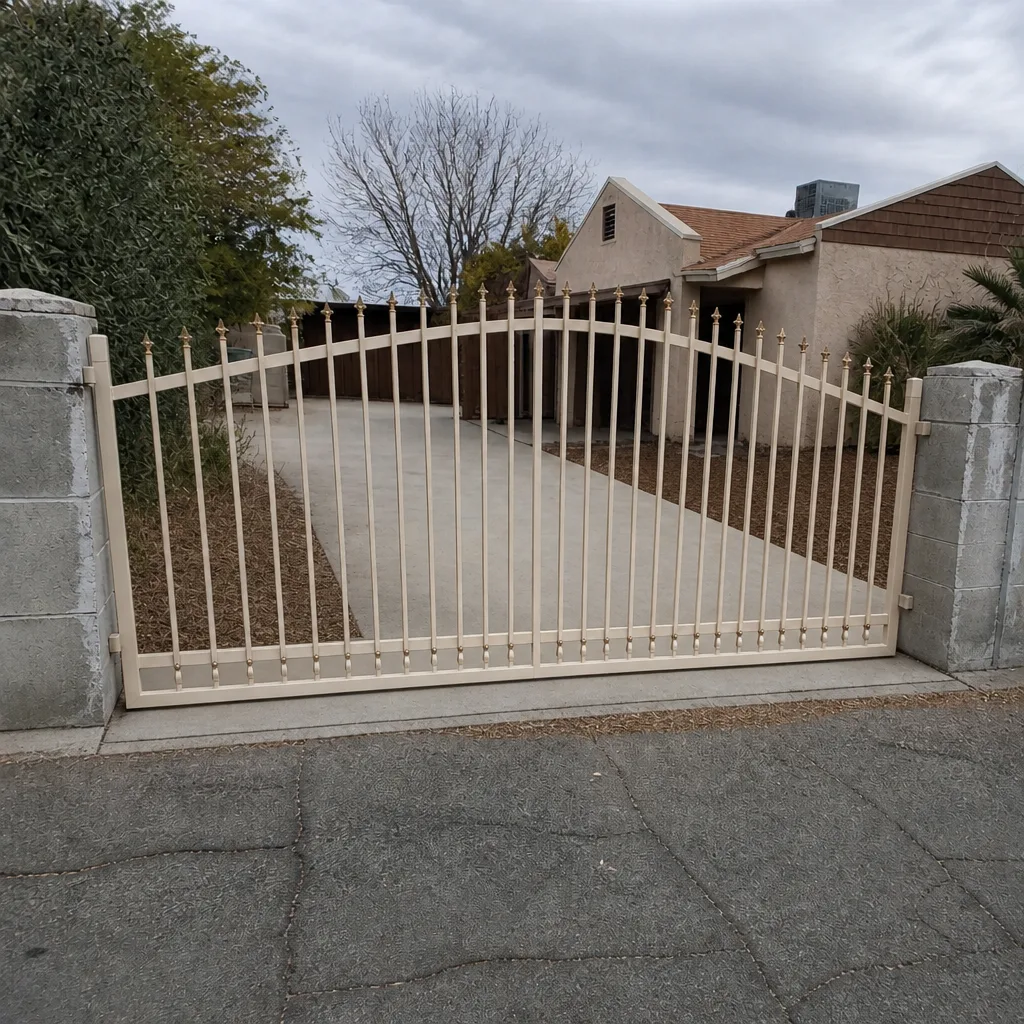 After
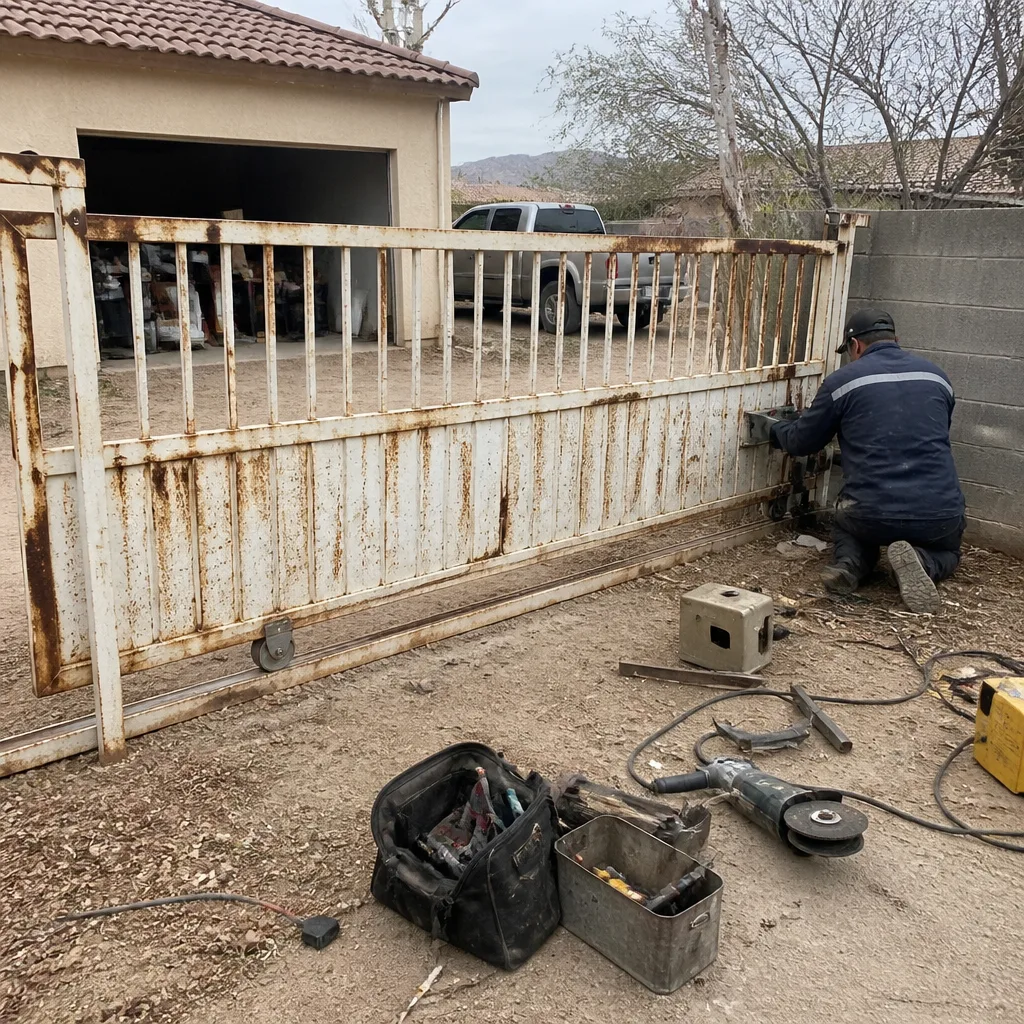 Before
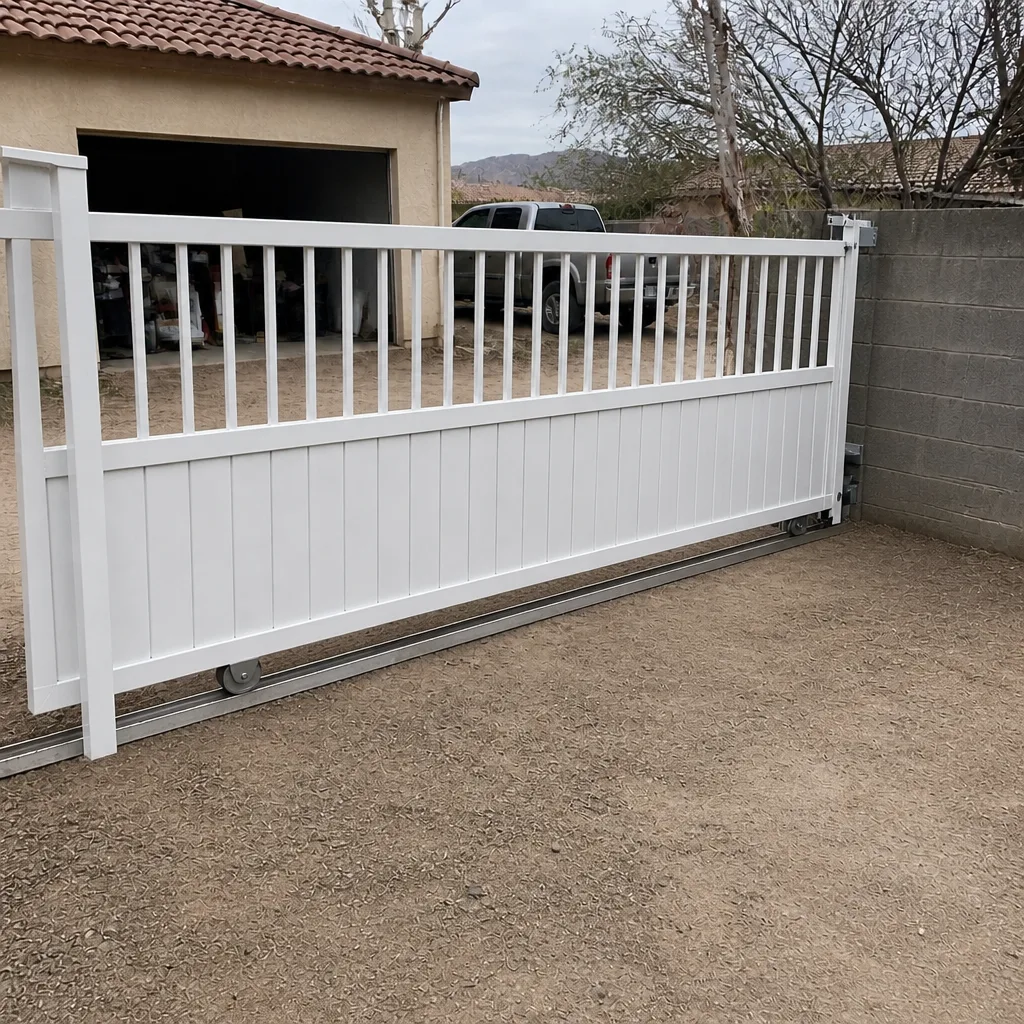 After
When to Call a Professional
Call a professional when the gate reverses on its own, when a post has moved out of plumb, when the operator won’t hold its programming, or when a weld has cracked. Also call when an overhead mechanism fails or the gate is stuck open. Those are the moments where a wrong repair can make the problem worse or create a safety hazard. For anything on the automation side, our gate motor and opener service is set up to diagnose the operator and the gate together, which is how we avoid the “replace the operator” call when the real problem is a binding hinge. Ironworks Gate Co. Boulder City offers free estimates in Boulder City and a free second opinion on any written estimate. Call (888) 276-7609.
Frequently Asked Questions
At 30 days. That’s when the gate has cycled enough times to reveal its real operating resistance, which lets the technician correct limits and force settings against how the gate actually behaves rather than how it behaved on day one. Waiting until the first annual service skips the adjustment that prevents most first-season problems.
Every 90 days during the first year, then every six months after that for swing gates and every four months for exposed slide gate tracks because of wind-blown grit. Overhead mechanisms should be left to a technician; don’t lubricate torsion hardware yourself.
A slight change in latch alignment or a fraction of an inch of settling is normal. A post that has tilted steadily, concrete cracking across the pad, or a gate that binds at the same point every cycle are signs of a foundation problem and should be inspected before the operator is blamed.
The operator’s force settings, limits, battery backup, and manual release; all safety devices tested by hand; every hinge, roller, chain, and fastener; all welds and structural points; post plumb and concrete condition; finish and rust; and access control hardware. It should take an hour or more and produce a written report.
Many do. Several major brand warranties are prorated and require documented service records. Keeping a maintenance log with dates, service performed, and who did it is the difference between a covered claim and a rejected one. Register the operator within 30 days of installation.
Yes. We offer free estimates in Boulder City, and a free second opinion on any written estimate you’ve already received. Call (888) 276-7609 for an exact quote, and we’ll schedule a time that works rather than promise a same-day dispatch. New gate service is measured and scheduled, not rushed.
The Bottom Line
Your gate’s first year is a break-in period, not a normal operating year. The 30-day adjustment, the 90-day lubrication pass, and the 6-month post check are what keep a correctly installed gate from becoming an early problem. Register the operator, keep the log, match lubricants to the hardware, and hire a specialist for anything on the automation or overhead side. Boulder City conditions make the break-in checks more important, not less, and the annual inspection is your early warning for everything that follows. Done right, a good gate will close like the day it was hung for decades. Done right and backed in writing is the standard we work to.
If you want the job reviewed by a qualified specialist, Ironworks Gate Co. Boulder City offers free estimates throughout Boulder City. Call (888) 276-7609 – a live person answers, 24 hours a day. Explore our Ironworks Gate Co. Boulder City home or our gate installation service for the next step.
Written by the team at Ironworks Gate Co. Boulder City.