
Last updated November 17, 2026
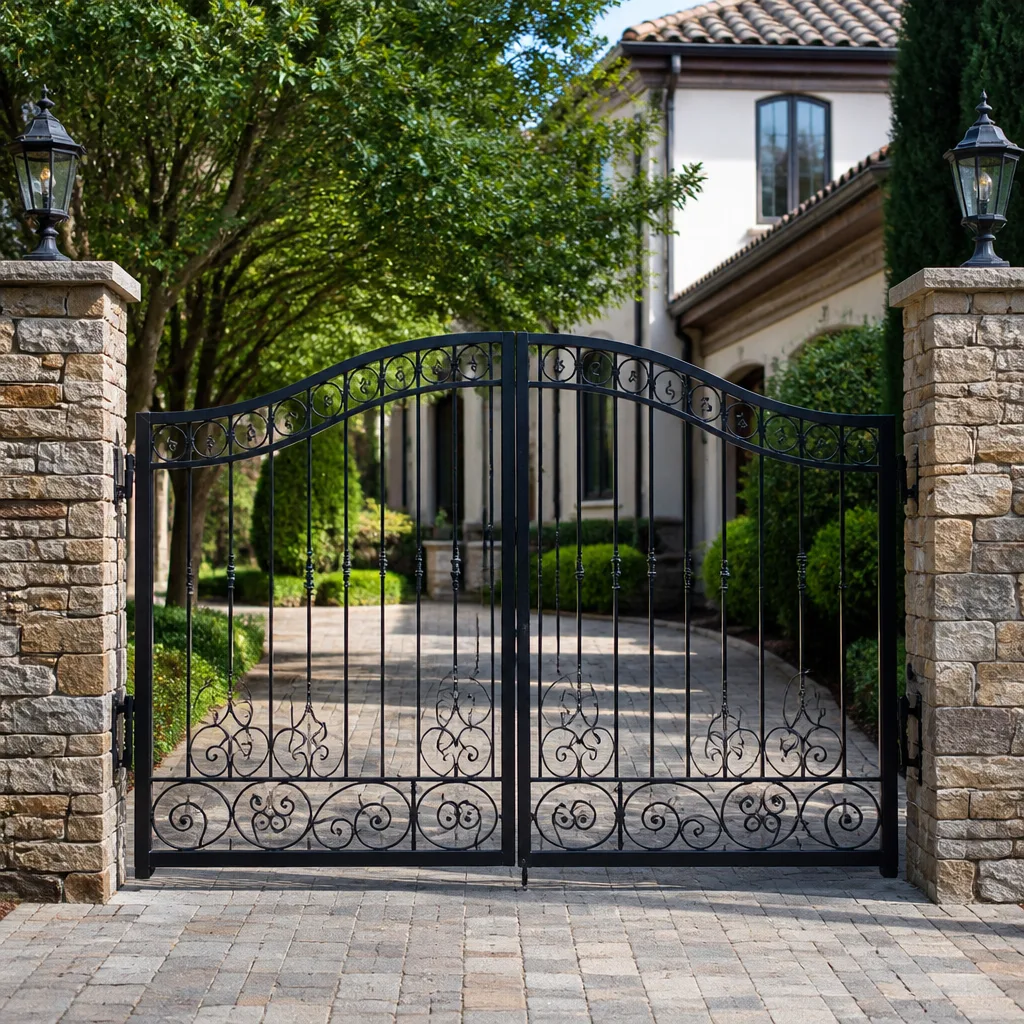 Wrought iron
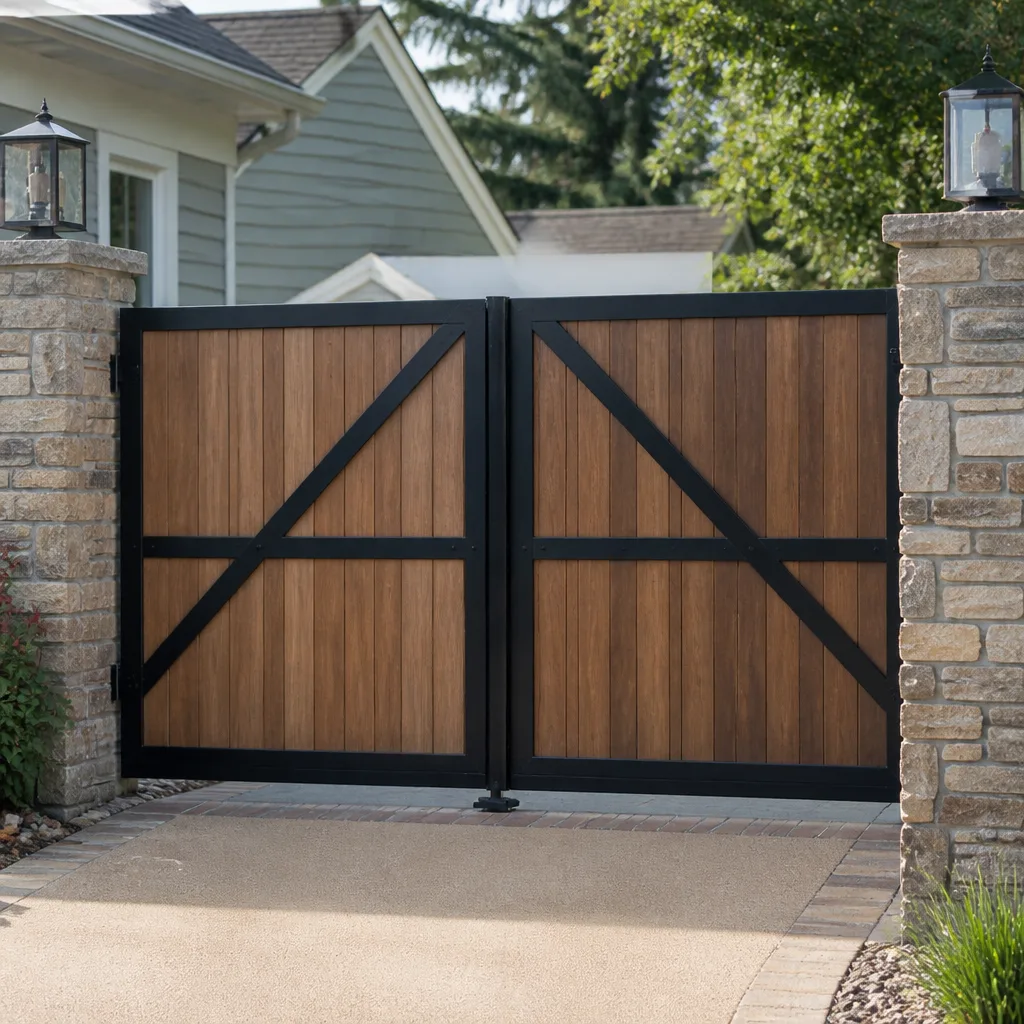 Wood & steel frame
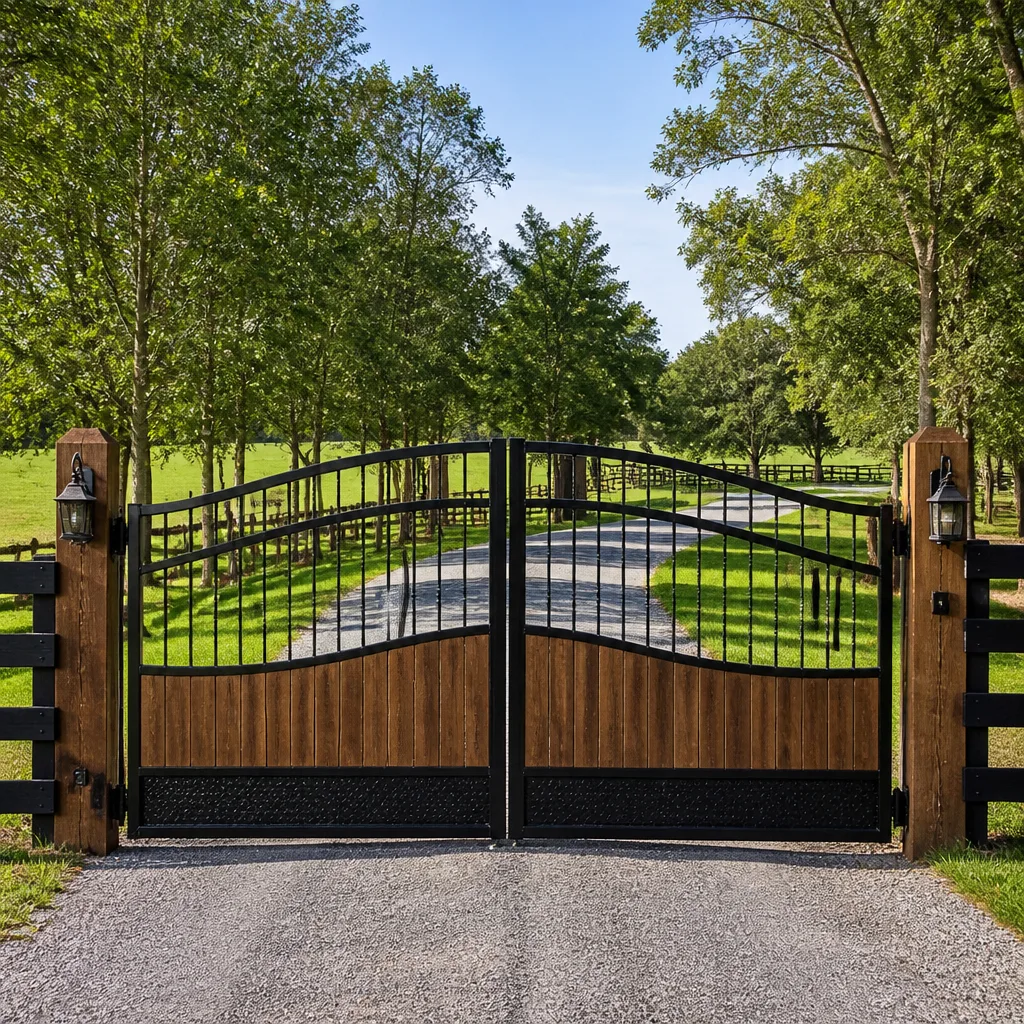 Farm & ranch
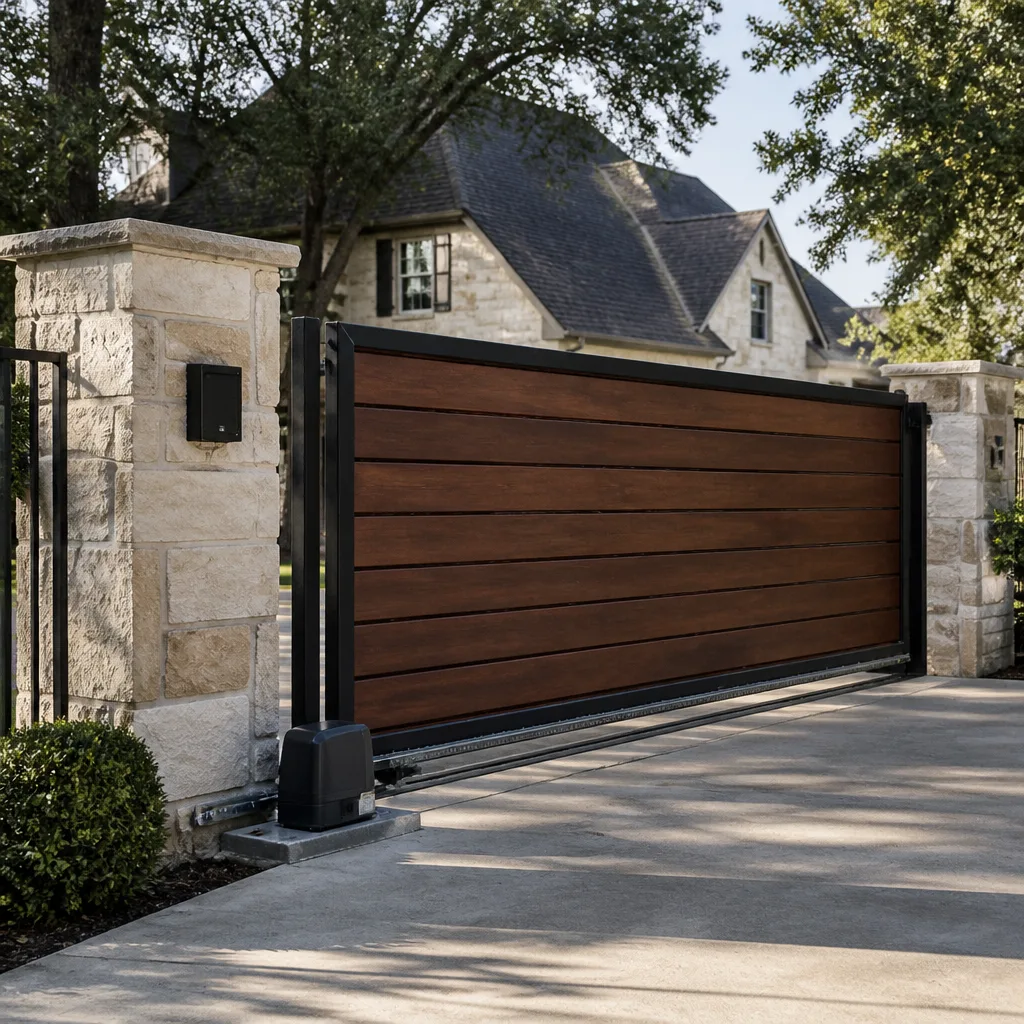 Sliding driveway gates
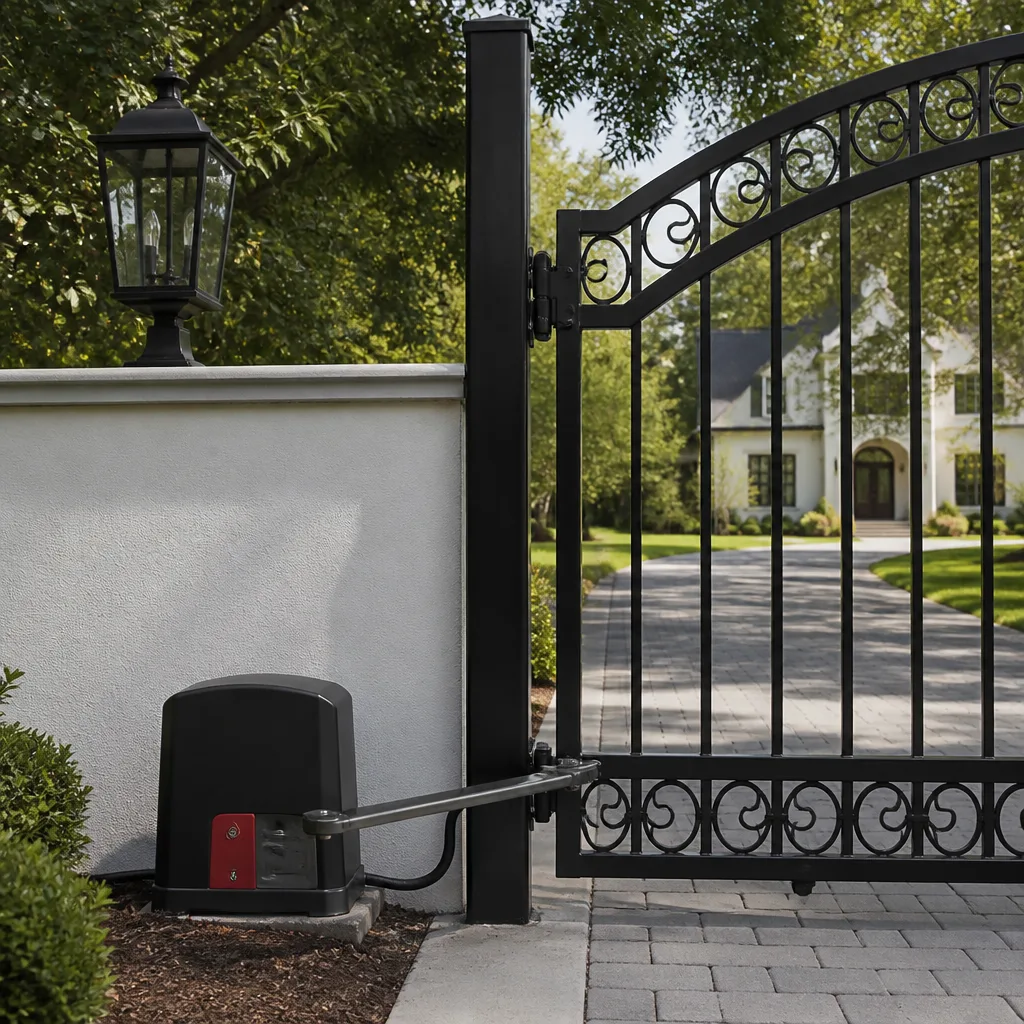 LiftMaster operators
Free on-site gate assessment - hinges, posts, and your LiftMaster or Nice gate operator checked before anything is quoted
The assessment is free and the quote is the invoice.
Get your free estimateGate Parts & Welding Maintenance Schedule: What to Do and When
A gate used by a family of four ages completely differently than the same gate used by a home with a housekeeper, a pool service, and regular deliveries. One may cycle six times a day; the other sixty. Apply the same annual maintenance calendar to both, and one of them will always seem to need repair. That’s the trap most maintenance advice falls into: it treats every gate the same. The right schedule isn’t based on the calendar at all. It’s based on cycle count and load. Below you’ll find how to estimate your gate’s real annual load, what to check at which interval, which parts need lubrication and which should never see a drop of oil, and how desert seasons in Boulder City change the equation. You’ll also learn exactly what a professional visit should cover versus what you can handle between visits.
Quick Answer
Gate parts and welding maintenance should be scheduled by how often your gate cycles, not by the month. A low-use gate (under about 20 cycles per day) needs a hardware and weld inspection every 12 months and lubrication every 6. A high-use gate (40+ cycles daily) needs inspection every 6 months and lubrication every 3. In Boulder City’s desert climate, add one post-monsoon inspection in September and a cold-snap hardware check in January regardless of cycle count. Hinges and pivot bearings get lubricated; gate tracks, keypads, and screw-drive arms do not.
Styles & brands we work with
- Wrought iron
- Wood & steel frame
- Farm & ranch
- Sliding driveway gates
- LiftMaster operators
Table of Contents
- Why Cycle Count Beats the Calendar
- How to Estimate Your Gate’s Annual Cycle Load
- The Maintenance Matrix: Low-Use vs. High-Use Gates
- Lubrication: What to Use, How Often, and What to Never Lubricate
- Desert Seasonal Tasks: Monsoon, Summer Expansion, Winter Cold
- Welds and Hardware: What to Look For and When to Stop Using the Gate
- What You Can Do Between Visits vs. What a Professional Visit Should Include
- Common Mistakes to Avoid
Why Cycle Count Beats the Calendar
Every gate wears out one cycle at a time. Every open and close puts load on the hinges, the pivot bearings, the weld joints, the operator gearbox, and the drive mechanism. A calendar schedule ignores this entirely. Two identical gates on the same street in Boulder City will wear at different rates because they’re doing different amounts of work. One homeowner lives alone and leaves twice a day. The neighbor runs a home business with clients arriving through the morning, a gardener on Tuesdays, and grandkids in and out all summer. Those gates will not last the same number of years, and applying the same quarterly inspection to both is money spent in the wrong place on one gate and neglect on the other.
We’ve seen this directly. In our experience servicing gates around Boulder City and the older neighborhoods near the historic district, a low-use gate that’s twenty years old is often in better structural shape than a high-use gate that’s eight years old. The difference is almost always cycle count, not age. That’s why we build every maintenance plan around how much the gate actually works.
Cycle count matters most for three things: hinge and pivot bearing wear, weld joint fatigue at the post attachment points, and operator gearbox load. All three fail from repeated stress, not from sitting still. The finish and paint fail from sun and weather, which is a calendar issue. Separate the two and your schedule writes itself.
How to Estimate Your Gate’s Annual Cycle Load
You don’t need a logbook. A rough count over one week tells you everything you need. Here’s a simple method:
- Pick a typical week – not a vacation week, not the week you had company. A normal one.
- Count every use of the gate for two or three of those days, including the mail carrier, packages, deliveries, and your own comings and goings. Write it down.
- Add up the total uses per day. Multiply by 365 for a rough annual figure.
- Add predictable extras: a weekly yard service is 3-4 more cycles, a pool service 3-4 more, regular deliveries 2-4 more per week. Multiply each by 52 and add them in.
- Compare your weekly total to the use on a busy weekend day – that’s your peak load, which wears harder than daily average.
Most Boulder City homes we service land somewhere between 8 and 30 cycles a day. Homes with regular delivery traffic, extended family, or a home office bump that to 40 to 60. If you’re near the top of that range or above it, you’re in high-use territory and your inspection intervals should shorten accordingly. If you’re at the bottom – a single vehicle, and the gate is optional – you can stretch your intervals safely.
The Maintenance Matrix: Low-Use vs. High-Use Gates
Here’s the practical difference. Below is the same set of components at two different schedule policies, based on how much work the gate actually does.
Low-Use Gates (Under ~20 Cycles Per Day)
- Hinges and pivot bearings: Lubricate every 6 months; inspect and adjust every 12.
- Welds and post attachment points: Visual inspection every 12 months.
- Hardware (bolts, brackets, latches, stops): Tighten and check every 12 months.
- Finish and paint: Touch up annually; full repaint every 4-6 years depending on sun exposure.
- Operator/motor: Professional service every 12-18 months.
- Safety sensors: Test monthly (homeowner), professional calibration annually.
High-Use Gates (40+ Cycles Per Day)
- Hinges and pivot bearings: Lubricate every 3 months; inspect and adjust every 6.
- Welds and post attachment points: Inspection every 6 months – yes, twice as often.
- Hardware: Tighten and check every 6 months.
- Finish and paint: Touch up every 6-9 months; full repaint every 3-4 years.
- Operator/motor: Professional service every 6-9 months.
- Safety sensors: Test monthly; professional calibration twice a year.
Between the two extremes, common sense rules. A gate at 25-30 cycles a day sits comfortably in the middle: annual inspection, and lubrication that lands between the 3-month and 6-month intervals depending on how quiet the gate stays after each service.
For homeowners who’d rather not track any of this themselves, our Ironworks Gate Co. Boulder City home page walks through the service options that fit each schedule, and the seasonal tune-up pricing covers the basic inspection and lubrication without the full evaluation if you need it.
Lubrication: What to Use, How Often, and What to Never Lubricate
Lubrication is where the greatest good and the greatest harm live side by side. Done right, it makes a gate swing like new for years. Done wrong, it grips grit, gumming up hinges and grinding pivot bearings into premature failure. The word that matters here is “dry.”
What to Use
- Hinges and pivot pins: a dry film lubricant, a graphite spray, or a molybdenum-disulfide (moly) grease. These go on wet and dry into a thin film that doesn’t collect dust.
- Bearings: a light lithium grease where the manufacturer specifies it; otherwise the dry film type called for in your gate manufacturer’s manual.
- Latch and striker plates: dry graphite in the latch mechanism, applied sparingly, twice a year.
- Steel hardware threads and bolt ends (exposed to weather): an anti-seize compound on threaded hardware before reassembly after any repair.
What Never to Lubricate
- Gate tracks and guide channels on sliding gates: track should be clean and dry. Oil attracts grit; grit wears the track and the roller flanges.
- Keypad contacts and access control boards: keep sealed and dry. Never spray anything into a keypad housing.
- Screw-drive operator rails (the screw itself): the operator manufacturer’s spec overrides everything here; on Linear and similar screw-drive operators, the molybdenum-rich operator grease is used once and then not reapplied – never add a general-purpose lubricant on top.
- Safety sensor lenses: clean with a soft cloth; never lubricate.
Lubrication Frequency by Environment
In Boulder City, dust is constant and the wind carries grit from the desert floor into every moving surface. A hinge that might go 6 months in a humid climate will start to squeal in half that time if it’s a high-use gate. Light, frequent dry-film applications every 3 months on the hinges of a high-use gate outperform a single heavy grease application annually by a wide margin.
Desert Seasonal Tasks: Monsoon, Summer Expansion, Winter Cold
Boulder City’s climate has three seasonal pressures that a generic maintenance schedule doesn’t account for: the late-summer monsoon, the plateau of 100-degree-plus heat from June through August, and the occasional sharp cold snap in December and January that catches metal hardware off guard. Each one calls for a specific task.
Post-Monsoon Inspection (September)
Monsoon season in the Mojave can deliver weeks of dust storms and flash-flood rain in a single afternoon. Two things need attention after the season: fine debris that’s collected around the base of the gate posts, and rust-stained water trails that indicate a finish compromise or a failing weld. Walk the gate once, look at the bottom of the posts where water collects, and check every weld joint on the enclosure panels and the main frame.
Summer Expansion Checks (June through August)
Metal expands in the heat. A gate that closes cleanly in March can start to drag in July because the frame has grown a hair. Weld joints at the corners are the most common failure point here – the expansion and contraction cycle itself puts stress on them. If the gate has started to scrape or rub, that’s usually a seasonal adjustment, not a failure.
Winter Cold-Snap Hardware Review (December-January)
Boulder City sits at higher elevation than Las Vegas, so overnight temperatures can drop into the 30s. Metal contracts back down. Bolts that were tightened in July can work loose by January. Latch mechanisms can bind. It’s worth a brief check on latch, hinge, and bracket tightness after the first cold snap of the year.
For a full repair scenario that often surfaces during these seasonal checks – particularly weld cracks at the post attachment on heavily used gates – see our page on Gate Repair in Winchester for the diagnostic sequence.
Welds and Hardware: What to Look For and When to Stop Using the Gate
Weld failures on driveway and estate gates almost always start small. It begins as a hairline crack at a weld joint where the gate frame meets the post attachment or the enclosure panel meets the main frame. Those joints see a lot of stress – every cycle, the weld is loaded and unloaded, and over time the flex works the crack deeper. The danger is that gate failure is not gradual. A weld that’s been failing for two years can let go in a single wind gust, or under the momentum of the gate when it’s swinging.
What to Look For
- Hairline cracks at welds: look at the joint faces where the gate frame meets the rails, and at the post attachment point.
- Rust streaks at weld joints: rust in a weld seam means water has found a compromise; the weld is starting to fail.
- Popping or creaking sounds from the gate: a weld or hinge that’s flexing before failure makes noise.
- Gate sagging or dragging: often a hinge failure, but could be a weld crack that’s pulled the frame out of square.
- Anything that looks like flex where it should be solid: hold one hand on the joint and push the gate gently. Any movement beyond the hinge itself is a red flag.
When to Stop Using the Gate
If you can see a crack larger than a hairline at any weld joint, stop operating the gate. Prop it open and give us a call. A weld repair is a quick fix on a sound gate but a much bigger job after the weld has torn out the surrounding metal, and there’s a real risk of the gate coming down. That’s also the reason the schedule matters: a weld inspected every 6 months on a high-use gate is a weld that gets caught weeks before failure, not years after.
Welding is one of the tasks we handle most often for Boulder City homeowners, and it’s usually the repair that saves a gate that was six months from needing full replacement. If the weld itself has failed, see our team at Gate Repair in Winchester through the link above, or ask about welding in the same visit.
What You Can Do Between Visits vs. What a Professional Visit Should Include
A good maintenance schedule splits cleanly between what you can realistically do and what should go to a professional. Here’s the honest version of both, with time estimates.
Homeowner Tasks – 10 to 15 Minutes a Month
- Monthly safety sensor test: trip the safety reverse by walking through the gate beam during operation. Add a 30-second check on the gate’s auto-reverse pressure. Takes 2-3 minutes.
- Monthly visual walk-around: look for rust streaks, debris in the track or base, and loose hardware visible at a glance. 5 minutes.
- Quarterly dry-film lube on hinges – one spray per hinge. 5-8 minutes on a typical estate gate.
- Seasonal cold-snap check on latches and brackets – 10 minutes.
Professional Visit – 60 to 90 Minutes, Annually or Semi-Annually
A proper professional maintenance visit is not the same as a repair call. Here’s what should be included:
- Full structural inspection: all weld joints, post anchors, gate frame, enclosure panels.
- Operator service: open the housing, inspect the gearbox and drive mechanism, check the motor, inspect the battery backup if fitted.
- Hinge and pivot bearing service: check clearance, adjust, and lubricate per spec.
- Safety system test and calibration: sensors, reverse pressure, and, where fitted, edge sensors and photo-eye alignment.
- Access control check: keypads, remote range, and any intercom or phone-via-app systems (DoorKing and Linear systems commonly show battery or firmware issues that surface during this inspection).
- Finish check: rust spots worth touching up before the next season.
- Written summary of what was found, what was done, and any items to watch.
That’s the difference between a maintenance visit and a repair call. It takes more effort and is worth it. If your gate is currently in the middle of a maintenance cycle, the Gate Motor & Opener in Winchester page details what’s covered on the operator side, and a full walkthrough is available through our Gate Installation in Winchester page for homeowners considering a fresh gate where maintenance frequency is a key factor in the material choice.
Common Mistakes to Avoid
- Applying grease to hinges or tracks that should stay dry. The single biggest cause of premature hinge failure on gates we see in Boulder City is a homeowner spraying a heavy grease into a hinge that the manufacturer specifies as dry film. The grease grabs desert grit, and the hinge grinds itself out.
- Using the calendar instead of the cycle count. A low-use gate that’s inspected on the same quarterly schedule as a high-use gate is over-serviced on one end and neglected on the other. Count the cycles first, then set the schedule.
- Skipping the post-monsoon inspection. The September walk-around catches rust in its earliest stage – a small streak you can touch up in five minutes versus a weld that will need replacing by next spring.
- Ignoring a weld crack because the gate “still works fine.” Weld failure is not gradual. A gate with a visible crack larger than a hairline should be propped open and inspected professionally before the next cycle.
- Assuming the operator is the problem when the hinges are the cause. A gate that’s dragging or reversing midway is often a worn hinge or loose anchor, not a motor failure. Diagnosing the parts side before the operator side saves money and time.
- Running extended-family load through a low-use operator. If the gate has become the main entrance for deliveries, pool service, and a growing list of regulars, the operator needs a service interval upgrade – not just more frequent hinges.
- Skipping the winter cold-snap check. Metal contracts, bolts loosen, latches can bind. A 10-minute check in January catches what would otherwise become a February repair call.
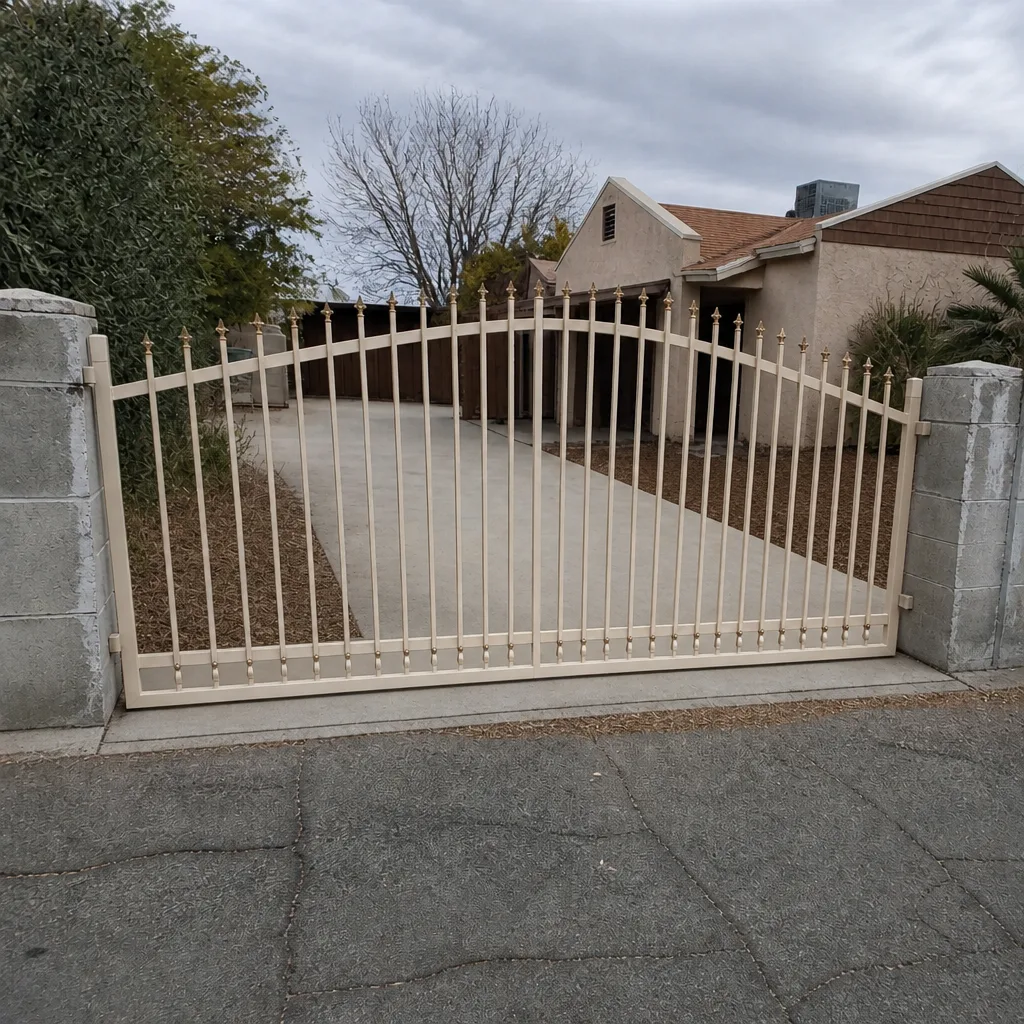
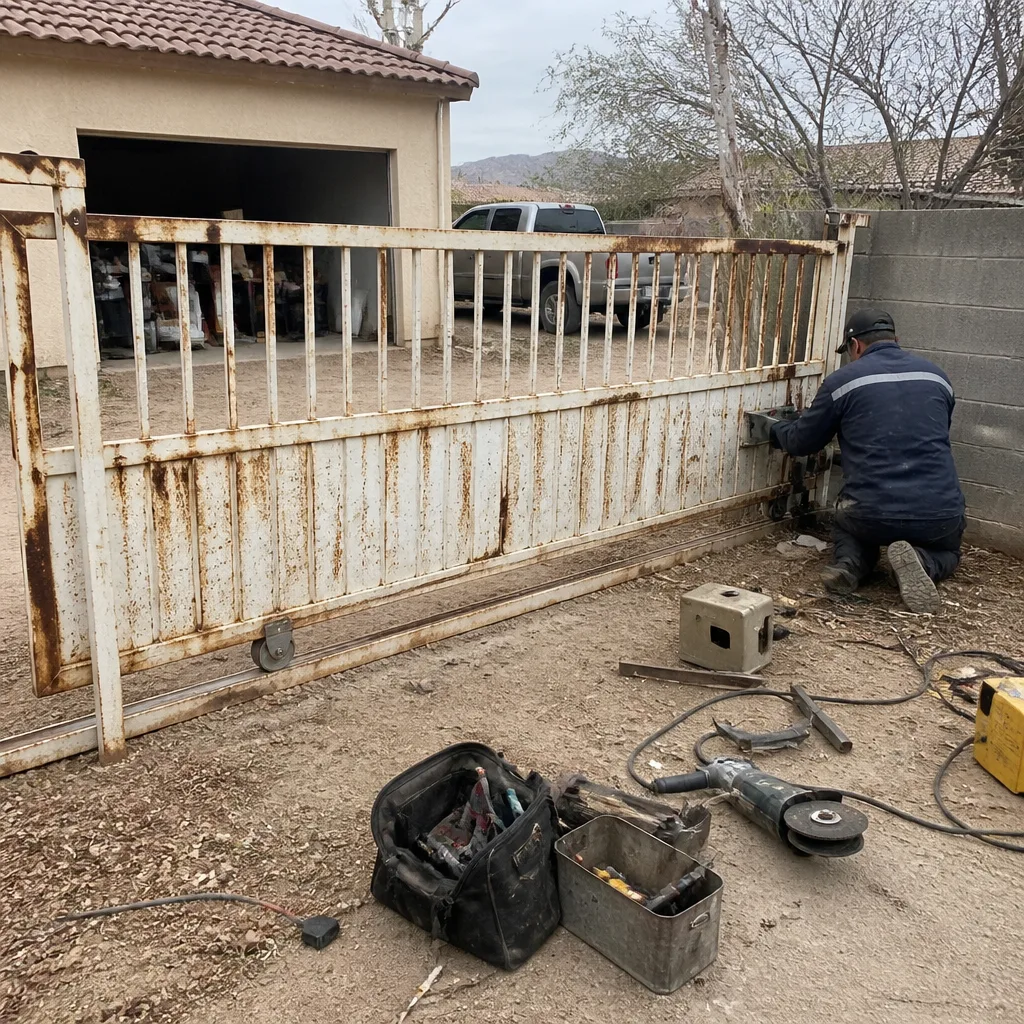
See the difference
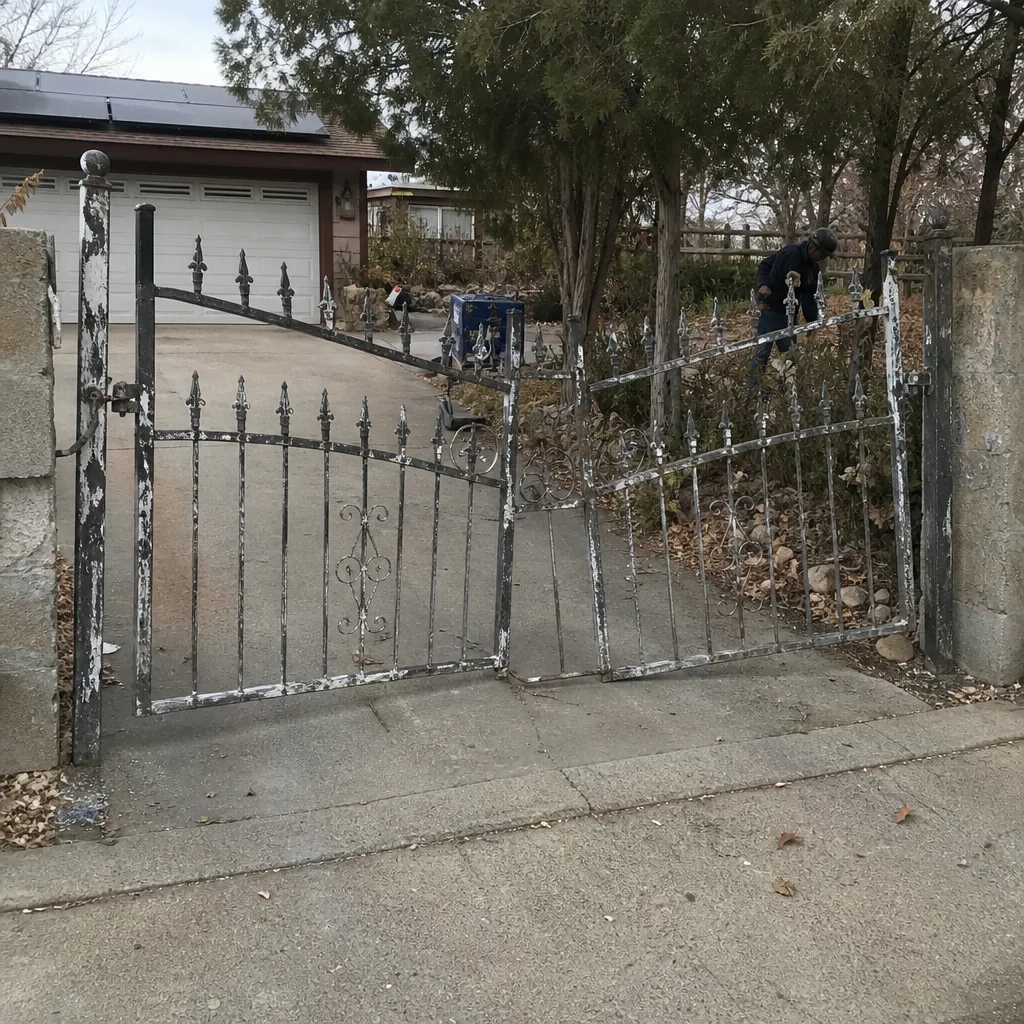 Before
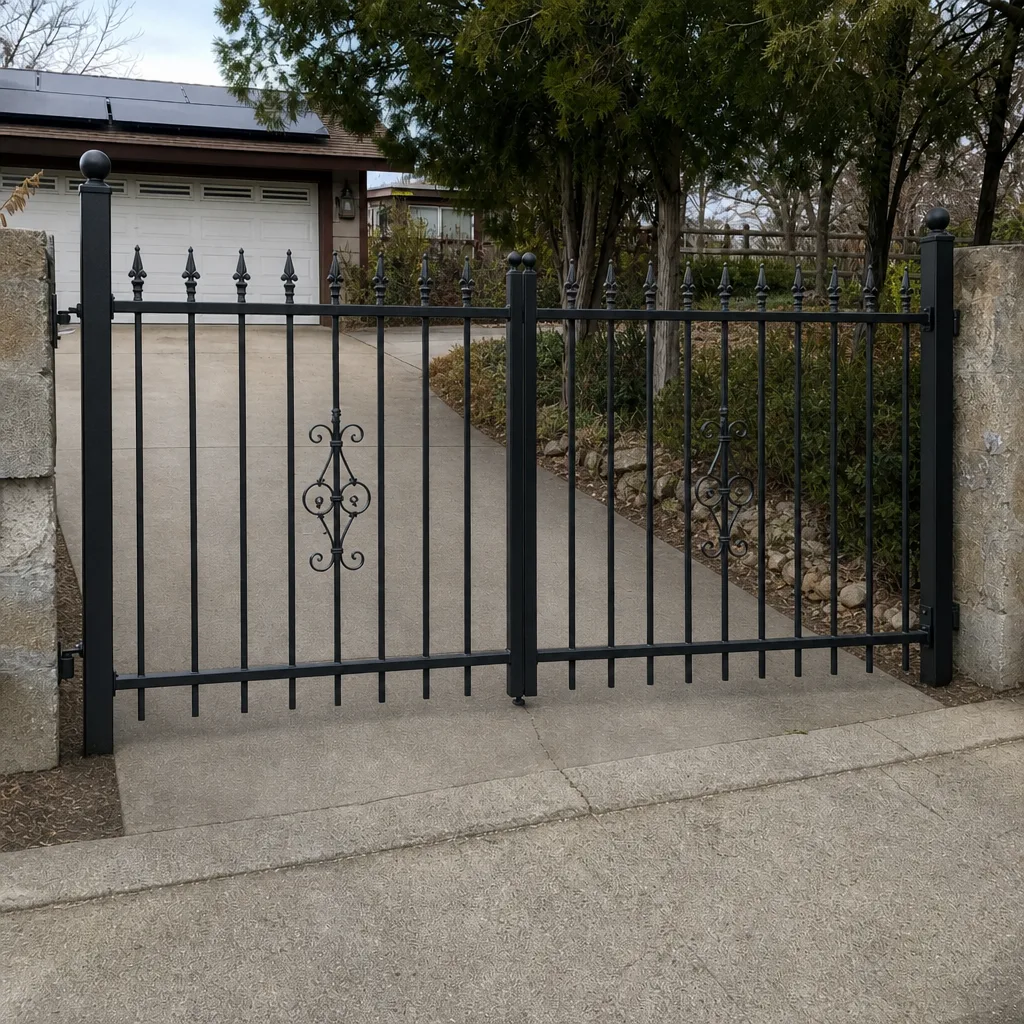 After
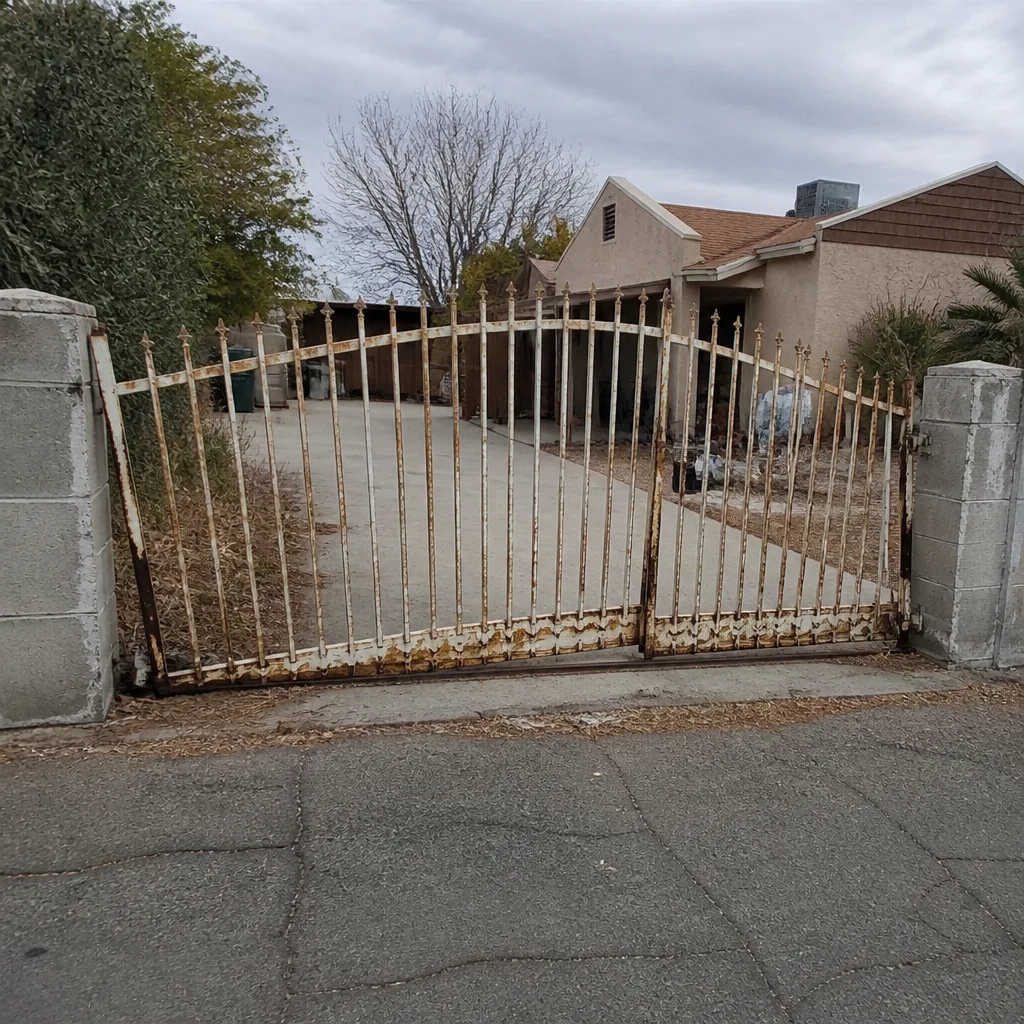 Before
 After
 Before
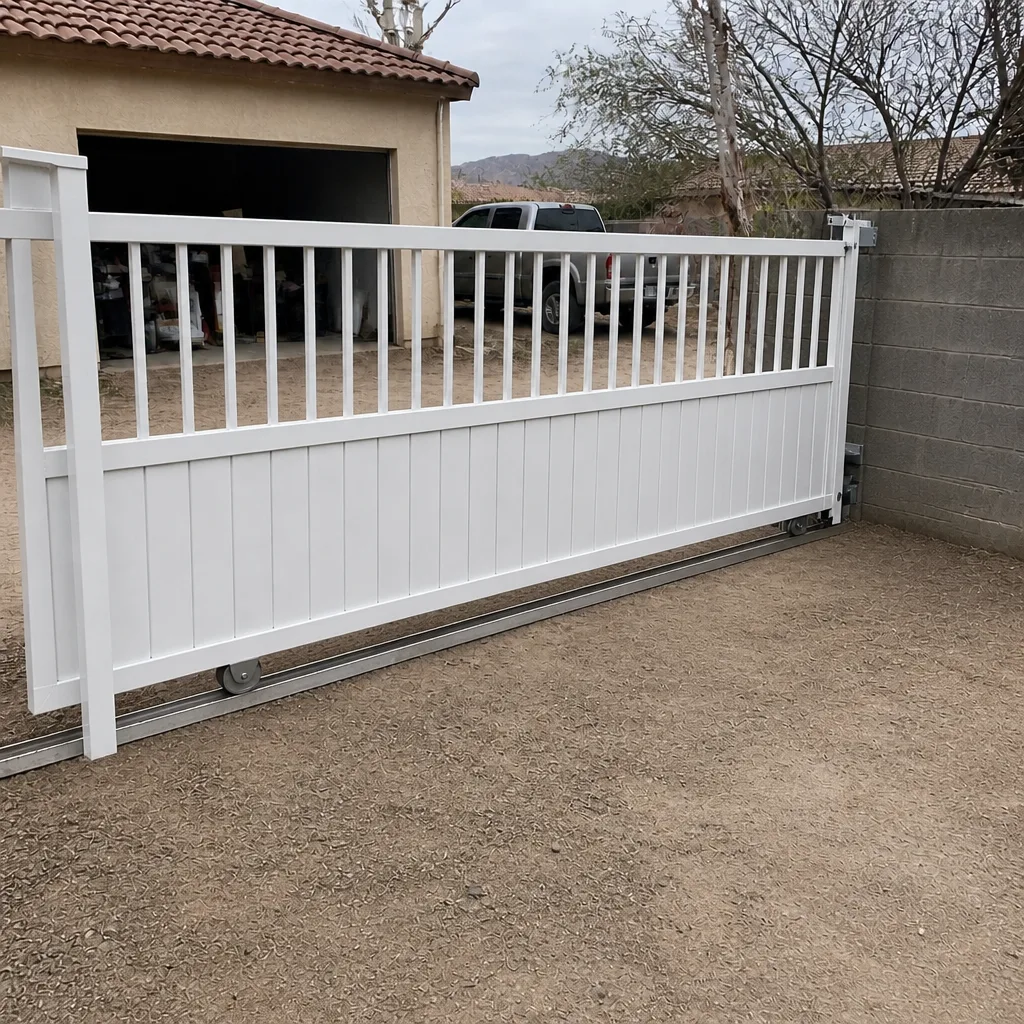 After
When to Call a Professional
Call before operating the gate any further in these situations: any visible weld crack larger than a hairline, a hinge so worn the gate sags, hardware that’s come loose and gone missing, a gate that reverses when it shouldn’t, or any physical movement at a joint that should be solid. Welding isn’t a homeowner job – grinding, prepping, and re-welding a gate joint on a structural member requires proper equipment and skill, and the load on a driveway gate makes the failure risk real. If your gate feels wobbly, scrapes on every cycle, or has started triggering its safety reverse without obstruction, that’s a repair diagnosis – not a maintenance task. Ironworks Gate Co. Boulder City offers free estimates in Boulder City – call (888) 276-7609. Our technicians are trained and equipped on Linear, DoorKing, Ghost Controls, and other leading brands so the diagnosis is right the first time. The price is quoted and agreed before any work begins, and every job is covered by our 90-Day Done Right Promise.
Frequently Asked Questions
Lubricate hinges and pivot bearings with a dry-film product every 3 months on a high-use gate (40+ cycles a day) and every 6 months on a low-use gate. Never apply heavy grease to hinges, and never lubricate sliding gate tracks, keypads, or screw-drive operator rails with anything other than the manufacturer’s specified product. Call (888) 276-7609 for an exact service plan based on your gate’s cycle count.
A maintenance visit is proactive – inspecting all the parts, adjusting, lubricating, testing the safety system, and reporting back on what to watch. A repair call fixes something that’s already failed. A genuine maintenance visit takes 60-90 minutes and covers inspection, operator service, safety calibration, and access controls. If your gate has started rubbing, sagging, or reversing when it shouldn’t, that’s a repair call. Call (888) 276-7609 for a free estimate.
Yes – Boulder City’s dust and grit mean hinges need more frequent dry-film lubrication and welds need closer inspection than a humid-climate gate. Add a post-monsoon inspection in September and a cold-snap hardware check in January regardless of cycle count. Call (888) 276-7609 for a maintenance plan built around Boulder City’s climate.
The two most reliable signs of weld failure are hairline cracks at the weld joint and rust streaks running out from a seam. Any visible crack larger than a hairline should be treated as a hazard: prop the gate open, don’t operate it, and call a professional. Welding a structural gate joint is not a homeowner task. Call (888) 276-7609 for an inspection and estimate.
Hinges and pivot bearings wear first on high-use gates, weld joints at the post attachments wear second, and finish (paint or powder coat) degrades fastest on the sun-facing surfaces. High-use gates in Boulder City typically need hinge service every 6 months and weld inspection every 6 months; low-use gates can stretch those to 12. Call (888) 276-7609 to schedule a service timed to your gate’s load.
A thorough maintenance visit should include full structural inspection of the gate and posts, weld joint inspection, hinge and pivot service, operator gearbox and motor service, safety sensor testing and calibration, access control check (keypads, remotes, and any intercom), and a written summary of findings and items to watch. That’s a 60-90 minute visit for most estate gates. Call (888) 276-7609 to schedule one – estimates are free.
The Bottom Line
The right gate maintenance schedule is set by how much work your gate actually does, not by the year on the calendar. Estimate your daily and annual cycle count once, then build the schedule around three numbers: your hinge lubrication interval (3 months for high-use, 6 for low-use), your weld inspection interval (6 months for high-use, 12 for low-use), and your seasonal checks in Boulder City (post-monsoon in September, cold-snap in January). Lubricate the parts that should be lubricated – hinges and bearings, dry film, not grease – and leave the tracks, keypads, and operator rails alone. Handle the safety sensor test monthly yourself, and book a proper professional maintenance visit for the structural, operator, and access control work. Done right, a gate will run quietly for a decade or more between major repairs. That’s the standard we work to at Ironworks Gate Co. Boulder City, and the reason most maintenance jobs we touch don’t come back.
If your gate is due for a maintenance visit or you’ve spotted something on this schedule that needs a professional eye, call (888) 276-7609 for a free estimate. We’ll quote the work in writing before a single bolt is turned, back it with our 90-Day Done Right Promise, and make sure you’re set up with a cycle-based schedule that fits how much work your gate actually does.
Written by the team at Ironworks Gate Co. Boulder City.