
Last updated November 17, 2026
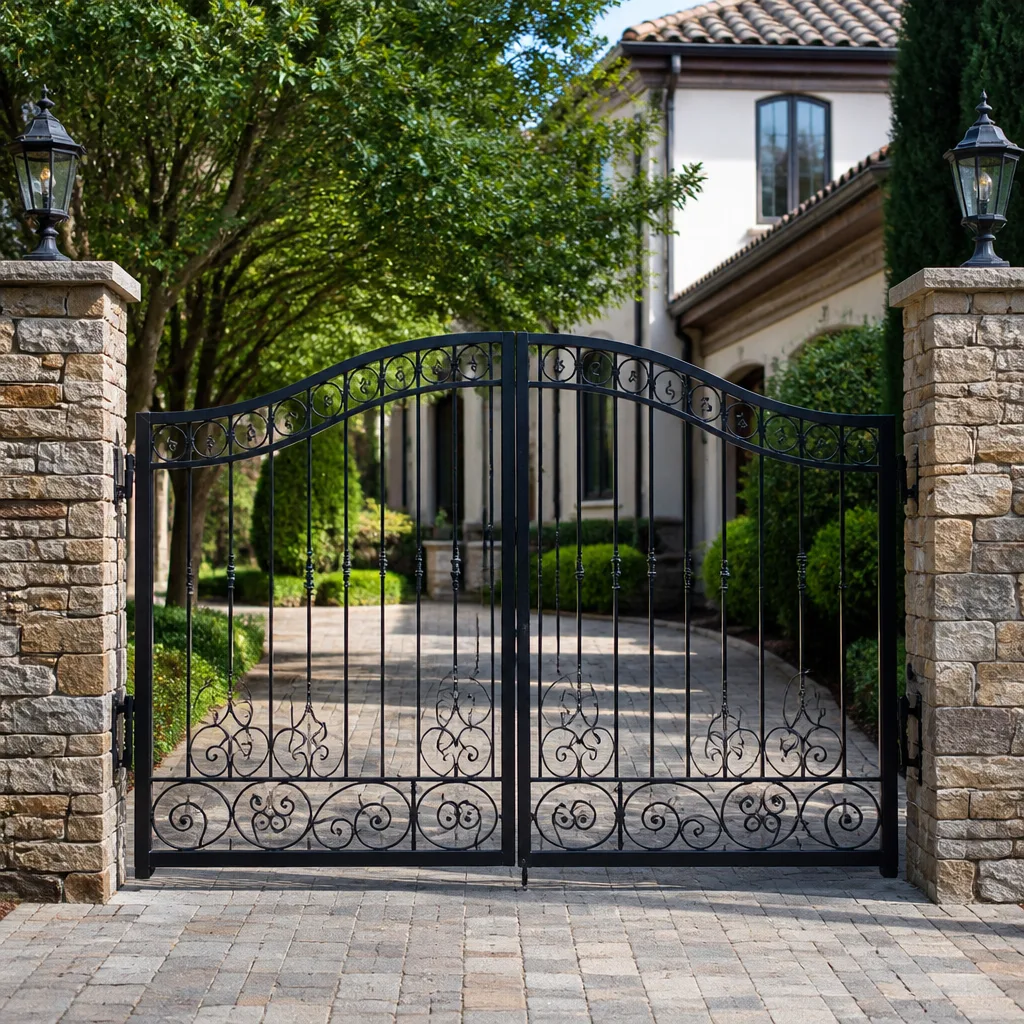 Wrought iron
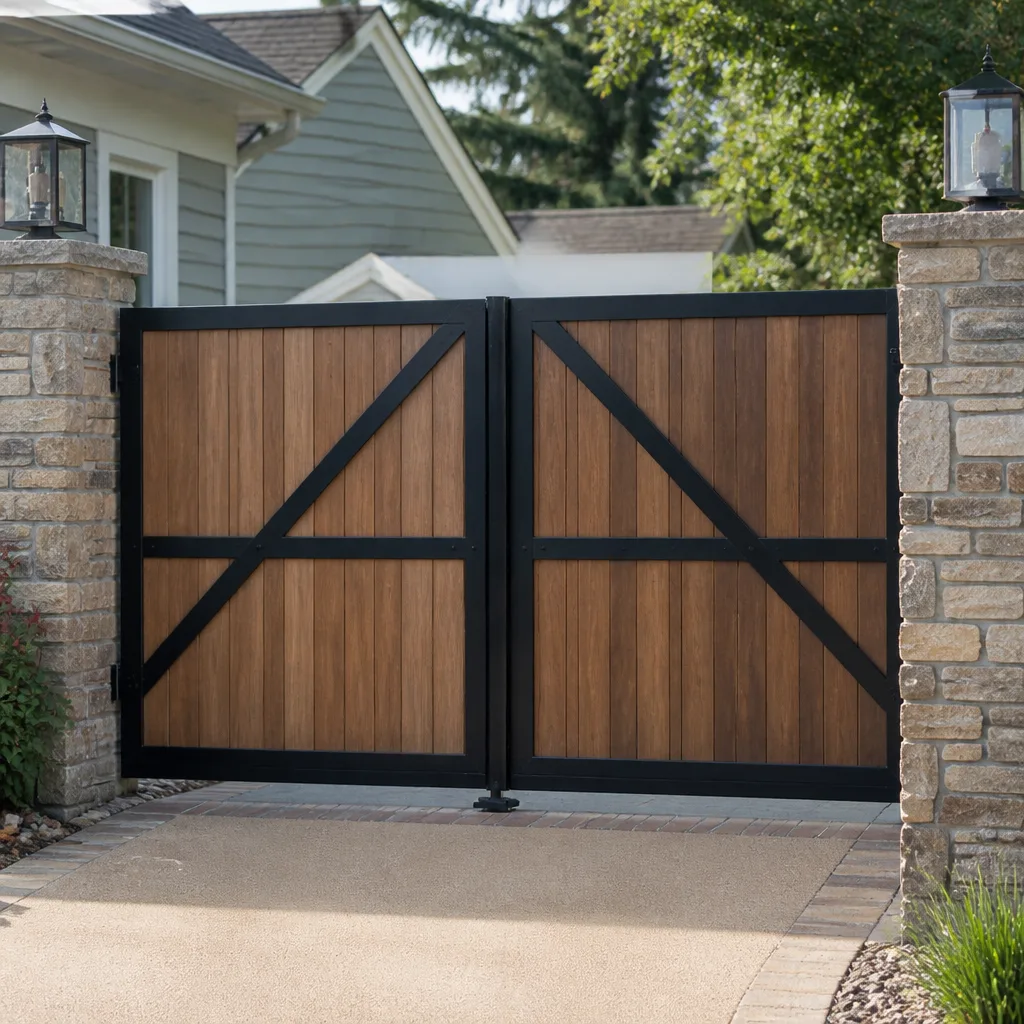 Wood & steel frame
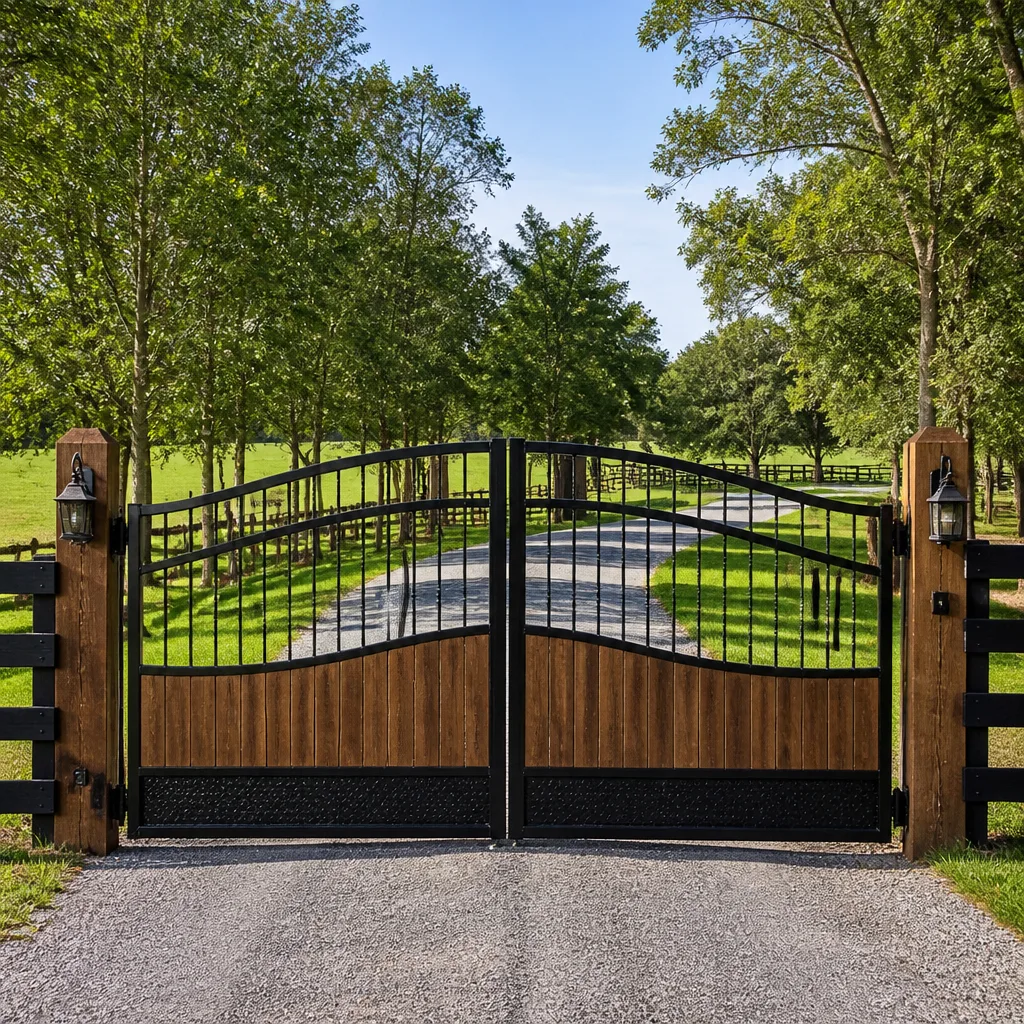 Farm & ranch
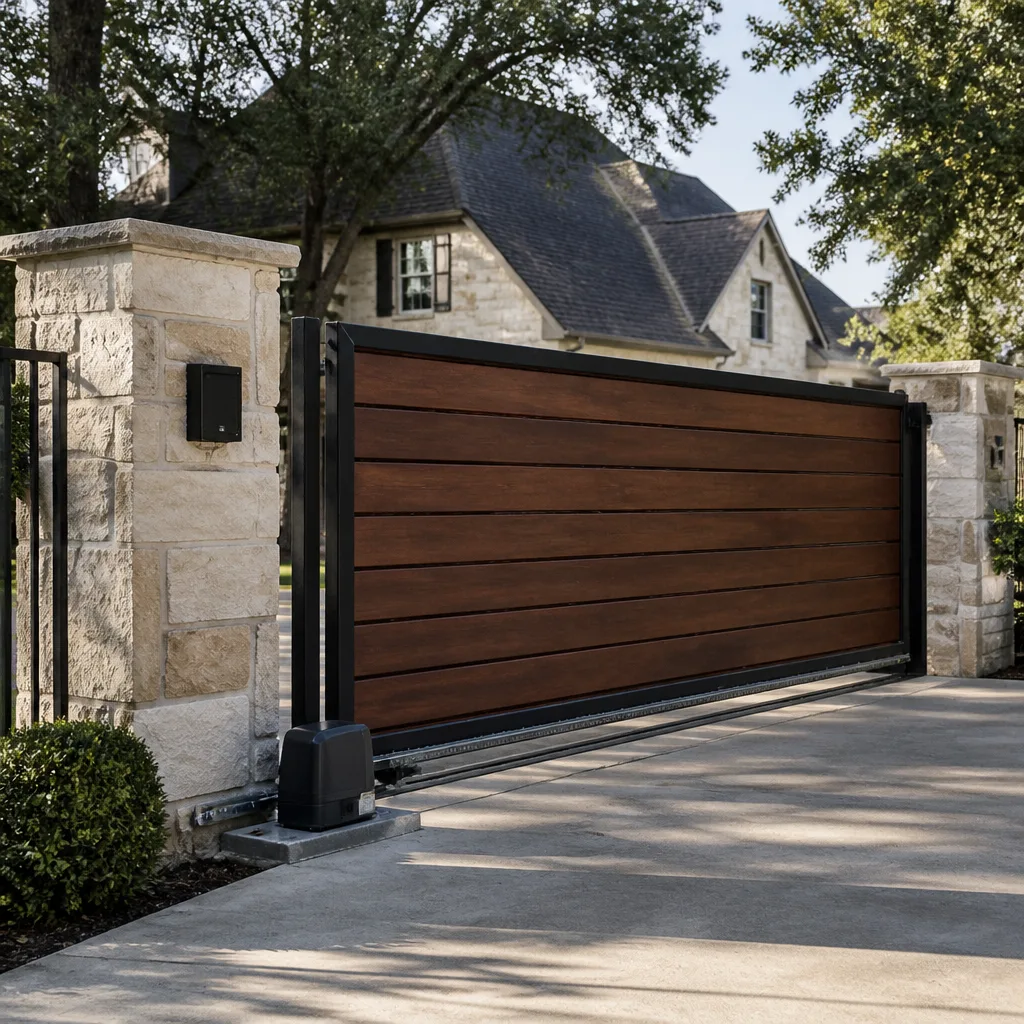 Sliding driveway gates
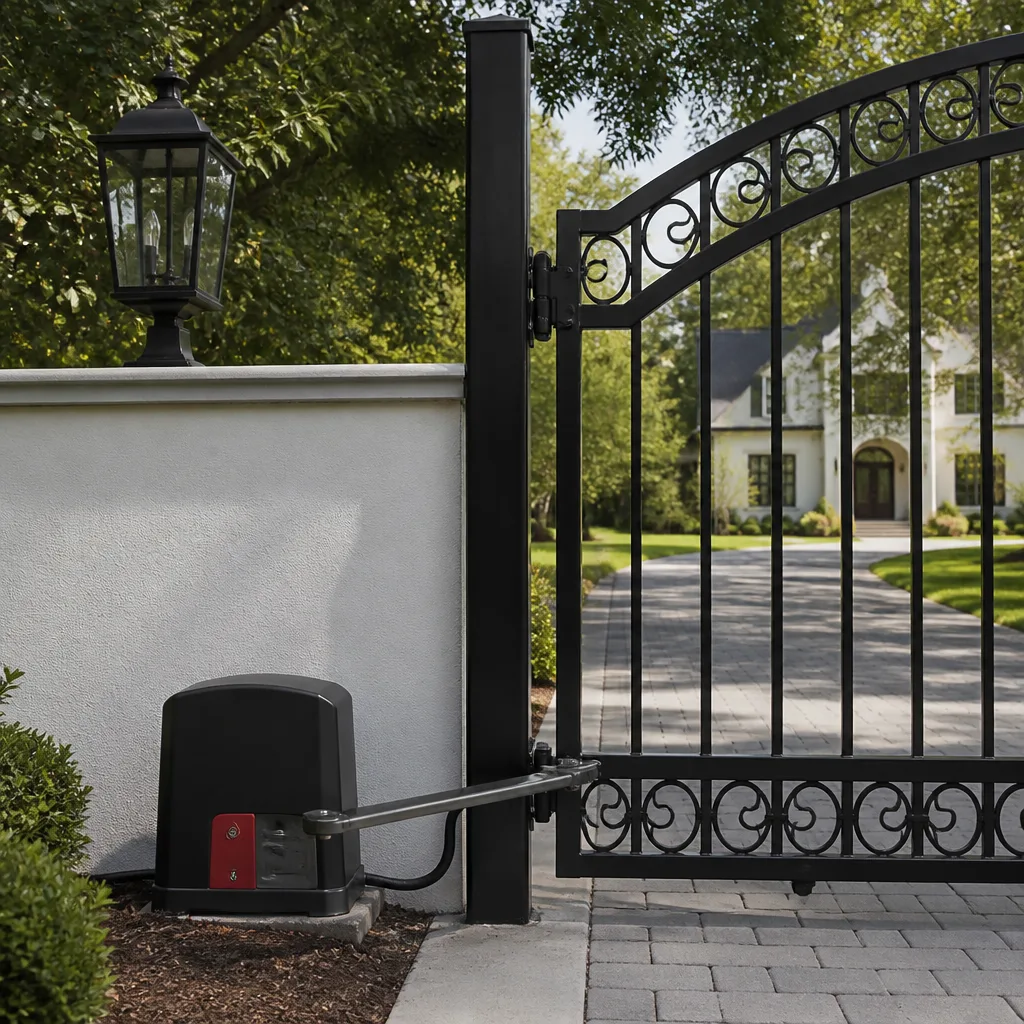 LiftMaster operators
Free on-site gate assessment - hinges, posts, and your LiftMaster or Nice gate operator checked before anything is quoted
The assessment is free and the quote is the invoice.
Get your free estimateGate Parts & Welding Troubleshooting: Common Problems and How to Fix Them
If a weld on your gate has cracked, the weld itself almost certainly isn’t the reason. Something upstream – post movement, misaligned hinges, an overloaded motor pulling the frame – caused the crack, and welding it again without fixing the cause is money spent twice. In our experience across Boulder City, the same gate gets welded three times by three different people because nobody diagnosed the source. This guide walks through the real mechanical explanations behind sagging, rattling, and slow swing, shows you how to tell a cosmetic weld failure from a structural one, and explains what proper repair looks like so you can tell the difference on your own driveway.
Quick Answer
Most gate and welding problems are symptoms of an upstream failure, not the failure itself: a sagging gate is usually a post problem, a rattling picket is usually a stress-distribution problem, and a cracked weld is usually caused by movement the weld was never designed to absorb. Diagnosing the source before repairing the symptom is what keeps a gate from needing the same fix twice. In Boulder City, our technicians have up to 13 years of experience tracing those sources to posts, hinges, and operators rather than stopping at the visible crack.
Styles & brands we work with
- Wrought iron
- Wood & steel frame
- Farm & ranch
- Sliding driveway gates
- LiftMaster operators
Table of Contents
- Why Gate Repairs Fail the First Time: The Root-Cause Framework
- The Three Most Misdiagnosed Gate Problems and Their True Causes
- Is That Cracked Weld Cosmetic or Structural?
- Post Movement: When It’s Settling and When It Needs a Full Re-Set
- What Proper Weld Inspection Looks Like After a Repair
- Hinge, Roller, and Latch Wear: What Actually Fails First
- How an Overloaded Motor Causes Frame and Weld Failures
- Boulder City Conditions That Stress Gate Hardware
Why Gate Repairs Fail the First Time: The Root-Cause Framework
A gate fails in layers. There’s what you see – the crack, the droop, the rattle – and there’s what caused it, usually one layer down. The welding crack is the last thing that happens, not the first. Walk the layers in order and you’ll find the source nearly every time.
- The visible failure. A cracked weld, a grinding hinge, a gate that drags the ground.
- The mechanical wear. A hinge that’s lost tolerance, a chain that’s slackened, a roller worn flat.
- The structural drift. A post that’s moved a half-inch, a frame that’s racked out of square, a concrete footing that’s cracking.
- The environmental push. Ground movement, expansion in high heat, water at the footing, an operator set too strong for the gate’s weight.
Every one of those layers has to be checked before anyone touches a welder. In Boulder City we regularly see a gate cross into a home’s driveway where the crack was welded, the post never checked, and the crack returns within a season. Layer-three checks – post plumb, frame square, footing visible at the base – take ten minutes and save the customer a second visit.
If you want the broader picture of what we mean by gate repair as a full discipline, our gate repair service in Winchester page covers the repair-side scope. But the diagnostic logic is universal: source first, symptom second.
The Three Most Misdiagnosed Gate Problems and Their True Causes
Across the years, three gate problems come in again and again with the wrong diagnosis already attached. Each one has a true mechanical cause, and each one is routinely repaired as if it were something else.
Sagging gates
Apparent cause: worn hinges. True cause: usually post movement. When a gate drops on the latch side, homeowners assume the hinge has worn. Ten times out of twelve, the post it’s hung on has tilted out of plumb, and the hinge is fine. Swapping hinges on a tilting post just delays the same sag.
Rattling pickets
Apparent cause: a broken weld. True cause: stress distribution failure. On ornamental gates, each picket takes vibration from the operator or from wind along the whole length of the gate. If one picket is welded rigid at the top and free at the bottom, the vibration loads concentrate at the top weld. The weld cracks; the picket rattles. Re-welding without releasing the bottom join causes the same crack to come back.
Slow or binding swing
Apparent cause: a failing opener. True cause: a frame racked out of square. When the gate doesn’t close on its own weight at a run, the operator has to force it. That force bends the frame, which pulls the hinges misaligned, which makes the swing heavier, which makes the operator push harder. The fix is frame and hinge setup, not a new motor.
Notice the pattern. Each apparent cause points to a part, and each true cause points to a relationship between parts. That’s why diagnostics matter more than the repair itself. If you’re not sure whether your gate’s issue is mechanical or operator-driven, our overview at Ironworks Gate Co. Boulder City home covers the full scope of what we look at.
Is That Cracked Weld Cosmetic or Structural?
Not every crack in the weld needs to be cut out and re-run. Some cracks are cosmetic, living in the paint or in a dressing pass that never had structural load to begin with. Others signal a joint that has failed and will keep failing. Here’s how to tell before you call anyone.
- Cosmetic crack signs: surface-level, short (under an inch), following a paint seam, no rust bleeding from the crack, no movement when you push the joint gently.
- Structural crack signs: deeper than the paint, longer than an inch, rust streaks running out of the crack (meaning it’s been open and wet), a gap you can see daylight through, or movement when the gate is pushed at the joint.
The single most useful test is the movement test. With the gate in its normal closed position, push the joint in the direction the gate swings. If there’s perceptible shift either side of the crack, that’s a structural failure and the joint has to be cut out, re-fitted, and re-welded with the parent metal intact. If there’s no movement, the weld may only need dressing and painting.
One safety note: full-penetration welding on a gate frame carries real physical hazards – the arc, the heat, and the risk of a joint failing under load if the base metal wasn’t prepped. This is not a task to self-perform on a loaded frame. The diagnosis above is safe to do; the welding is work for a trained professional.
When we diagnose a weld failure in Boulder City, we treat the crack as evidence, not as the case. The question is always what caused the crack, and the answer usually comes from the post, the hinge, or the operator.
Post Movement: When It’s Settling and When It Needs a Full Re-Set
Post movement is the single most common upstream cause of gate problems we find in Boulder City. It’s also the one most homeowners can assess from the surface without any tool beyond a spirit level and a careful eye.
Cosmetic settling
A post has cosmetic settling when it moves less than a quarter inch off plumb over a long period, the gate still latches cleanly, and the movement hasn’t accelerated. Ground that expands and contracts with seasonal temperature swings – common in the desert around Boulder City – can shift a post a fraction at a time. If the gate still closes its own latches without assistance, cosmetic settling is a note in the file, not a repair.
Structural movement (full re-set)
A post needs to be re-set when any of the following is true:
- It’s off plumb by more than a quarter inch over the height of the post.
- The footing shows visible cracking, or the concrete at grade is separating from the post itself.
- The gate has stopped latching, or the operator has had to be adjusted to force the latch.
- The movement accelerated in the last twelve months.
Full re-set means pulling the post, re-excavating the footing, and setting new concrete to the correct depth and mix. It’s not a job to patch with a shim at the hinge. When we see a shim on the hinge of a gate in Boulder City, we know we’re looking at a post that should have been re-set a while ago. The scope of a proper re-set is part of what gate installation work covers, since the footing standard is the same whether the gate is new or being brought back.
What Proper Weld Inspection Looks Like After a Repair
After a weld is completed, a proper inspection should look the same way every time – and the technician should be willing to walk you through it. Two signs tell you the weld was placed on the symptom rather than the problem.
What a correct weld inspection includes
- Visual check of the bead. The bead should be uniform, with a consistent crown height and no undercut at the toes. A bead that’s thin in the middle, or that stops short of the joint corners, is a sign of a rushed pass.
- Joint alignment check. The two members should meet square, with any offset within tolerance for the section thickness. If the frame is racked before welding, the weld locks in the rack.
- Post-weld movement test. After the joint cools, the technician pushes the gate in its swing direction to confirm the joint is rigid. Movement here means the weld didn’t hold the load.
- Parent metal intact. The metal around the weld should be free of heat damage and cracks. A star crack radiating from a weld point is a sign the base metal was overloaded, not the weld.
Two signs the technician welded the symptom
Sign one: the same crack appears again within a season, in the same location, with no other repairs logged against the frame or post. Sign two: the technician cannot tell you what caused the original crack and points to “just a bad weld.” A technician who understands the failure always has a cause in hand.
The 90-Day Done Right Promise exists because we’ve seen both of those signs from other repairs. If our repair fails within 90 days, we come back and make it right in writing, with no arguing.
Hinge, Roller, and Latch Wear: What Actually Fails First
When a gate is working correctly, the hardware wears in a predictable order. Knowing the order tells you which part needs attention before the whole assembly gets blamed.
- Hinges wear first. The gate hangs off its hinges 24 hours a day, and the bottom hinge carries the heavier load. a bottom hinge with more than a small amount of play – a millimeter or two of lateral movement – indicates replacement. On a heavy estate gate the top hinge can last twice as long.
- Rollers wear second. V-groove and flat rollers flatten with use and start skipping. A roller that skips in the same spot every pass is worn, not a track problem.
- Latches wear third. A latch that needs a slam, or a latch that sits proud of its receiver, is worn or out of alignment. Whacking the receiver with a hammer to fix a latch usually fixes a symptom; the latch and the post are the actual issue.
- The frame is last. By the time a frame is failing, the earlier parts have been worn through for a while. Frame failure is a sign the earlier stages were missed.
In our experience, a gate that’s been on the same hinge set since the house was built will show visible hinge wear long before the frame gives trouble. Replacing hinges before the wear spreads is cheaper than re-welding a cracked frame later. Our gate motor & opener service covers the operator side; the hinge and frame side sits in the parts and welding scope.
How an Overloaded Motor Causes Frame and Weld Failures
An operator is not a neutral part of the gate. It applies force to the frame every cycle, and if that force is set too high or the frame isn’t square, the frame absorbs the excess. Over time that shows up as cracks in the welds and loosening hinges.
The operator brands we’re trained on – FAAC, BFT, Linear, Viking, among others – each have their own force calibration and travel limits. If a motor is left on its factory default with a heavy gate, it will push through any resistance rather than reverse. That resistance is the frame telling you it’s out of square. Reversing on resistance is normally a safety setting, and forces that override it put sustained load through the frame and hinges.
Here’s the practical sequence for checking operator-induced stress:
- Disconnect the operator (with the gate at rest) and check whether the gate swings freely by hand. Free swing without binding means the frame isn’t the source.
- If the gate binds by hand, the frame or hinges are causing the drag, and the operator has been forcing past it.
- If the gate swings freely, measure the force setting and confirm it matches the gate weight and section. An over-driven operator on a free-swinging gate still stresses the frame, just less obviously.
None of this requires replacing the motor. Most of the time it requires setting the motor to the gate. A technician trained on nine brands (including the four above) can recognize the difference on first visit rather than trial-and-error through parts.
Boulder City Conditions That Stress Gate Hardware
Boulder City sits at the edge of the Mojave, and the climate here pushes at gate hardware in ways that northern climates don’t. The two forces to plan for are heat and near-zero humidity.
Heat drives expansion in the steel. A gate frame that measures correctly at sunrise can be slightly longer at midday, and a weld that was dressed flush in cool weather may crack in the first summer because the joint had no room to move. On the metal sun-facing side of a west-facing gate, surface temperature in July gets high enough that any paint film thin or breached will crack first, exposing the steel.
Low humidity means the painted finish is the only thing protecting the steel. Anywhere the paint cracks – at the weld toes, hinge points, or the gate frame lower rail – rust starts and spreads. In Boulder City, a weld that’s been repaired but not re-sealed with the right paint system will rust from the weld toe outward, and the second crack will follow the rust. Dressing and re-painting the joint properly is part of the repair, not an extra step.
Ground movement around the Boulder City hillside and out toward the lake can also shift a post in the first year after a set, particularly where soils move with seasonal watering. A gate that starts dragging in the fall may have a footing that needs a re-set before the spring. That’s why we don’t recommend waiting on a small drag – checking it early is cheaper than checking it after the post has moved.
For homes close to the wash and drainage channels, we also look at runoff at the base of posts. Standing water at a footing will undermine it faster than any other cause, and it’s why a post on the drainage side of a property sometimes moves while its neighbour doesn’t.
Common Mistakes to Avoid
- Welding the crack without checking the post. It’s the most common repair we see done twice. If the post is out of plumb, the new weld will fail within a season.
- Shimming the hinge to level a sagging gate. A shim on a hinge hides the post movement instead of fixing it. The gate stays out of square and the operator keeps forcing past the drag.
- Turning up the opener force to fix a binding gate. That masks the frame problem and adds stress. In Boulder City the frame often binds only on hot days, and an over-driven motor will hide the sign on a cool morning.
- Painting over a rusted weld. Paint over rust doesn’t stop rust; it traps moisture. The weld toe is where it starts, and the right fix is to cut back to clean metal before applying any finish.
- Adding weight to a gate for “security.” Extra pickets, plates, or cladding add load the hinges, frame, and operator weren’t sized for. If you’ve added weight anywhere on the gate, have the operator re-checked.
- Assuming rattling means a broken weld. Most rattling comes from a picket that’s rigid at only one end. The weld isn’t failed – the picket’s stress path is.
- Ignoring the footing after a re-set. Fresh concrete around a post takes time to cure fully. In Boulder City’s dry heat, curing isn’t the concern – it’s that the surrounding soil gets disturbed, so keep an eye on the post for a season after any re-set.
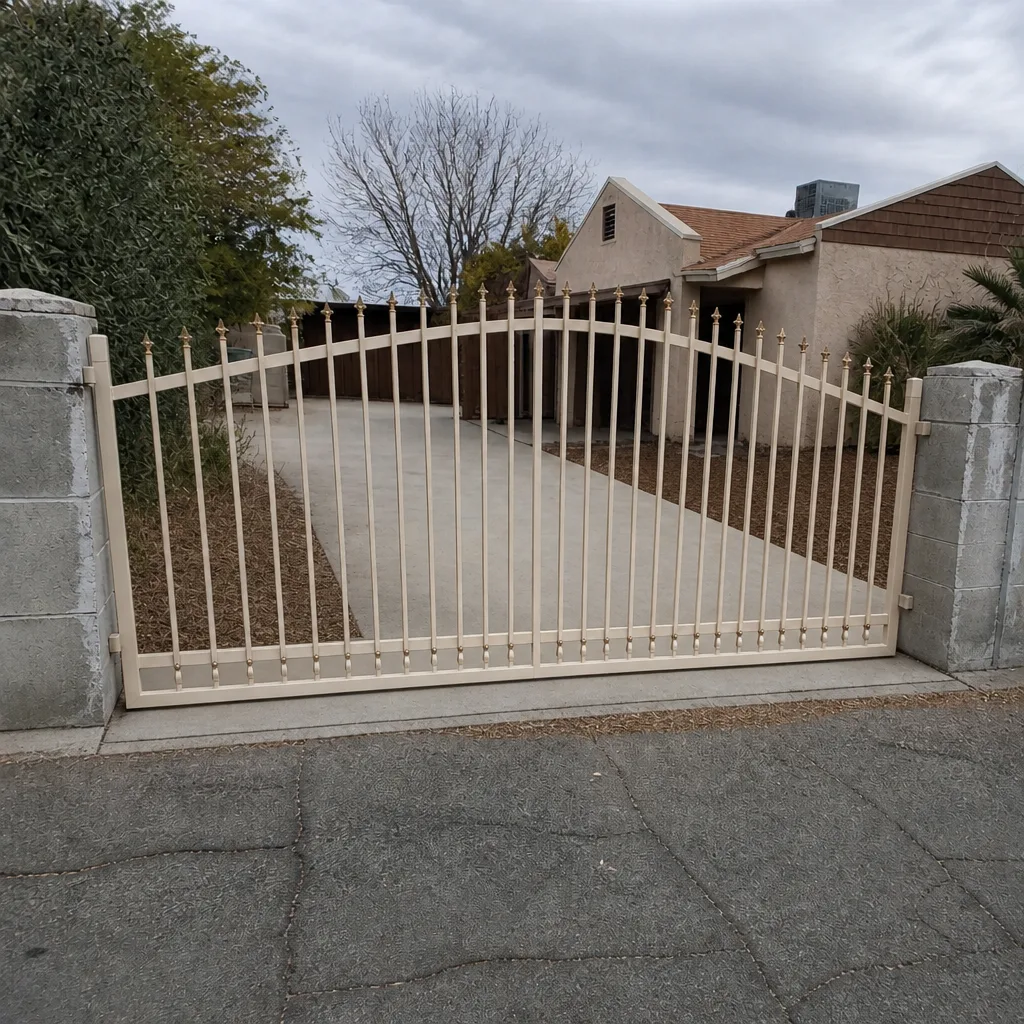
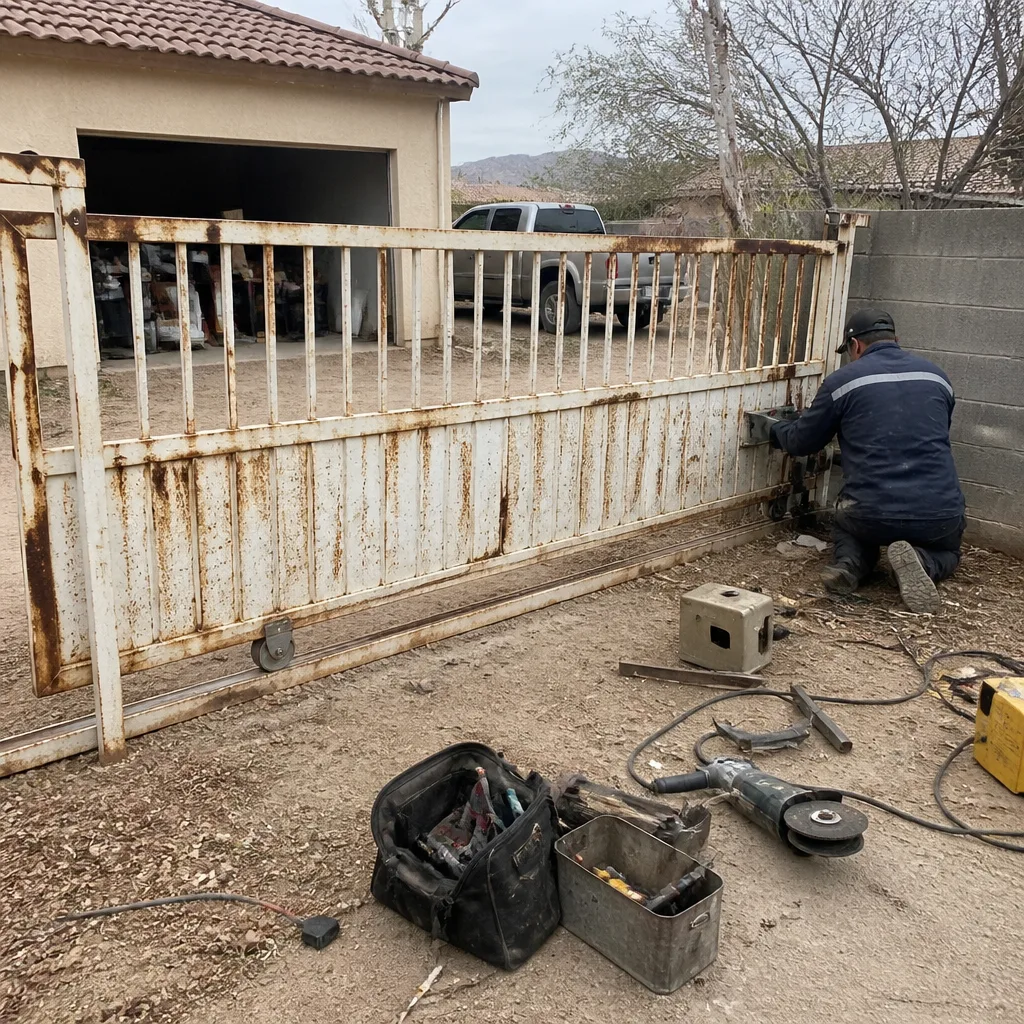
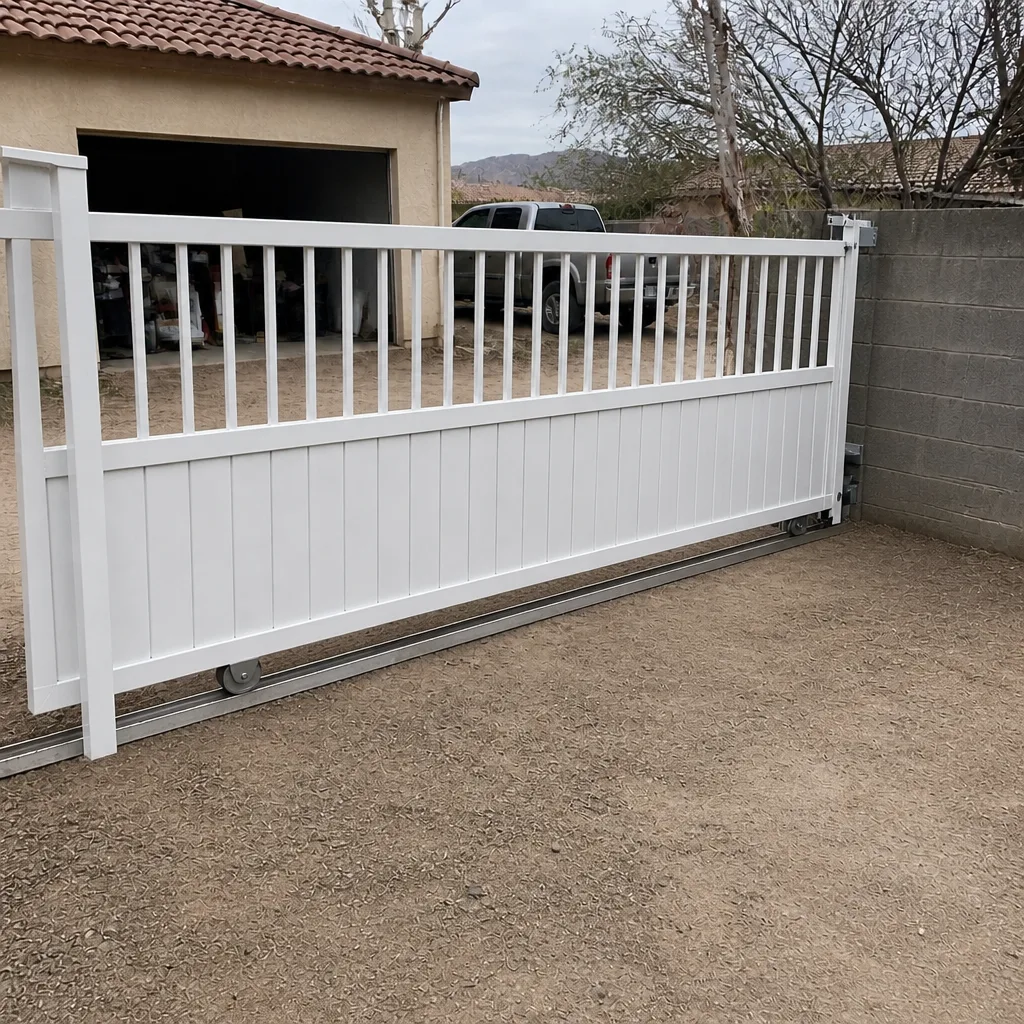
See the difference
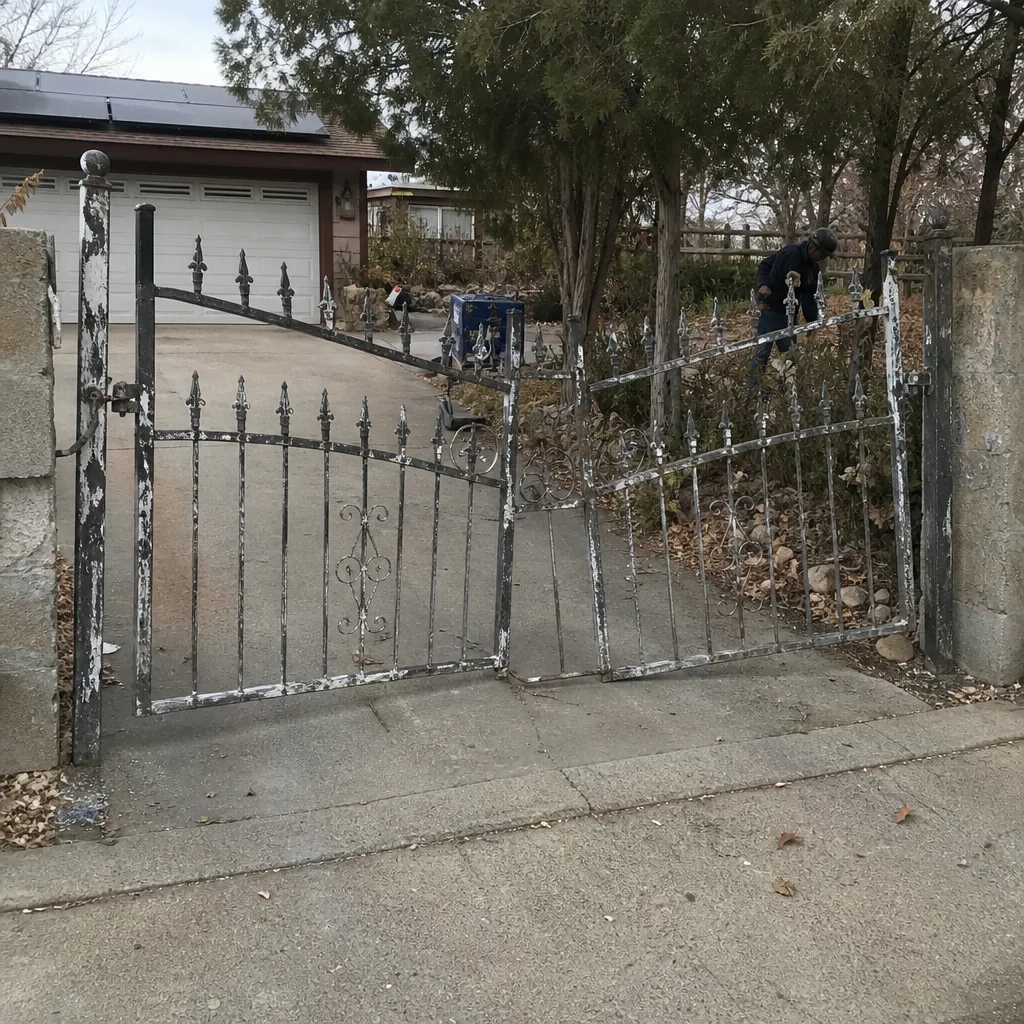 Before
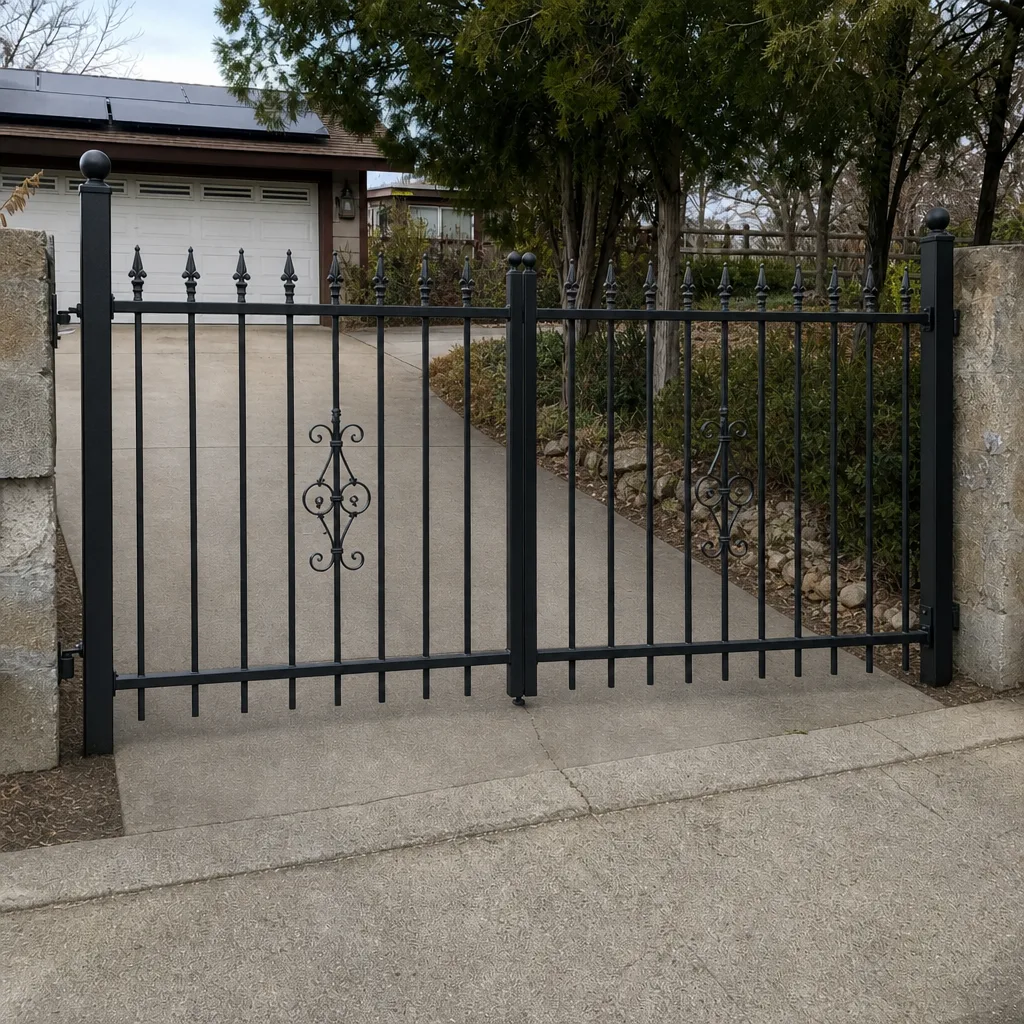 After
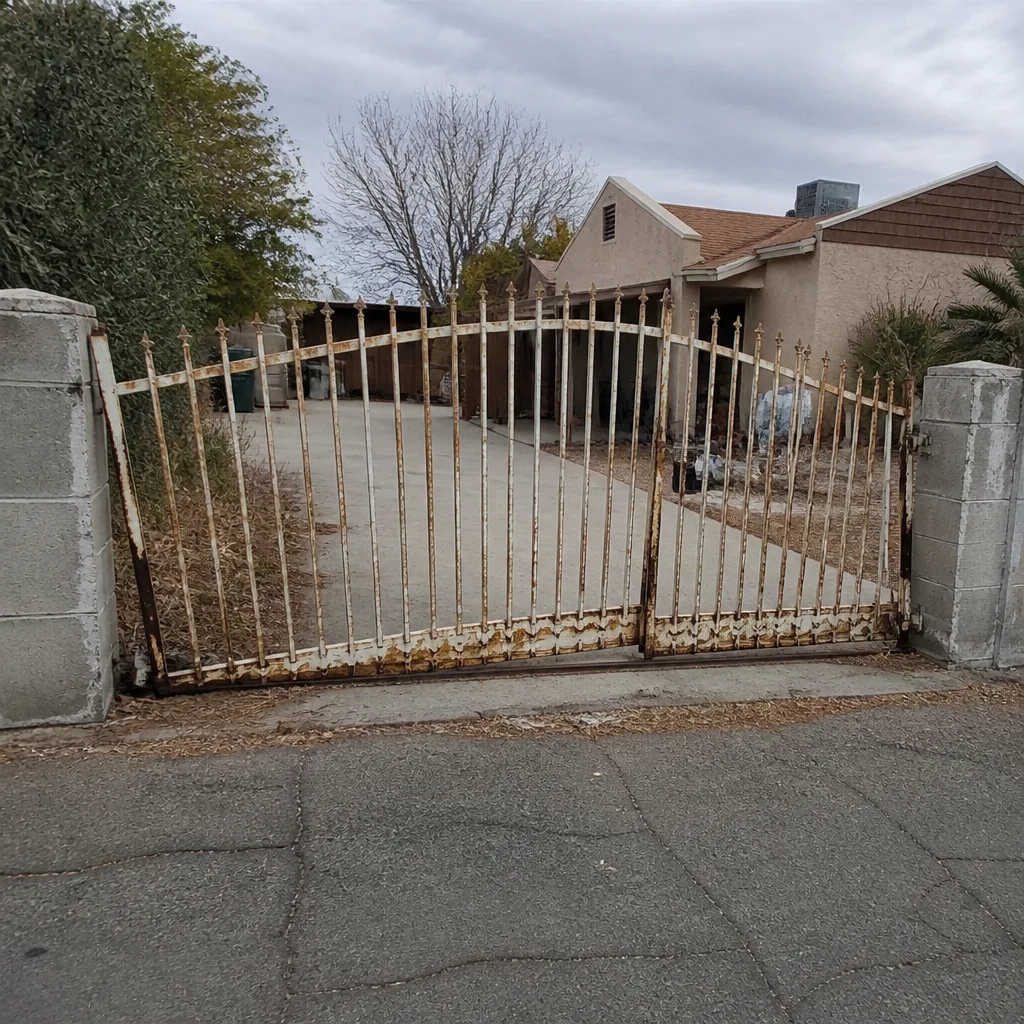 Before
 After
 Before
 After
When to Call a Professional
If the gate has dropped more than an inch on one side, if the post shows visible cracking at the footing, if the operator has started to reverse mid-travel or has to be held to close, or if a weld has cracked in the same spot more than once – those are the moments the diagnosis matters and self-repair risks doing the fix twice. A welding repair on a loaded frame is also a job with real risk from the arc, the heat, and the risk of a joint failing under load. That work should go to a trained professional. Ironworks Gate Co. Boulder City offers free estimates in Boulder City – call (888) 276-7609. Our technicians have up to 13 years of experience, and we’re background-checked and insured on every job.
Frequently Asked Questions
Almost always because the joint was loaded by movement it wasn’t designed to absorb – a post that shifted, a frame out of square, or an operator set too strong. The weld was the weakest link in the load path, so it failed first. The right repair starts by checking the post plumb and the frame square before the welder comes out. Call (888) 276-7609 for a free second opinion on any written estimate.
Not on a loaded frame, no. A gate frame carries significant weight, and an under-welded joint can fail under load without warning. The arc, the heat, and the risk of a joint letting go make this work for a trained professional. A professional will cut out the failed bead, prep the parent metal, and re-weld with the correct procedure for the section thickness.
Check plumb over the height of the post with a spirit level. Off by more than a quarter inch, visible cracking at the footing, or a gate that no longer latches on its own all point to a re-set. Anything less than a quarter inch with clean latches is usually cosmetic settling. Our team in Boulder City checks exactly this on every welding diagnosis.
Usually a post problem. A sagging gate that drops on the latch side is most often on a post that’s tilted out of plumb, and replacing the hinges won’t fix it. In our experience, a shim at the hinge is a sign the post was never checked. A free estimate will confirm the source before any parts are ordered.
Because heat expands the steel and, in Boulder City, surface temperatures on the sun-facing side get high enough to shift a mild frame out of tolerance. A gate that swings free in cool weather and binds by mid-afternoon is showing you a frame with tight clearance and the wrong operator force setting. Setting the operator for the hottest condition – not the coolest – is what stops the recurring bind.
The weld bead should be uniform with no undercut, the joint should meet square, and the technician should be able to tell you the cause of the original failure. If the crack returns in the same spot within 90 days, the symptom was welded, not the problem. Our 90-Day Done Right Promise is a written guarantee that we come back and make it right if that happens.
The Bottom Line
Gate welding and parts problems almost always trace back to an upstream cause: post movement, frame rack, or operator stress. Diagnosing the source – not the crack – is what stops the same repair from being paid for twice. If you check plumb, frame square, and operator force before touching the welder, you get the repair done once, and done right. In Boulder City, our technicians have up to 13 years of experience reading those signs on sight, and every job carries the 90-Day Done Right Promise in writing. When you’re ready for a diagnosis you can trust, our team at Ironworks Gate Co. Boulder City is a call away.
Call Ironworks Gate Co. Boulder City at (888) 276-7609 for a free estimate. We answer the phone 24 hours a day, 7 days a week, with a live person – not voicemail. Our technicians have up to 13 years of experience, we service nine gate-automation brands including FAAC, BFT, Linear, and Viking, and every completed job is covered by our written 90-Day Done Right Promise. Confirm the source before you order parts, and the fix will hold the first time. Our standing $50 off any repair over $250 applies, and seniors and veterans always receive 5% off.
Written by the team at Ironworks Gate Co. Boulder City.