
Last updated November 17, 2026
 Wrought iron
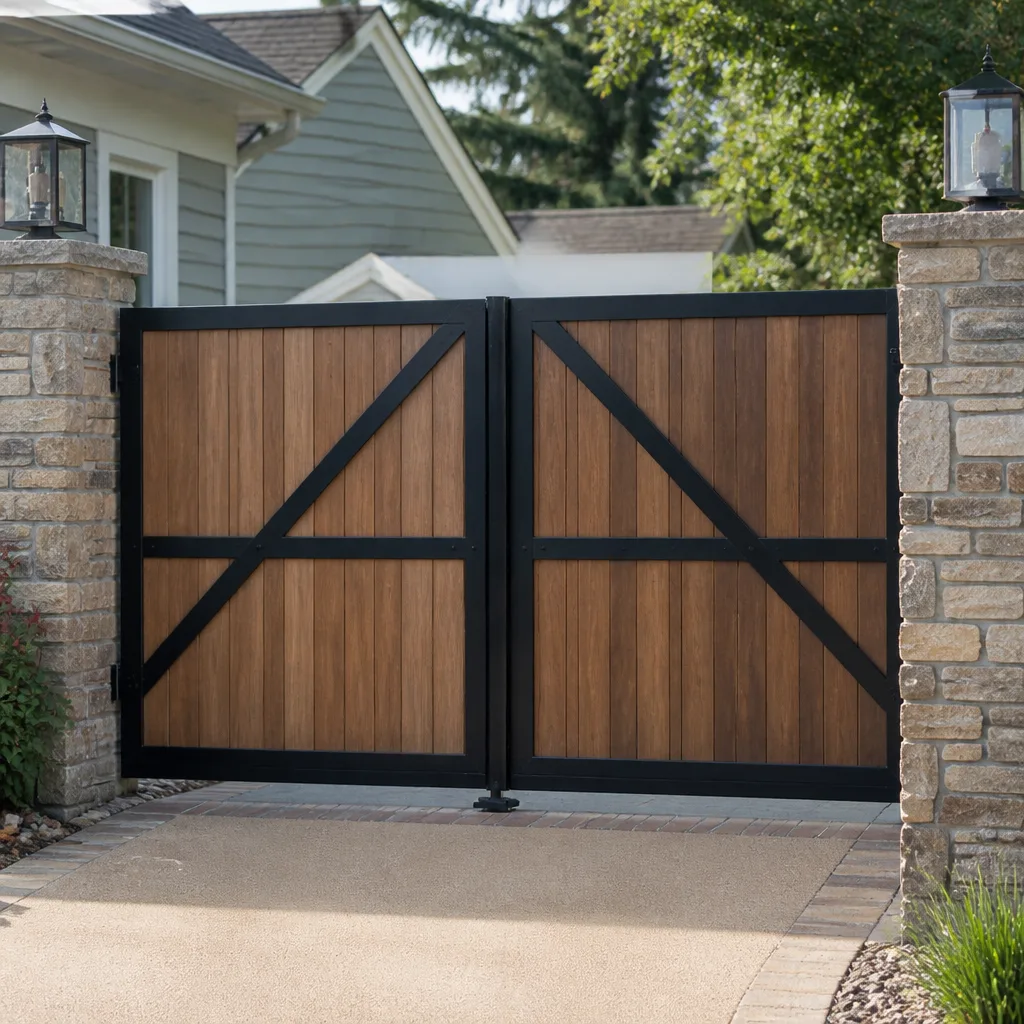 Wood & steel frame
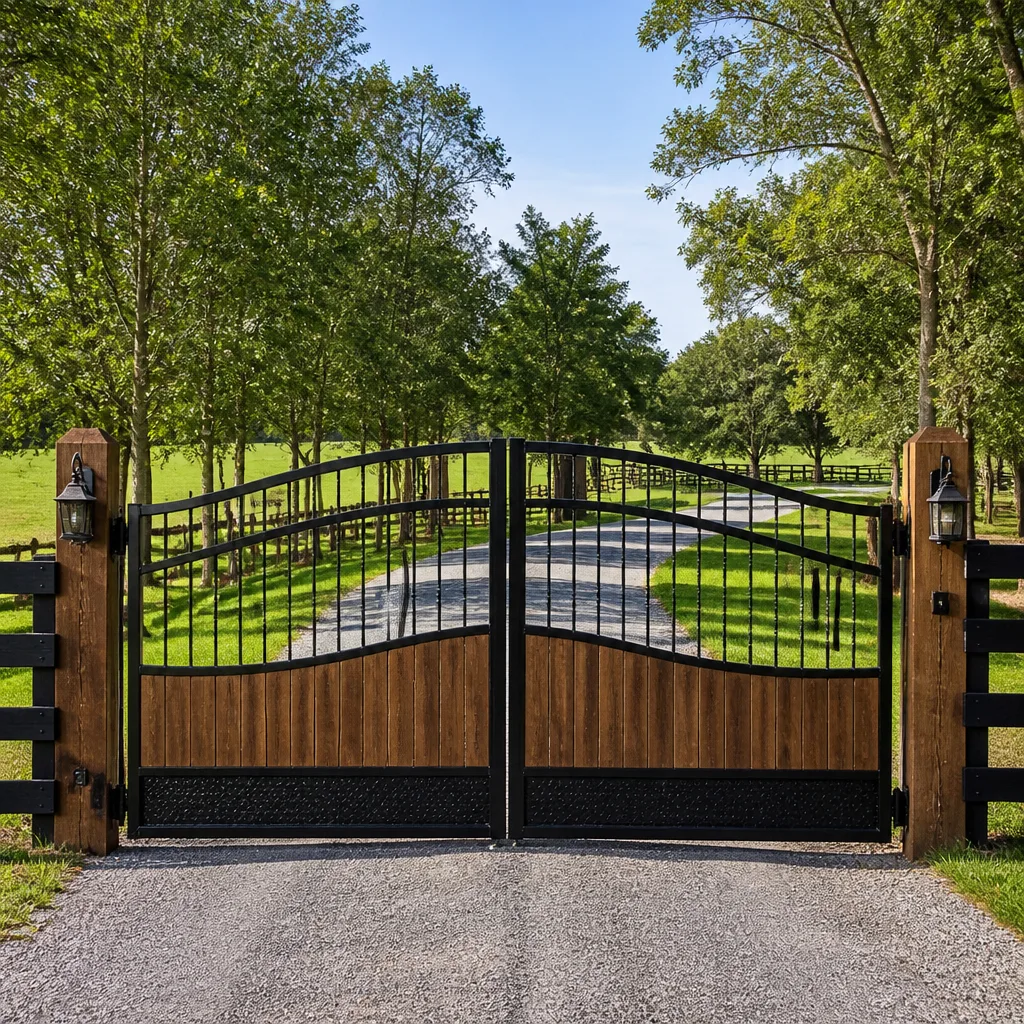 Farm & ranch
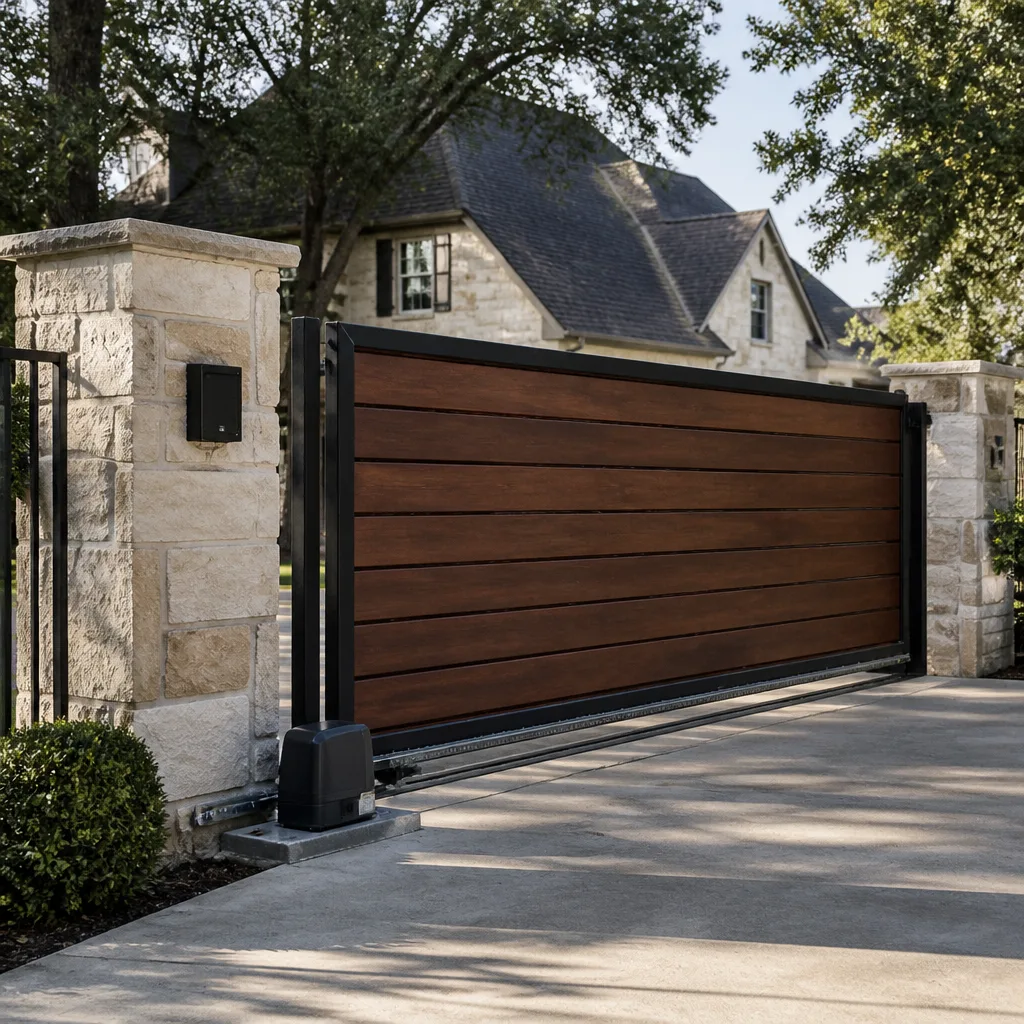 Sliding driveway gates
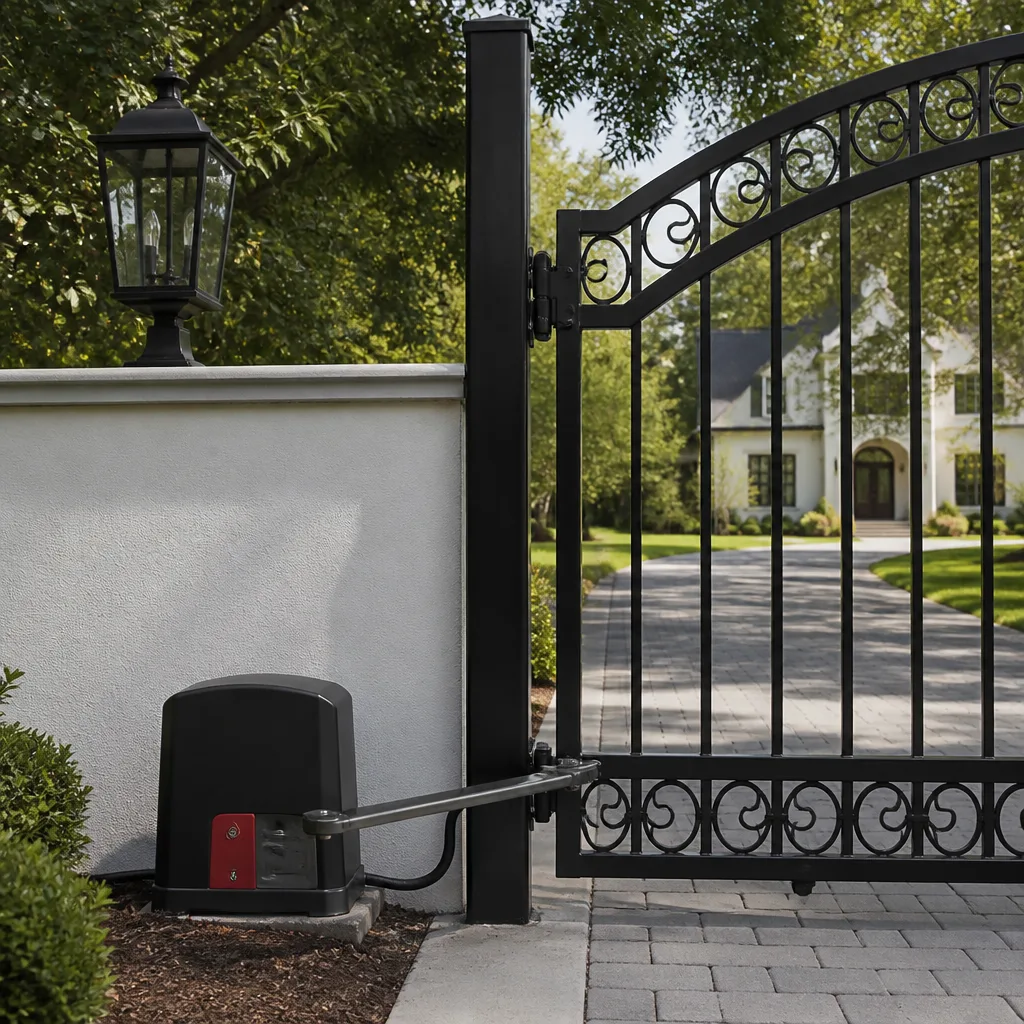 LiftMaster operators
Free on-site gate assessment - hinges, posts, and your LiftMaster or Nice gate operator checked before anything is quoted
The assessment is free and the quote is the invoice.
Get your free estimateDIY vs Professional Gate Installation: What’s Safe to Do Yourself
Wiring a gate operator incorrectly doesn’t just leave you with a gate that won’t open. It can energize the metal your family touches every day. That gray zone between low-voltage control wiring and 120-volt line power is what makes gate automation unlike any other weekend project, and the stakes aren’t a tripped breaker. We’ve pulled plenty of homeowner wiring out of Boulder City gates over the years, and the pattern is always the same: the mechanical work held up fine, the electrical didn’t. This guide breaks installation into project types, so you know exactly what’s within reach of a careful DIYer and what genuinely needs licensed hands.
Quick Answer
A manual pedestrian gate on a flat, well-drained lot is a realistic DIY project for someone comfortable with digging, concrete, and a level. An automated driveway gate is not: the line-voltage connection, safety reversing system, and buried conduit loop require a licensed electrician in Nevada, and getting them wrong creates a shock and entrapment hazard you’ll own for as long as the gate stands. The split isn’t skill, it’s what the work can hurt.
Styles & brands we work with
- Wrought iron
- Wood & steel frame
- Farm & ranch
- Sliding driveway gates
- LiftMaster operators
Table of Contents
- Which Gate Projects Are Actually DIY-Friendly?
- What Nevada Law Requires for Gate Automation Wiring
- The Hidden Complexity Factors Nobody Warns You About
- The Real Cost Comparison, Warranty Included
- How to Scope a Hybrid Approach
- Post Material, Soil, and Slope: What Changes the Job
- Common Mistakes to Avoid
- When to Call a Professional
Which Gate Projects Are Actually DIY-Friendly?
Not all gate installations carry the same risk, and treating them the same is where homeowners either waste money on unnecessary help or create a hazard they’ll live with for years. Here’s the honest breakdown we give when someone calls asking whether they should tackle it themselves.
Within reach of a skilled DIYer
- A manual pedestrian gate on a flat, sandy or gravelly lot. Digging two or three post holes by hand, mixing concrete, hanging a lightweight wood or vinyl gate, and adjusting a latch are all reasonable for someone who owns a post-hole digger and a level.
- Replacing an existing manual gate on existing posts where the posts are solid, plumb, and correctly spaced. This is essentially a swap, not an installation.
- Cosmetic and non-structural work: painting, hinge lubrication, latch adjustment, and replacing a worn handle or closer on a gate that’s already hung.
Not DIY, even for a confident homeowner
- Any automated driveway gate. The operator, the buried conduit, the safety reversing edges, and the line-voltage connection are a coordinated system. A gate that opens but doesn’t reverse on contact is a serious hazard.
- Widening or regrading an existing opening to fit a wider gate, which changes load paths through the posts and hinges.
- Hanging a heavy wrought-iron or steel gate. These can weigh hundreds of pounds and need welded joints, correct hinge geometry, and posts set deep enough to resist years of swing. This is where a gate that “looked fine” in year one starts sagging by year five.
- Burying conduit for power or low-voltage control. Even the “just the low-voltage side” argument doesn’t hold, because low-voltage control wiring runs alongside line voltage in the same trench and enclosure.
In Boulder City, we see a particular version of this play out: a homeowner buys a kit gate and a small operator at a box store, installs both over a weekend, and calls us two years later when the gate drifts, the motor groans, and nothing reverses. The mechanical attempt was respectable. The electrical attempt was the problem.
What Nevada Law Requires for Gate Automation Wiring
Gate automation wiring falls into a category that trips up more homeowners than any other part of the job. It combines low-voltage control signals with 120-volt line voltage in the same system, and the line-voltage portion is not something a homeowner is permitted to install in Nevada without a licensed electrician.
Here’s what that means practically:
- A permit and inspection are required for the electrical work. Adding a new circuit to feed a gate operator, or extending an existing circuit to a new location, is permitted electrical work in Nevada. An unpermitted installation is exactly the sort of thing that surfaces during a home sale or an insurance claim.
- Unpermitted electrical work can complicate a homeowner’s insurance claim. If a fire or injury traces back to work that required a permit and wasn’t inspected, insurers have legitimate grounds to deny or limit coverage. That’s the practical cost of skipping the step, and it’s far larger than the permit fee.
- The safety reversing system is part of the electrical scope. Modern operators like LiftMaster, FAAC, and BFT models are required to have reversing or obstruction-sensing capability. It’s wired and tested as part of the installation, and it’s the single most important safety feature on the gate.
- A licensed electrician signs off on the connection. We coordinate this on every automated installation. It’s not a step we treat as optional, and it’s why we can stand behind the work in writing.
There’s a genuine safety component here, too. A gate operator wired incorrectly can energize metal components your family, guests, and delivery people touch. This isn’t a case where a mistake shows up as a blown fuse and a shrug. It can be a shock or entrapment hazard that sits quietly on your property for years. We include a safety caveat on every automated installation estimate for this reason: this is training-and-tools work, not weekend work.
The Hidden Complexity Factors Nobody Warns You About
The DIY guides make gate installation sound like a straightforward three-step job. In our experience, it’s the conditions on your specific lot that decide whether a project is a weekend or a rescue. Four factors reliably turn the second into the first.
- Slope. A gate on grade is one thing. A gate on a slope means the post holes need deeper footings on the downhill side, the gate needs to swing without dragging, and an automated gate needs an operator rated for incline. A flat-lot guide applied to a sloped drive produces a gate that binds within a season.
- Soil type. Boulder City’s ground ranges from sandy, quick-draining soil to caliche and rock that laughs at a post-hole digger. Sandy soil needs wider footings and more concrete; caliche means equipment and time. Both change the math.
- Post material and gate weight. A steel gate hung on undersized posts will pull them out of plumb, and when the posts go, the gate follows. Heavy gates need heavier posts, deeper footings, and often welded hinge brackets rather than bolt-ons.
- Automation class. Entry-level operators and light-duty openers are fine for a light residential gate on flat ground. A larger or heavier gate needs a commercial-grade operator, and pairing the wrong one with the gate is one of the most common failures we correct. If you’re weighing an automated upgrade, our Gate Motor & Opener in Winchester page walks through sizing an operator to the gate you actually have.
We’ve also seen the desert climate factor home in during the Boulder City summer. Heat and sun bake a gate into expansion, and a gate installed just slightly tight in cool weather binds by July. That’s a small detail, but it’s the kind that separates a gate that lasts from one you fight every summer. Getting the automation right from the start is squarely the job of someone who does it for a living, which is also why we keep those jobs on a measured, scheduled timeline rather than promising same-day work.
The Real Cost Comparison, Warranty Included
The DIY-versus-professional cost conversation usually stops at the labor rate, and that’s where it goes wrong. The real comparison includes what happens after something fails. Here’s the line-item picture we walk through with Boulder City homeowners, using qualitative ranges rather than pretend precision:
- Manual pedestrian gate, DIY: materials for posts, concrete, and hardware. Labor is your own. Warranty: none. If it sags or binds, the cost to fix is yours.
- Manual pedestrian gate, professional: materials plus installation labor at a quoted, agreed-upon price. Warranty: covered, in writing, if the installation fails.
- Automated driveway gate, DIY: operator, conduit, wire, safety edges, permit, and electrician. The permit and electrician are not optional in Nevada, so the “DIY price” is already partially professional. Warranty: on the operator only, and typically voided by improper installation.
- Automated driveway gate, professional: operator, electrical coordination, safety system, installation, and testing at a fixed quoted price. Warranty: the full installation, backed in writing by a company that returns to make it right.
The hidden line item in the DIY column is what a failed installation costs to fix. A gate that was hung wrong, or an operator that was wired wrong, often needs the posts re-set and the electrical redone, and now you’re paying for both the original mistake and the correct job. That’s the gap the warranty covers, and it’s why a professional installation is sometimes cheaper once you price the risk honestly.
Every job we do settles the price before a single bolt is turned, so you know what you’re paying and what it covers. No surprises on the bill, and no chasing down an explanation after the fact.
How to Scope a Hybrid Approach
The most sensible answer for a lot of homeowners is neither pure DIY nor a full professional build. You can do the parts that don’t risk your safety or your warranty and hand off the parts that do, which keeps your costs down without creating a hazard. Here’s how we’d scope it.
- Do the site prep yourself. Clearing the gate path, removing an old gate or hardware, trimming vegetation, and confirming the opening dimensions are all safe, useful work you can own.
- Have us handle the structural pieces. Post setting, footing depth, hinge geometry, and hanging a heavy gate are where improper work becomes expensive. Getting the structure right from the start is the difference between a gate that hangs true for years and one you adjust every season.
- Keep the electrical and the operator on the professional side. This is the part that carries the real cost of getting it wrong. Coordinating the permit, the electrician, the buried conduit, the safety edges, and the operator commissioning is the piece that protects you and your family.
- Do the finish work yourself if you want. Painting, staining, and landscaping around the finished gate are cosmetic and completely within a homeowner’s reach.
This hybrid route is the one we recommend most often to homeowners who want a solid result without paying for work they can safely do themselves. It also keeps the warranty clean, because the parts that carry the guarantee are the parts the professionals handled. When a Gate Installation in Winchester is scoped this way, we quote the professional portion up front and stand behind every part of it in writing.
Post Material, Soil, and Slope: What Changes the Job
The material of the gate and post is the single biggest predictor of whether a DIY job will hold up. Wood is forgiving and light, which makes it the friendliest DIY material. Steel and wrought iron are not.
A steel or wrought-iron gate that weighs hundreds of pounds puts stress on the posts, the hinges, and the ground in a way a wood or vinyl gate simply doesn’t. The posts need to be set deeper, into a wider footing, and often with a welded or through-bolted hinge arrangement rather than a bolt-on. Where a wood gate might survive a slightly shallow post hole, a heavy gate pulls a shallow post out of plumb within a few years, and the gate starts dragging. Then a closed gate is a gate that won’t close, and you’re calling someone anyway.
Boulder City specifics matter here too. The soil ranges from sandy and quick-draining to rocky caliche that requires equipment to dig through. Sandy soil drains fast, which is good, but it also needs wider footings to spread the load. Caliche is the opposite problem: hard, compacted ground that takes far longer to prep. Both are conditions we can read quickly and both are conditions a first-time installer shouldn’t have to guess at.
The gate’s weight, the soil’s behavior, and the slope together decide the post size, footing depth, and operator class. That combination is what we assess on every estimate, because the right gate is the one sized to the ground under it. If the gate is currently hanging on posts that have failed, a repair is often the wiser first step, and our Gate Repair in Winchester page covers what that involves.
Common Mistakes to Avoid
1. Skipping the survey of what’s under the driveway
Before you dig a post hole or trench conduit, you need to know where the buried utilities are. In Boulder City, water and power lines don’t always run where you’d expect on an older property. A call to the utility locating service before you dig is free and it’s the most important step on the list.
2. Assuming “low voltage” means it’s safe to wire yourself
Gate automation isn’t purely low voltage. The operator, the line-voltage feed, and the safety edges are all part of one system, and the electrical portion requires a licensed electrician in Nevada. Wiring it yourself risks a shock hazard and can put your insurance coverage at risk.
3. Hanging the gate before checking the posts are truly plumb
Setting posts and then hanging a gate is the right order, but the posts have to be checked for plumb after the concrete sets, not only when you first place them. A post that’s off plumb by a small amount appears fine until the gate starts swinging on its own.
4. Buying the operator before the gate is sized
A light-duty opener paired with a heavy or larger gate is one of the most common failures we correct. The operator has to be rated for the gate’s weight and class. Picking the operator first means fixing the second most expensive mistake on the list.
5. Forgetting the desert heat
Boulder City’s summer heat and sun cause metal gates to expand, and a gate installed slightly tight in cooler weather binds by July. A small gap on a new install is not a mistake, it’s a heat allowance.
6. Treating the safety system as optional
Reversing and obstruction-sensing are required for safety, not a nice-to-have. A gate that doesn’t reverse on contact is a serious hazard, and testing the safety edges isn’t a step you can skip after the install.
7. Assuming a cheap quote means a complete one
A quote that leaves out the electrical permit, the electrician, or the safety system isn’t a cheaper install, it’s an incomplete one. Get a written, upfront price that names every part of the job before work begins.
When to Call a Professional
There are specific situations where a DIY approach stops making sense and a professional call is the right move. If your gate is automated, or you’re planning to automate it, that’s the biggest one. If the posts need to be set in caliche or sandy soil, or on a slope, footing depth and width change and the margin for error narrows. If you’re hanging a steel or wrought-iron gate that weighs hundreds of pounds, that’s structural work. If the safety reversing system needs to be installed and tested, or the electrical permit and electrician need to be coordinated, that’s a professional job by law. And if anything feels like a guess, get a free second opinion on the estimate.
Ironworks Gate Co. Boulder City offers free estimates in Boulder City and the surrounding area. Call (888) 276-7609, and a live person will answer, any hour, any day. Our technicians have up to 13 years of experience, and every completed job is covered by our written 90-Day Done Right Promise.
See the difference
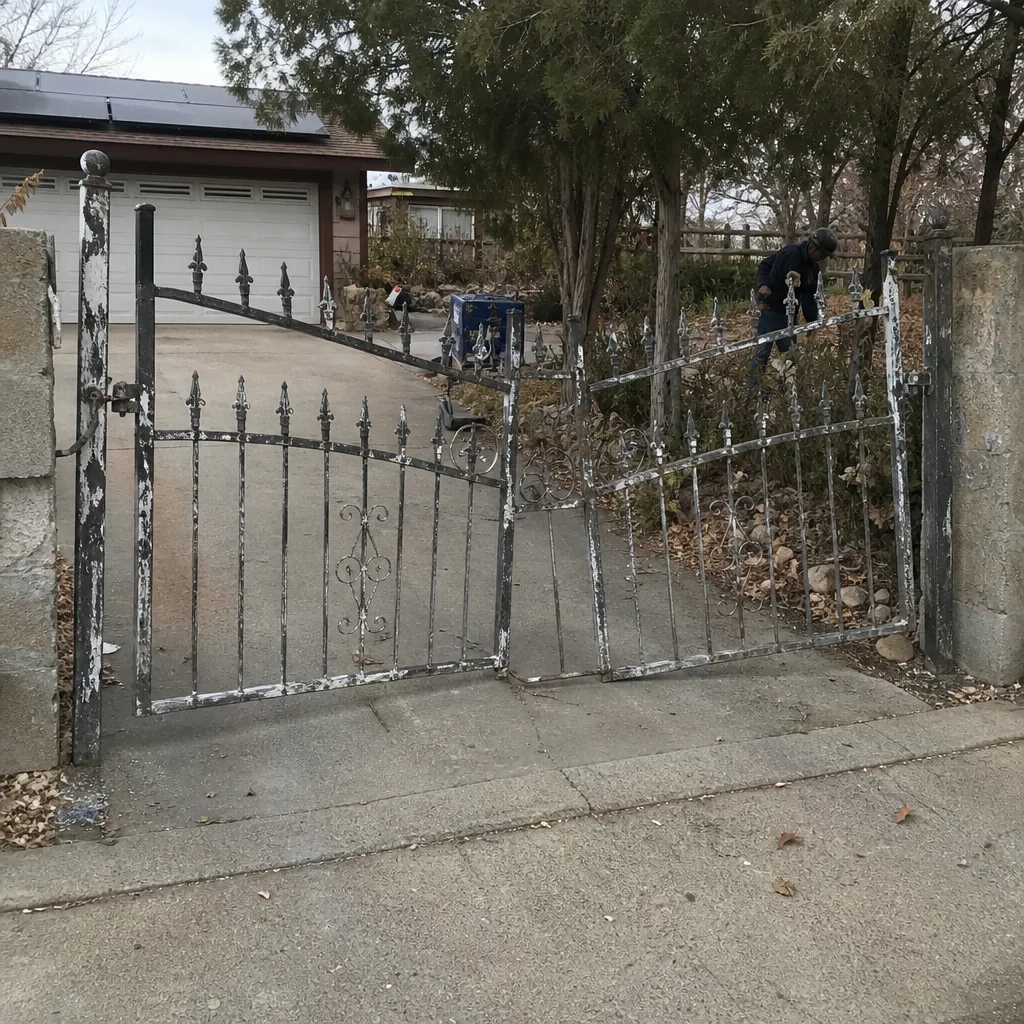 Before
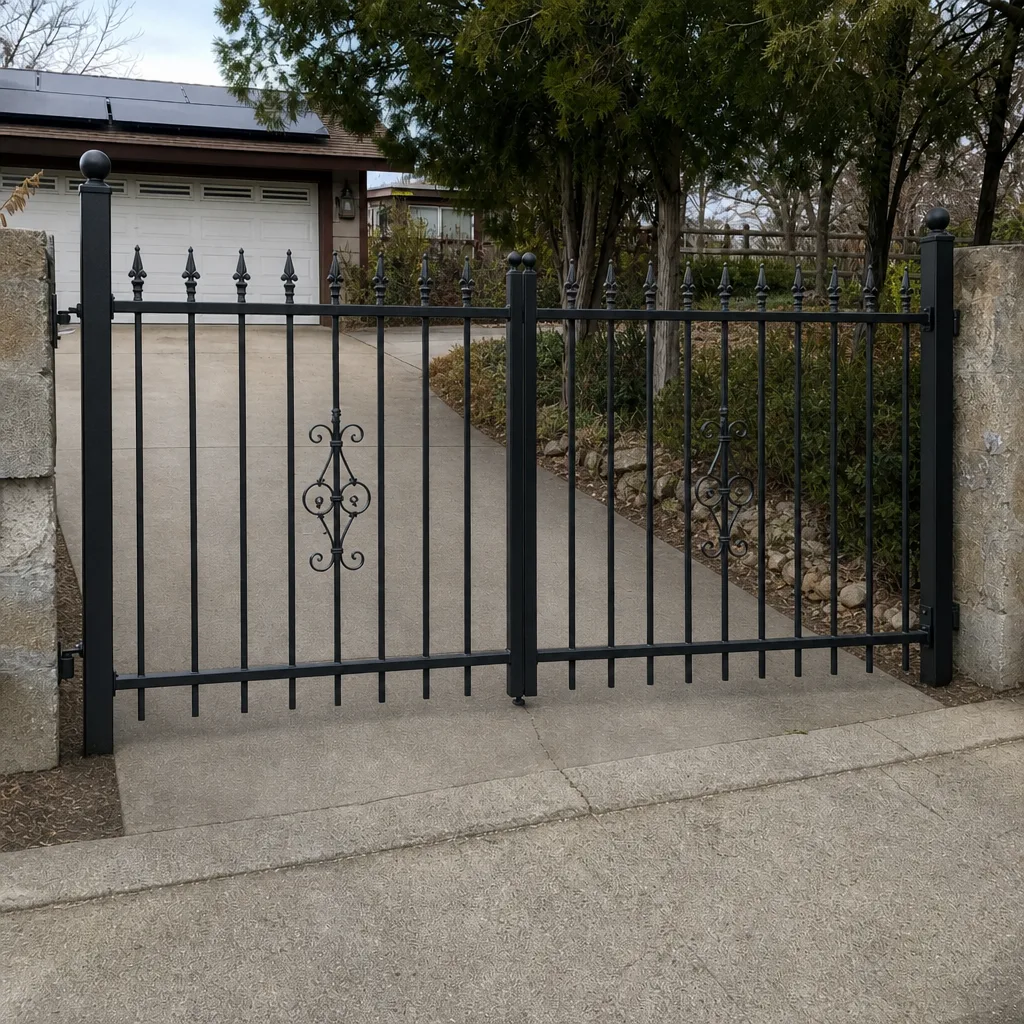 After
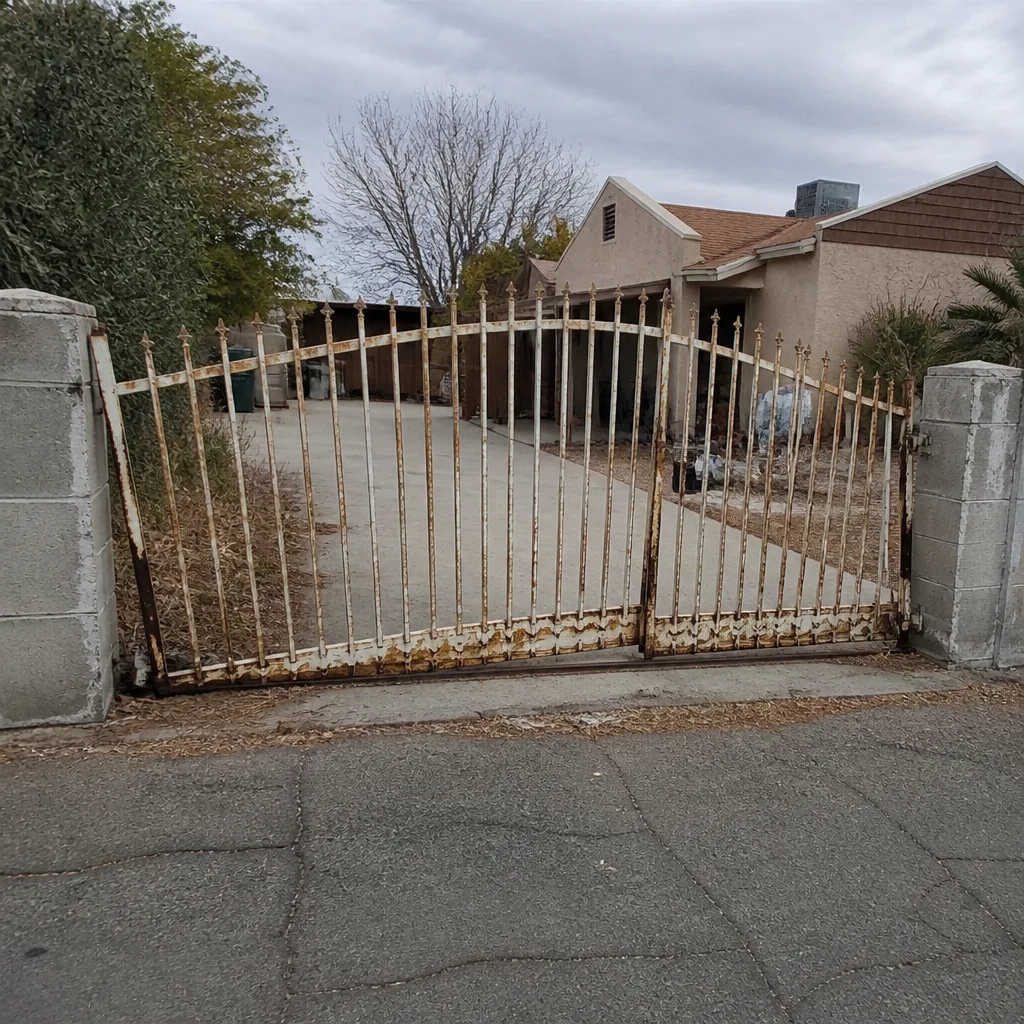 Before
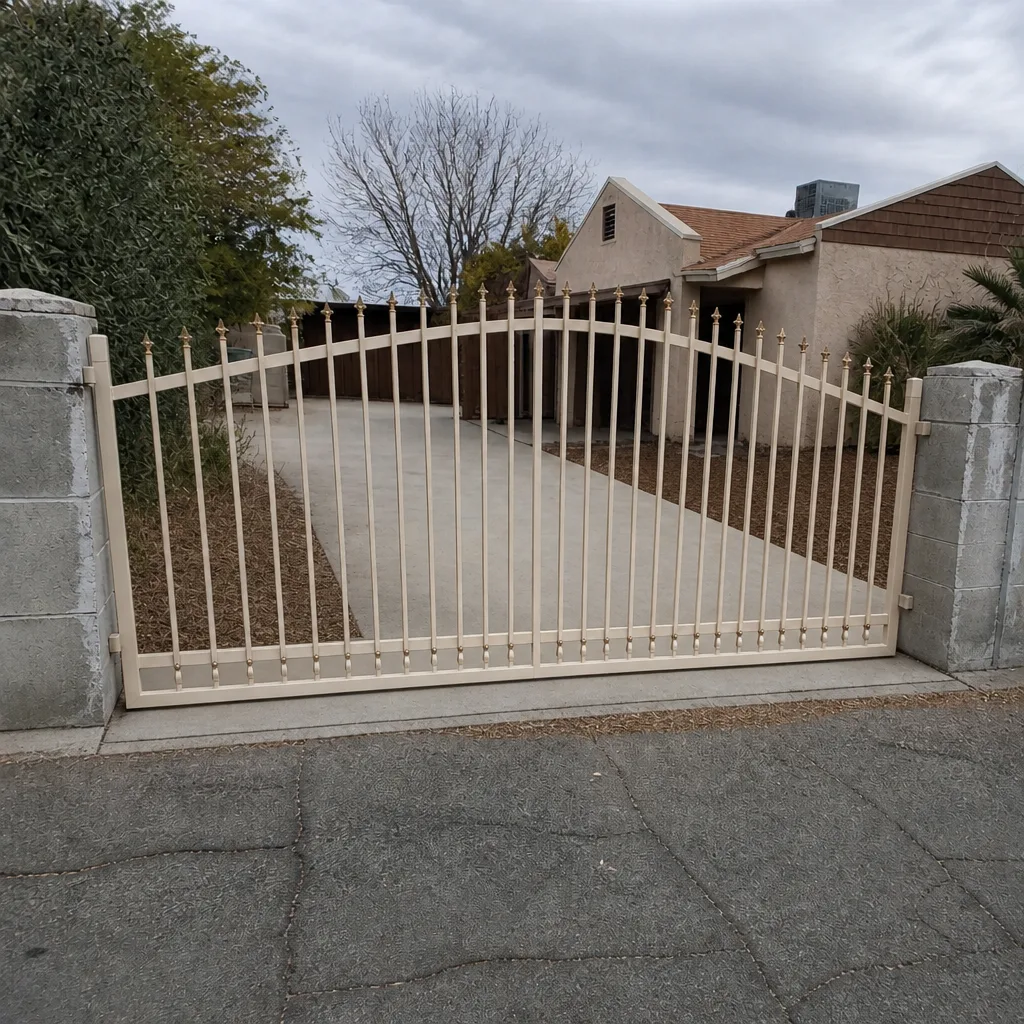 After
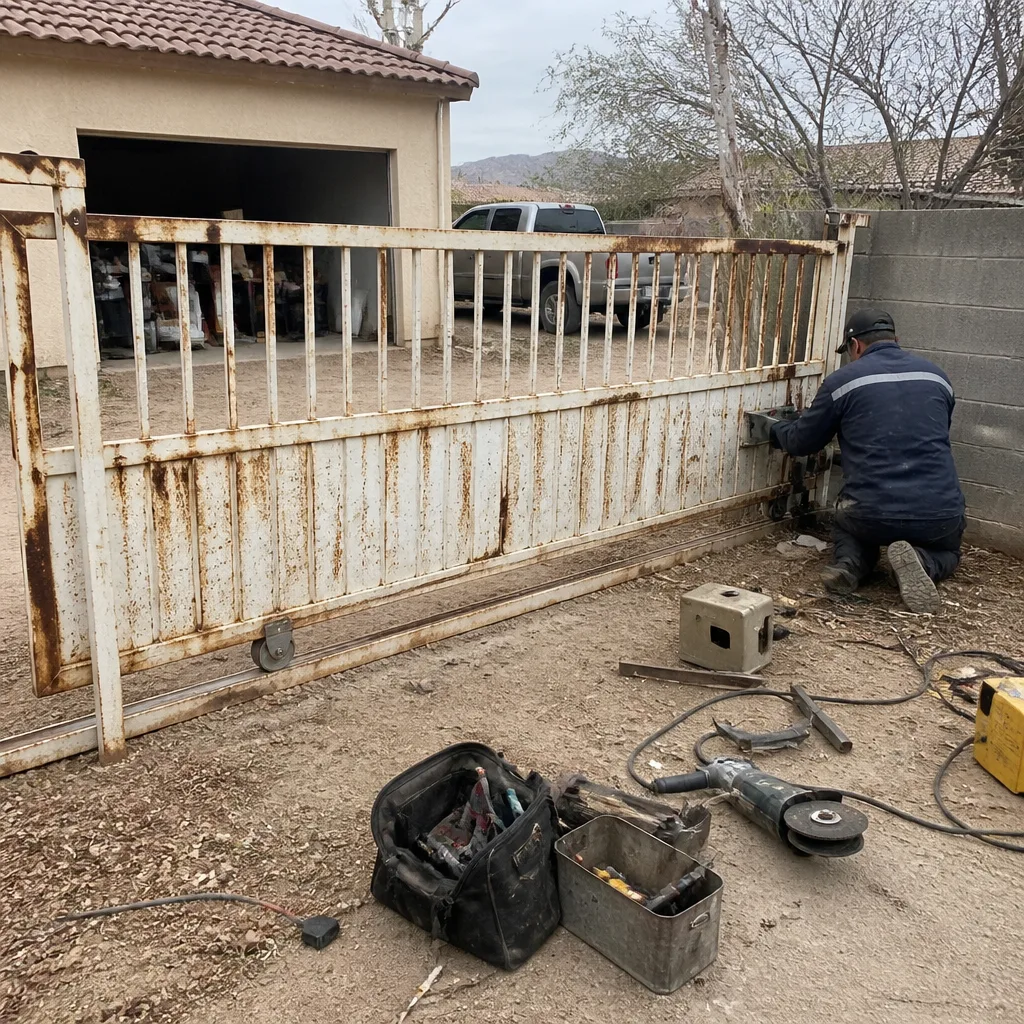 Before
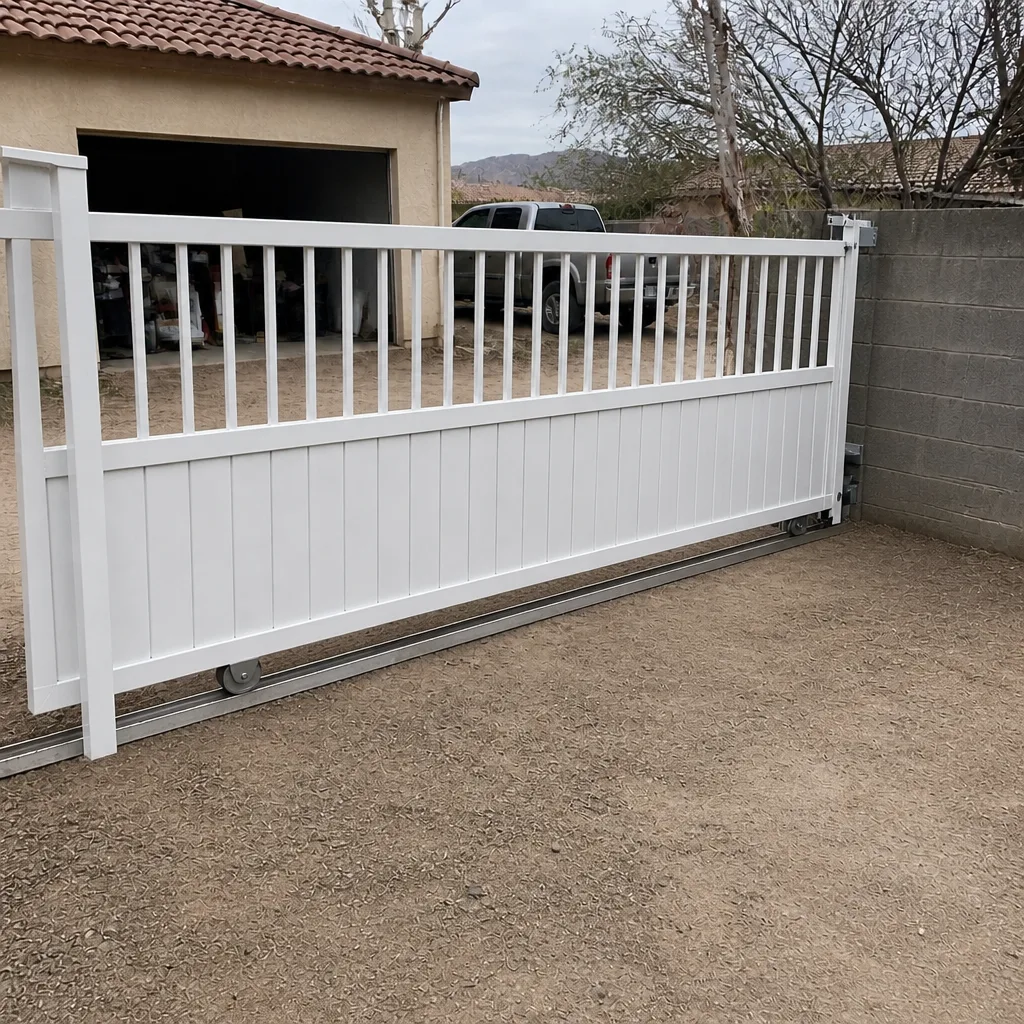 After
Frequently Asked Questions
You can install a manual pedestrian gate yourself if it’s on flat, well-drained ground and you’re comfortable with digging, concrete, and leveling. You cannot legally install the line-voltage electrical portion of an automated gate without a licensed electrician and the required permit. The safest split is to do the site prep and finish work yourself and hand off the structural and electrical work.
Yes. Adding a new circuit to power a gate operator, or extending an existing circuit to a new location, is permitted electrical work in Nevada, and it needs to be inspected. Skipping the permit also risks your homeowner’s insurance coverage if something goes wrong. Call (888) 276-7609 if you want to talk through the permit and electrician steps before you commit to a project.
Manual pedestrian gate installation is generally the least expensive option, automated driveway gate installation is the higher end, and the exact range depends on gate weight, soil, slope, and whether a permit and electrician are involved. We give you a written, upfront price before any work begins, so there are no surprises. Call (888) 276-7609 for a free estimate.
A simple manual gate on an existing solid post often can be finished in a single visit. An automated driveway gate is measured, ordered, and scheduled, so it isn’t a same-day job, and we won’t tell you otherwise. For most straightforward repairs, though, we complete the work in one visit. Estimates are always free, so call (888) 276-7609 and we’ll give you an honest timeline.
A complete installation covers the gate, the operator, the buried conduit, the line-voltage connection coordinated with a licensed electrician, the safety reversing system, and testing. It also includes the written guarantee that the whole system was installed correctly. Call (888) 276-7609 and we’ll walk through exactly what’s included in your job.
It can be cheaper for a manual pedestrian gate on forgiving ground, but a failed automated install often costs more to fix than a correct one costs to begin with. Once you account for the permit, the electrician, and the value of warranty coverage, the professional route is frequently the better value. Get a free second opinion on any written estimate before you decide.
The Bottom Line
The decision isn’t about your skill level, it’s about what the work can hurt. A manual pedestrian gate on a flat lot is a genuine DIY project, and a careful homeowner can handle it. An automated driveway gate involves line-voltage wiring, a permit, an electrician, and a safety system that has to work every time, and that’s a job for a professional. The hybrid route, where you do the safe prep and finish work and a professional handles the structure and electrical, is the smartest cost-saving move for most homeowners. Whatever you decide, get the price in writing before work starts. We’re the gate specialist for homeowners who want the job done right and backed in writing, and our team is here when you’re ready to start at the Ironworks Gate Co. Boulder City home page or by phone.
Call (888) 276-7609 for a free estimate in Boulder City. A live person answers every call, 24 hours a day, 7 days a week. Our technicians are trained on LiftMaster, FAAC, BFT, and Linear systems, and every job is covered by our written 90-Day Done Right Promise.
Written by the team at Ironworks Gate Co. Boulder City.