
Last updated November 17, 2026
 Wrought iron
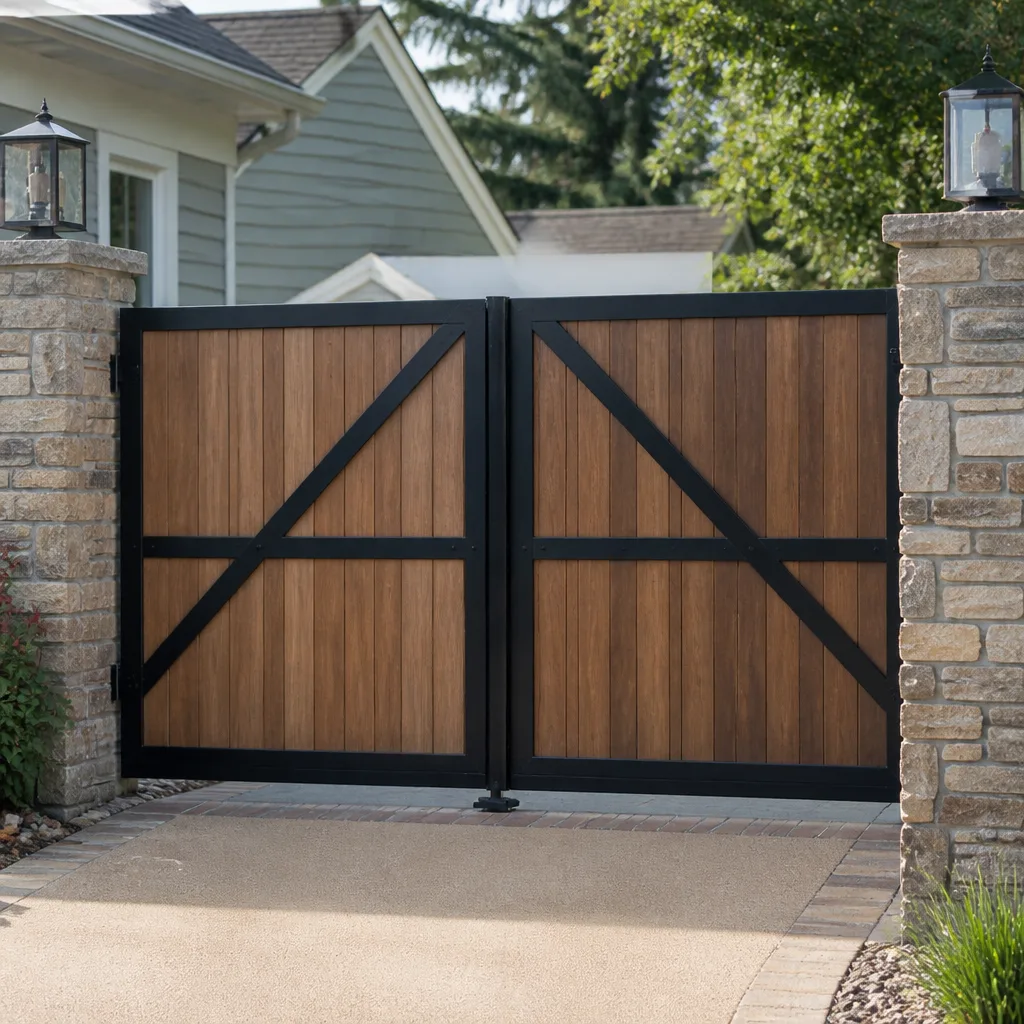 Wood & steel frame
 Farm & ranch
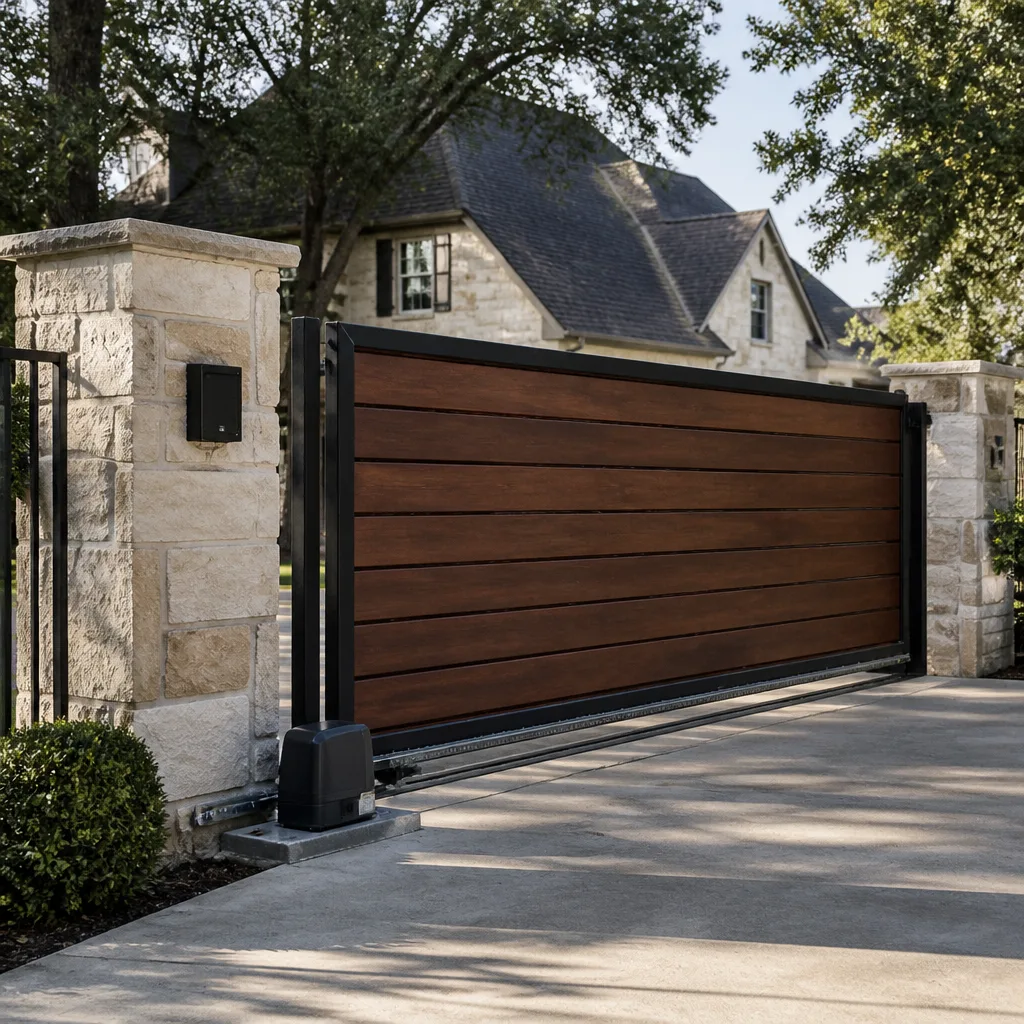 Sliding driveway gates
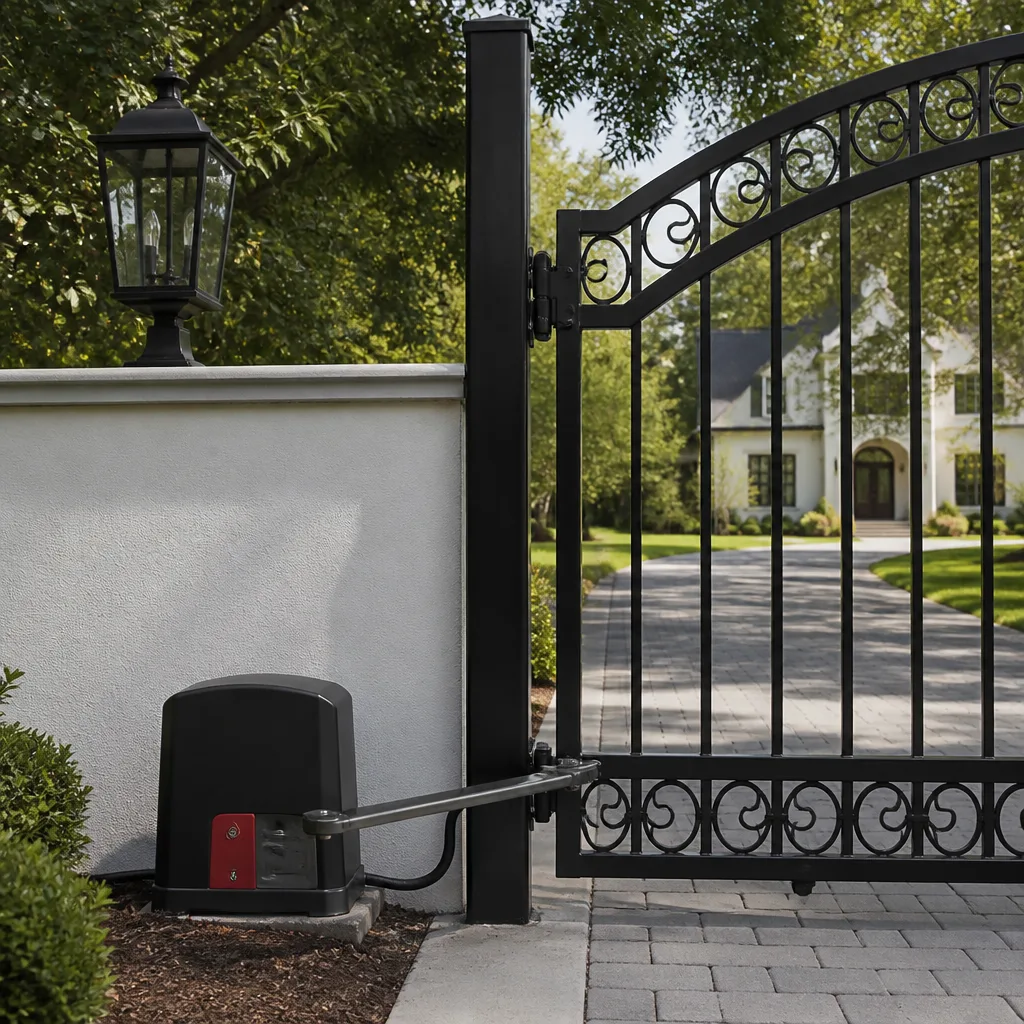 LiftMaster operators
Free on-site gate assessment - hinges, posts, and your LiftMaster or Nice gate operator checked before anything is quoted
The assessment is free and the quote is the invoice.
Get your free estimateGate Repair Permits, Codes & Inspections in NV: What You Need to Know
Here’s a scenario almost no one in Boulder City expects. Your automated driveway gate swings open on a sensor and clips a visiting grandchild. Nobody is badly hurt, but there’s a hospital visit and an insurance claim. Then your carrier asks for the permit pulled when the operator was wired in. There isn’t one. That missing paper gives the carrier a legally defensible reason to deny the claim, and the liability lands on you. Most homeowners assume gate work is permit-free because it feels like maintenance. In Nevada, it often isn’t. This guide covers which gate repairs and installations need permits, how UL 325 applies to your operator, what inspectors check, how to legalize an existing gate that was never permitted, and how HOA rules and city code can pull in opposite directions.
Quick Answer
In Nevada, any electrical work on an automated gate system and certain structural repairs to a boundary gate generally require a permit, pulled through Boulder City’s building department and inspected before the work is buried behind stucco, block or steel. A like-for-like mechanical repair (a hinge, a roller, a latch) usually does not. The dividing line is whether the job touches the electrical circuit, the operator, or the structural integrity of the gate and its supports. When in doubt, ask before you weld or wire.
Styles & brands we work with
- Wrought iron
- Wood & steel frame
- Farm & ranch
- Sliding driveway gates
- LiftMaster operators
Table of Contents
- Which gate work needs a permit in Nevada?
- How UL 325 applies to your residential gate operator
- The homeowner exemption: what you can self-permit in Nevada
- What a Boulder City gate inspector actually checks
- How to permit an existing gate that was never permitted
- HOA rules versus municipal code: when they conflict
- Common mistakes to avoid
- Frequently asked questions
Which gate work needs a permit in Nevada?
Nevada Revised Statutes and the adopted building codes treat an automated gate as both a structure and an electrical appliance. That dual nature is why the permit question trips people up. A gate repair that seems purely mechanical can cross into permitted territory the moment it involves the operator, the circuit feeding it, or the posts and footings holding the whole assembly up.
Here’s the practical breakdown we use on service calls around Boulder City:
- Requires a permit: New automated gate installation, replacing or upgrading a gate operator, running or modifying the electrical circuit that powers the operator, adding safety loops or photo-eye sensors tied into the operator, and any structural repair to gate posts, footings or masonry piers that carry the gate.
- Usually does not require a permit: Replacing a hinge, roller, latch or sagging wheel, re-welding a joint on the gate leaf itself, lubricating and adjusting the operator, replacing a battery in a keypad or remote, and swapping a transmitter.
- The gray zone: Replacing a gate operator with the same model on the same circuit is often treated as a repair, but the safety devices, wiring method and anchoring still have to meet current code. Some jurisdictions want a permit for any operator swap because UL 325 entrapment protection has to be verified. Boulder City’s building department is the authority to confirm with before you buy the new unit.
Structural repairs to a boundary gate that faces a public street or serves as part of a property line get extra scrutiny, because the gate becomes part of the site’s built environment. For a fuller look at what falls under ordinary repair scope, see our guide to Gate Repair in Winchester.
How UL 325 applies to your residential gate operator
UL 325 is the safety standard for automated door, gate, window and drapery operators. It’s what the manufacturer certifies and what the inspector is really checking when they look at your automated gate. The standard’s core requirement is entrapment protection: the operator must be able to detect, or the installation must prevent, a person or object being caught in the gate’s path.
For a residential sliding or swinging gate, UL 325 recognizes two categories of protection:
- Inherent entrapment protection: built into the operator itself. A sensing mechanism that reverses the gate when it meets resistance. Many newer LiftMaster and Viking operators include this.
- External entrapment protection: devices wired to the operator, such as photo-eye sensors that see an obstruction and stop the gate, or safety edges on the gate leaf itself. Ghost Controls and DoorKing systems commonly pair the operator with these.
The standard requires at least one means of entrapment protection appropriate to the gate type. An inspector will want to see the safety devices actually functioning, not just present. They’ll test the photo-eye by breaking the beam mid-travel and confirming the gate reverses. They’ll check that the operator has a manual release so the gate can be opened by hand in a power loss.
Here’s what we’ve seen in Boulder City: gates installed in the 1990s and early 2000s with a single operator and no photo-eye at all, still closing on anyone who walks behind them. Those installations pass no current review. Upgrading to meet UL 325 isn’t optional if you’re pulling a permit for the electrical work now or selling the home. Our Gate Motor & Opener service handles the operator and safety-device side of the compliance question.
The homeowner exemption: what you can self-permit in Nevada
Nevada, like most states, allows a homeowner to pull a permit for work on their own primary residence without holding a contractor’s license. That exemption is real, and it’s narrow. It applies to owner-occupied single-family homes. It does not cover rental property, it does not cover property you’re flipping, and it does not let you do work on someone else’s behalf.
What a homeowner can self-permit generally includes:
- The permit itself for a repair or installation on your own home.
- Hiring licensed subcontractors to perform permitted electrical work under that permit.
- Doing the work yourself, if you’re competent and the inspection passes.
What the exemption does not do:
- It doesn’t waive the inspection. The work still gets inspected, and if it fails, you fix it and pay for the re-inspection.
- It doesn’t shield you from liability if the gate later injures someone. A self-pulled permit on an inept electrical installation is a paper trail pointing straight at the homeowner.
- It doesn’t cover structural work some jurisdictions restrict to licensed contractors. Masonry that carries a gate, footings and load-bearing posts often fall into that bucket.
In our experience, the exemption is best used for minor mechanical work that happens to need a permit. For anything involving the electrical circuit or the operator, hiring a licensed electrician or gate contractor of record is the safer path. The permit and inspection process also becomes the contractor’s job.
What a Boulder City gate inspector actually checks
A Boulder City gate inspection is not a rubber stamp. When a residential gate installation or repair goes in for inspection, the plan reviewer and field inspector look for a specific set of items. Knowing them ahead of time is the difference between a clean pass and a callback.
- The permit and approved plans on site. The inspector wants to see the approved drawing matching the built work. Any deviation needs a plan change.
- The electrical circuit. How the operator is fed, whether the wiring is in conduit or rated for exterior exposure, GFCI protection where required, and a properly bonded grounding path.
- UL 325 entrapment protection in operation. Photo-eyes tested by breaking the beam, safety edges tested by pressing them, and the operator’s reversing behavior confirmed under load.
- Manual release functioning. The gate should open by hand smoothly when the operator is disengaged.
- Structural anchoring. Posts and footings sized to the gate, the mounting hardware appropriate, and the structural attachment to masonry or steel checked.
- Setback from the public right-of-way. The gate shouldn’t swing or slide into a sidewalk, alley or street.
- Drainage and grade. In Boulder City’s desert climate, sudden monsoon rain can pool at the gate’s base. The inspector may note ponding that undermines the footing or rusts the operator’s housing.
The single most common inspection failure we’ve seen is entrapment protection that isn’t wired correctly. A photo-eye installed, wired and powered but not monitored by the operator’s control board isn’t doing its job, and the inspector will catch it.
How to permit an existing gate that was never permitted
Plenty of Boulder City homes have a gate installed decades ago with no permit at all. The prior owner installed it, sold the house, and nobody asked. When the current homeowner discovers this during a sale, a refinance or an insurance review, the question is how to legalize it without tearing everything out.
Here’s the process we walk homeowners through:
- Pull the history. Request the permit records from Boulder City’s building department for your address. If there’s no permit on file, you know the work is unpermitted.
- Get a plan review. Bring a description of what’s installed to the building department. They’ll tell you what an as-built permit requires: drawings, an electrical inspection, or full UL 325 compliance review. Costs vary by scope. Expect the permit fees plus the cost of any upgrades the inspection requires.
- Bring the gate up to current code. In practice this means the safety devices the gate should have had from the start. Photo-eyes, safety edges, a reversing operator if the current one lacks it, and a manual release. Often the operator is 15 to 25 years old and none of this is present, so the fix is a new operator.
- Schedule inspection. Once the work is complete, the inspector signs off and the as-built permit closes. You now have a clean record.
- Notify your insurer. Send the closed permit and inspection to your homeowner’s insurance carrier. This is what converts the risk into coverage.
Common flags in this process: an operator running off an extension cord instead of a dedicated circuit, a safety edge that was added but never wired to the operator, a gate post that’s undersized for the gate, and a photo-eye mounted at the wrong height or aimed wrong. None of these are hard to fix, but they all get written up. When you’re ready, our Gate Installation in Winchester team handles code-compliant installs and retrofits.
HOA rules versus municipal code: when they conflict
An HOA and the city are two separate authorities with two different agendas, and they don’t always agree. The city cares about safety, life safety code and public right-of-way. The HOA cares about appearance, uniformity and its own CC&Rs. When the two pull against each other, the homeowner is caught in the middle.
The classic conflict we see: an HOA requires a specific gate style, paint color, or height for the community’s uniformity. The city’s code may require a setback, an entrapment-protection safety edge of a certain profile, or a height consistent with a corner lot sight line. A gate built strictly to the HOA’s spec can fail inspection. A gate built strictly to code can violate the HOA.
Here’s how to navigate it before the work starts:
- Read the CC&Rs and the city code side by side. The gate requirements in each. Don’t just rely on the HOA architectural committee’s verbal approval.
- Get the HOA’s approval in writing. An email trail from the architectural review committee is worth more than a committee member’s word.
- Order the bid with both sets of requirements written in. A gate contractor and an electrician both need to see the HOA spec and the city’s code requirements in the same scope document.
- Plan for the harder constraint. When code and HOA can’t both be satisfied, code wins, but the HOA can often be brought around if the reasoning is documented. Build the accommodation into the design from the start.
Boulder City has a mix of long-established neighborhoods near the historic district and newer subdivisions with active HOAs, so the answer depends heavily on which side of town you’re in. A phone call before ordering any custom gate work saves weeks.
Common Mistakes to Avoid
- Assuming all gate work is permit-free. The electrical circuit and the operator are the dividing line. A repair can quietly cross it, and the homeowner finds out when the insurance claim gets denied.
- Pulling a permit and then skipping the inspection. An open permit is a red flag on a title search and can delay a sale. Close what you open.
- Buying the new operator before confirming the permit. Some operators won’t meet Boulder City’s current entrapment-protection requirements once installed on a residential gate. Confirm the model with the building department before ordering.
- Self-permitting electrical work as a homeowner. The exemption lets you pull the permit. It doesn’t make you an electrician, and it doesn’t shield you if the installation later injures someone. For anything energized, hire a licensed contractor of record.
- Treating HOA approval as the same as code compliance. They aren’t. A gate built strictly to the CC&Rs can fail inspection, and a gate built strictly to code can violate the CC&Rs.
- Ignoring the desert climate when planning the footing. Boulder City’s monsoon-season rain can pool around a gate base that wasn’t detailed to drain. A footing that rots or rusts out is a structural failure, and it doesn’t get grandfathered.
- Letting an existing unpermitted gate ride. The risk compounds with every year. It’s cheaper to legalize a gate now than during a rushed sale or after a claim.
See the difference
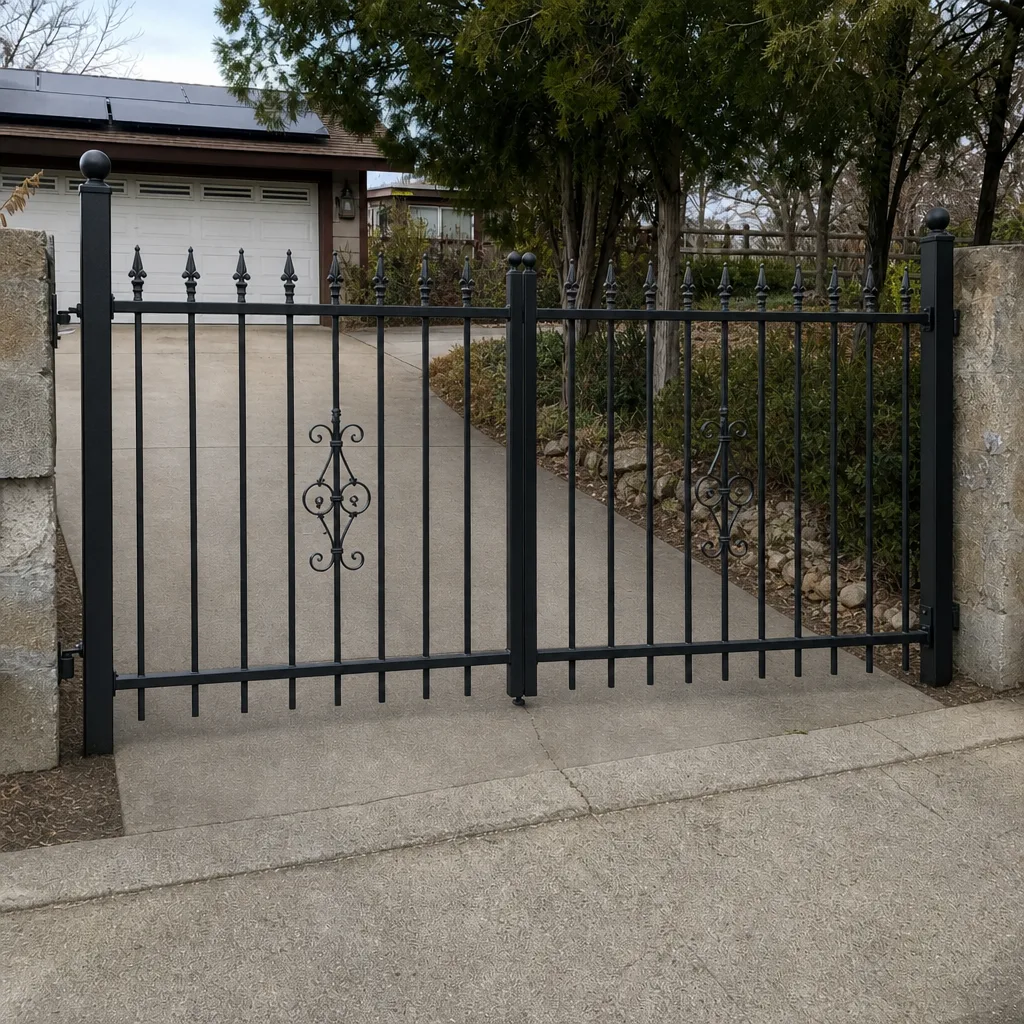
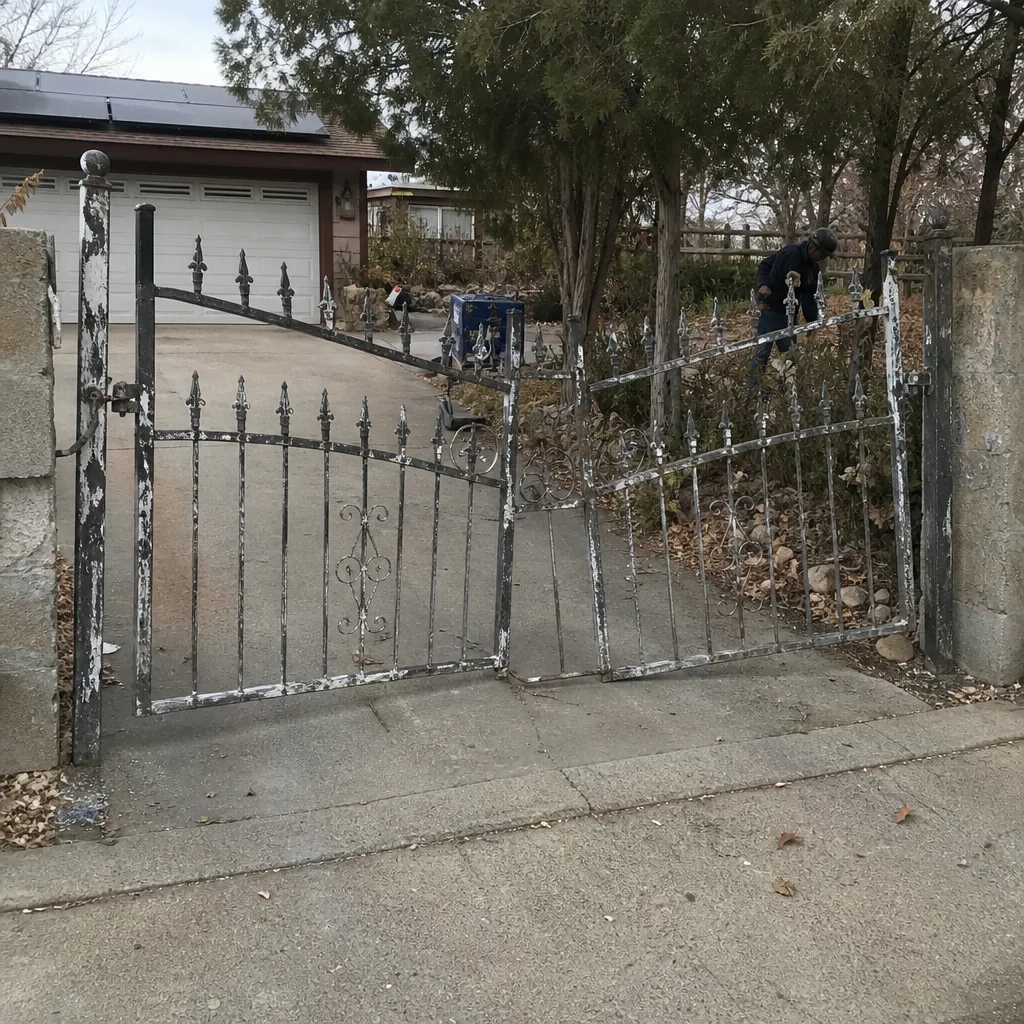 Before
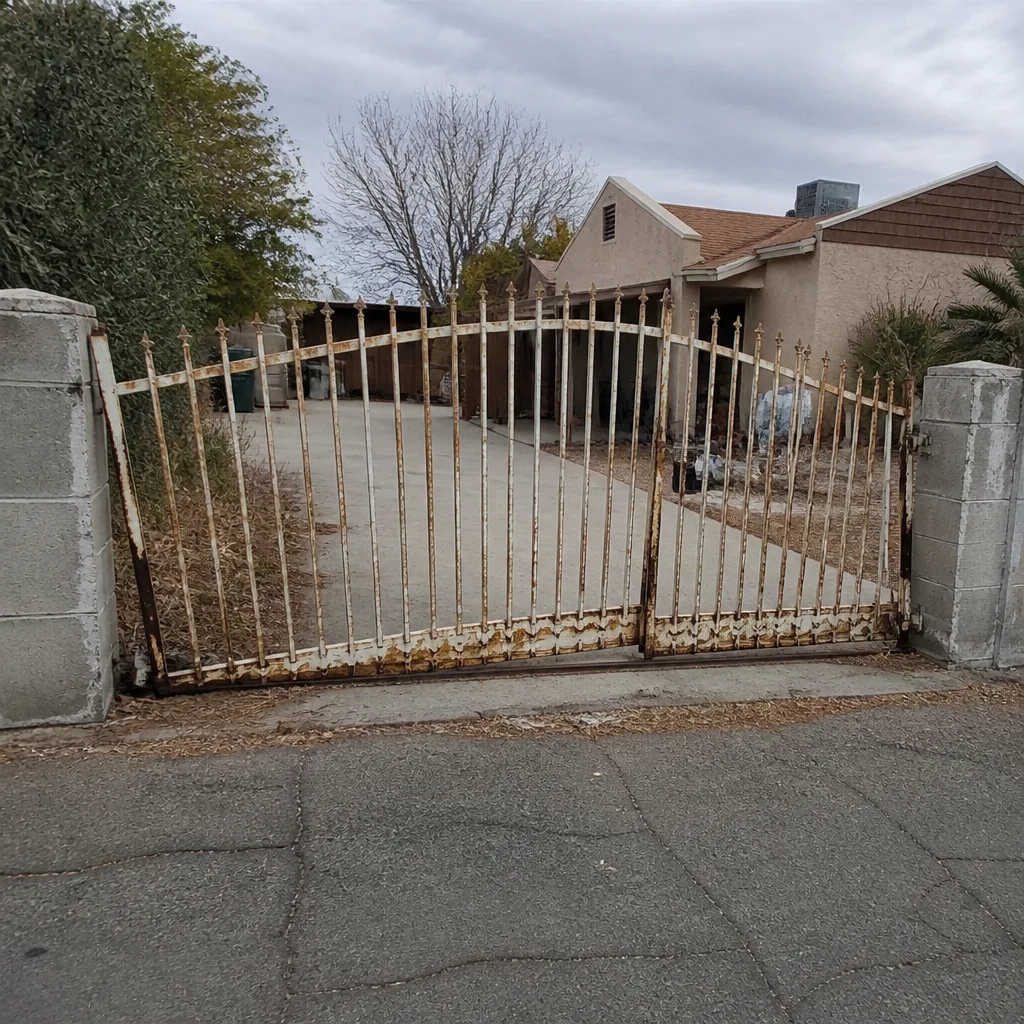
 After
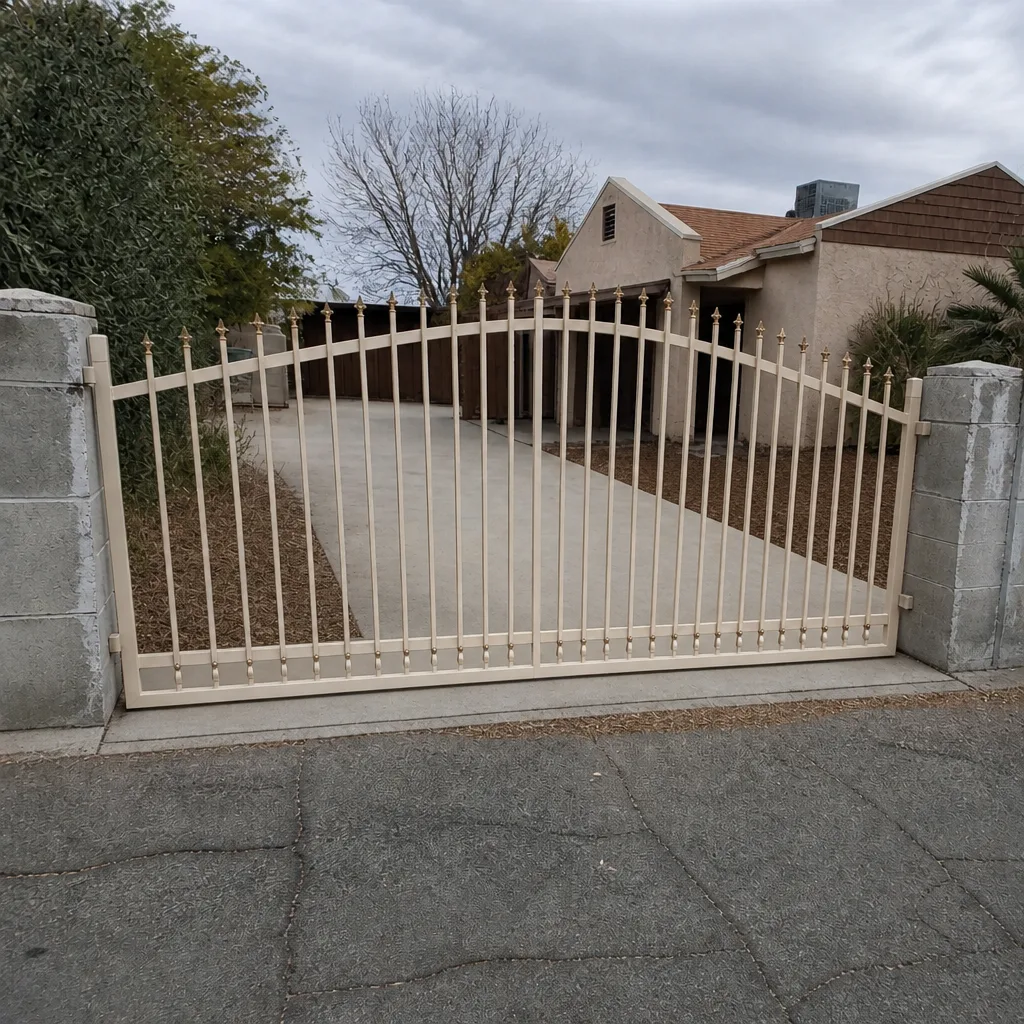
 Before
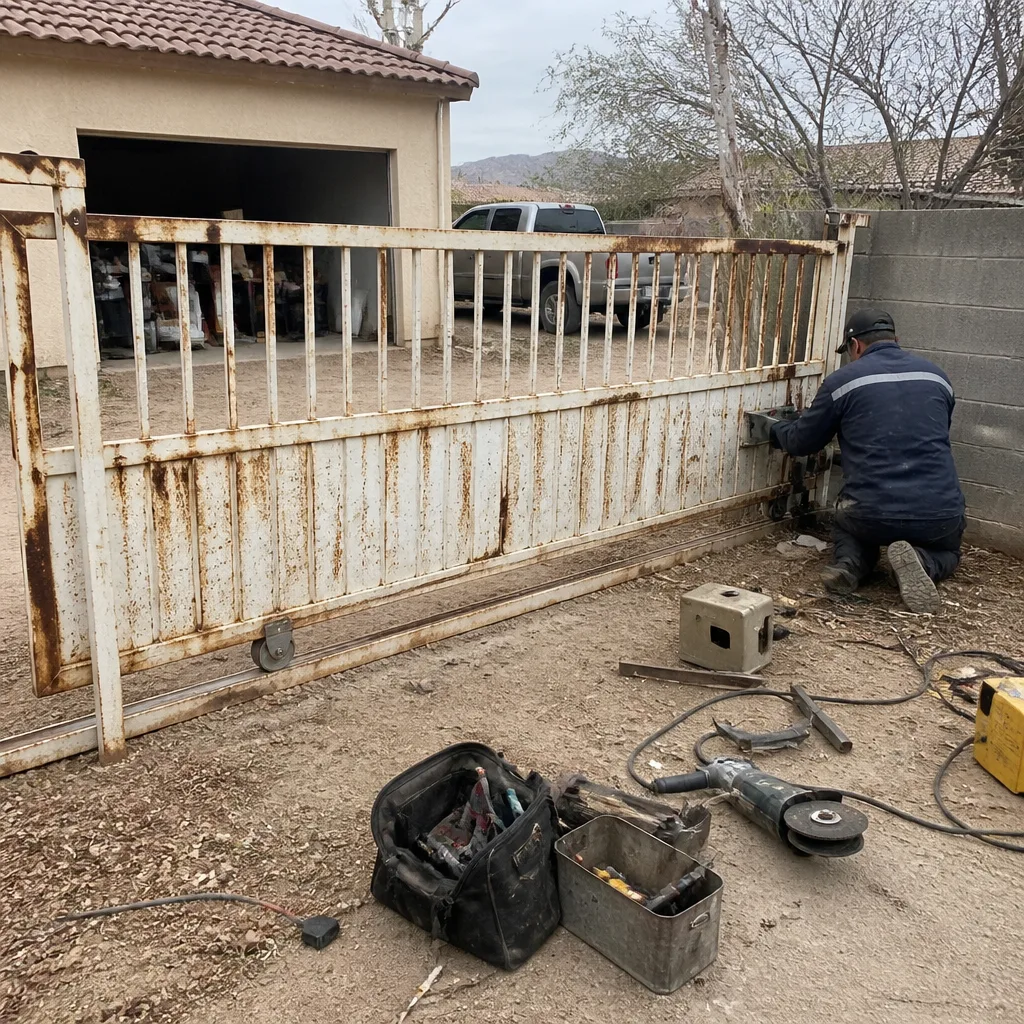
 After
 Before
 After
When to Call a Professional
Call a professional when the work involves anything energized, anything structural, or anything where an injury is possible if it fails. If your gate operator needs to be replaced, if the circuit feeding it needs to change, if a post or footing is compromised, or if a gate that was never permitted needs to be brought up to code, that’s the point to bring in a licensed contractor of record. A gate contractor used to permitting in Boulder City will know which inspections get flagged and how to avoid a callback. Ironworks Gate Co. Boulder City offers free estimates in Boulder City – call (888) 276-7609.
Frequently Asked Questions
It depends on what you’re repairing. A hinge, roller, latch or weld on the gate leaf itself usually does not need a permit. Anything touching the operator, the electrical circuit, or the structural posts and footings generally does. Confirm with Boulder City’s building department before the work starts, because an open permit is your protection if something goes wrong.
Often not. If the gate injures someone and there’s no permit for the electrical installation that was part of the injury, your carrier has a defensible reason to deny the claim. The safest path is to pull the permit and get the inspection, or legalize an existing gate if you’ve discovered it was never permitted. Call (888) 276-7609 for a free second opinion on any written estimate you’ve received for the work.
UL 325 is the safety standard for automated gate operators. It requires entrapment protection, meaning the operator either detects an obstruction and reverses or the installation prevents one from entering the path. Any permitted installation today must meet it, and most unpermitted gates installed before the standard’s current requirements fail it outright. Upgrading safety devices is usually the simplest way to pass inspection.
The permit fees themselves depend on scope and are set by Boulder City’s building department. The bigger cost is usually bringing the gate up to UL 325 compliance, which often means new safety devices or a new operator. We quote the entire job in writing before any work starts, so you know the full number before a bolt is turned. Call (888) 276-7609 for a free estimate.
Yes, on your own primary residence, for work you’re competent to do. The exemption doesn’t waive the inspection and doesn’t shield you from liability if the installation later injures someone. For anything involving the electrical circuit or the operator, hiring a licensed contractor of record is the safer choice, and the permitting becomes their responsibility.
Code wins when the two conflict, but the HOA can often be brought around if the reasoning is documented. Get the HOA’s written approval, then have the gate contractor design to the stricter of the two requirements. Working that out before you order custom materials saves weeks and the cost of a rebuild. Our team at Ironworks Gate Co. Boulder City home handles this conversation routinely.
The Bottom Line
Gate work in Nevada lives at the intersection of structure and electricity, which is exactly why the permit question matters more than most homeowners realize. Any wiring, operator replacement or structural repair to a Boulder City gate should be permitted and inspected. A like-for-like mechanical repair usually doesn’t require one. If you’ve inherited an unpermitted gate, legalize it before the risk catches up with you. The cost of a permit and an inspection is far lower than a denied insurance claim. And when the work involves anything energized, hire a licensed professional of record so the liability rides with them, not you.
Our technicians have up to 13 years of experience with permitted installations and retrofits. We’ll quote the full scope, permit fees included, in writing before any work starts. If you’d like a straight answer on whether your gate needs a permit, call (888) 276-7609 for a free estimate. We’ll be there when we say, and we stand behind the work in writing.
Written by the team at Ironworks Gate Co. Boulder City.