
Last updated November 17, 2026
 Wrought iron
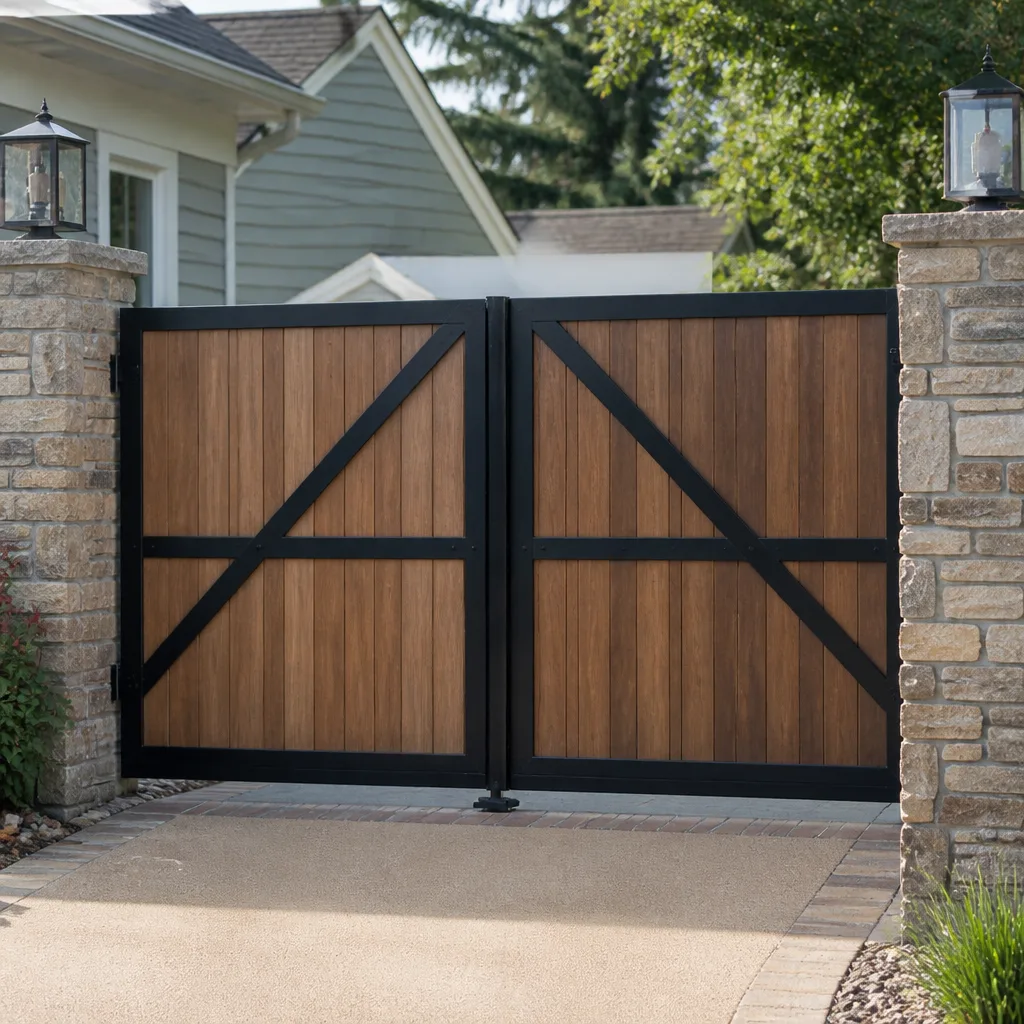 Wood & steel frame
 Farm & ranch
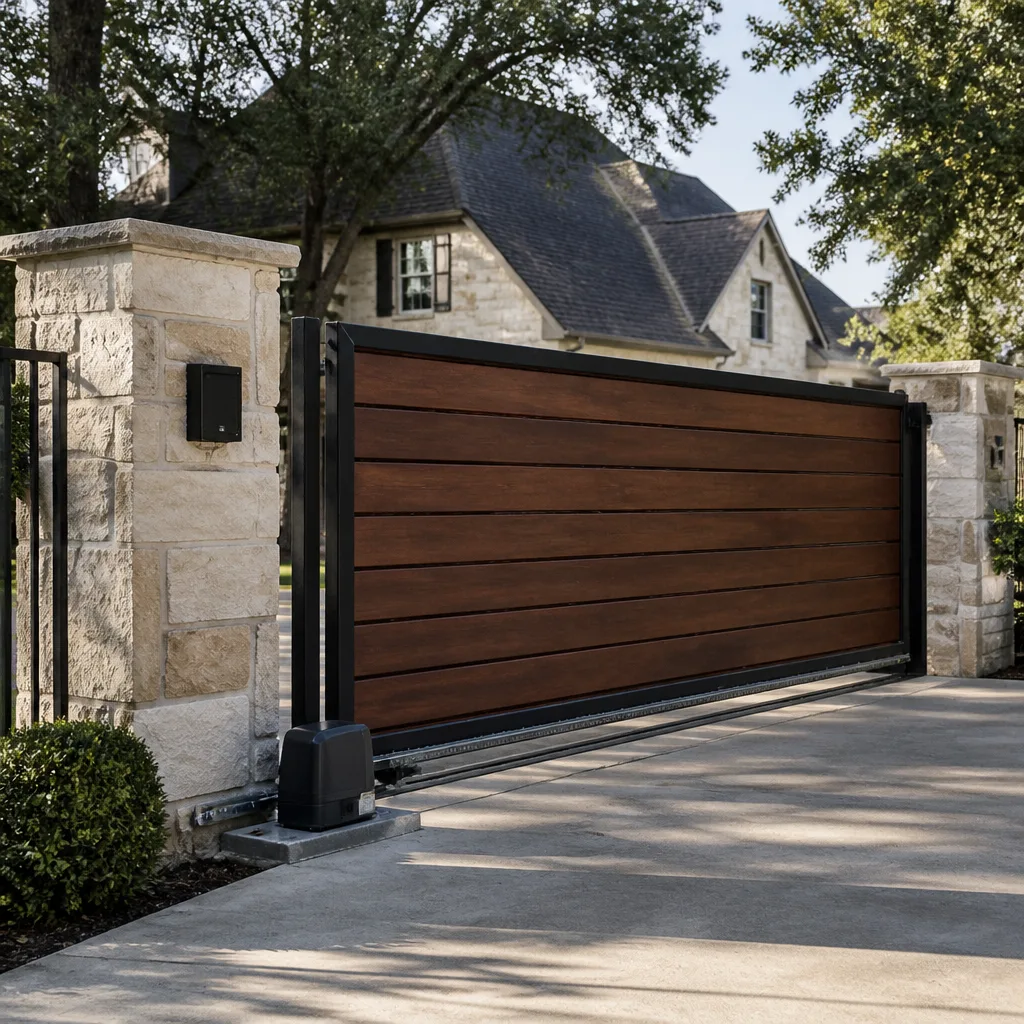 Sliding driveway gates
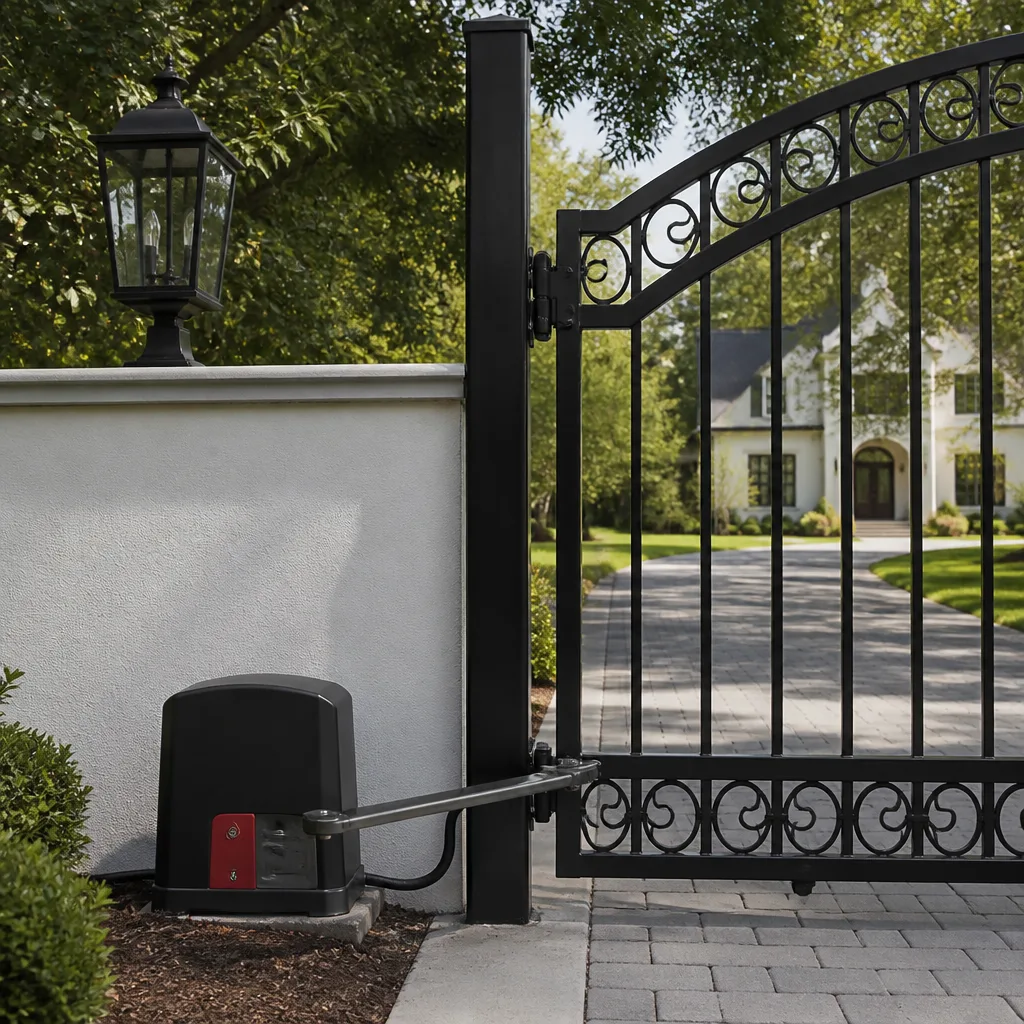 LiftMaster operators
Free on-site gate assessment - hinges, posts, and your LiftMaster or Nice gate operator checked before anything is quoted
The assessment is free and the quote is the invoice.
Get your free estimateGate Repair Maintenance Checklist for Boulder City Homeowners
The number one maintenance mistake Boulder City homeowners make is lubricating a hinge that should be replaced. Fresh grease on a worn pin quiets the squeak for a week and quietly accelerates the structural damage underneath it, because the slack never goes away and the gate keeps hammering the same worn bore. We’ve pulled hinges off Boulder City gates where two years of monthly oiling had turned a $40 part into a $600 post repair. This guide skips the vague “inspect for damage” language. What follows are the actual measurements, sounds, and tolerances that separate a gate in good condition from one that’s 60 days out from an expensive failure, in the heat and dust that Boulder City hands out.
Quick Answer
A useful gate maintenance checklist tells you what you’re looking for and why: check post plumb, gate sag, and latch gap variance against real tolerances (roughly 1/8 inch of sag and 2 degrees of lean are the warning lines); lubricate by component with the correct product; and test your safety sensors with a rigid object, not a broomstick. Monthly tasks are visual and quick, semi-annual tasks involve lubrication and hardware checks, and after a dust storm or a run of 105-degree days you inspect again. If anything is out of tolerance, a professional can read the gate’s history from a documented log and diagnose it faster.
Styles & brands we work with
- Wrought iron
- Wood & steel frame
- Farm & ranch
- Sliding driveway gates
- LiftMaster operators
Table of Contents
- The Tolerances That Actually Matter: Sag, Lean, and Gap
- Monthly Checks You Can Do in Ten Minutes
- Semi-Annual Tasks: Lubrication and Hardware
- Lubrication Type by Component: Chain Drive vs. Screw Drive
- How to Test Automation Safety Sensors Correctly
- The Mojave Calendar: Dust Storms and Extreme Heat
- How to Document an Inspection Your Contractor Can Read
The Tolerances That Actually Matter: Sag, Lean, and Gap
Most checklists say “check for sagging.” That tells you nothing. What matters is how much is acceptable before it becomes a repair item, and the numbers are tighter than most folks expect. On a standard driveway gate, up to about 1/8 inch of drop at the latch edge is normal seasonal movement. Past 1/4 inch, something has loosened: a hinge pin, a worn bore, or a post footing that’s starting to shift.
Gate sag
Measure from the ground to the bottom rail at the hinge side and again at the latch side. The difference is your sag. Under 1/8 inch: leave it. 1/8 to 1/4 inch: note it and re-check in 60 days. Over 1/4 inch and growing: it’s a repair item, not a maintenance item. A gate that sags a quarter inch in a month is telling you the hinge or footing is failing, not that the gate is settling.
Post lean
Hold a 4-foot level against the post, top and bottom, on the hinge side. A post that reads plumb at the base and 2 degrees off at the top is leaning. Two degrees on a 6-foot post is roughly 2.5 inches out of plumb along the height, and that’s the point where automation starts fighting itself. In Boulder City, where caliche and decomposed granite can hold a footing for decades and then give way after one wet winter, post lean is worth checking twice a year.
Gap variance
Close the gate and look at the gap between the gate leaf and the strike post. Run your eye from top to bottom. If the gap is even within about 3/16 inch top to bottom, the geometry is sound. If it varies more than that, the gate has twisted, or the post has moved, and no amount of latch adjustment will fix it for good.
Every gate we look at in Boulder City starts with these three measurements. They tell us, in about five minutes, whether a call is maintenance or repair. For the full range of what falls under repair, see our Ironworks Gate Co. Boulder City home page.
Monthly Checks You Can Do in Ten Minutes
The monthly list is visual and hands-on. No tools required beyond a flashlight and your ears. Do it on the first of the month and you’ll build a baseline fast.
- Walk the full swing. Open and close the gate by hand. Listen. A steady mechanical hum from the operator is normal. A grind, a pop, or a knock at the same point in the travel is a worn bearing, a loose sprocket, or a chain with a stiff link. Note where in the swing it happens.
- Look for fresh rust bloom. Orange dust at a weld or hinge means moisture is trapped somewhere. In Boulder City, rust at welds is usually a sign of irrigation overspray or a gate that faces the prevailing weather, not a general humidity problem.
- Check the latch alignment. With the gate fully closed, the latch should drop without being pushed. If you have to lift or shove the gate to latch it, note it.
- Test the keypad and remotes. Every month, key in your code and click each remote once. A fading battery in a Linear or Ghost Controls remote shows up as intermittent operation weeks before it fails.
- Look at the track or cantilever wheels. On a sliding gate, check for flat spots and debris in the track. A single pebble in a V-track can wear a wheel flat in a season.
- Confirm the safety reverse. Full sensor test below, but a quick monthly check is worth doing.
Note anything unusual in a log (more on that below). A single odd sound is noise. The same odd sound three months running is a diagnosed problem waiting to be fixed before it fails.
Semi-Annual Tasks: Lubrication and Hardware
Twice a year, in April before the heat and in October after it, do the deeper pass. This is where a gate either gets ahead of wear or falls behind it.
- Torque-check the hinge bolts and post anchors. A socket set and a few minutes. Loose anchor bolts are the single most common cause of a gate that wanders out of alignment after a hot summer.
- Inspect the operator housing. Look for dust ingress, insect nests, and cracked gaskets. A DoorKing or Viking operator in a Boulder City yard sees more dust in a season than a coastal unit sees in five years.
- Lubricate the chain or screw, the hinge pins, and the rollers with the correct product for each (see below). Wrong lubricant here is worse than none.
- Test the battery backup, if your operator has one. Unplug the operator from power and open the gate once. If it doesn’t move, the battery is dead and a power outage leaves you locked in.
- Inspect the welds. Look for hairline cracks at the corner joints on the frame. A small crack caught at semi-annual is a five-minute weld. The same crack caught a year later is a rebuilt section. If you’re seeing weld failures, our Gate Repair in Winchester page covers the same repair process and what to expect.
- Clear the sensor lenses and the operator’s cooling vents.
If you’d rather not do the semi-annual yourself, our Gate Motor & Opener in Winchester page lays out what professional service covers, and the $89 seasonal tune-up is built for exactly this pass.
Lubrication Type by Component: Chain Drive vs. Screw Drive
This is the part most checklists get wrong. Putting the right lube on the wrong component is the fastest way to accelerate wear. Match the product to the part.
Chain drive
Use a chain-specific lubricant, ideally a dry or paraffin-based product that sets after application. The reason is dust: a wet oil on a chain in Boulder City collects grit, and grit turns the chain into a grinding paste. The chain wears faster lubricated with the wrong product than it would running dry. Apply sparingly, wipe the excess, and don’t spray the motor housing.
Screw drive
Use a lithium or white lithium grease, not a chain lube. A screw drive needs a film that clings to the threads. Chain lube runs off the rotating screw and leaves the threads dry within a few cycles. One or two passes of grease along the full travel is enough; more just attracts dust.
Hinges and pivot points
A light machine oil or a penetrating lubricant is right for a healthy pin. But here’s the counterintuitive part: if the pin is already sloppy in the bore, lubrication does not fix it and may make it worse. Fresh grease on a worn pin masks the squeak while the pin keeps carving out the bore. The fix is a new hinge, not a can of oil. We’ve seen hinges replaced for $40 apiece where two years of oiling turned the same job into a $600 post rebuild. Same logic for the Gate Installation in Winchester work: the right hardware at install is what makes the maintenance simple later.
Rollers and tracks
Roller bearings take a light grease. Steel V-tracks take a dry graphite or a very thin film, and the track should be cleaned of grit before lubrication ever goes on. Never grease a track that carries dust.
How to Test Automation Safety Sensors Correctly
The broomstick method is the most common test and the least useful. A broomstick is soft and wide, so it passes a sensor that would still fail to detect a child’s hand or a dog’s leg. Sensors are rated by how small an object they reliably detect. Test them that way.
- Use a rigid object no wider than 2 inches. A piece of 2×2 lumber, a length of pipe, or a rolled-up magazine. Pass it through the beam at three heights: knee level, mid-height, and chest level.
- Watch the gate operator’s response. If the gate is closing and the beam is broken, the gate must reverse. If the gate is opening and the beam is broken, it must stop or reverse depending on your model. If it doesn’t, the sensor is not doing its job.
- Test the sensor alignment from both sides. A sensor whose receiver sees the beam at one angle but not another will pass a casual test and fail in real use. Jostle each sensor housing slightly and watch whether the gate trips.
- Check the photo-eye LED. Most sensors have a small indicator light that stays solid green when aligned. A blinking or dark LED means misalignment or a failed sensor.
- Repeat after a dust storm. Blowing dust in Boulder City coats sensor lenses and can shift the beam alignment. A sensor that was fine in March can be marginal by August.
Safety sensors are a life-safety component. If they don’t respond correctly after a proper test, that’s a same-day call, not a “get to it next week” item. Live phone support is available around the clock, which matters when a sensor problem shows up on a Saturday evening.
The Mojave Calendar: Dust Storms and Extreme Heat
Boulder City’s climate writes its own maintenance calendar. Two weather events do more gate damage than everything else combined: dust storms and sustained heat.
After a dust storm
Within a day of a dust event, do an inspection pass. Blowing dust and grit infiltrate tracks, coat sensor lenses, and pack into hinge bores. Sweep the track out with a dry brush. Wipe the sensor lenses with a soft cloth. Open and close the gate once and listen for grit grinding in the rollers. If a door operator loses its photo-eye alignment after a storm, the sensor brackets have shifted and need realignment.
During extreme heat
Sustained 105-degree days expand steel and soften lubricants. The practical heat checks:
- Metal expansion. A gate that runs smoothly at 70 degrees can bind slightly at 110, particularly with a snug latch gap. A small, temporary binding is normal. A gate that binds hard enough to trip the operator’s current-sensing reverse is not.
- Battery performance. Heat kills lead-acid and lithium backup batteries. Test the backup during the hottest month, not just in spring.
- Lubricant breakdown. Cheap chain lubes dry out and flake off under sustained heat. Re-apply after the worst of the summer if the chain looks dry.
- Operator cooling. Clear any dust or debris from the operator vents. A door operator that overheats will fail to complete a full cycle mid-swing, usually at the worst time of day.
Gates we service in Boulder City are often on a schedule that skips semi-annual maintenance entirely. That’s a choice, and it’s a legitimate one; but if you’re going to skip a pass, skip the spring one before the heat, not the fall one after it.
How to Document an Inspection Your Contractor Can Read
A documented history is one of the most useful tools a homeowner can hand a contractor. It turns a two-hour diagnostic call into a 30-minute one, and it’s how you save money on service calls. Any notebook, any format, as long as it’s consistent.
Record, at each inspection:
- Date and weather. Heat, wind, dust, or rain. A contractor reading “gate binding, July 14, 108 degrees” reads something different than “gate binding, July 14, 78 degrees.”
- Sag measurement. Ground-to-rail at hinge side and at latch side, in 1/16ths of an inch if you can.
- Post lean. Plumb, or “leaning slightly,” “leaning noticeably.” A 4-foot level against the post tells you which.
- Gap variance. Even top-to-bottom, or the approximate measurement if not.
- Sounds. What you heard and where in the swing. “Pop at 3/4 open” is more useful than “making noise.”
- Sensor test result. Date last tested, object used, pass or fail.
- Lubrication log. Date, what was lubricated, what product was used. This is the entry a technician uses to spot wrong-lubricant wear early.
- Battery backup test. Date and result.
Bring the log to a service call. A technician trained on Linear, Viking, and DoorKing operators (and the rest of the nine brands we service) can read a set of consistent entries and name the likely failure before touching the gate. That’s the difference between a diagnostic visit and a guessing visit. Our Ironworks Gate Co. Boulder City home page links to the full service scope.
Common Mistakes to Avoid
- Oiling a worn hinge instead of replacing it. Fresh oil quiets the squeak, but the pin keeps grinding the bore, and eventually the hinge fails properly. In Boulder City, the dry air lets a failing hinge last longer than it should, which is exactly why it gets overlooked.
- Using WD-40 as a chain lubricant. It’s a water displacer, not a lubricant. On a gate chain, it evaporates within days and accelerates wear. Use a chain-specific product, or nothing.
- Testing sensors with a broomstick. A soft, wide object passes a sensor that would miss a hand or a paw. Test with a rigid object no wider than 2 inches at three heights.
- Ignoring post lean because the gate still opens. Two degrees of lean on a post becomes bearing wear on the operator over a few seasons. Catching it early is a footing repair; catching it late is a new post and a new operator.
- Skipping the pre-summer inspection. Boulder City heat is the hardest part of the year on outdoor steel and operator housings. The April pass is the one worth doing, even if you skip October.
- Disconnecting the safety reverse for convenience. The most common reason a safety sensor fails a proper test is that someone bypassed it. It’s a safety component for a reason, and it’s the first thing a qualified technician will restore.
- Not documenting anything. A gate with no history is a gate that gets diagnosed from scratch every service call. The log is free and the savings are real.
See the difference
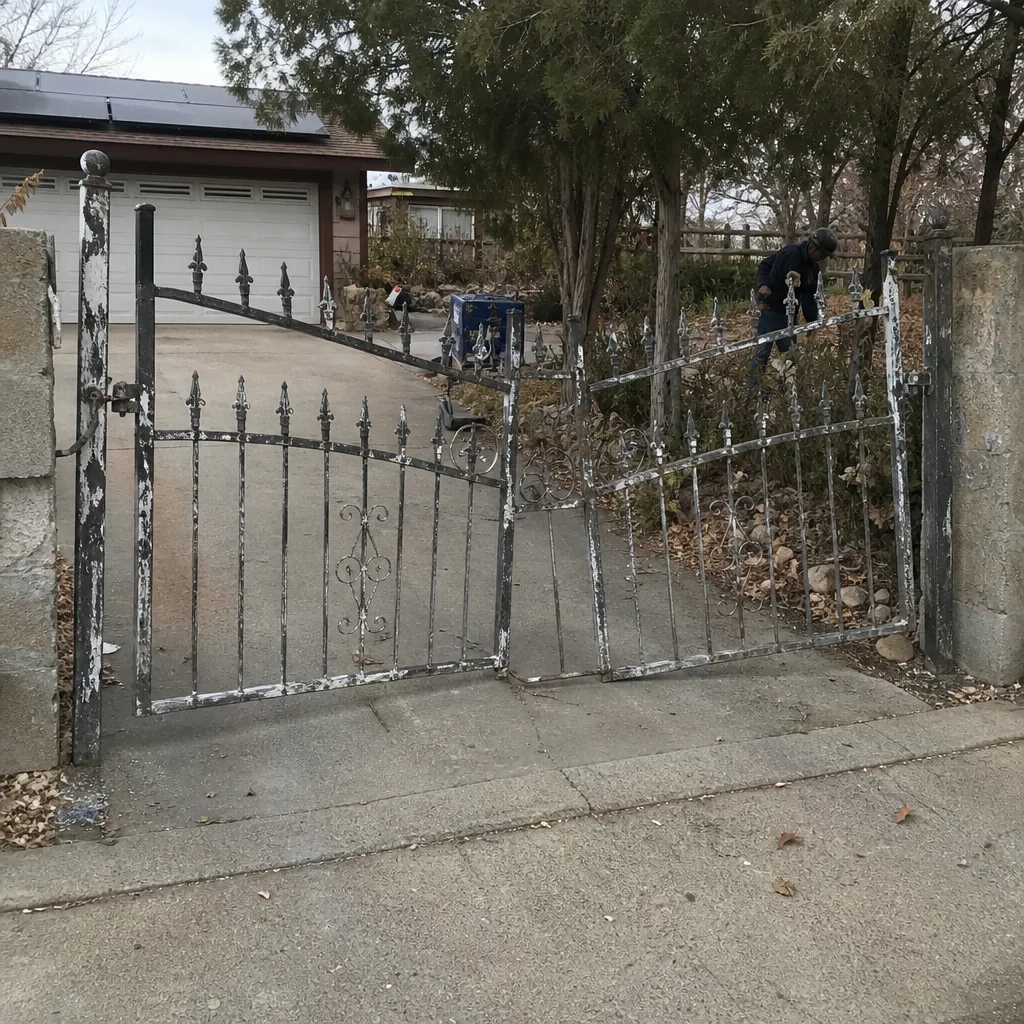 Before
 After
 Before
 After
 Before
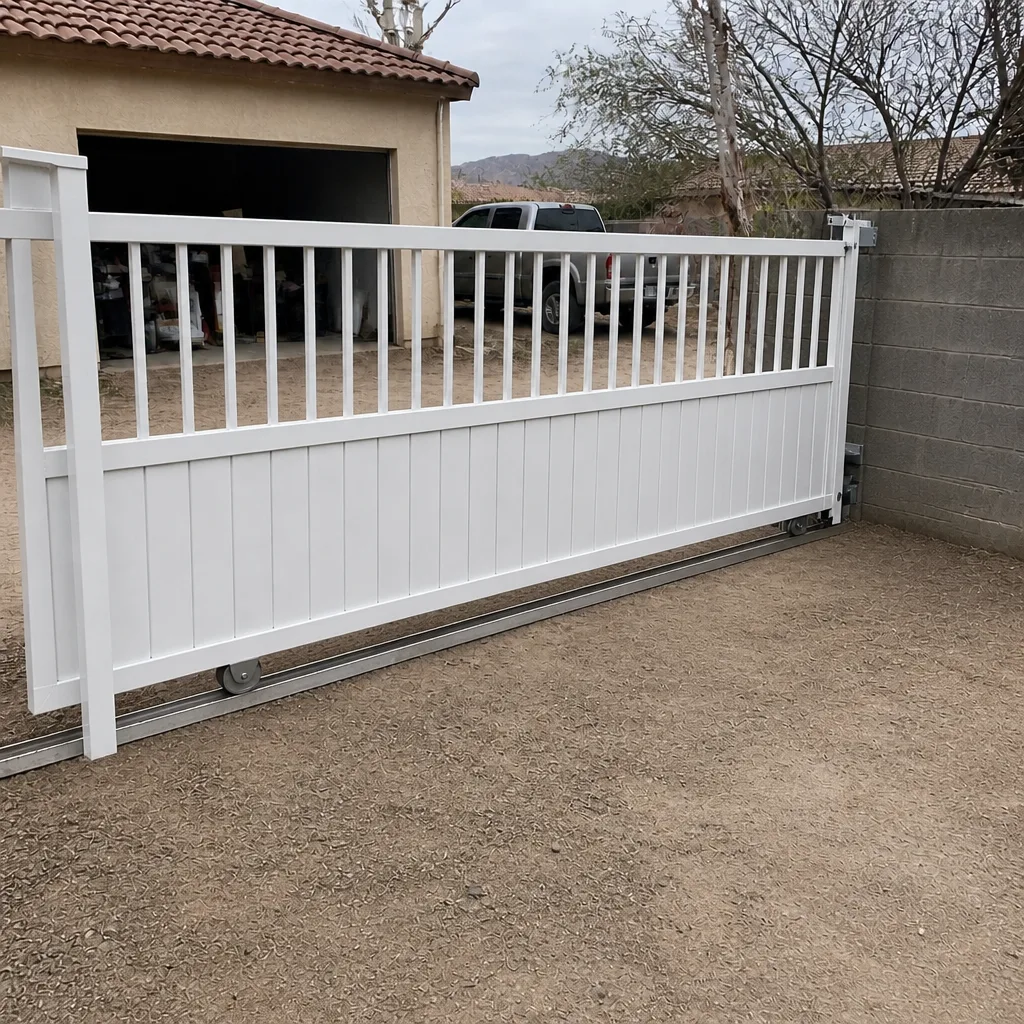 After
When to Call a Professional
Some items in this checklist are genuinely DIY: monthly visual checks, sensor tests, log-keeping, a dry brush to the track. Others are not, and pretending otherwise wastes money or creates a hazard. Call a professional when any of the following is true:
- Gate sag exceeds 1/4 inch and is getting worse.
- Post lean exceeds 2 degrees on a level.
- A safety sensor fails a proper test and won’t realign.
- You hear a pop, grind, or knock that’s new and repeatable.
- Weld cracks, rust at welds, or hinge bore play you can feel with the gate at rest.
- The operator overheats, trips the breaker, or loses its opener memory.
High-tension gate springs need a caveat. If your gate uses a spring or counterbalance under tension, do not attempt to adjust, lubricate, or inspect the spring under load. Springs and cables under tension can release violently and cause serious injury. That’s a trained professional’s job, every time. Ironworks Gate Co. Boulder City offers free estimates in Boulder City, live phone support around the clock, and technicians with up to 13 years of experience on the operator brands that matter. Call (888) 276-7609 to get on the calendar.
Frequently Asked Questions
Every two to three months in normal use, and again after a dust storm. In Boulder City’s dust and heat, apply a dry or paraffin-based chain lubricant sparingly, wipe the excess, and use more often in summer than winter. Never use WD-40 or a wet oil as a chain lubricant. Call (888) 276-7609 for an exact quote on a seasonal tune-up; estimates are free.
Up to 1/8 inch of drop at the latch edge is normal. Between 1/8 and 1/4 inch is worth noting and re-checking in 60 days. More than 1/4 inch and growing is a repair item, not a maintenance item. If the gate sags a quarter inch in a month, have it looked at, because the hinge or footing is starting to fail.
No, and we don’t recommend it. A broomstick is soft and wide, so it passes sensors that would fail to detect a child’s hand or a pet’s paw. Use a rigid object no wider than 2 inches (a 2×2, a pipe) at knee, mid, and chest heights. Test with the gate closing and confirm it reverses. If it doesn’t reverse, call (888) 276-7609 the same day.
Heat expands steel, and a gate that runs smoothly at 70 degrees can bind slightly at 110. Small, temporary binding is normal. Hard binding that trips the operator’s reverse is not, and usually points to a latch gap that needs adjustment or a hinge that’s already worn. Call (888) 276-7609 for an exact quote before it gets worse.
Yes. Our technicians are trained and equipped on nine major gate-automation brands, including Linear, Viking, and DoorKing alongside LiftMaster, FAAC, BFT, Ghost Controls, Elite, and Mighty Mule. Whatever is on the driveway, we can service it in a single visit in most cases. Call (888) 276-7609 for an exact quote; estimates are free, and the price is settled before a single bolt is turned.
Date, weather, sag measurement, post lean, gap variance, sounds, sensor test result, lubrication log with product names, and battery backup test. Consistent entries let a technician read the gate’s history and diagnose faster, which saves money on service calls. Every job we complete is backed by the written 90-Day Done Right Promise, so you have our word in writing that if it’s not right, we come back.
The Bottom Line
A maintenance checklist is only as useful as its specificity. The Boulder City homeowners who get the most out of their gates are the ones who measure, listen, and log, not the ones who oil everything that squeaks and hope for the best. Monthly visual checks catch the small stuff. The April and October semi-annual passes catch the seasonal wear before summer heat locks it in. Cutting a broomstick test to a rigid object test is the single easiest safety upgrade to make this weekend. And the log is free, it takes a minute per inspection, and it saves real money on service calls. If something’s out of tolerance, call a professional before it becomes a real repair.
Ready to schedule a tune-up? Call Ironworks Gate Co. Boulder City at (888) 276-7609 for a free estimate. We’ll measure sag, lean, and gap, test your sensors properly, and tell you plainly whether you need maintenance or repair. The price is agreed upfront, before any work starts, and every job is backed by the written 90-Day Done Right Promise. A square deal, no surprises on the bill, and a gate that closes like the day it was hung.
Written by the team at Ironworks Gate Co. Boulder City.