
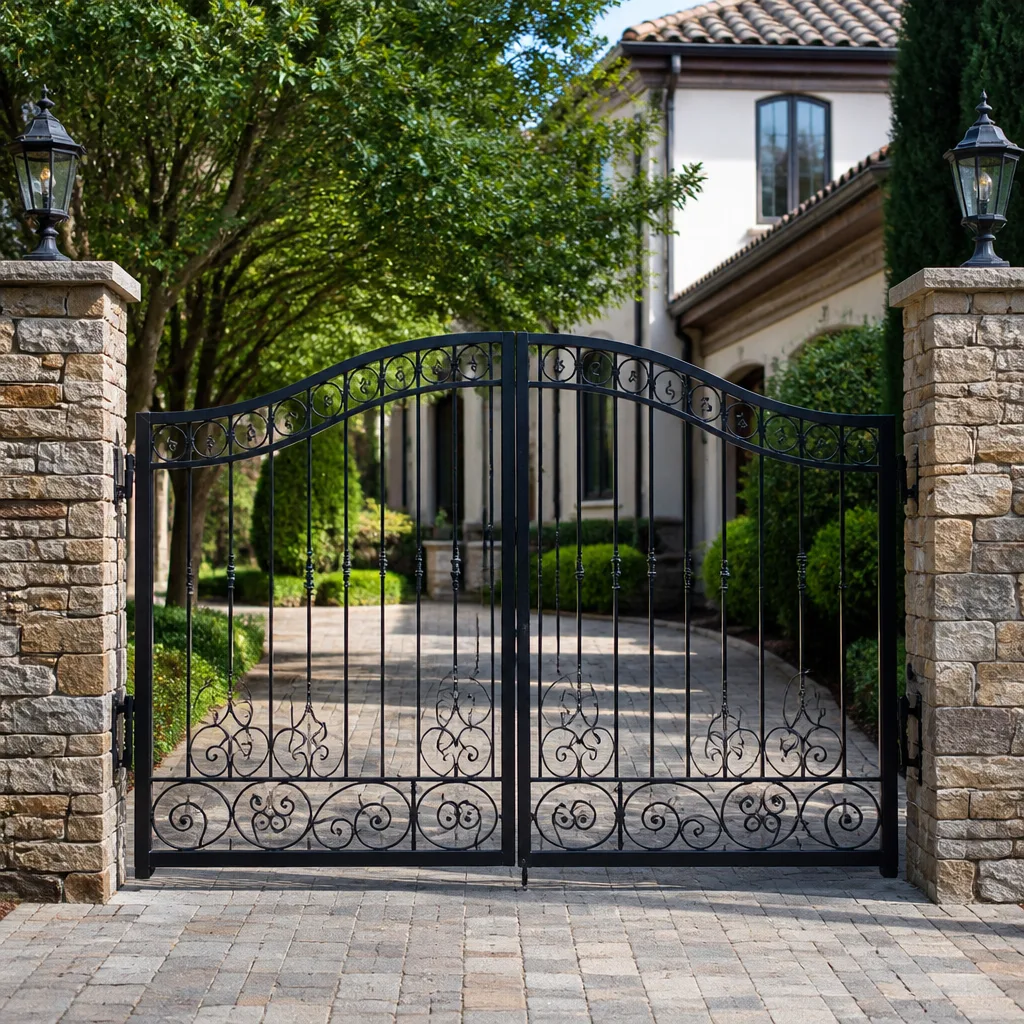
 Wrought iron
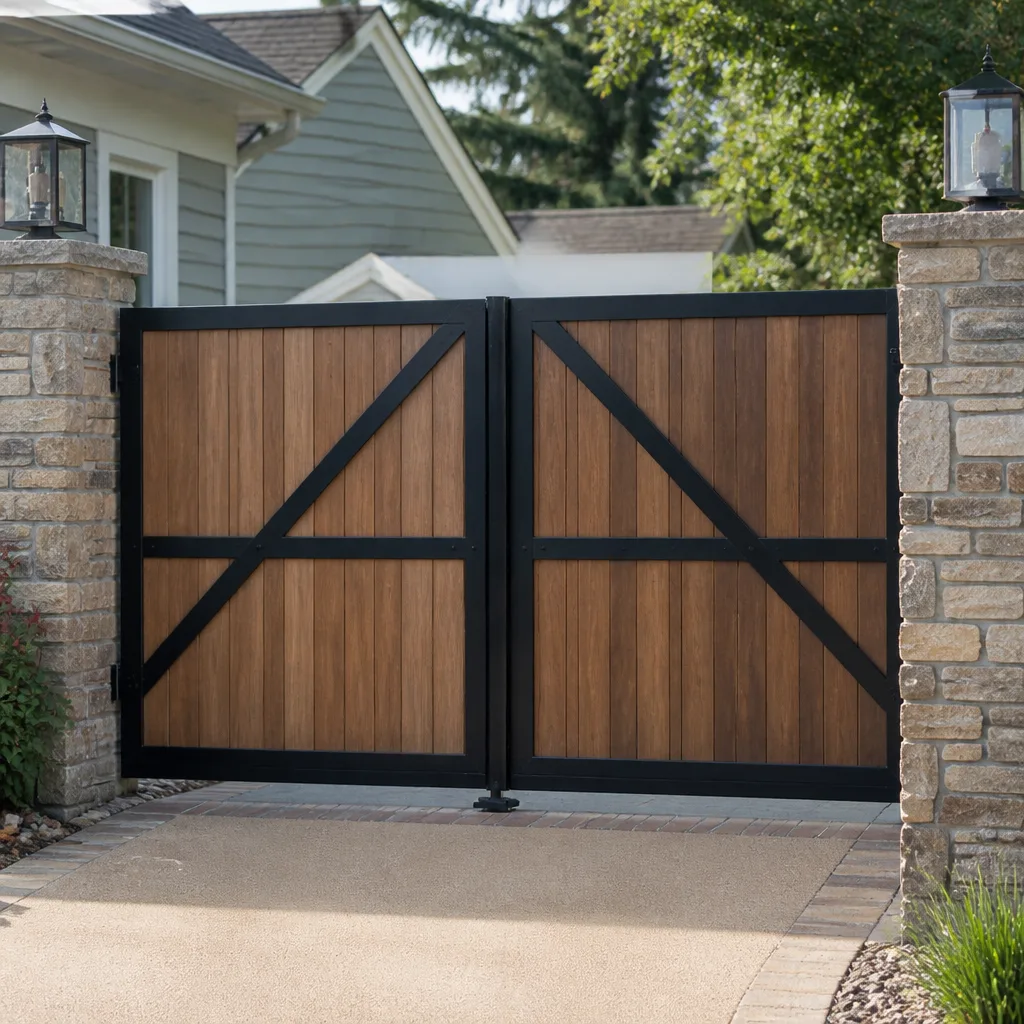 Wood & steel frame
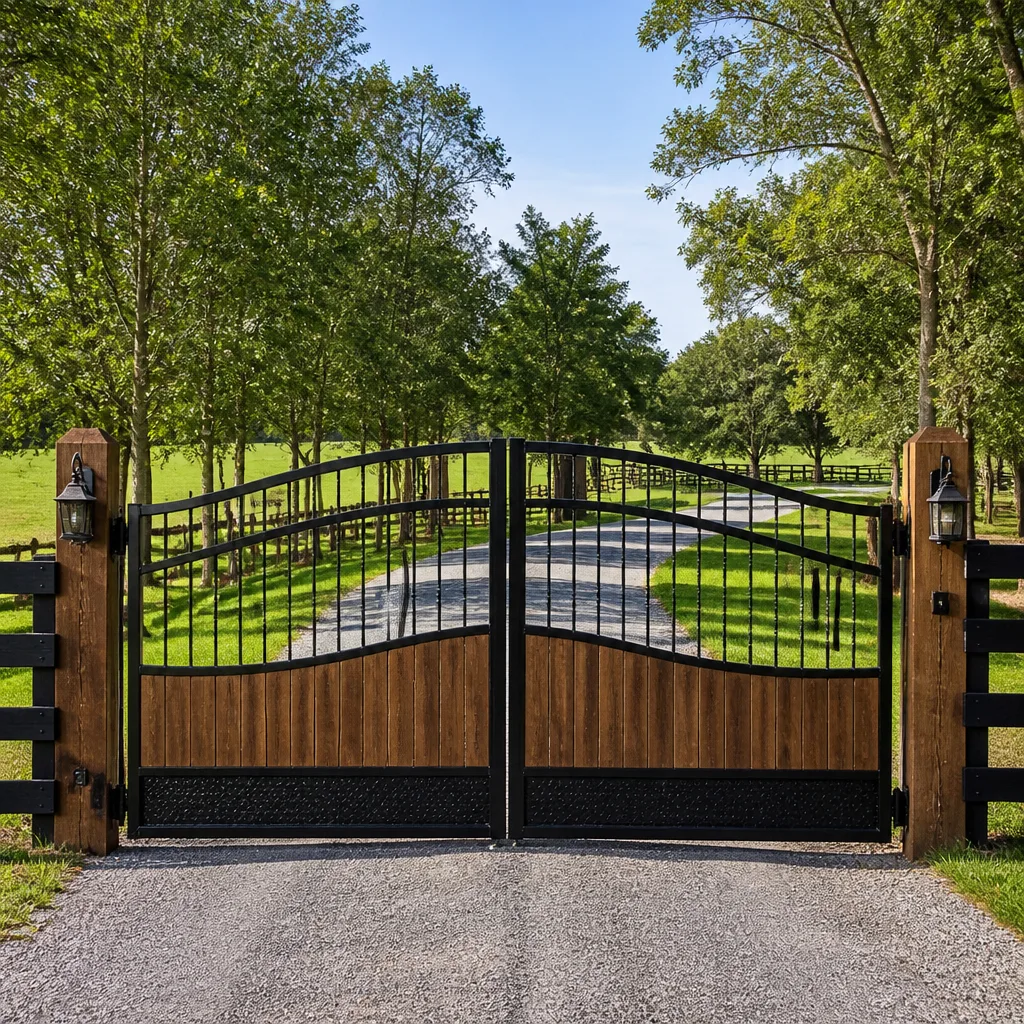 Farm & ranch
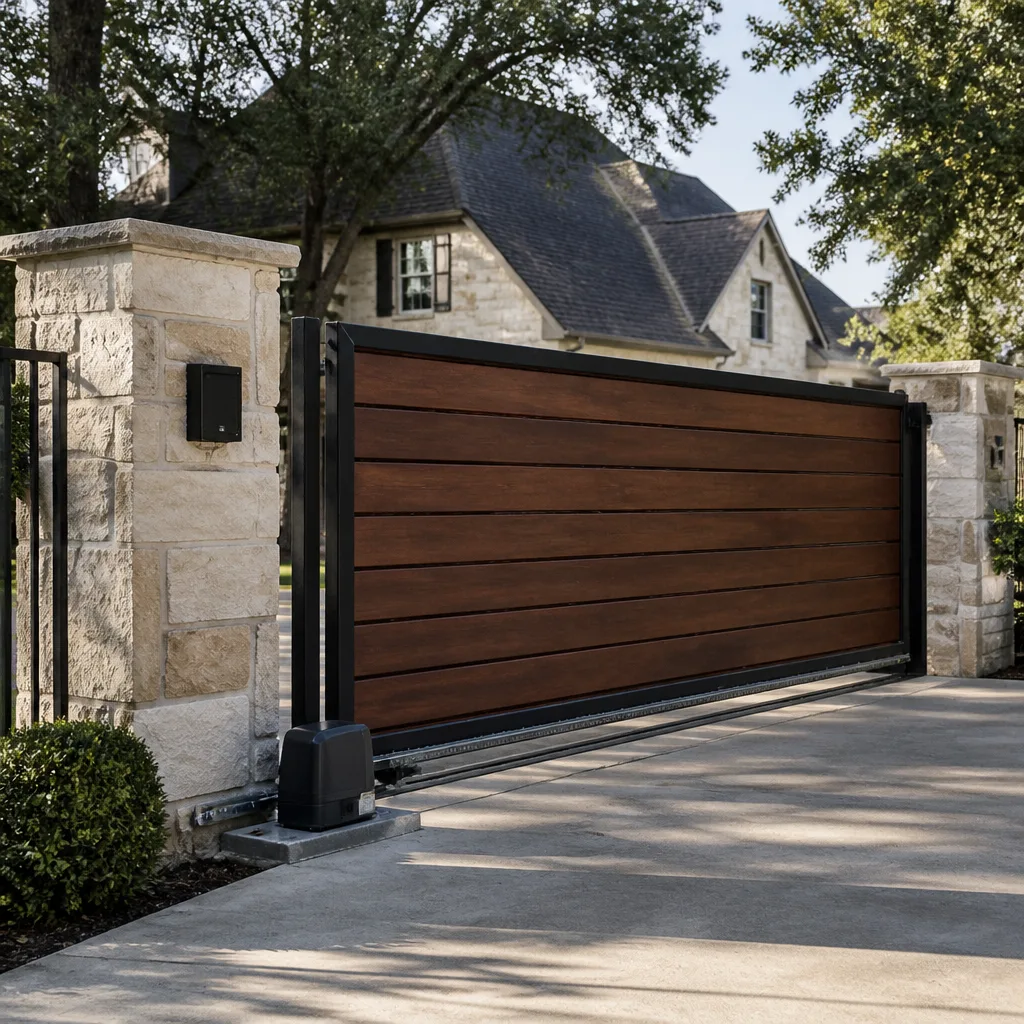 Sliding driveway gates
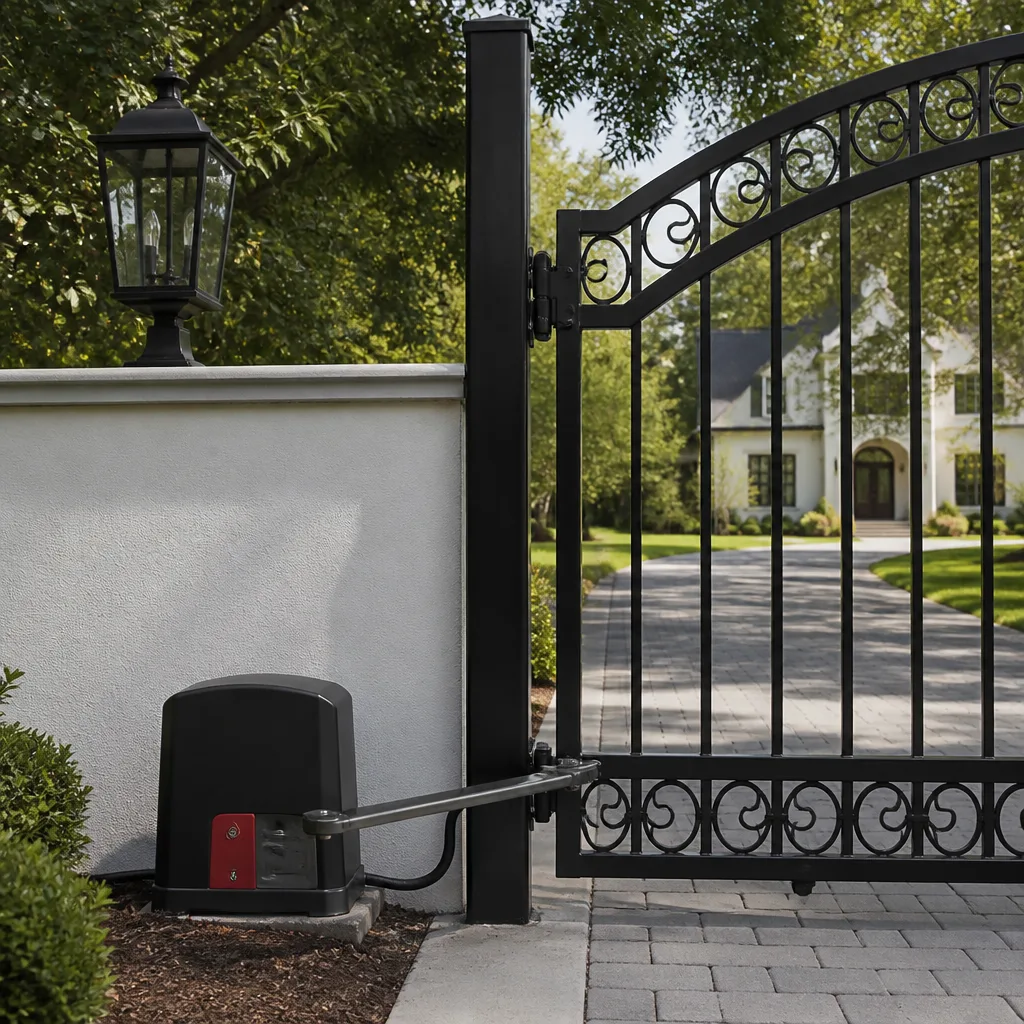 LiftMaster operators
Free on-site gate assessment - hinges, posts, and your LiftMaster or Nice gate operator checked before anything is quoted
The assessment is free and the quote is the invoice.
Get your free estimateStyles & brands we work with
- Wrought iron
- Wood & steel frame
- Farm & ranch
- Sliding driveway gates
- LiftMaster operators
See the difference
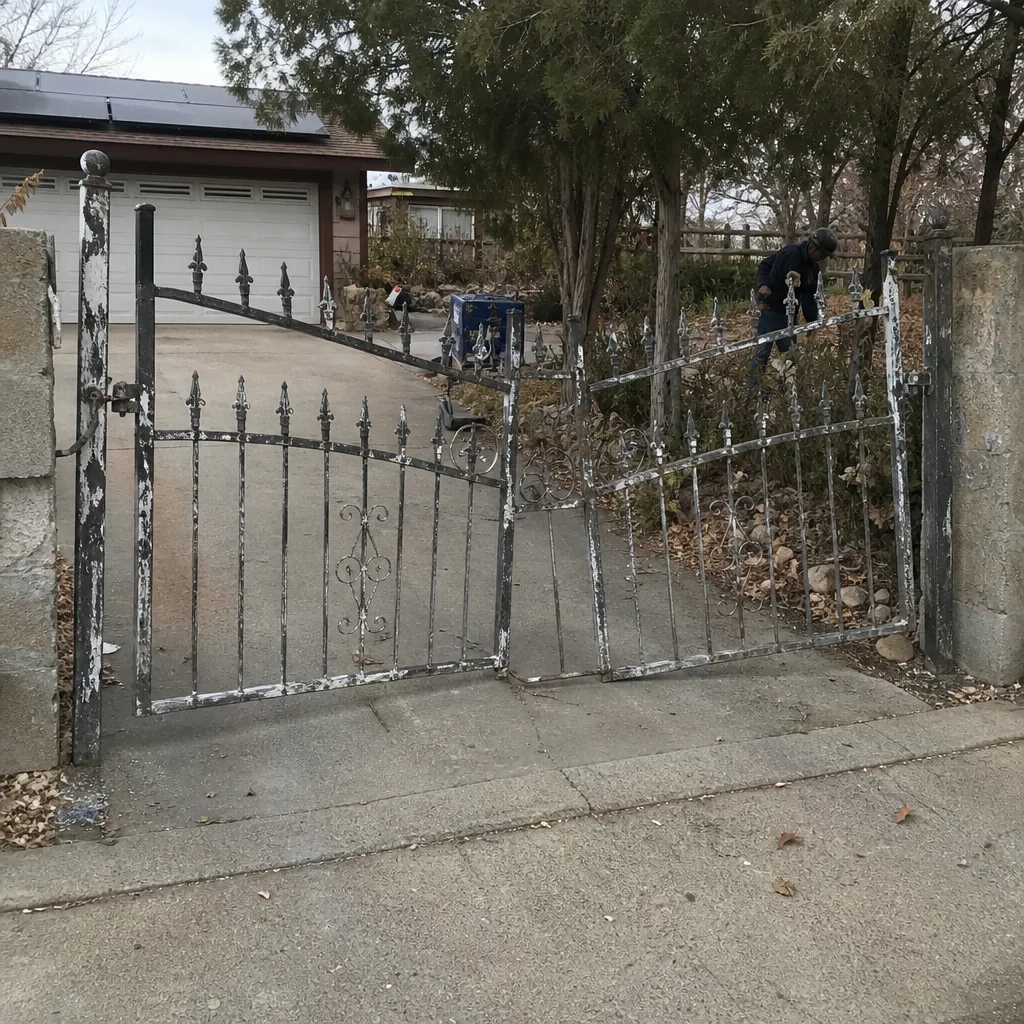 Before
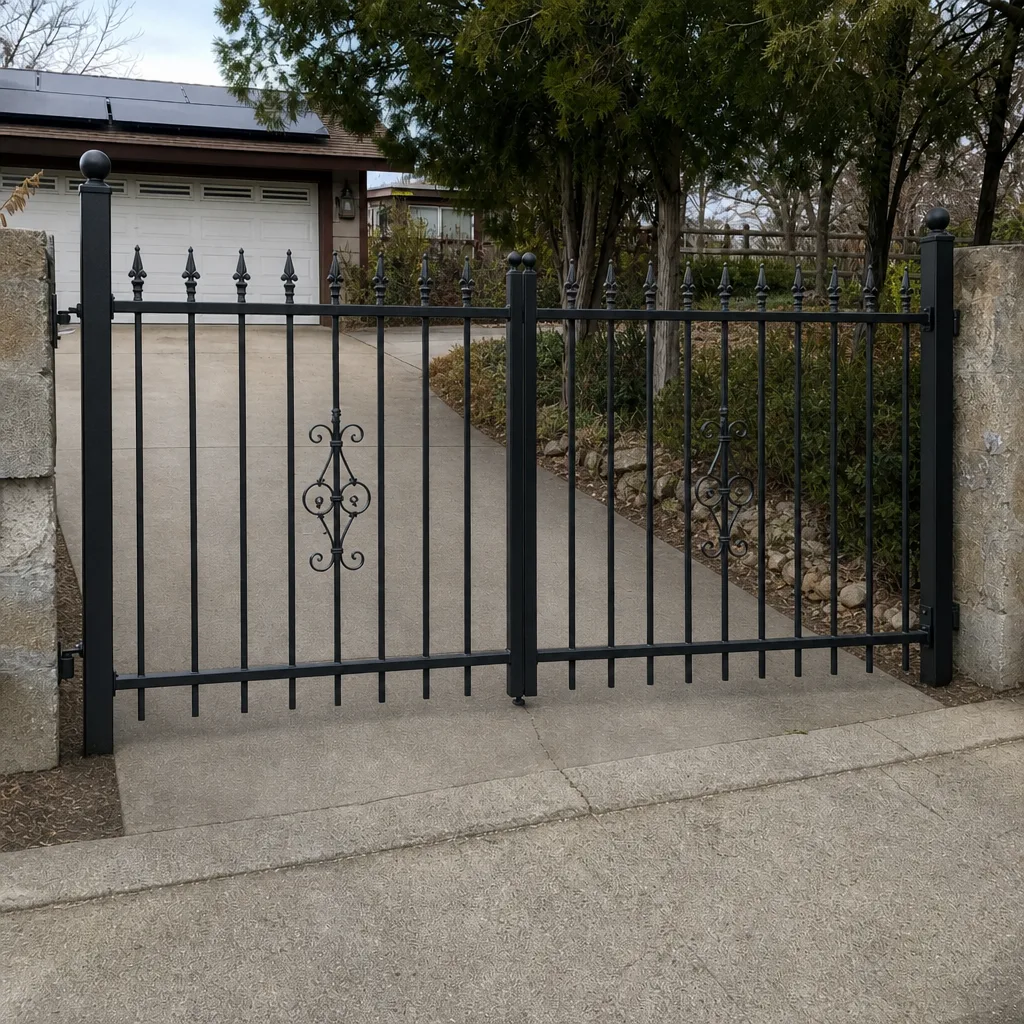 After
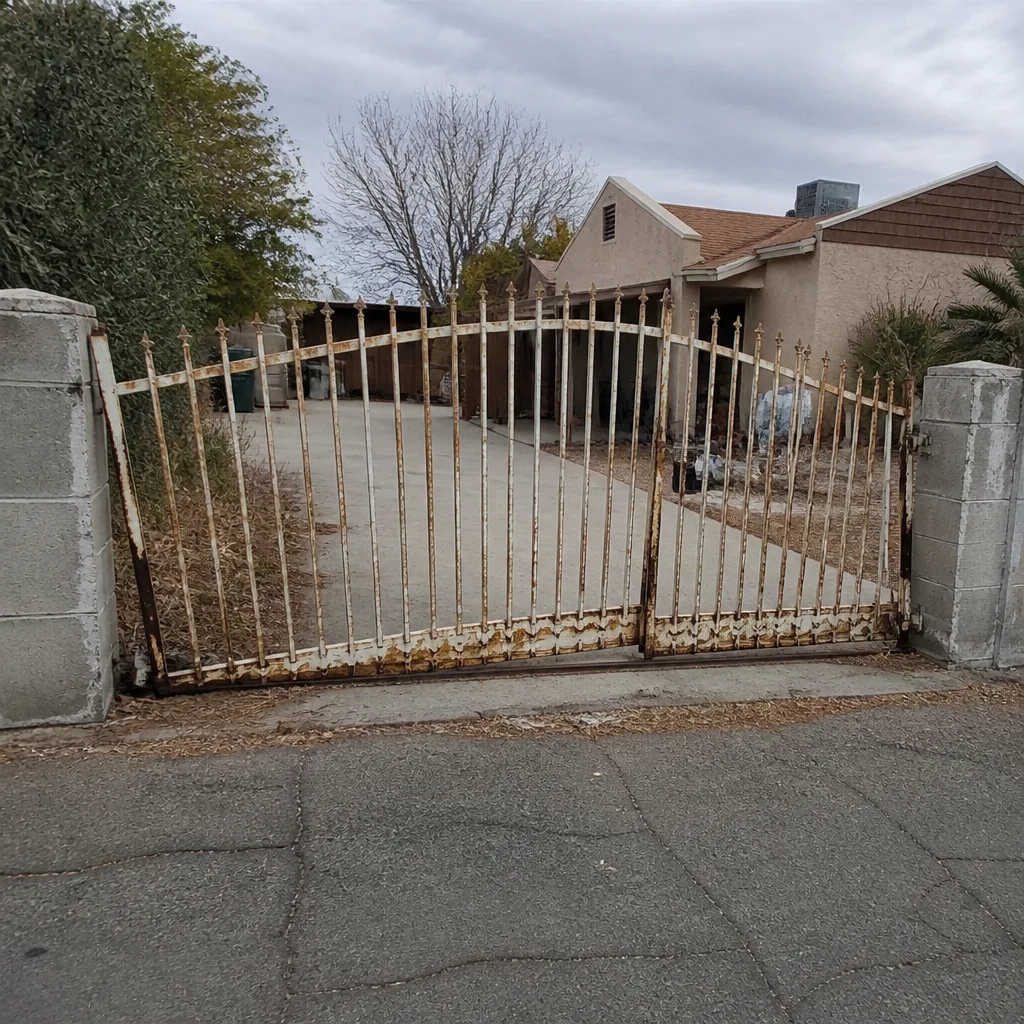 Before
 After
 Before
 After
Wrought Iron vs Aluminum Gate in Boulder City, NV: Which One Belongs on Your Property?
Choose wrought iron unless your gate sits on a modern subdivision lot outside the historic overlay and you want the lightest, lowest-maintenance option money can buy. In Boulder City’s historic core, wrought iron is usually the only material that clears design review, because the city’s historic preservation guidelines list material compatibility as a review criterion, and aluminum wasn’t used in residential gate construction in the 1930s. That single fact reshapes a comparison most homeowners read online. Call (888) 276-7609 and we’ll tell you which side of that line your property falls on before you spend a dollar.
Why the Answer Changes Inside Boulder City’s Historic Overlay
Most wrought iron vs aluminum comparisons are written for a national audience and treat the choice as taste. Here it’s partly a permitting question. Boulder City is a 1930s federal company town, and the original Bureau of Reclamation housing, the adobe, brick, and wood-frame bungalows built for Hoover Dam workers, still lines the historic core. Those homes sit under a historic overlay with a design-review process. When a proposed gate doesn’t match the period and materials of the surrounding housing stock, review can reject it before anyone strikes an arc.
Aluminum is a modern metal in this context. It reads as anachronistic against a 1936 bungalow the same way a vinyl window would. Wrought iron, by contrast, is the material the neighborhood was built with. If your property is inside the historic district, that difference isn’t aesthetic preference. It’s the difference between an approved gate and a resubmittal.
Outside the historic core, in the subdivisions built from the 1970s through the 2000s, the block-wall and wrought-iron perimeter fencing tells a different story. There, aluminum is a legitimate option and the design-review question often doesn’t apply. Knowing which side of that boundary you’re on is the first thing we check.
The Mojave Changes the Rust Argument (Honestly)
You’ll read everywhere that aluminum doesn’t rust. That’s true. It’s also less relevant here than vendors imply. Boulder City sits in the Mojave Desert with summer highs routinely over 100°F, intense UV, and very low humidity. Steel rusts fast in coastal salt air and humid climates. In our dry heat, a properly finished and maintained wrought iron gate holds up well for a long time, and the repair cycles we see are driven by sun and heat rather than moisture.
The flip side: aluminum expands less than steel in heat, which sounds like a clean win. In practice, a well-built steel gate hung with the right clearances handles thermal movement fine. What actually fails in July is an undersized operator straining against a heavy gate, and that’s an automation spec problem, not a material problem.
Wrought Iron vs Aluminum Side by Side
| Factor | Wrought Iron | Aluminum |
|---|---|---|
| Historic overlay approval in Boulder City | Matches period material; typically clears review | Can fail material-compatibility review on federal-era properties |
| Rust risk in the Mojave | Low in dry, low-humidity conditions with proper finish | No rust, but dents and bends more easily |
| Weight and automation | Heavy; needs a higher-torque actuator spec’d correctly | Light; a smaller opener can handle it |
| Matching 1930s hand-forged details | Scrolls, finials, and hinges can be fabricated on-site | Cold-formed manufacturing can’t replicate hand-forged profiles |
| Repairability | Weldable; a damaged section can be cut out and replaced | Often replaced section by section or entirely |
The Fabrication Reality Nobody Talks About
Original 1930s gates in the historic district often carry hand-forged elements: scrolls, finials, and hinges that are no longer manufactured. When one of those hinges cracks or a scroll finally gives out after ninety summers, you can’t order a replacement from a catalog. It has to be fabricated to match, and that’s a forge-and-weld job done on-site.
Aluminum’s cold-formed manufacturing process can’t replicate a hand-forged profile. A cast or extruded aluminum substitute looks close in a photo and wrong on the gate. This is where material choice and repair method collapse into one decision. Fabricating a material-matched iron component is a standard service call for us, not a specialty order.
If you’re weighing a full replacement instead of a repair, our guide to Gate Installation covers how new gates get built to match existing ironwork.
Weight, Automation, and the Right Operator the First Time
Wrought iron’s greater mass is real. A heavy steel driveway gate needs a higher-torque actuator, and putting an undersized opener on it is the most common failure we’re called out to correct. The motor runs hot all summer, the control board cooks, and the gate stops mid-travel in August. Buying the correct operator the first time costs less than replacing a burned-out unit every two or three years.
We’re trained and equipped across nine major gate-automation brands, including LiftMaster, FAAC, and BFT, so the correct fix happens on the first visit whatever is already on your driveway. Our technicians have up to 13 years of experience matching operators to real gate load, and every job is backed by the 90-Day Done Right Promise, in writing. For homeowners planning new construction, our Gate Installation in Boulder City page covers how material and operator get spec’d together from the start.
How We Evaluate Your Gate: A 5-Step Process
- Check the overlay status. We confirm whether your property falls inside the historic overlay before recommending a material, because that answer can override preference.
- Inspect the existing gate and hardware. We look for rusted steel frames, dry sun-cracked wood, and hand-forged hinges that need fabrication rather than replacement.
- Measure gate weight and travel. We calculate the real load the operator has to move in summer heat so the actuator is sized correctly, not guessed at.
- Quote upfront. You get a no-surprise price before a single bolt is turned, so there’s nothing new on the bill later.
- Complete and back it in writing. Most jobs finish in a single visit, and the Keystone Standard applies: if it isn’t right, we come back and make it right.
What It Costs in Boulder City
Wrought iron generally runs higher than aluminum for the same gate footprint, and the gap widens when fabrication is involved. Here are the ranges we work with:
- On-site hand-forged hinge or scroll fabrication: roughly $150-$400 depending on complexity.
- Wrought iron swing gate repair (weld, hang, refinish): typically $180-$450 per gate.
- Higher-torque operator to handle an iron gate’s load: about $600-$1,200 installed, depending on brand and gate weight.
- Aluminum gate repair: generally $120-$350, since sections can be swapped rather than welded.
Pricing varies with gate size, access, and how much original ironwork needs to match. Book a free estimate and we’ll give you an exact number. Current offers include $50 off any repair over $250, a free second opinion on any written estimate, an $89 seasonal tune-up, and a permanent 5% senior and veteran discount.
When Aluminum Makes Sense
We’ll say so plainly: aluminum can be the right call. If your home sits outside the historic overlay, you want a lighter gate for easier automation, and you’re fine trading the forged look for lower weight and zero rust concern, aluminum does the job. What we won’t do is recommend it where it’s likely to fail design review. We’d rather tell you that upfront than take the job and have the city reject the gate later.
FAQs
Yes. The city’s historic preservation guidelines cite material compatibility as a review criterion, and aluminum wasn’t used in residential gate construction in the 1930s, so it can be rejected on a historic-overlay property before any work begins. If you’re inside the overlay, wrought iron is the safer path.
Less than you’d expect. Boulder City’s Mojave climate is dry with very low humidity and intense UV, so steel rusts far more slowly here than in coastal or humid regions, while the heat and sun drive most of the wear on both materials.
Yes, by fabricating them to match rather than sourcing modern hardware. Original 1930s gates in the historic district often carry hand-forged hinges and scrolls that are no longer made, and we routinely forge and fit a replacement on-site.
It can if the operator is undersized for the gate’s real load. Iron’s greater mass needs a higher-torque actuator, and we size it correctly on the first visit rather than installing a unit that strains and fails in summer heat.
If you’d rather have it looked at, Ironworks Gate Co. Boulder City offers a no-pressure assessment in Boulder City – call (888) 276-7609 for a free estimate and we’ll tell you straight which material belongs on your property.
Written by the team at Ironworks Gate Co. Boulder City, serving Boulder City, NV.