
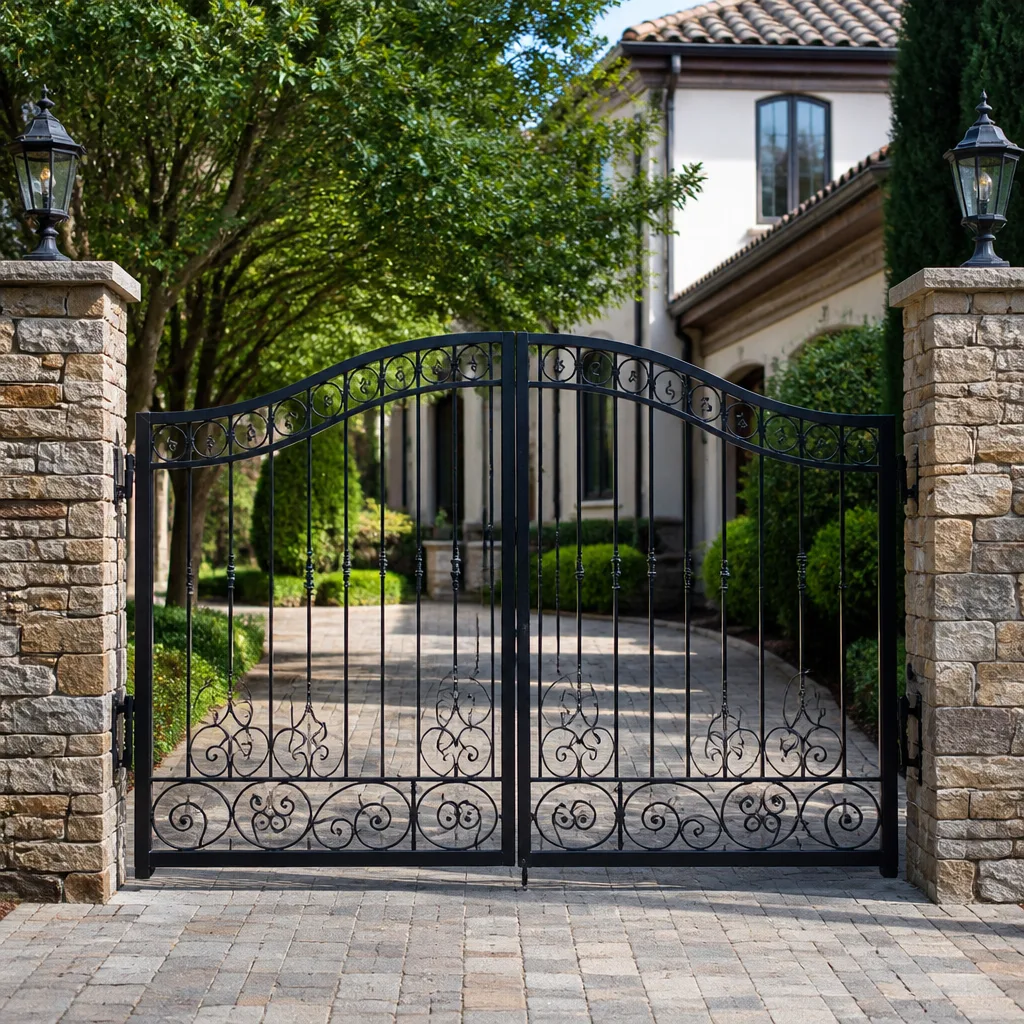
 Wrought iron
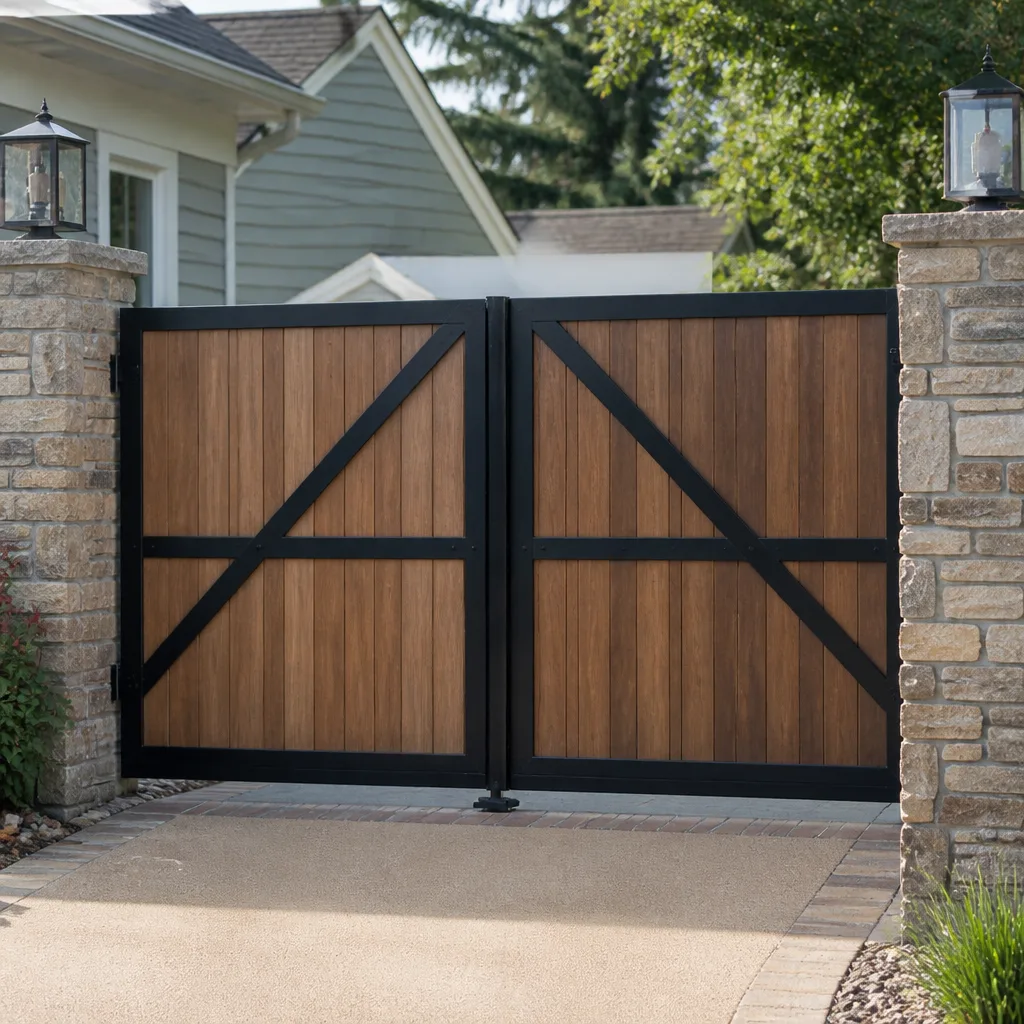 Wood & steel frame
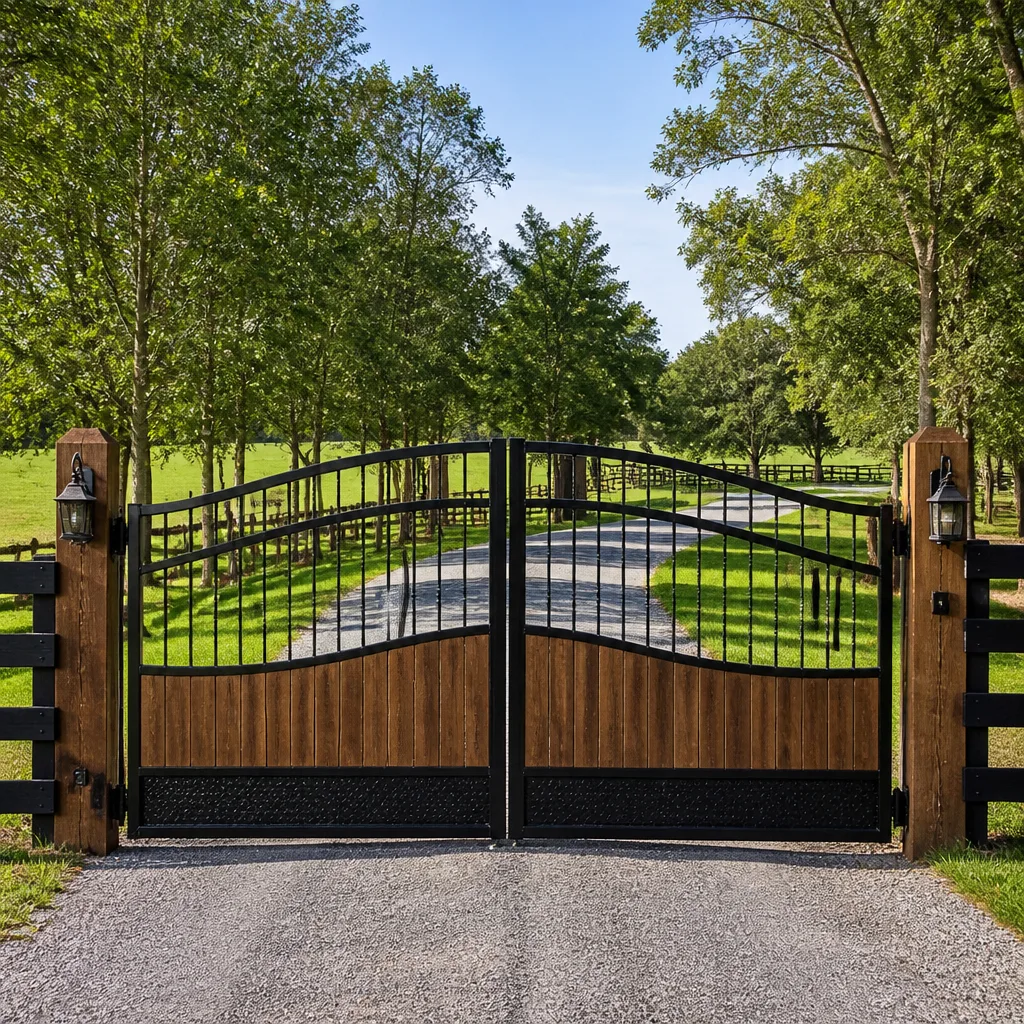 Farm & ranch
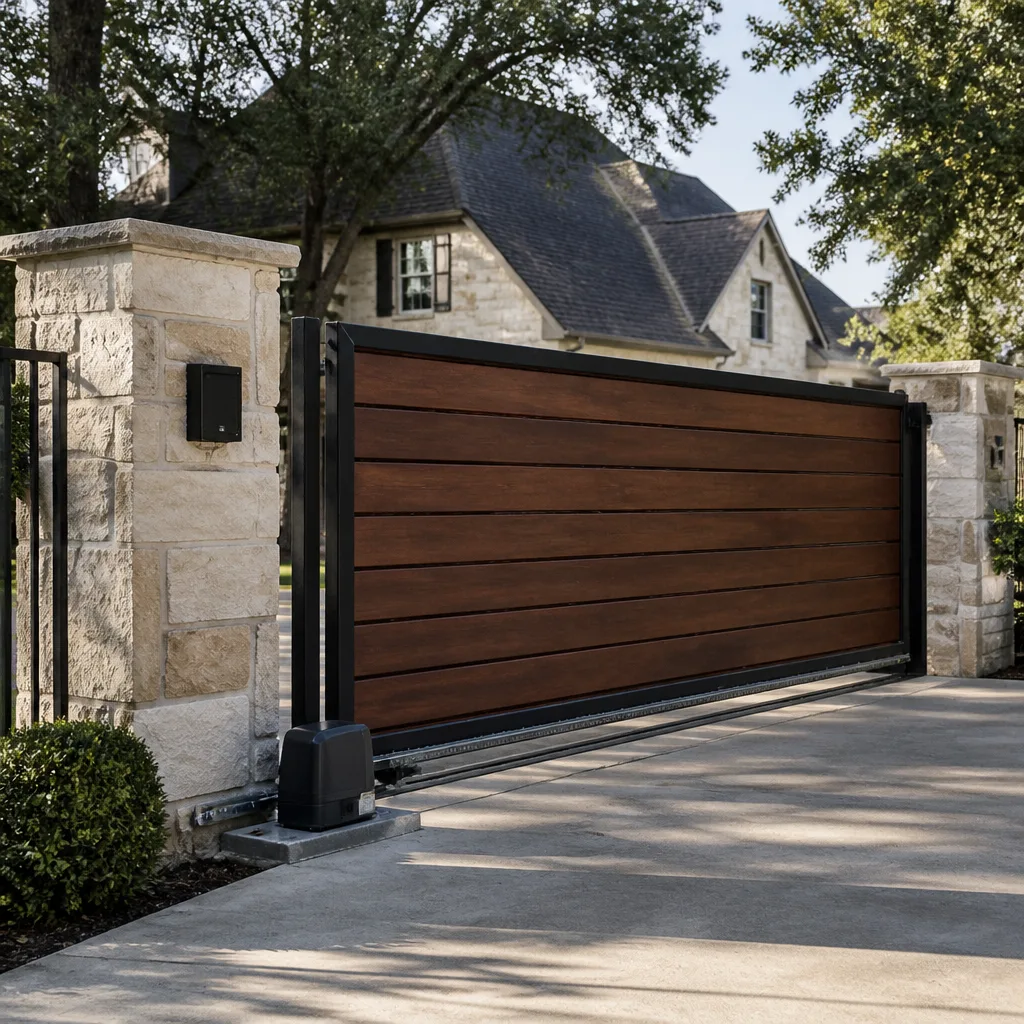 Sliding driveway gates
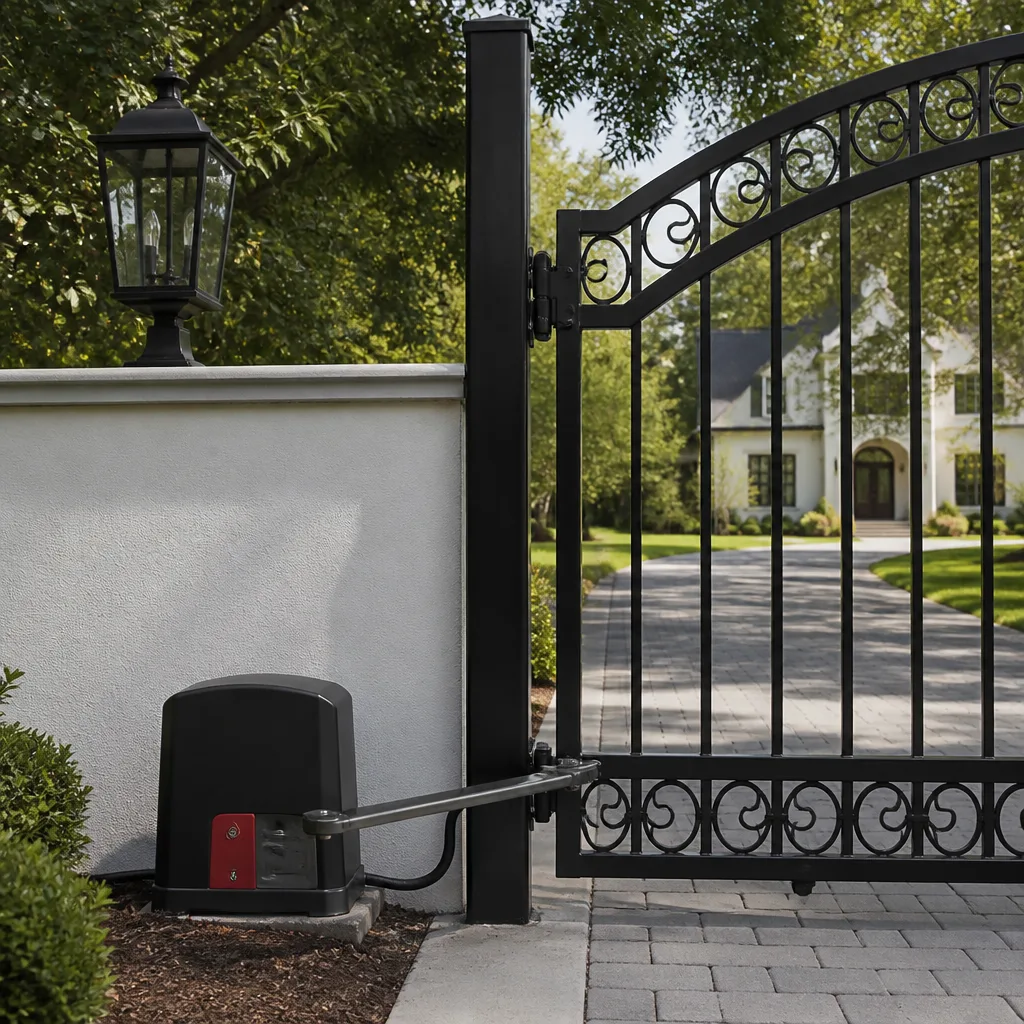 LiftMaster operators
Free on-site gate assessment - hinges, posts, and your LiftMaster or Nice gate operator checked before anything is quoted
The assessment is free and the quote is the invoice.
Get your free estimateStyles & brands we work with
- Wrought iron
- Wood & steel frame
- Farm & ranch
- Sliding driveway gates
- LiftMaster operators
See the difference
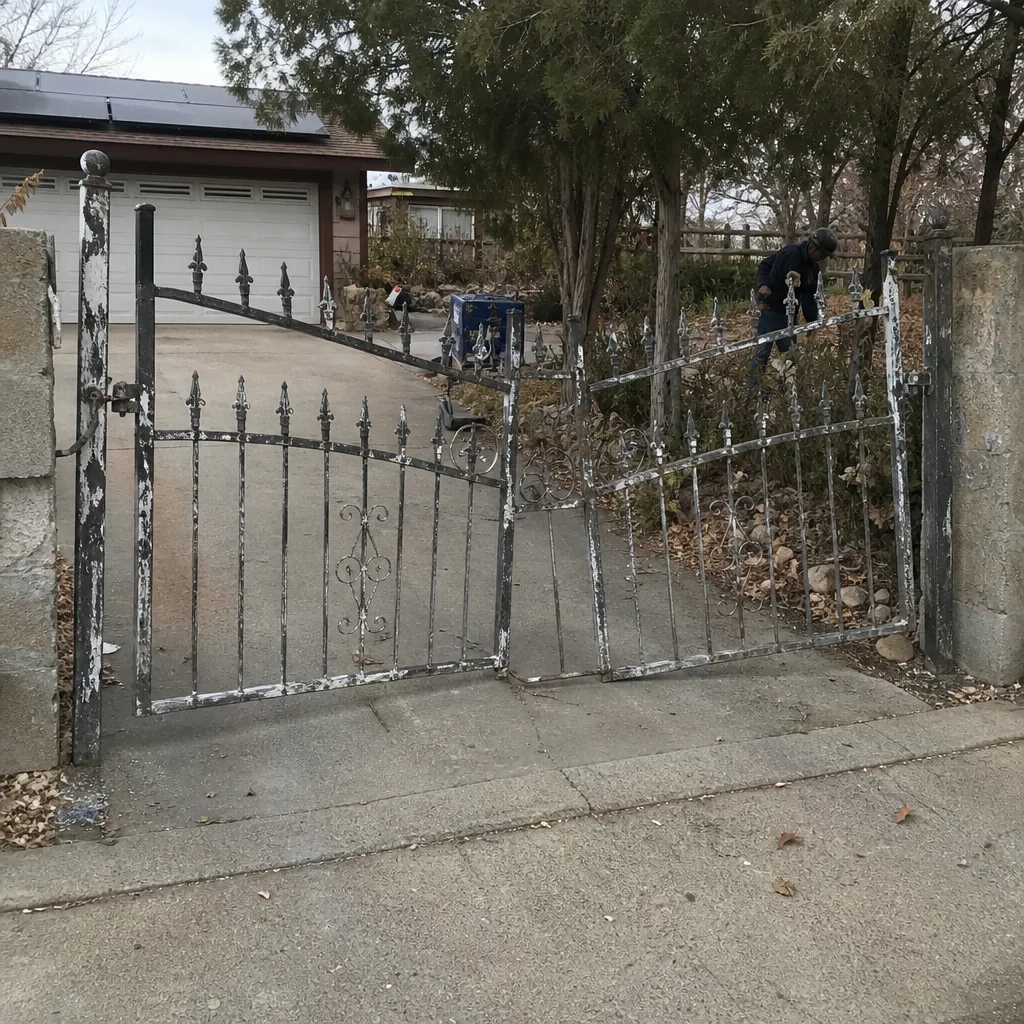 Before
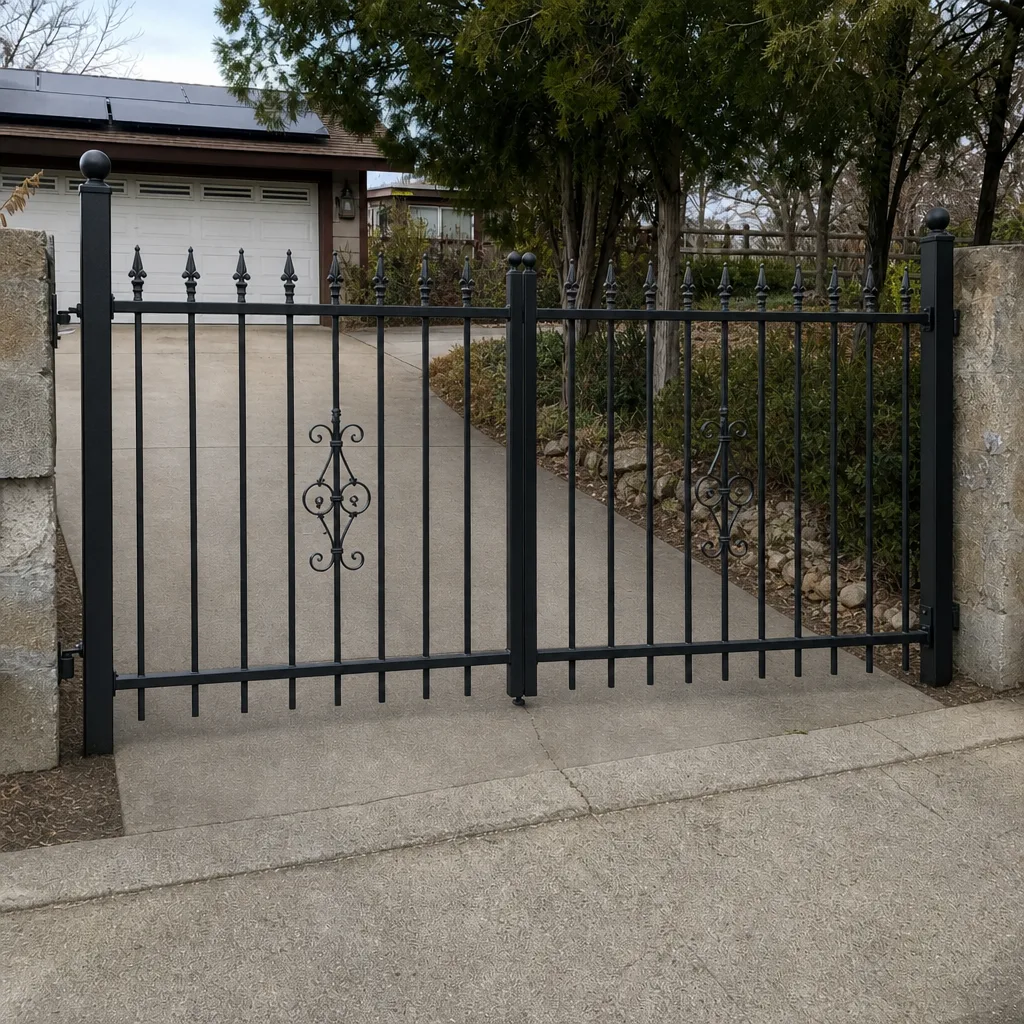 After
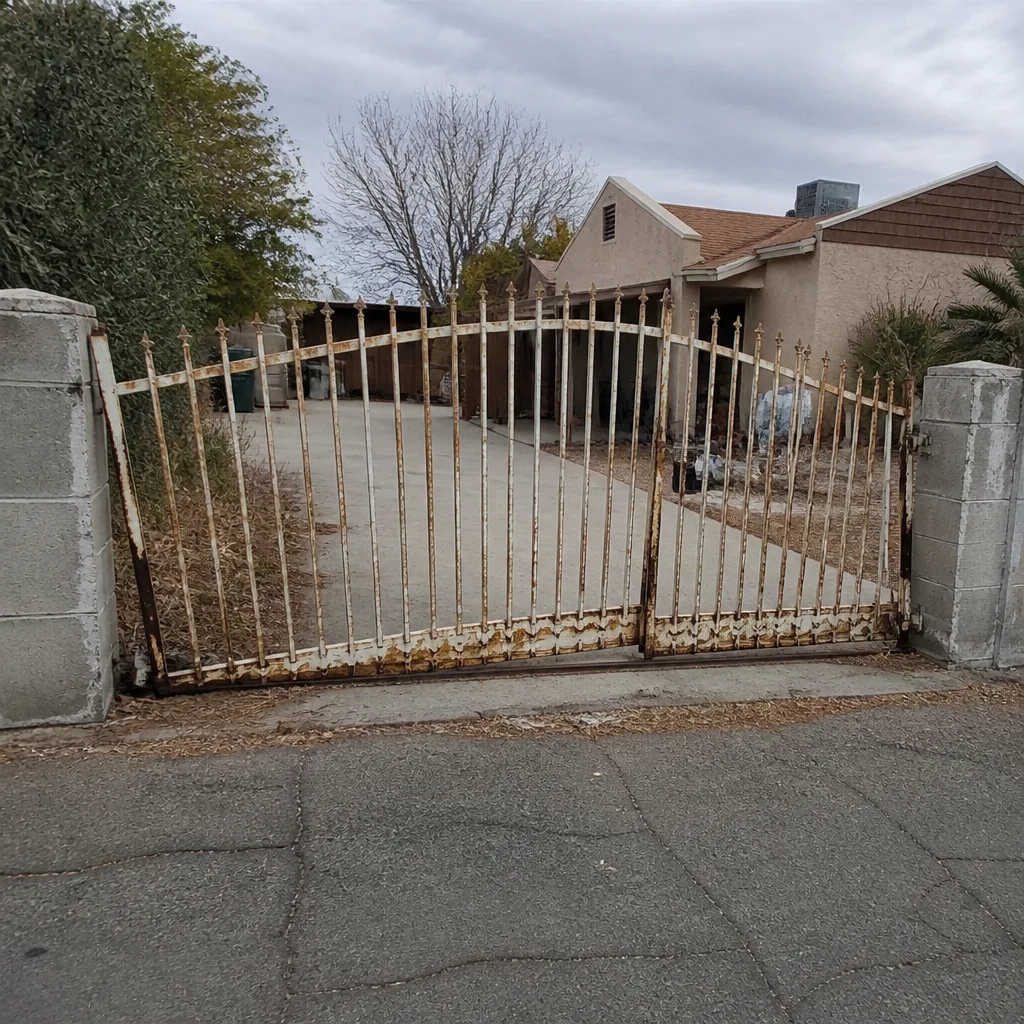 Before
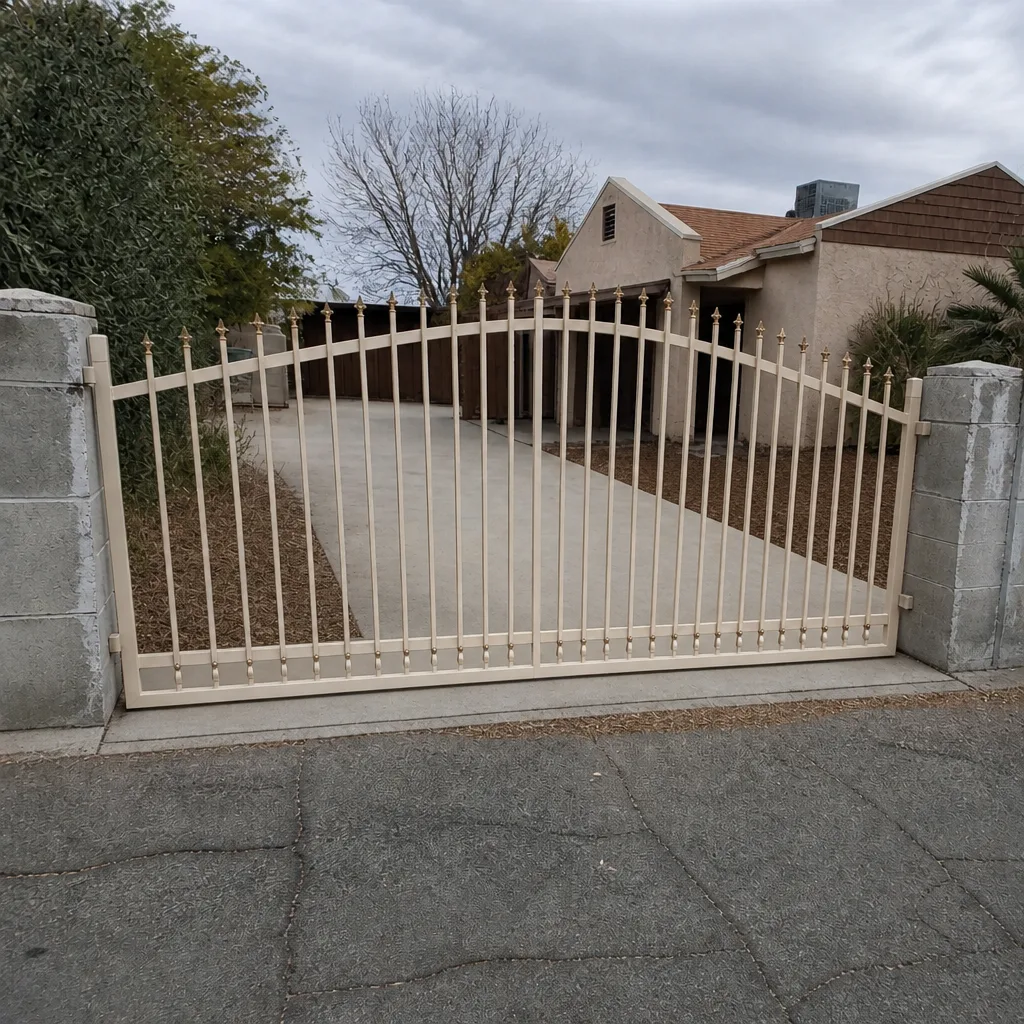 After
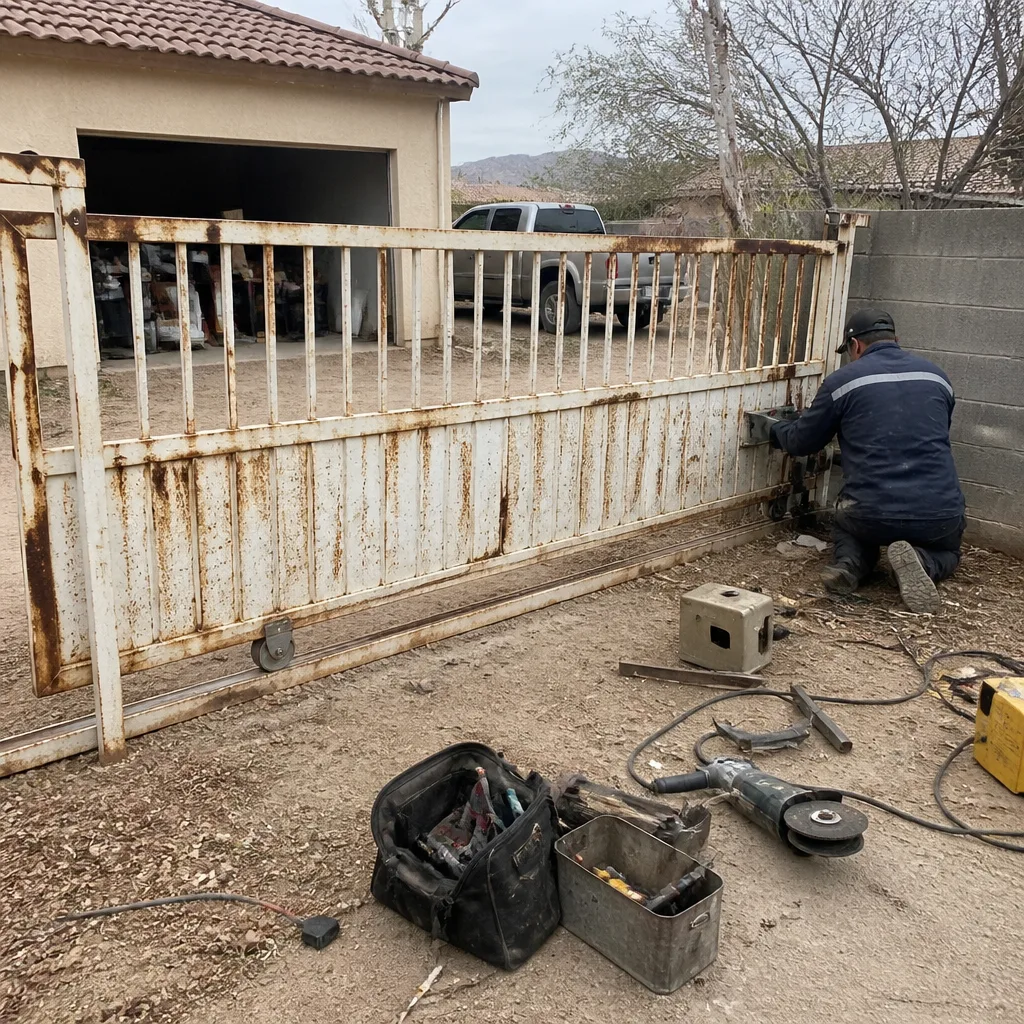 Before
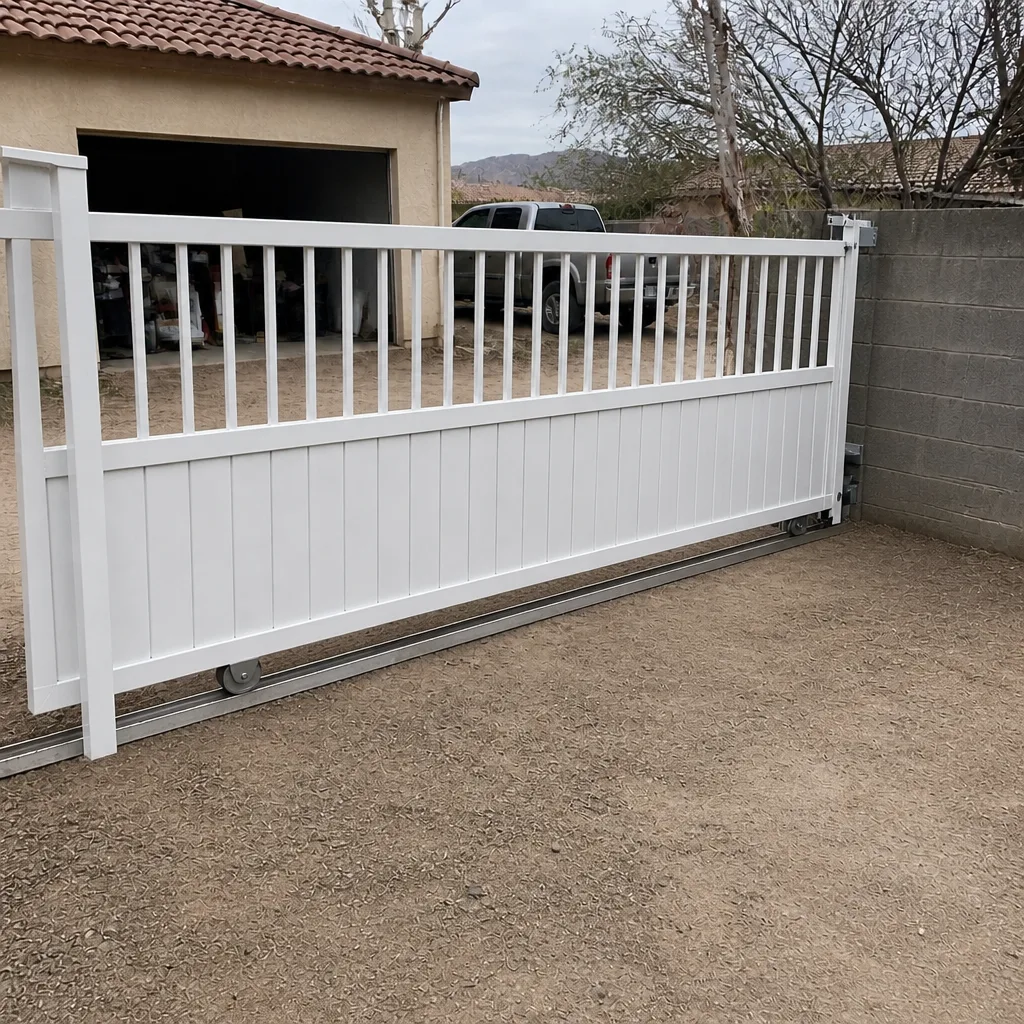 After
How Does an Automatic Gate Opener Work in Boulder City, NV?
An automatic gate opener works by running a simple loop: an access signal arrives at the control board, the board sends power to the motor, the drive mechanism moves the gate, and a position sensor tells the board when to stop. In Boulder City, NV, that loop has a wrinkle most explainers skip. When the ambient temperature hits 108°F, the motor’s duty cycle shrinks, the steel arm lengthens by a measurable fraction, and the sensor calibration you set in March is no longer accurate in July. If your gate is behaving strangely in summer, call Ironworks Gate Co. Boulder City at (888) 276-7609 for a free estimate and a straight diagnosis.
The Five Parts of Every Gate Opener and What Heat Does to Each
Strip away the brand names and a residential gate opener is five components working in sequence. Understanding each one explains why your gate acts differently in July than it did in January.
The control board (the brain)
The control board takes input from a remote, keypad, or intercom, then decides how long to run the motor and when to reverse. On a Boulder City driveway, the board sits inside a housing that absorbs direct sun. Electrolytic capacitors, the small components that smooth voltage, degrade faster at sustained high ambient temperatures. A board that worked fine for years can start acting erratically at 105°F even though nothing else changed.
The motor and drive mechanism
The motor turns electrical energy into torque, and the drive converts that torque into gate movement. Motors are rated for a duty cycle, the percentage of time they can run without overheating. At 108°F in Boulder City, that duty cycle drops. A gate that opened and closed twenty times a day without complaint in spring may start tripping its thermal limit on a hot afternoon. This is normal physics, not a defect.
The limit switches
Limit switches tell the board when the gate has reached fully open or fully closed. Some brands on the market use mechanical switches with physical contact points. Others use encoder-based positioning that counts motor rotations. A mechanical limit switch can drift out of position as a steel gate arm expands in heat, leaving the gate slightly off its stop point. An encoder system doesn’t drift the same way, but its logic is different enough that a technician trained only on one system will misdiagnose the other.
The obstruction sensors
Safety photo-eyes sit on both sides of the gate opening. When the beam breaks, the board reverses the gate. In Boulder City, the posts holding those sensors expand and shift with temperature swings of forty degrees between morning and afternoon. A sensor that was perfectly aligned at 7 a.m. can throw a false obstruction at 3 p.m. because the post it’s mounted to moved a quarter inch.
The access-control input
Remotes, keypads, and intercoms send the signal that starts the loop. Radio-frequency interference, dead batteries, and corroded contacts are the usual culprits when the gate won’t respond at all. Heat and UV destroy keypad membranes and remote batteries faster in the Mojave than in most of the country.
Three Drive Configurations and Which One You Probably Have
The drive mechanism depends on your gate’s era and the space beside it. Boulder City’s housing stock makes this fairly predictable.
- Articulating arm: The most common setup on swing gates in the historic core, where narrow setbacks leave little room. The arm mounts to a post and the gate leaf and folds as the gate swings.
- Underground linear actuator: An invisible option that suits the historic-district homes built for Hoover Dam workers in the 1930s. The mechanism sits in a concrete vault below grade, so the gate looks manual from the street. The city’s design-review process for the historic overlay sometimes pushes homeowners toward this configuration when visible hardware would alter the streetscape.
- Rack-and-pinion sliding gate: Standard on block-wall and wrought-iron perimeter properties from the 1970s through the 2000s. A gear on the motor engages a toothed rack welded to the gate frame.
Each configuration has its own heat behavior. A rack welded in cool weather can bind as the steel rail expands on a hot afternoon. An underground actuator stays cooler but is more expensive to service when water intrusion combines with heat cycling. For a deeper look at how these systems get matched to a property, see our Gate Motor & Opener in Boulder City page.
Why Brand Knowledge Changes the Diagnosis
A gate opener isn’t a universal machine. The nine brands we service use different control logic, and that difference matters when something goes wrong.
DoorKing operators are common on access-controlled properties and use logic built around their own loop-detector and intercom ecosystem. LiftMaster and Elite systems often use encoder-based positioning that behaves differently from a mechanical limit setup. Mighty Mule is a DIY-friendly line with mechanical limits, and the troubleshooting path for a Mighty Mule is not the same as for a LiftMaster. A technician trained on one brand but sent to fix another will make the correct repair only by luck. This is why Ironworks Gate Co. Boulder City trains across all nine brands rather than specializing in just one. Our technicians have up to 13 years of experience, and the correct fix on a single visit depends on understanding the specific logic your board was designed to follow.
We also back every repair with the 90-Day Done Right Promise, a written guarantee with no paperwork and no arguing. If it isn’t right, we come back and make it right.
Common Local Scenarios
Here’s how the heat effect plays out in practice around Boulder City.
The gate that opens fine in the morning and won’t close at 2 p.m.
In the historic core, this is almost always a sensor alignment problem. Posts on the 1930s-era wall expand through the day, and a photo-eye mounted to one of those posts drifts out of line. We realign to the afternoon position, not the morning one.
The gate that reverses halfway open
On block-wall properties out toward the newer subdivisions, this often points to a limit switch drifting as the steel arm expands. The board thinks the gate has hit its stop when it hasn’t, and it reverses. Encoder-based systems fail differently here, so a brand-specific diagnosis matters.
The gate that won’t respond to the remote
In summer, this is frequently a keypad membrane warped or baked by UV, or a remote battery cooked in a car parked in the sun. Simple to fix, once someone checks the right part.
The 1930s wooden gate with hand-forged hinges
Boulder City’s historic district has original wood gates with iron hinges no longer manufactured. When hardware fails, we fabricate replacements rather than forcing a modern part onto a gate built by and for dam workers. The city’s design-review process for the historic overlay can require that match.
A Word on Safety
Gate springs, high-tension arms under load, and the electrical connections feeding a motor are the parts of this system that hurt people. We cover how each component works so you can understand a diagnosis, not so you can attempt a repair. If your gate is moving on its own, stalling with the motor under load, or showing a tripped breaker at the control panel, that’s a call for a trained technician.
How We Diagnose a Gate Opener Problem
When we’re sent to look at a gate that isn’t working right, the order of checks matters. Here’s the sequence we work through.
- Test the access input: does the board receive the signal from the remote, keypad, or intercom?
- Check the motor duty-cycle behavior and any thermal trip condition.
- Inspect the drive mechanism for binding, rack wear, or arm travel issues.
- Verify limit switch position against where the gate actually stops.
- Test the obstruction sensors for false trips, especially after sun exposure.
- Confirm the control board logic matches the brand’s expected behavior for that model.
Most of the time, this sequence finds the fault. Understanding your specific system before we arrive usually speeds things up and keeps the bill predictable. Learn more about what we do on our home page, or explore our full Gate Motor & Opener service.
FAQs
It stops when a limit switch or an encoder reaches the programmed open or closed position and signals the control board. In Boulder City heat, that stop point can drift as the gate expands, which is why a gate that stopped perfectly in spring may not fully seat in July.
Temperature change is the most common reason. Steel arm expansion, sensor misalignment on sun-heated posts, and a motor that’s already near its duty-cycle limit at 108°F all combine to make afternoon failures common. Call (888) 276-7609 for a free estimate and we’ll diagnose it at the time of day it actually fails.
Not usually. The historic district’s design-review rules may require visible hardware to match original materials, which is why underground linear actuators and fabricate-matched ironwork are common here. An off-the-shelf unit can also cause control-logic mismatches with existing limit systems, so it’s worth having a specialist confirm the match first.
Repair is usually cheaper when the control board and motor are sound and only sensors, limits, or an access input has failed. Replacement makes more sense when the board and motor both need work on an older unit. Call (888) 276-7609 for an exact quote before you decide.
Contact
If your gate opener is acting differently than it did a season ago, or you’d like a straight answer on what’s wrong before you commit to a repair, call Ironworks Gate Co. Boulder City at (888) 276-7609 for a free estimate. We’ll send a background-checked, uniformed technician who works in your home the way he’d work in his own mother’s, and every job comes with our written 90-Day Done Right Promise. A live person answers at any hour, and the price is settled before a single bolt is turned.
Written by the team at Ironworks Gate Co. Boulder City, serving Boulder City, NV.