
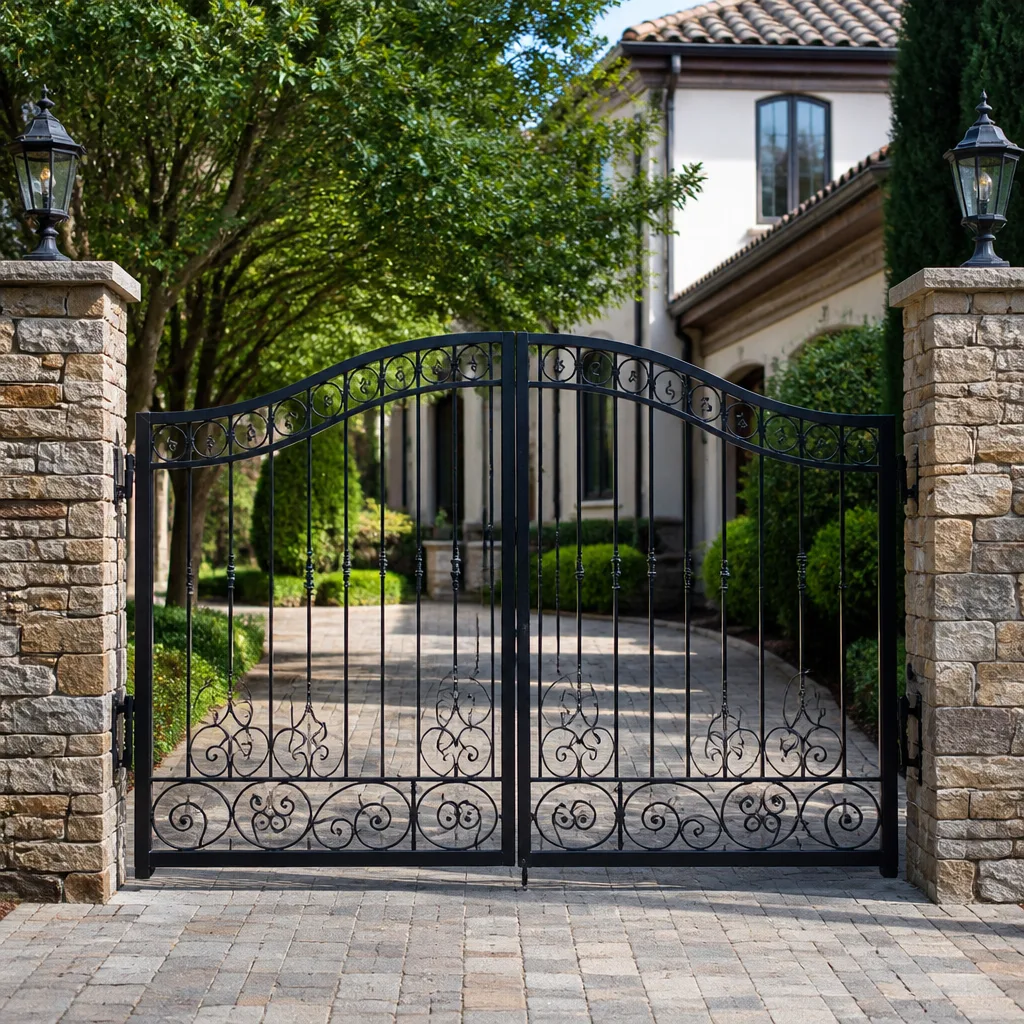
 Wrought iron
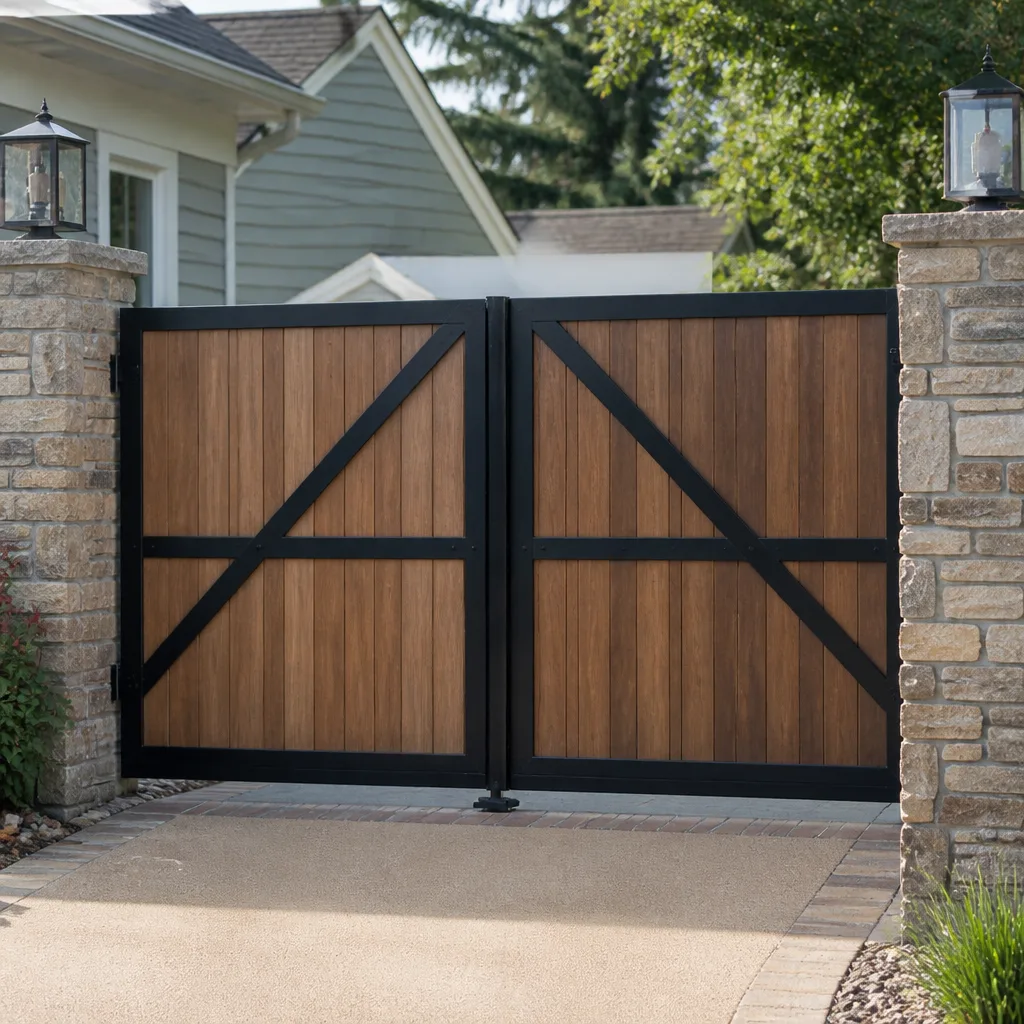 Wood & steel frame
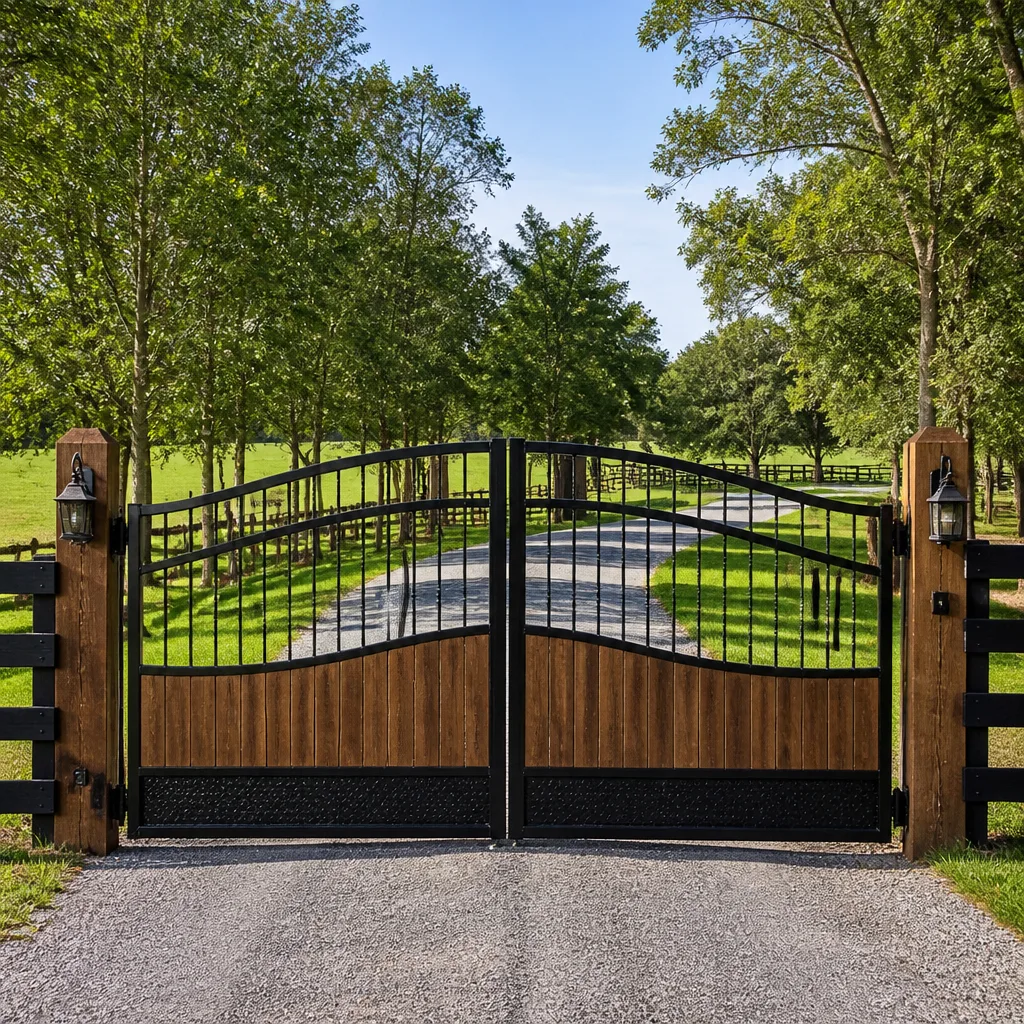 Farm & ranch
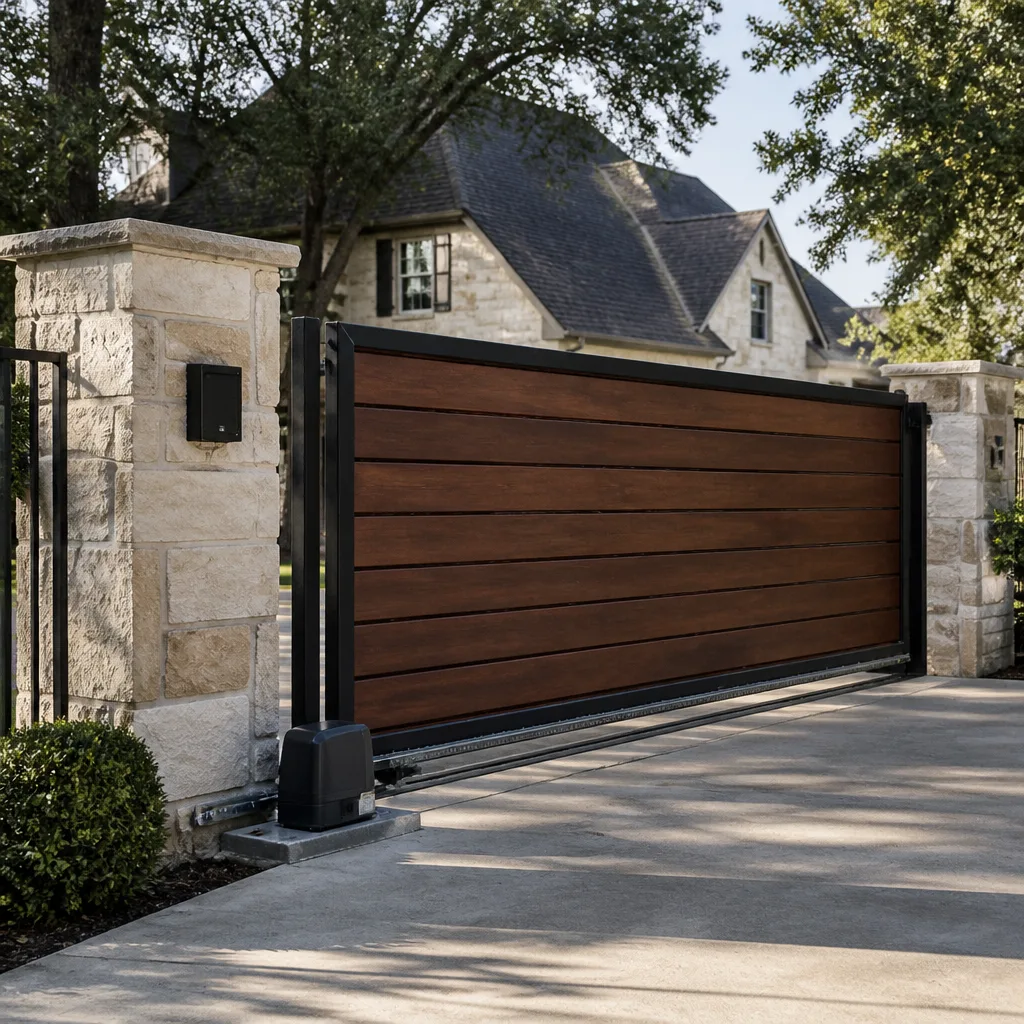 Sliding driveway gates
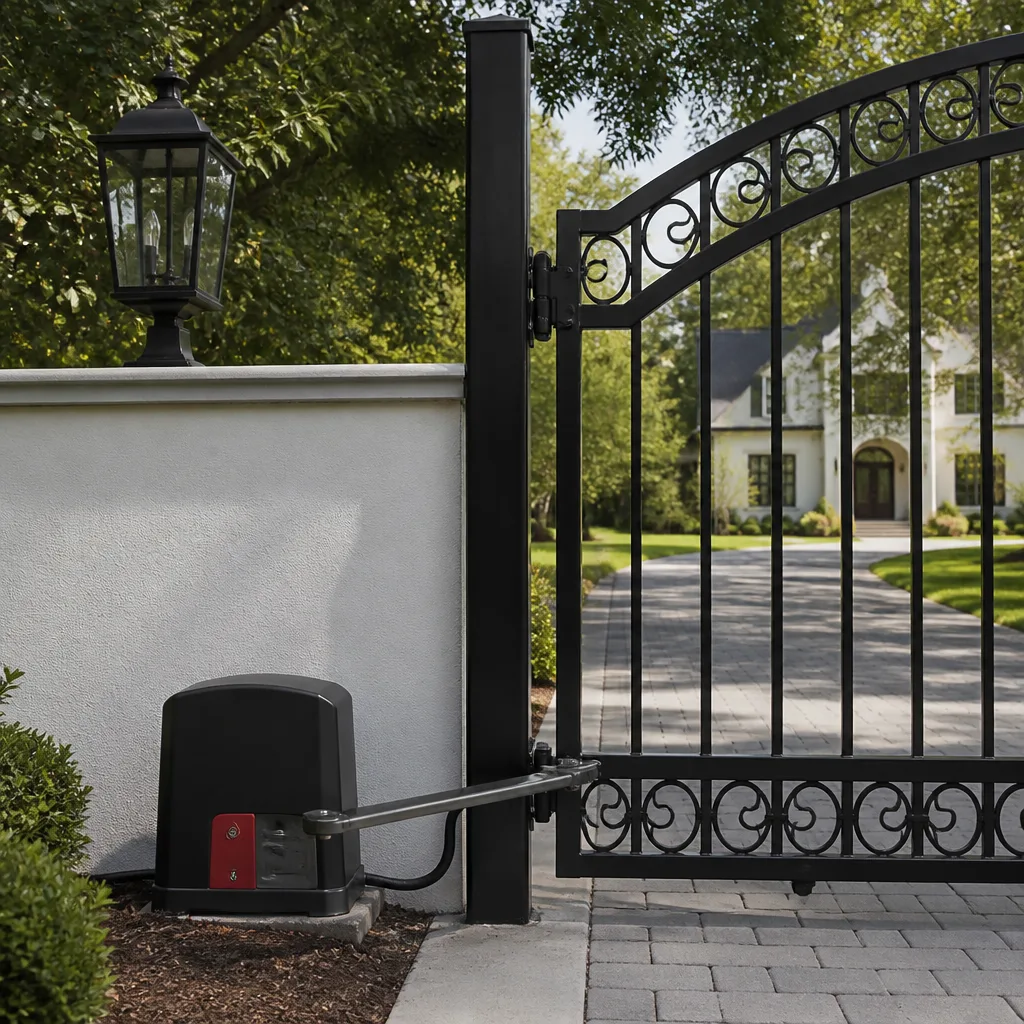 LiftMaster operators
Free on-site gate assessment - hinges, posts, and your LiftMaster or Nice gate operator checked before anything is quoted
The assessment is free and the quote is the invoice.
Get your free estimateStyles & brands we work with
- Wrought iron
- Wood & steel frame
- Farm & ranch
- Sliding driveway gates
- LiftMaster operators
See the difference
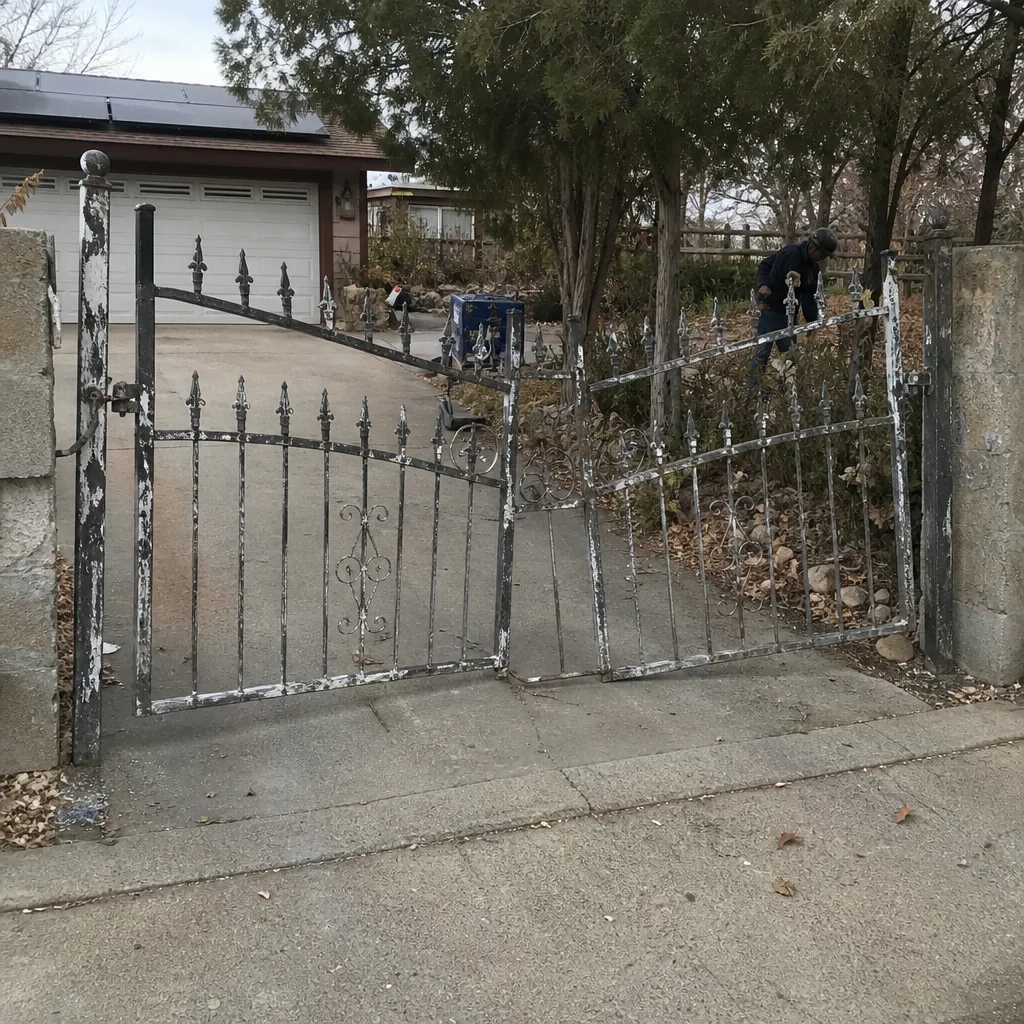 Before
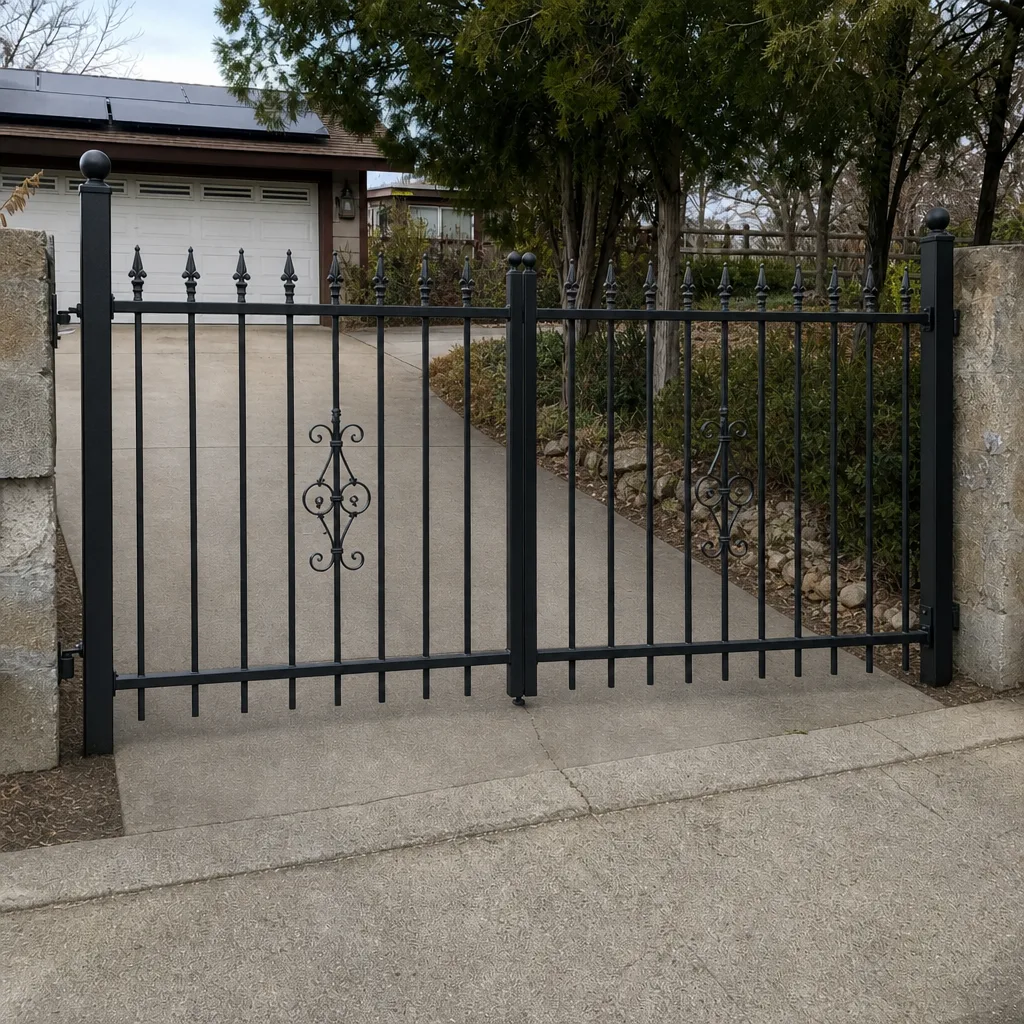 After
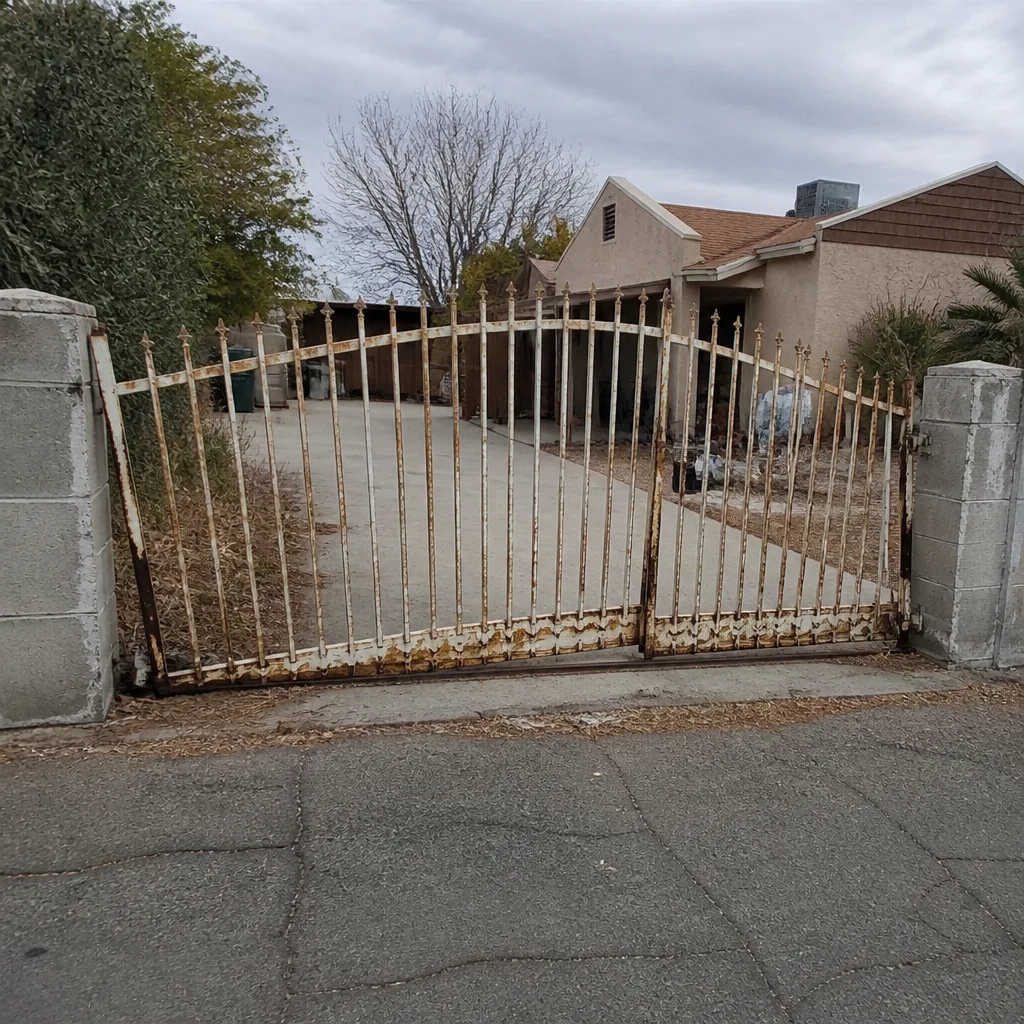 Before
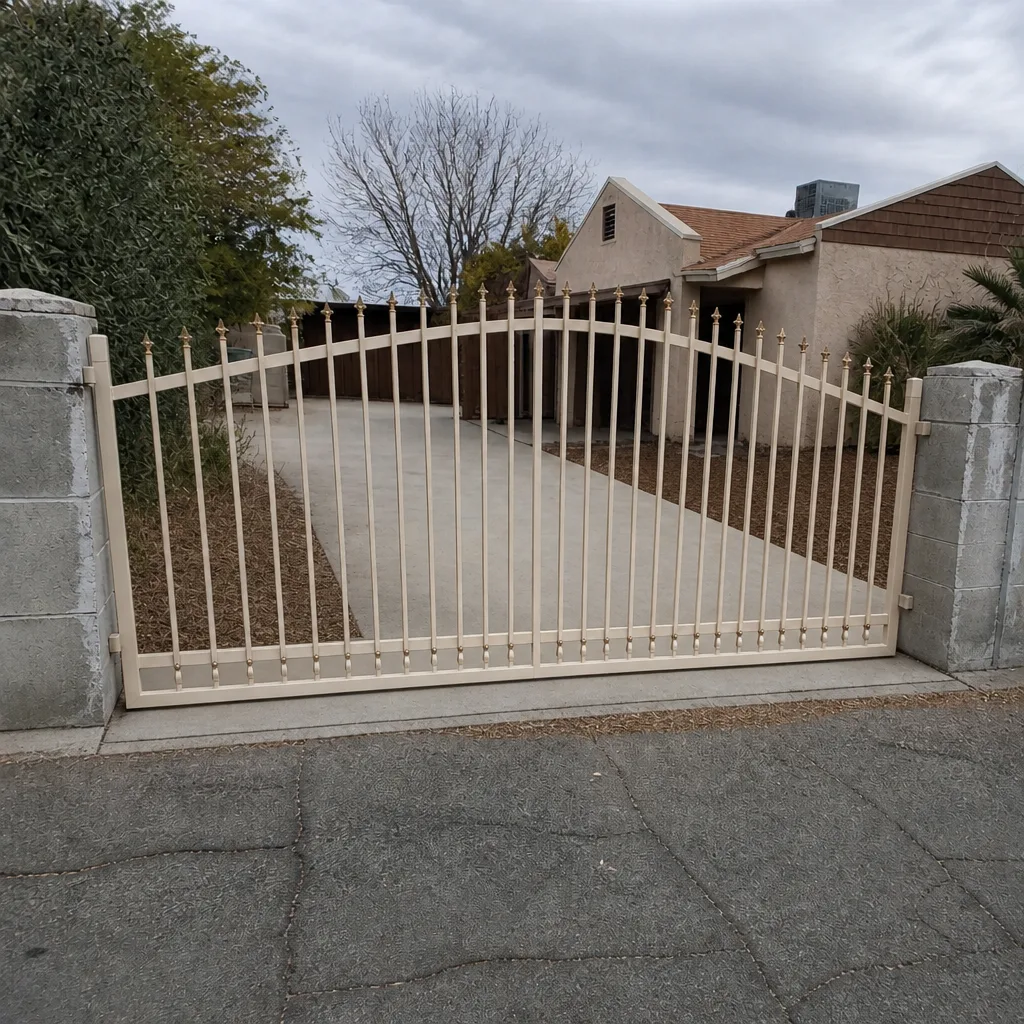 After
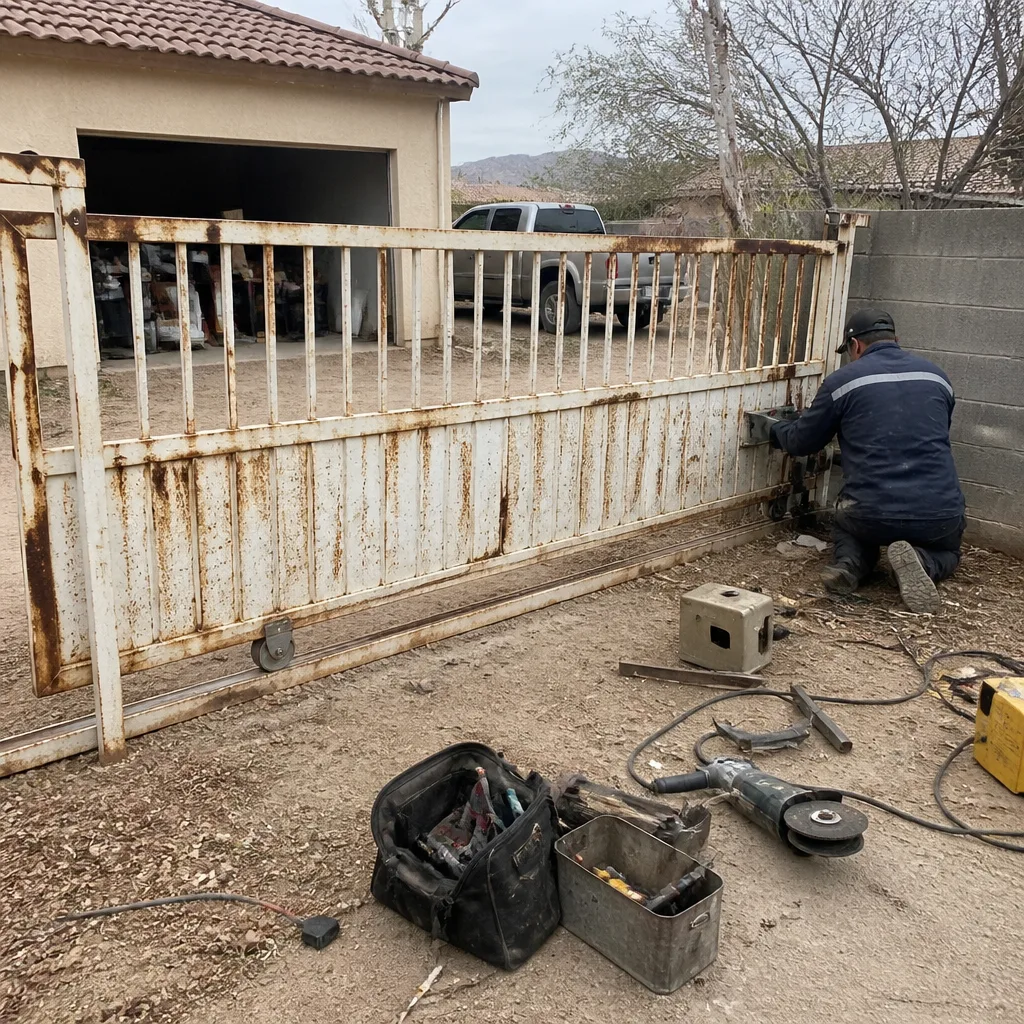 Before
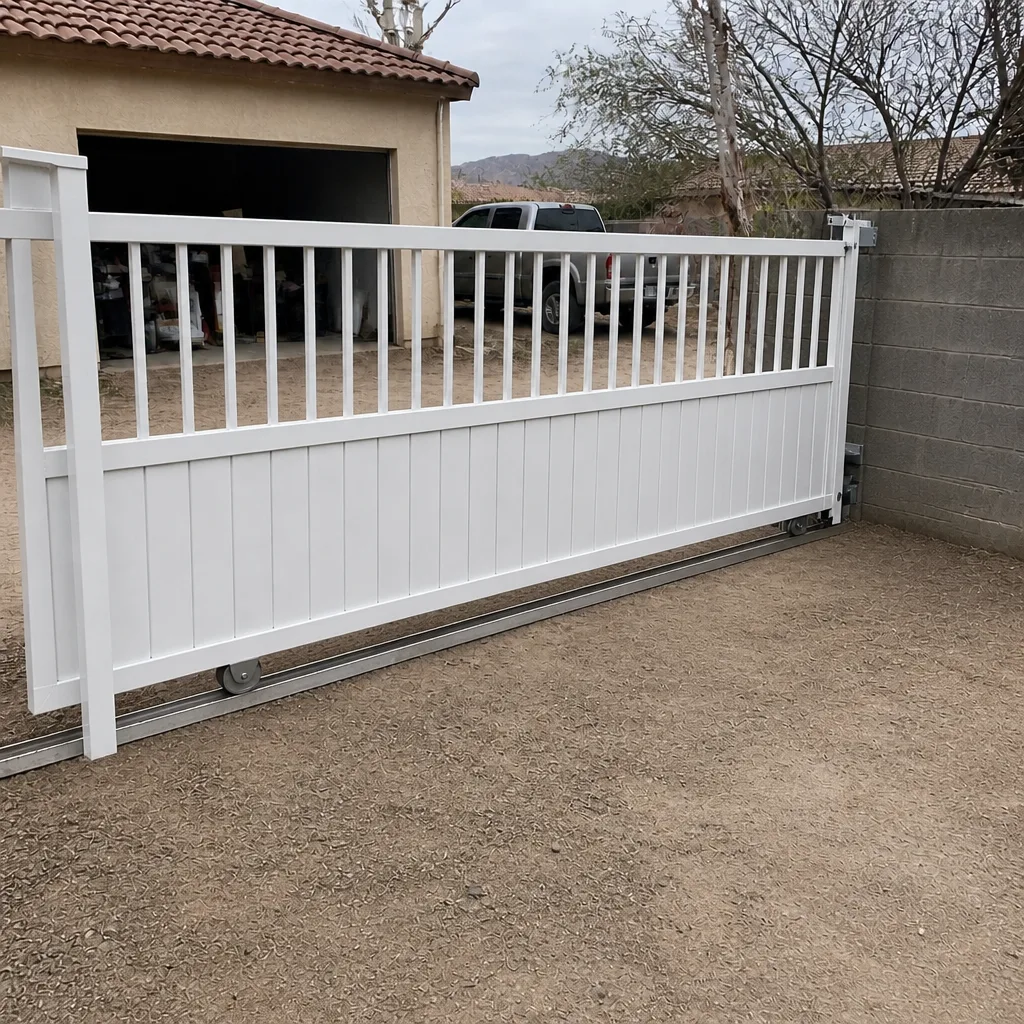 After
How Do Gate Access Control Systems Work in Boulder City, NV?
A gate access control system works by passing a credential through a controller board that tells a motorized actuator to open or close the gate, and it fails most often at the weakest link in that chain, not the whole system at once. In Boulder City, there’s a fourth layer most explainers never mention: the historic overlay’s design-review process can decide which control hardware you’re even allowed to mount on a street-facing gate. If your keypad lights up but the gate won’t budge, or the gate opens on its own at 2 a.m., call (888) 276-7609 and a live person will pick up.
We’re Ironworks Gate Co. Boulder City, and we work on driveway and estate gates every week in this town. What follows is the plain-language version of how the signal chain actually runs, where it breaks, and why a gate built in 1935 asks different questions than a gate built in 1998.
The Signal Chain, One Link at a Time
Every access control system, from a $200 Mighty Mule keypad to a DoorKing telephone entry unit on a gated drive, moves a single decision through four stages. Understanding them in order is how you narrow down a fault before you spend a dime.
- The credential. This is whatever you present: a keypad code, a key fob, a card reader, a phone app, or an intercom call. It captures an input and sends it down the wire to the next stage. If the keypad backlight is dead or the fob only works up close, your problem is here.
- The controller board. This is the brain, a low-voltage board that receives the credential, checks it against stored codes or users, and decides whether to send an open command. It also runs the safety loop (the photo-eyes or loop detector) that stops the gate from closing on a car.
- The actuator. On a swinging gate it’s an arm or a buried operator; on a sliding gate it’s a motor in a housing that drives a rack-and-pinion or chain. The actuator is what actually moves metal.
- The gate itself. Hinges, rollers, tracks, and the frame. A perfectly healthy control system can’t open a gate whose bottom hinge has seized or whose track is packed with gravel.
Here’s the part that matters: the credential is the only link a homeowner ever touches, so it gets blamed for everything. In our experience, a failed credential is the culprit maybe one time in four. The rest of the time it’s a controller board, a transformer, a safety loop, or plain mechanical drag.
Why the Brand Matters More Than You’d Think
Each of the nine brands we’re trained on handles the controller-to-actuator handshake differently. LiftMaster controllers often report a fault through a specific blink pattern on the board LED. FAAC uses its own diagnostic logic and sometimes a separate display. Linear and Elite boards may store a code in memory that only clears when you power-cycle in a set sequence. Viking and Ghost Controls lean toward simpler wiring but different terminal conventions. DoorKing telephone entry units layer in phone-line or VoIP behavior that behaves nothing like a residential keypad. BFT units have their own fault table entirely.
What this means practically: a technician who knows only one brand will misread a fault code on a brand they don’t know, replace a part that wasn’t broken, and come back next month. We’ve seen it happen on gates all over this town. The correct fix comes from knowing which brand is on the post before anyone touches a screwdriver.
The Invisible Third Layer: Boulder City’s Design-Review Overlay
This is the piece you won’t find in any generic explainer, and it’s the one that costs people money here. Boulder City’s historic core is the original 1930s federal company town built for Hoover Dam workers, and the adobe, brick, and wood-frame bungalows there sit under a historic overlay with a design-review process. That process looks at how a street-facing gate presents to the streetscape.
A homeowner on the historic grid recently installed a modern stainless-steel keypad on a 1930s wood gate. The system worked flawlessly. The keypad opened the gate every time. Three weeks later, a design-review notice arrived: the finish, the size, and the visibility of the unit didn’t match what the overlay expected on that block. The access control system was doing its job. It just wasn’t permitted where it sat.
What the overlay can touch:
- The finish and color of a keypad or intercom housing visible from the street
- The size and mounting height of surface-mounted control hardware
- How much of the hardware is visible through or above the gate face
- Whether modern hardware can replace original hand-forged iron latches and hinges, which in many cases the city would rather see matched than swapped
This is where understanding the signal chain alone is not enough. On a Boulder City street-facing gate, the design question has to be answered before the hardware is chosen, not after the notice arrives. That’s why we ask about the overlay before quoting a control upgrade. If you’d rather have the assessment done right, our Gate Access Control service page lays out what a full evaluation includes.
Common Local Scenarios We See in Boulder City
Different parts of town fail for different reasons. Here’s what we run into most.
Historic-core gates with hand-forged hardware
Wooden gates from the 1930s often carry original hand-forged iron hinges and latches that are no longer manufactured. When one fails, swapping in a modern latch can pull the whole gate out of compliance with the overlay. We fabricate replacements on-site when that’s the right answer, matching the original profile rather than dropping in a box-store part. The control hardware has to follow the same rule: match, don’t replace blindly.
1970s-2000s subdivisions with block-wall and wrought-iron drives
In the outlying subdivisions, sliding and swing driveway gates on block-wall perimeter fencing are the norm. Here the failure is usually mechanical first and control second: rusted steel frames, bound rollers, slumping tracks. The Mojave heat expands steel and drives rust faster than most climates, and a gate that worked fine in March can drag in July.
The Mojave heat problem nobody diagnoses
Boulder City routinely runs above 100°F in summer, with intense UV and very low humidity. That combination hits the control stack in a way moisture-driven climates don’t. Heat degrades transformer output over time. A transformer that once delivered a clean 24 volts may sag far enough in July that the controller board browns out intermittently, and the symptom looks exactly like a credential failure: the keypad accepts the code, the gate hesitates, then sometimes opens and sometimes doesn’t. A generalist will replace the keypad. The right fix is usually to test transformer output under load first.
What Happens When a Fault Hits at 10 p.m. on a Friday
An access-control fault at night is a security gap, not a convenience issue: the gate is stuck open or stuck shut, and the weekend stretches ahead. That’s why a live person answers our phone 24 hours a day, 7 days a week. No voicemail tree, no callback queue, no waiting until Monday morning to find out whether the gate can be secured tonight. We carry parts and programming tools for all nine brands, so the correct fix usually happens on the first visit rather than the second or third.
Every completed job is backed by our 90-Day Done Right Promise, a written guarantee with no paperwork and no arguing. If it’s not right, we come back and make it right. Our technicians have up to 13 years of experience, are background-checked, and work in your home the way they’d work in their own mother’s. Current offers include $50 off any repair over $250, a free second opinion on any written estimate, an $89 seasonal tune-up, and a permanent 5% senior and veteran discount.
FAQs
A gate access control system takes a credential (a keypad code, fob, card, or intercom call), sends it to a controller board, and the board signals an actuator to move the gate, with a safety loop preventing it from closing on a vehicle. Each stage can fail independently, so diagnosis means testing the chain in order rather than guessing at the most visible part. If you’re not sure where the break is, call (888) 276-7609 for a free estimate.
A lit keypad that won’t open the gate usually points to the controller board or transformer rather than the keypad itself, and in Boulder City summer heat a sagging transformer is a common cause. Above 100°F, transformer output can drop enough to brown out the board intermittently, which mimics a credential failure. Testing output under load is the first step, and it’s one a generalist often skips. Call us for a same-day assessment if the gate is stuck.
Yes. Street-facing gates in the historic overlay are subject to Boulder City’s design-review process, which can restrict the finish, size, and visibility of keypads, intercoms, and card readers. The hardware may work perfectly and still trigger a notice if it doesn’t match the streetscape. We check the overlay question before quoting, so you’re not installing twice. To see how we handle this, visit our Gate Access Control in Boulder City page.
Most jobs are completed in a single visit when parts are the issue and we have the brand on hand, which for us covers nine major brands including LiftMaster, FAAC, Elite, and Mighty Mule. A live person answers the phone 24 hours a day, 7 days a week, so a Friday-night fault doesn’t have to wait until Monday. Call (888) 276-7609 and we’ll tell you what’s realistic for your gate.
If You’d Rather Have It Looked At
If you’d rather have it looked at, Ironworks Gate Co. Boulder City offers a no-pressure assessment in Boulder City. We’ll trace the signal chain, check the overlay question before we touch a screw, and give you an upfront price before any work starts. Call (888) 276-7609 for a free estimate.
Written by the team at Ironworks Gate Co. Boulder City, serving Boulder City, NV.