
Last updated November 17, 2026
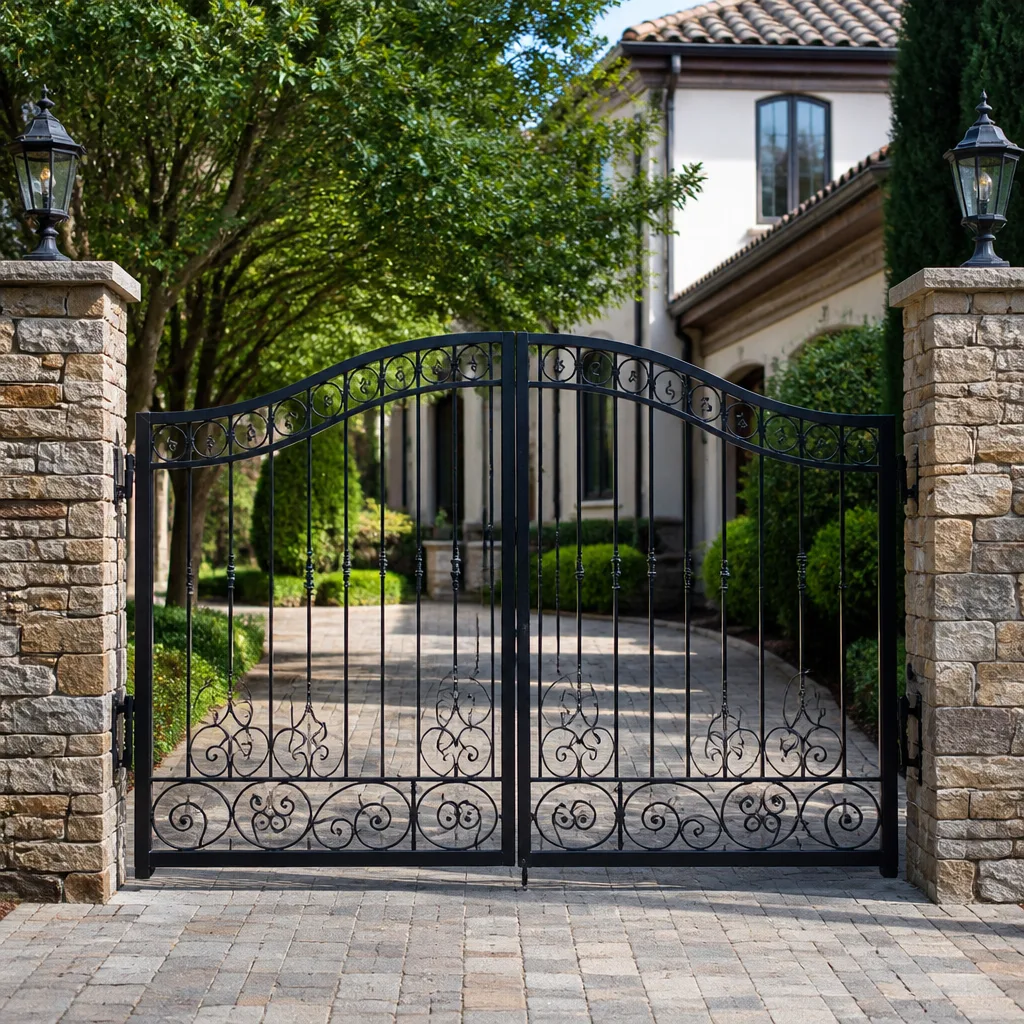 Wrought iron
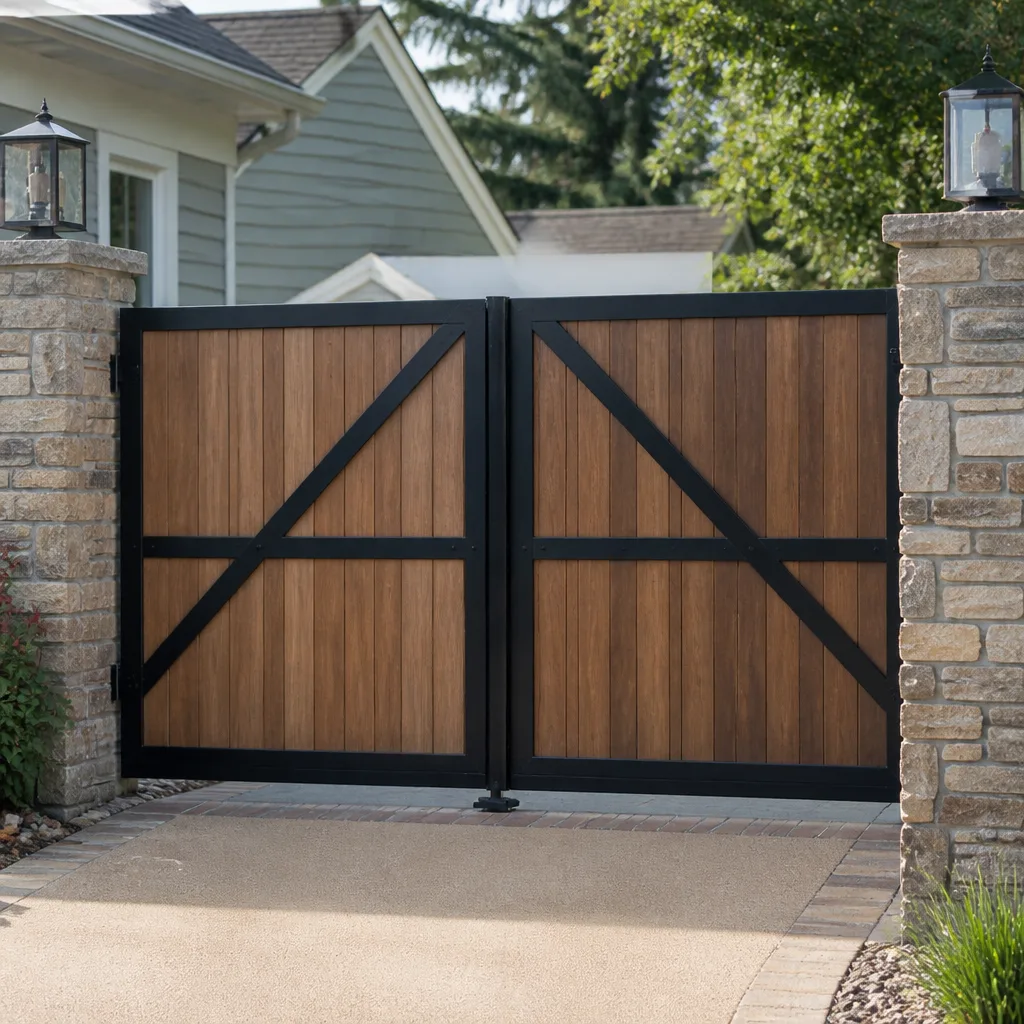 Wood & steel frame
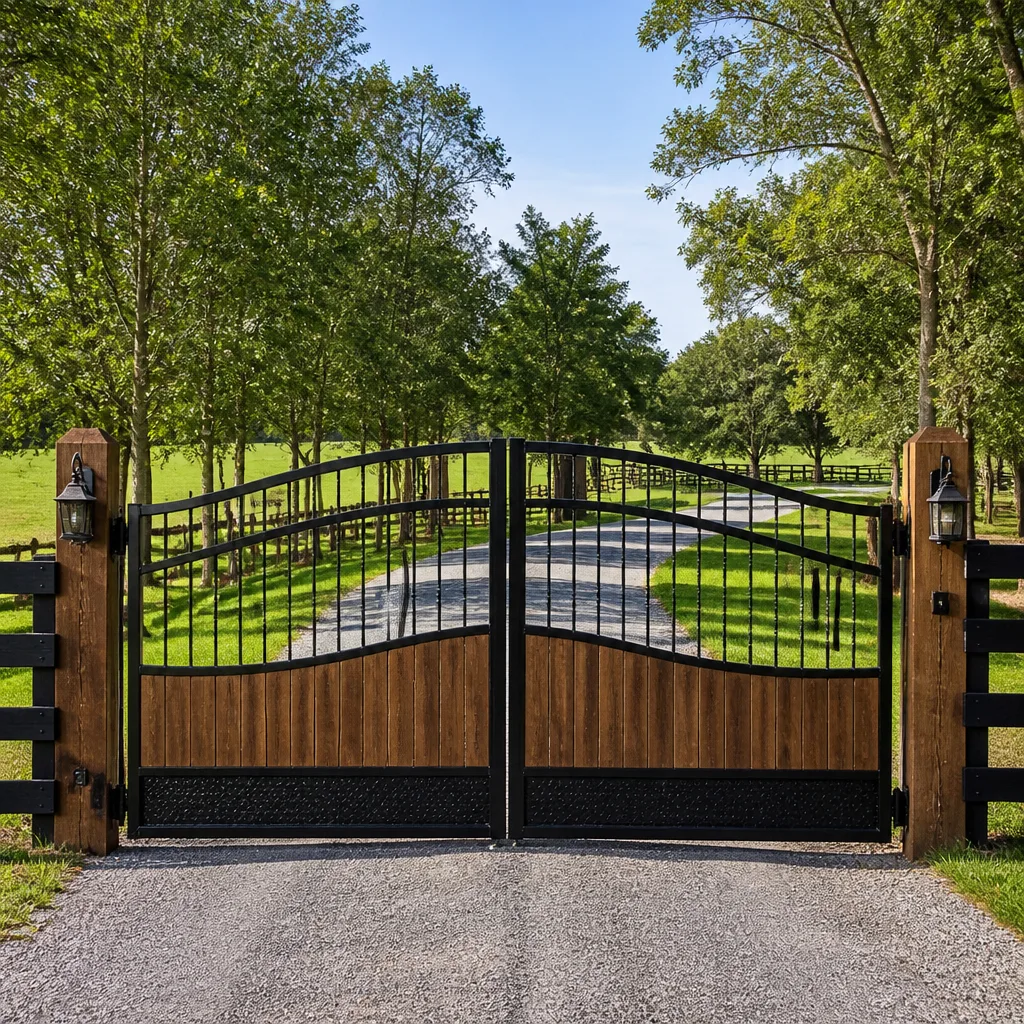 Farm & ranch
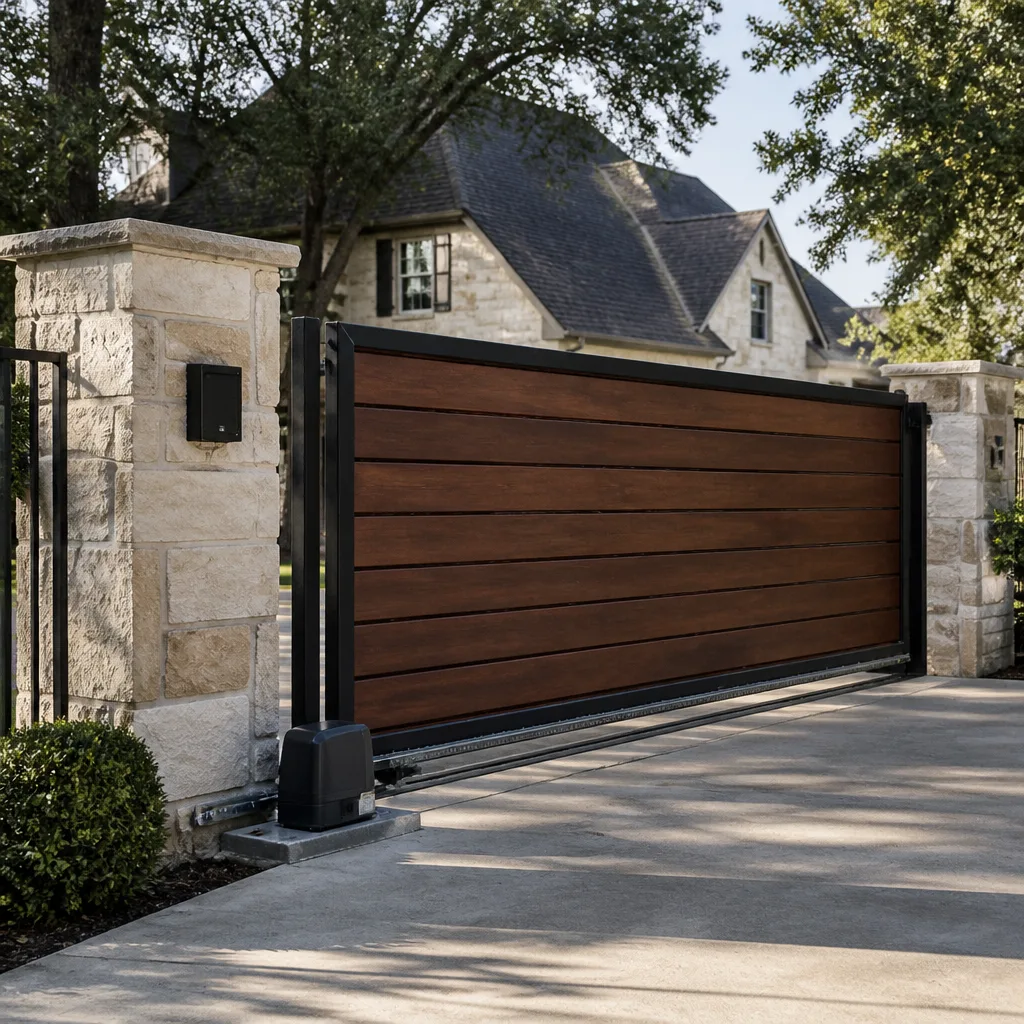 Sliding driveway gates
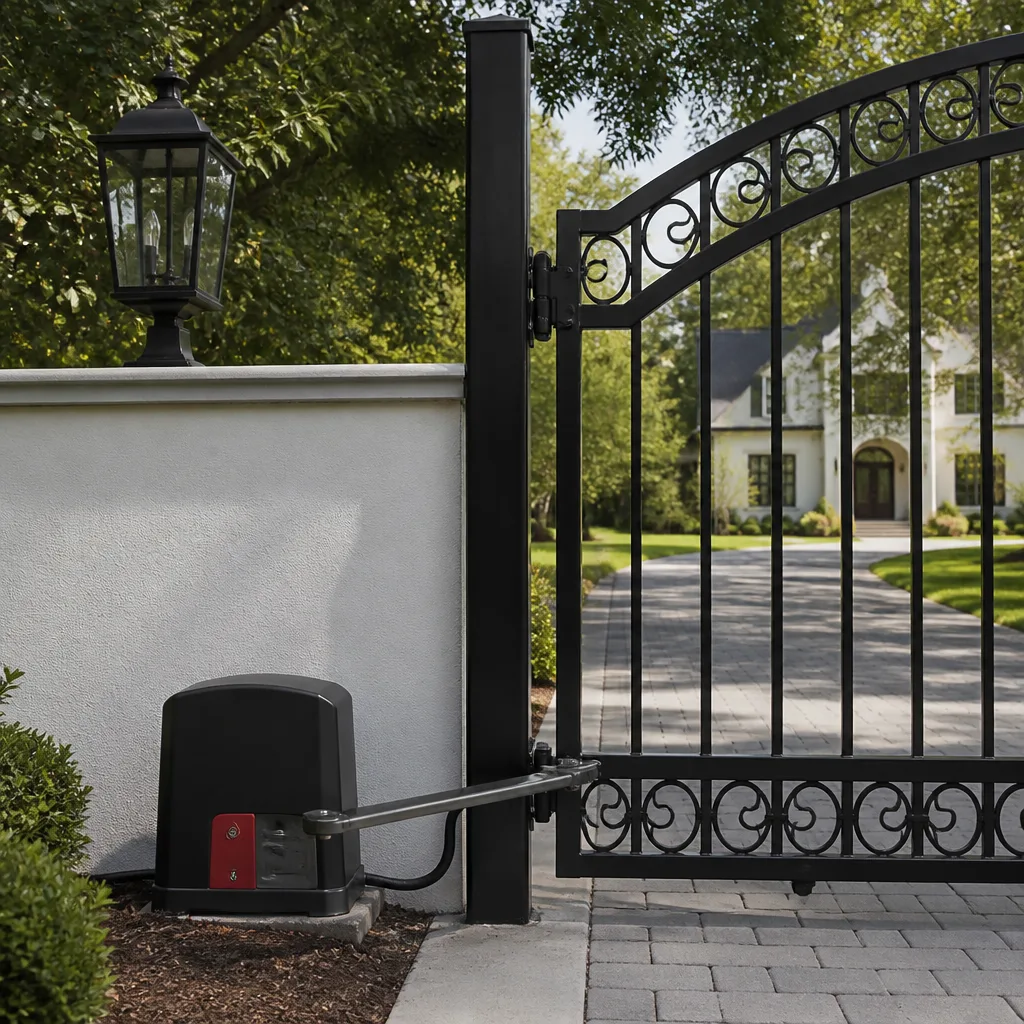 LiftMaster operators
Free on-site gate assessment - hinges, posts, and your LiftMaster or Nice gate operator checked before anything is quoted
The assessment is free and the quote is the invoice.
Get your free estimateThe Complete Gate Installation Guide for Boulder City Homeowners
Boulder City is one of the only municipalities in Nevada where the city itself still runs land use planning instead of handing it to the county. That single fact changes everything about gate installation here. A contractor who works mostly in Henderson or Las Vegas can quote your job confidently and still be wrong about the setback, the permit path, and what the ground under your driveway will do to a post. We’ve watched homeowners tear out year-old installations because the planning phase got skipped. This guide walks through the planning phase itself: permits, setbacks, HOA rules, soil, materials, and how to read a contract before you sign one. Read it once and you’ll know what to ask.
Quick Answer
A Boulder City gate installation succeeds or fails on the planning done before any digging. That means confirming the city’s own permit and setback requirements (not the county’s), checking HOA gate height rules, setting post depth for caliche soil rather than a national table, choosing a coating built for the local UV and temperature swing, and matching the opener’s duty cycle to your actual daily use. Get those five right and the gate lasts decades. Skip them and you’ll be paying twice.
Styles & brands we work with
- Wrought iron
- Wood & steel frame
- Farm & ranch
- Sliding driveway gates
- LiftMaster operators
Table of Contents
- Boulder City Permit and Setback Rules That Differ From the Metro
- HOA Gate Height Rules and What They Actually Cover
- Post Foundations in Caliche Soil: Why National Depth Tables Fall Short
- Choosing Materials and Coatings for the Local UV and Temperature Range
- Matching the Opener to Real Daily Usage
- What a Complete Installation Contract Should Include
- The Installation Process, Step by Step
- Common Mistakes to Avoid
Boulder City Permit and Setback Rules That Differ From the Metro
Boulder City handles its own planning and zoning rather than deferring to Clark County. In practice that means the permit forms, review timelines, and staff you talk to here are not the same ones a Las Vegas contractor deals with weekly. A gate that sits at the driveway apron, spans a side yard, or crosses a corner lot line gets reviewed against local front-yard and setback language, and the numbers don’t always match what the county would allow on a similarly sized parcel in Henderson.
Before you order a single panel, confirm three things with the city:
- Setback from the property line. Where the gate’s hinge post and the swing arc land matters as much as the gate face. A gate that swings into a required setback gets flagged even if the structure looks fine.
- Driveway apron and visibility triangle rules. Corner lots near the historic district and along the main approach streets often carry sight-distance requirements at the driveway. Those rules can limit gate height or force a slide rather than a swing.
- Whether your project is treated as a fence, a structure, or an access-control install. That classification drives which review it goes through. Automated gates sometimes trigger an electrical review on top of the planning review, and that’s a separate step with its own sign-off.
This is the part that surprises people most. A homeowner who’s lived in Boulder City for thirty years still gets caught out because the rules tightened or the parcel’s designation changed. Ask the city directly, in writing, before the crew digs. Ironworks Gate Co. treats the permit question as the first item on the job, not a detail to sort out later. You can read more about our Gate Installation in Winchester approach for a sense of how we scope a project from the ground up.
HOA Gate Height Rules and What They Actually Cover
HOA gate language is usually written for fences and then applied to gates by default, which is where disputes start. A typical Boulder City-area HOA rule caps fence height at four or six feet and sets a “no solid barrier to the street” clause. A gate that matches your fence height can still fail review if the board reads the gate as a wall where the fence is a divider. Read your CC&Rs for two things specifically: the maximum height for a structure at the property line, and any clause about “materials visible from the street.”
Then get the answer in writing from the board before you build. A short email asking “will a six-foot steel gate with vertical pickets, matching the existing fence line, be approved at the driveway” saves a rebuild. Most boards will respond to a clear, specific question. Vague questions get vague answers, and vague answers get you a stop-work order at project close.
Practical points worth confirming with your HOA:
- Gate style (picket, solid panel, ornamental) and whether open bars are required for sight lines.
- Finish color, since many associations restrict to specific tones or “match existing.”
- Where the operator housing sits relative to the street, since some boards treat the motor cover as a visible structure.
- Whether the association requires a permit copy filed with the board before work starts.
We’ve seen a Board approve one style and a new property manager reverse it a year later. Keep the written approval on file. It’s the only thing that settles the argument.
Post Foundations in Caliche Soil: Why National Depth Tables Fall Short
Boulder City sits on ground that includes caliche: a cemented layer of calcium carbonate that can behave like soft rock in one spot and crumble in the next. A national post-depth table assumes uniform soil. That assumption fails here. A gate post set at the standard depth in loose fill can shift within a season, and a post that meets a caliche layer without proper preparation can crack the surrounding concrete as it heaves.
In our experience, the depth decision has to come from what’s actually in the ground at your property. That’s why we don’t quote a final post depth until we’ve looked at the soil at the post locations. For a residential driveway gate, plan on deeper footings than a fence line and expect the crew to hand-auger or break through a caliche layer in places. A wider, bell-shaped footing with proper drainage matters here more than sheer depth alone.
The sequence we follow on every gate install is straightforward:
- Probe the ground at each post location to identify fill, caliche, or stable native soil.
- Set post depth and footing width based on what the probe finds, not a default number.
- Over-dig the footing base so the concrete bells out and resists uplift on the hinge side.
- Set the post plumb and brace it, then pour and let the concrete cure fully before hanging the gate.
- Verify swing alignment and hardware function only after cure, so the gate isn’t loaded onto green concrete.
This is also a safety matter. A gate post that shifts under load sends weight onto the hinges, the operator, and anyone standing nearby. Hinge-side failure on a heavy steel gate is not a small repair. We don’t recommend homeowners attempt post work on a driveway gate themselves, and we’d say the same to any generalist who hasn’t worked this soil before.
Choosing Materials and Coatings for the Local UV and Temperature Range
Boulder City’s climate is hard on finishes. High UV year-round, wide swings between summer heat and winter nights, and blowing dust that acts like sandpaper on a cheap paint coat. A gate finished with a standard shop-primer-and-paint job will start to chalk and peel within a few seasons. The material and coating choice determines whether you’re repainting every year or every decade.
What holds up here, in our experience:
- Hot-dip galvanized steel with a powder coat over it, for a driveway gate. The galvanizing protects against corrosion if the powder coat ever chips; the powder coat handles UV.
- Powder coat rated for exterior architectural use, not the lighter decorative powder coat used indoors. The architectural grade is formulated to hold color under direct sun.
- Heavier gauge tube for gates that see regular vehicle traffic. Thin tube deflects and the finish cracks at the deflection point, which is where rust starts.
- Stainless or properly plated hardware. Hinges and latches fail before the panel does, and a cheap hinge drags the whole gate out of alignment.
For ornamental aluminum, the factory finish is usually the best one you’ll get. Repainting an aluminum gate in the field rarely matches the original. For steel gates, a two-part coating system applied in a controlled shop beats anything brushed on site. Ask what the finish is and how it’s applied before you sign. “Painted” is not an answer. If you want to know how a coating choice affects the repair lifetime of an existing gate, our Gate Repair in Winchester page covers what we see on older finishes.
Matching the Opener to Real Daily Usage
Gate operators come in classes tied to duty cycle, and duty cycle means how many cycles the motor can run per hour and per day without overheating. A homeowner with one car leaving twice a day needs a very different operator than a household with three drivers, a service gate, and a delivery vehicle arriving weekly. The salesperson’s recommendation often defaults to the mid-range unit because it covers most cases. That’s a fine place to start and a bad place to stop.
Match the operator to your actual pattern:
- Two to four cycles a day (retired couple, one vehicle): a residential-class swing or slide operator is enough. LiftMaster and Elite both make reliable residential units we’re trained on.
- Eight to twelve cycles a day (multi-driver household, frequent visitors): step up to a heavier residential or light-commercial operator. Running a residential unit at this rate shortens its life and burns through batteries in a solar setup.
- Gate on a slope or with heavy steel panels: swing vs. slide changes the math. A slide operator handles weight better; a swing operator needs correct torque and a stable hinge post.
- Solar power: cycle count matters more because every cycle drains the battery. An operator sized for grid power may underperform on solar in this climate.
We’re trained and equipped on nine gate-automation brands, including DoorKing, Elite, Mighty Mule, LiftMaster, FAAC, BFT, Linear, Viking, and Ghost Controls. That breadth matters because the correct fix on your driveway is usually the operator already there, not a forced replacement. Ask what duty class the quote specifies and why. If it doesn’t say, that’s the first thing to question. For a deeper look at operator selection and setup, see our Gate Motor & Opener in Winchester guide.
What a Complete Installation Contract Should Include
A gate installation contract is the document you’ll refer to if anything goes sideways at project close. Most of the boilerplate is standard. The disputes come from the items left out. Here are the three that cause the most trouble, plus what else belongs in the contract.
The three items most quotes omit:
- The electrical scope and who owns it. A gate operator needs power, and running a circuit from the panel to the gate location is often excluded from the gate quote. When the operator arrives and there’s no power at the post, the change order can add significant cost. The contract should say exactly who runs the power, where it terminates, and what the electrical permit covers.
- The safety device scope. Photoelectric safety edges, loop detectors, and reversing sensors are not optional on an automated gate and are regulated. If the quote says “operator installed” but not “safety edges installed and tested,” that gap is a liability and a code problem.
- The finish and hardware warranty terms in writing. Not the operator’s manufacturer warranty, which is separate. The warranty on the welding, the coating, the hinge hardware, and the install work itself should be spelled out with a duration and what triggers a claim.
Also demand a written line-item price with no allowances for “TBD” items, the final post depth based on soil probe results, the operator model number and duty class, and a completion date. If your quote has a “materials allowance” or a “TBD electrical” line, ask for a firm number before signing. The job should be quoted and agreed before a single bolt is turned.
The Installation Process, Step by Step
For a homeowner planning a new gate, here’s the sequence a properly scoped project follows from first call to final walkthrough.
- Site visit and measurement. We measure the opening, check the driveway grade, look at the hinge and latch side, probe the soil, and note what’s above and below (power, irrigation, gas lines).
- Permit and HOA confirm. We confirm the setback, the height, and the review path with the city and check the HOA requirements before ordering materials.
- Written quote with line-item pricing. The gate, posts, operator, electrical scope, and safety edges each get a line. No hidden allowances.
- Fabrication or order. Gate and posts are fabricated to measurement, the operator is ordered to the correct duty class.
- Post install and cure. Footings are set at the depth the soil demanded, and the concrete cures fully before the gate is hung.
- Gate mounting and hardware. Hinges, latch, and stops are set; the gate swings by hand correctly before any motor goes on.
- Operator and safety device install. Motor is mounted, wired, and the safety edges and sensors are installed and tested.
- Walkthrough and handoff. You operate the gate yourself, we confirm the safety release and manual override work, and we leave you the documentation.
Most installations are completed in a single visit once the gate and operator are on hand, with follow-up scheduled for any electrical work that requires a separate trade. Every job we complete is covered by the 90-Day Done Right Promise in writing.
Common Mistakes to Avoid
- Using the county setback number. Boulder City sets its own planning rules. A contractor who quotes you from Henderson habit will get the setback and review path wrong.
- Assuming HOA fence language covers the gate. Read the CC&Rs for gate-specific language and get written approval before the crew arrives.
- Setting post depth from a national table. Caliche soil needs a probe-based depth, not a default number from a guide written for loam.
- Ordering the operator by price. Match duty cycle to actual daily cycles; an undersized operator on a heavy gate fails within a few years.
- Leaving the electrical run off the quote. If the quote doesn’t say who runs the power, assume it isn’t included, and the change order will make up for it.
- Skipping safety edges or reversing sensors. These are regulated and required on automated gates, not optional add-ons.
- Signing a quote with a “materials allowance.” An allowance is a placeholder, and placeholders become overruns at project close.
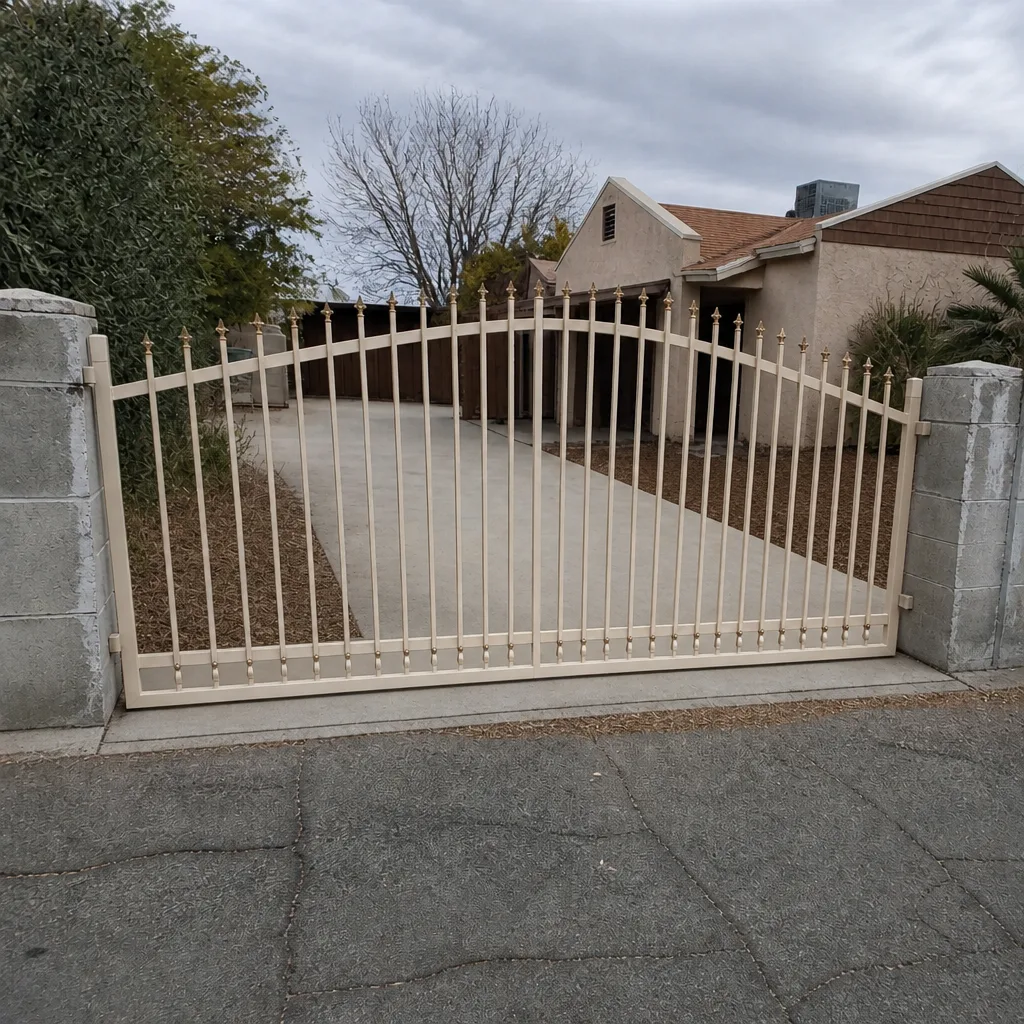
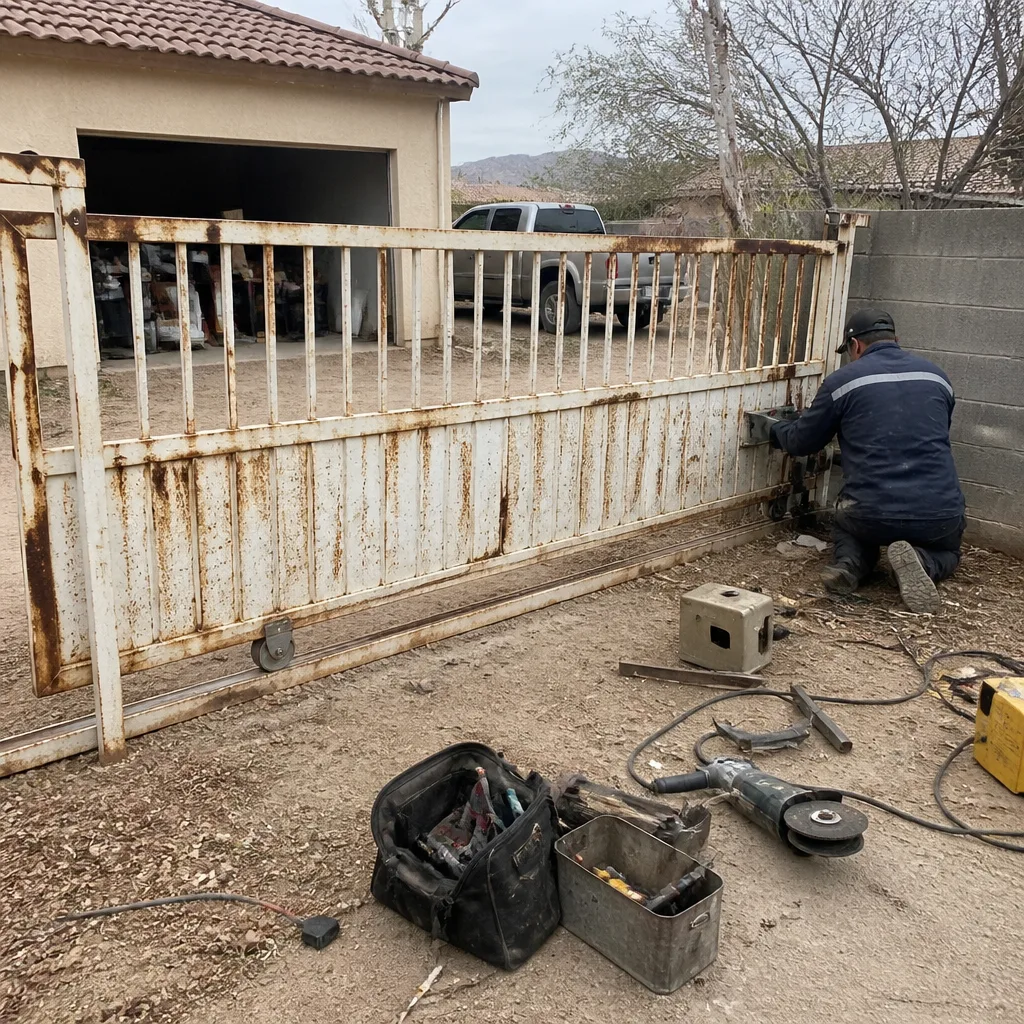
See the difference
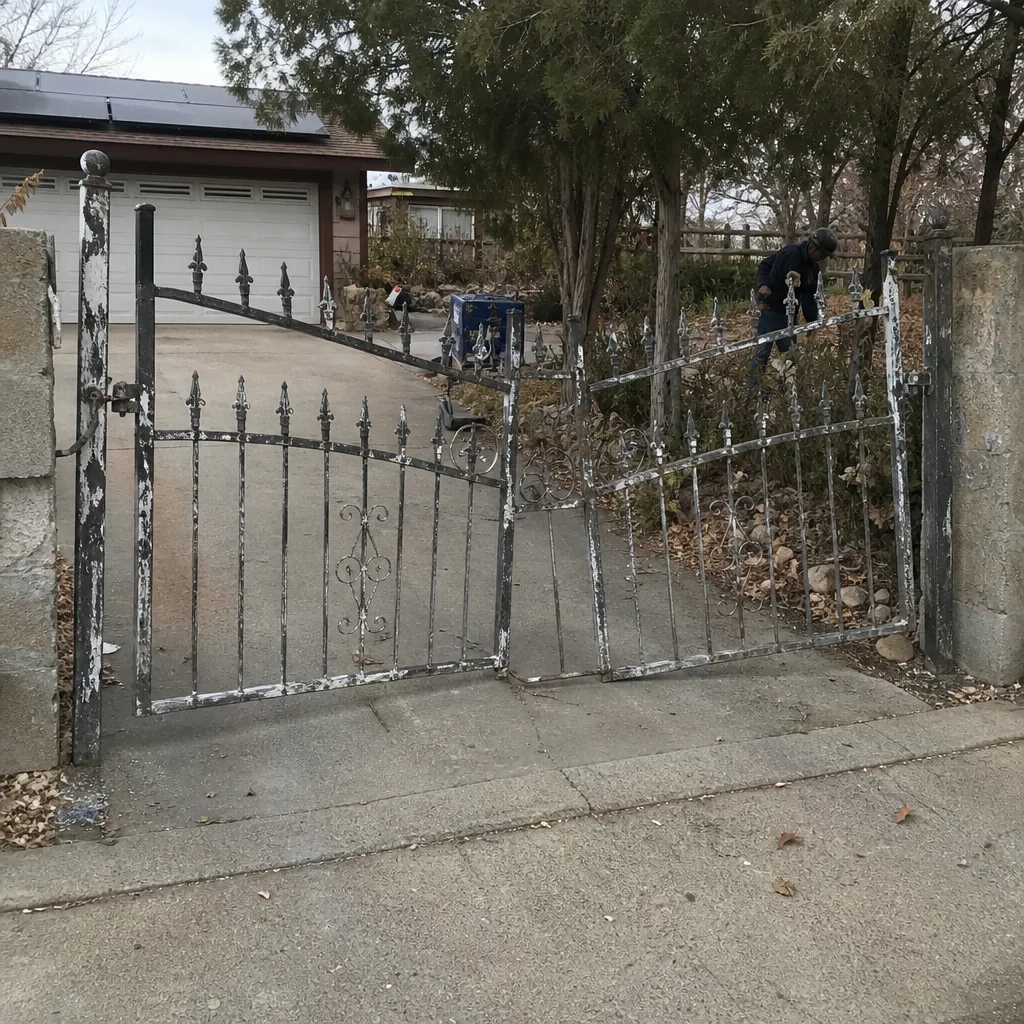 Before
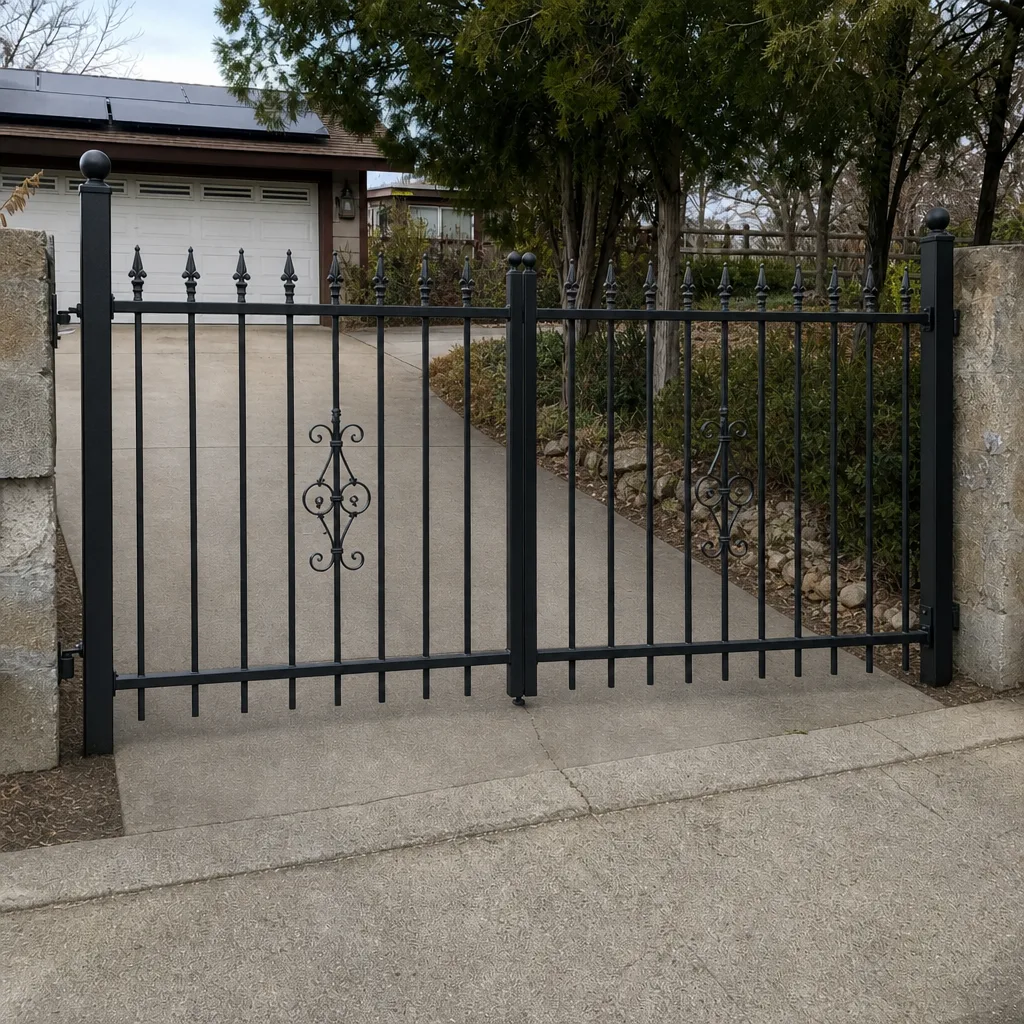 After
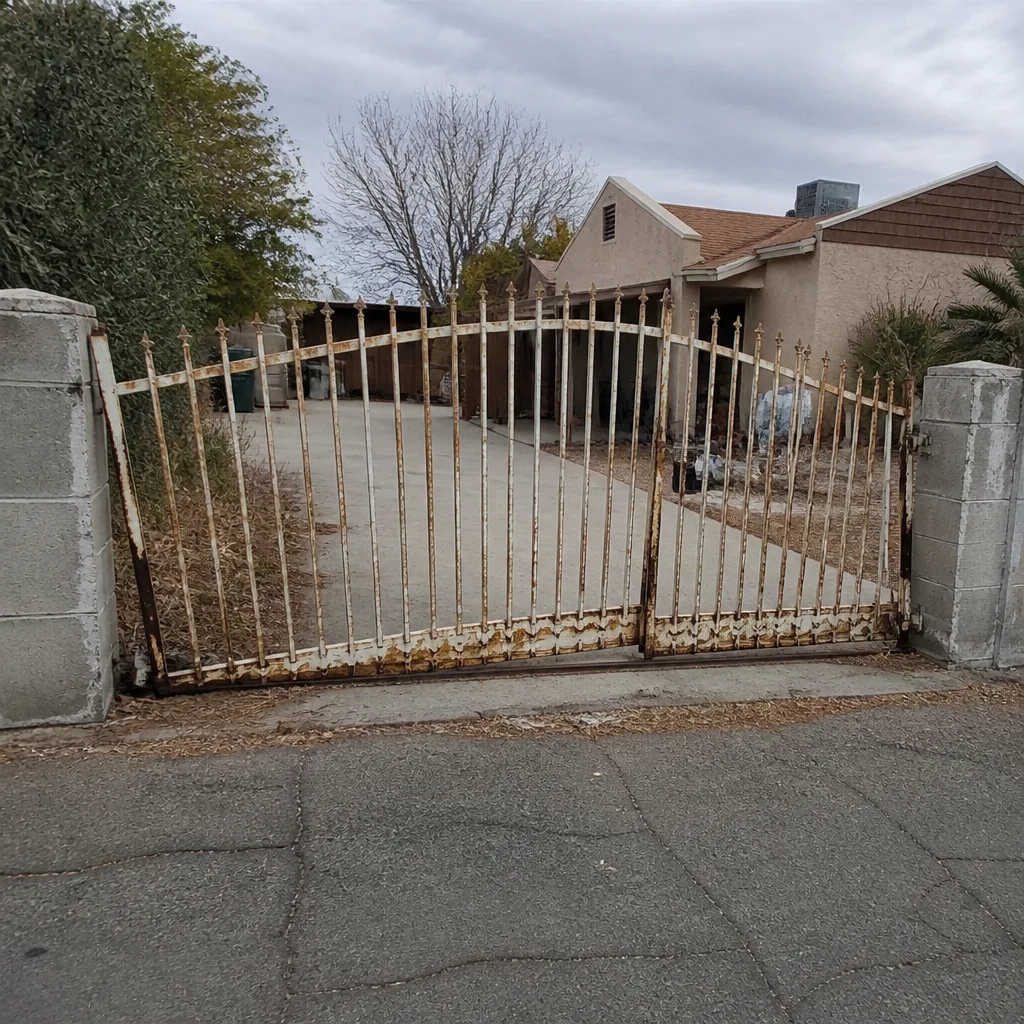 Before
 After
 Before
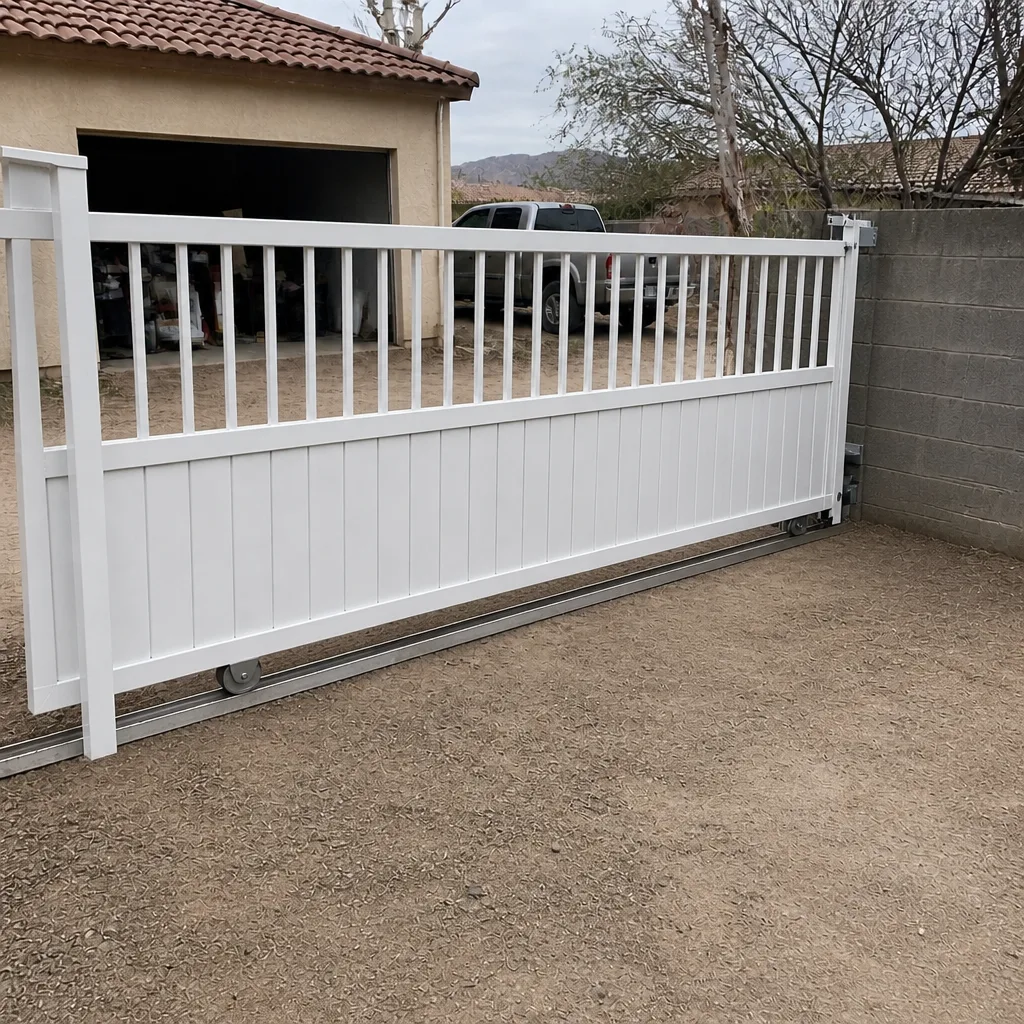 After
When to Call a Professional
Call a professional when the gate is automated, when the post foundation has to change, when the project crosses a property line or HOA review, or when the opening needs to be re-graded for a slide operator. Those are the jobs where soil, code, and mechanical load all meet, and where an amateur install tends to fail six months later. If you’re unsure, a short call is worth more than an hour of research. Ironworks Gate Co. specializes in driveway and estate gates, from hinges and welds to keypads and automation. We offer free estimates in Boulder City. Call (888) 276-7609, and a live person answers any hour, any day.
Frequently Asked Questions
Usually yes, especially if the gate is automated or alters the property line setback or driveway apron. Because Boulder City runs its own planning department rather than deferring to Clark County, the review path is not always identical to what Henderson or Las Vegas would require. Confirm your specific parcel with the city before work begins, and get the answer in writing.
Post depth depends on what’s in the ground at your property. Caliche and fill layers are common here and behave differently from uniform soil, so a probe at each post location decides the depth and footing shape. That’s why we don’t promise a final depth until we’ve looked at the soil. No reliable number can be quoted over the phone.
Costs vary widely with gate width, material, operator class, and how much electrical work the site needs. The honest answer is that no range we quote without a site visit would be accurate. Call (888) 276-7609 for a free estimate. Prices are quoted and agreed before work starts, and the quote is line-item, so you know where every dollar goes.
It’s our written guarantee that if anything about the installation isn’t right within 90 days, we come back and make it right, no arguing. It applies to every job and it’s in writing, not verbal. If something isn’t sitting the way it should, call and we’ll be there when we say.
No. Gate installation is measured, ordered, and scheduled work, not a same-day repair. The custom gate and the correct operator have to be fabricated and ordered to size. Follow-up scheduling is normal. Once materials are on hand, most installations are completed in a single visit.
Yes, the electrical run and the safety device install are part of the scope we address in the contract. Power from the panel to the gate and the safety edges are the two items most quotes omit, and both are specified in ours. If a separate electrical trade is needed, that’s spelled out in the quote rather than added later.
The Bottom Line
The planning phase is the job. Answer Boulder City’s permit and setback questions using the city’s own planning office, read the HOA gate language separately from the fence language, probe the soil before setting post depth, choose a finish built for the local UV, match the operator to actual daily cycles, and get the electrical and safety device scope on the quote. Do those five things and the installation ages slowly. Skip them and you’re paying for the same work twice. Ironworks Gate Co. brings trained, background-checked technicians with up to 13 years of experience, certified on the leading automation brands, and we stand behind every job in writing.
We serve homeowners across the Las Vegas Valley, including dedicated service in Winchester. For more on our overall approach, visit Ironworks Gate Co. Boulder City home.
When you’re ready to plan your gate installation in Boulder City, call (888) 276-7609 for a free estimate. A live person answers every call, 24 hours a day, 7 days a week.
Written by the team at Ironworks Gate Co. Boulder City.