
Last updated November 17, 2026
 Wrought iron
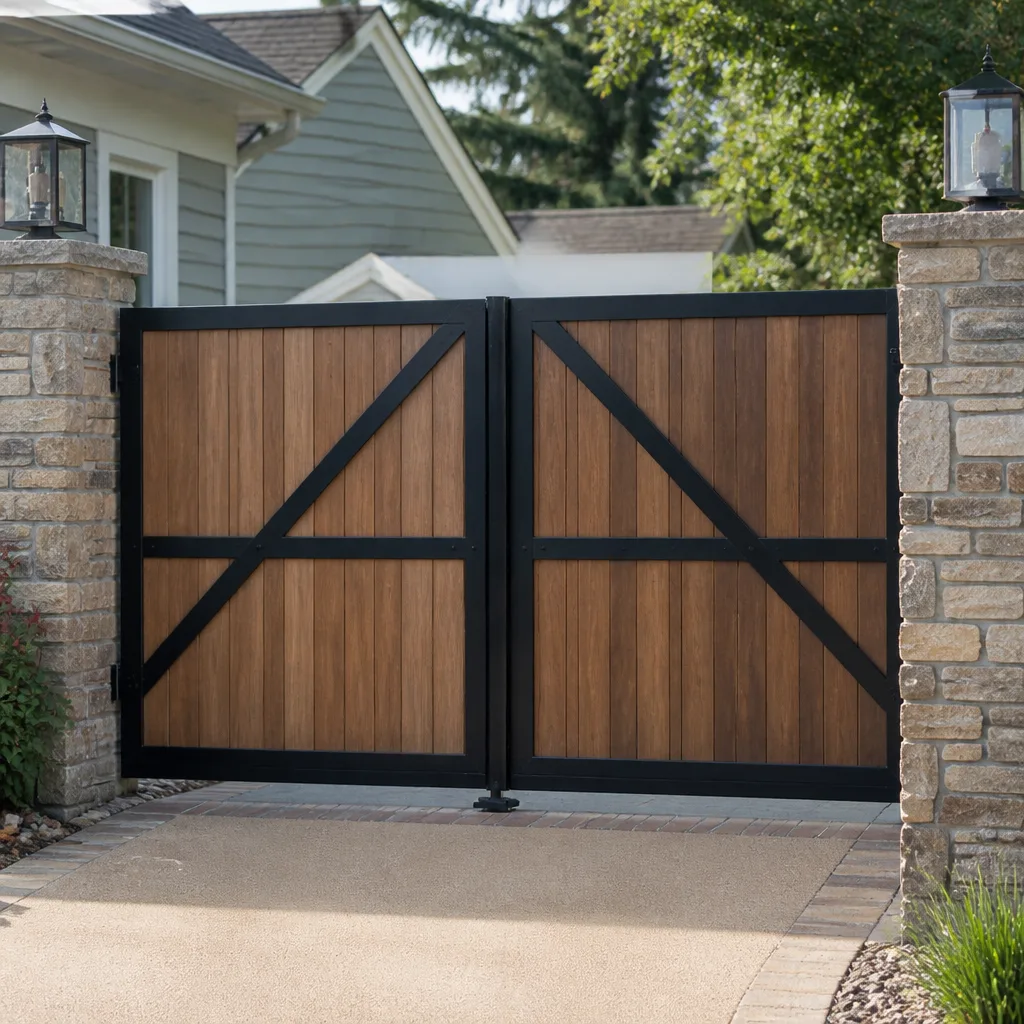 Wood & steel frame
 Farm & ranch
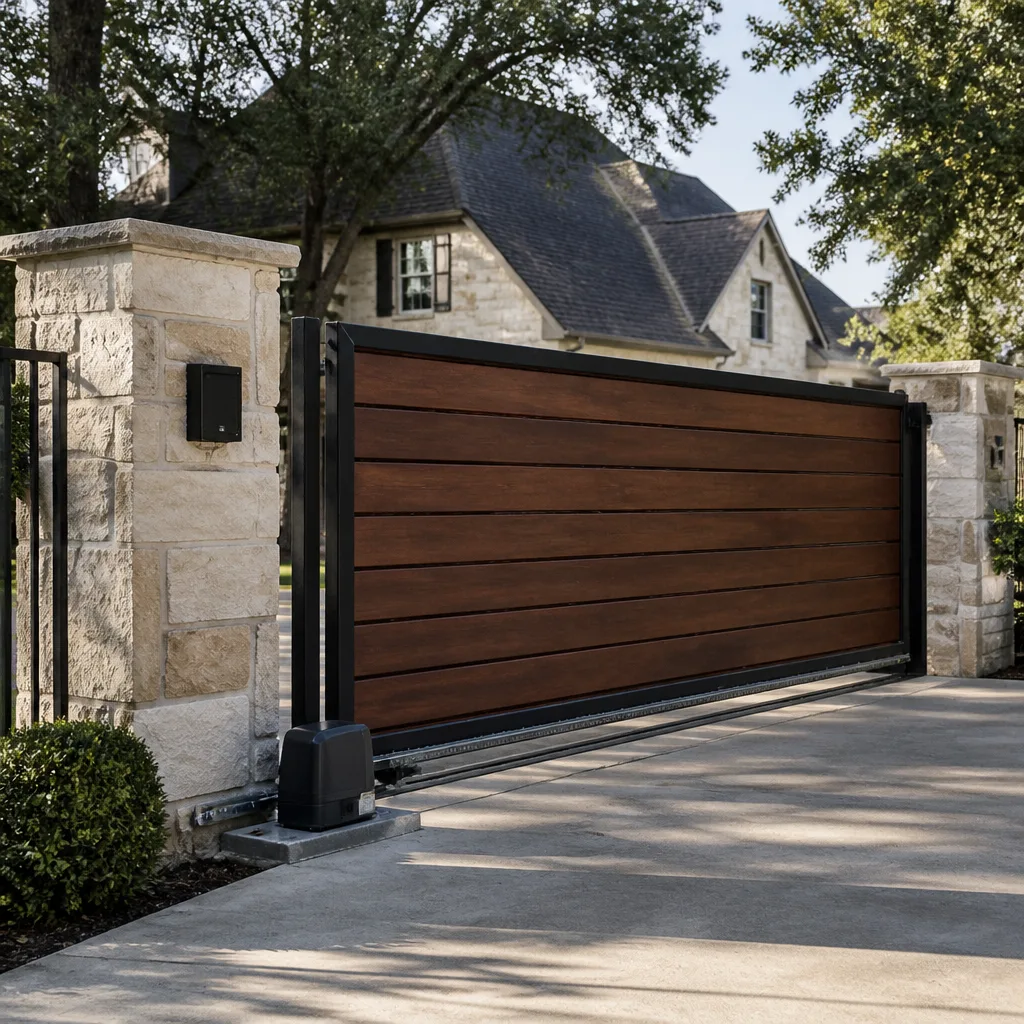 Sliding driveway gates
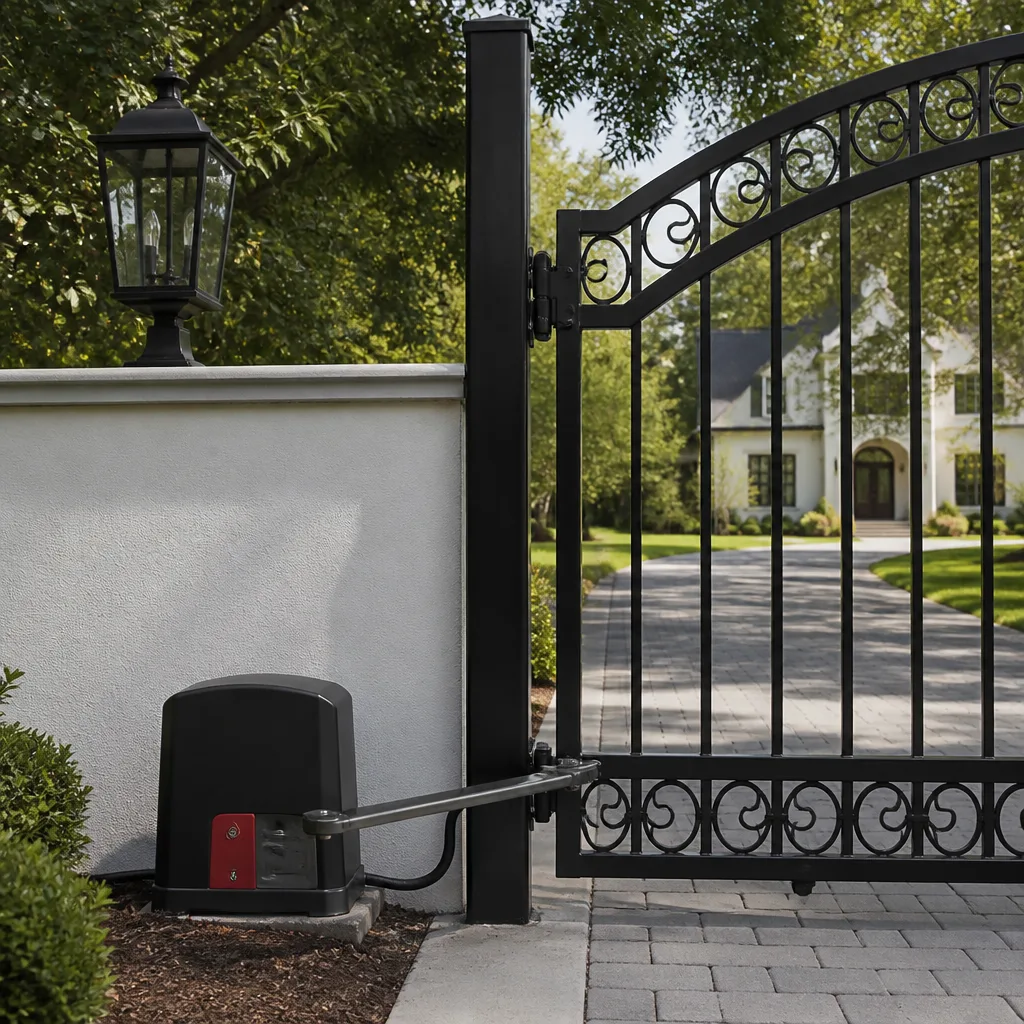 LiftMaster operators
Free on-site gate assessment - hinges, posts, and your LiftMaster or Nice gate operator checked before anything is quoted
The assessment is free and the quote is the invoice.
Get your free estimateDIY vs Professional Gate Access Control: What’s Safe to Do Yourself
Replacing a dead keypad battery yourself is smart. Reprogramming that same keypad’s logic board yourself is the single most common way Boulder City homeowners quietly void a manufacturer warranty they already paid for. The line between safe DIY and risky DIY on gate access control rarely follows skill level. It follows liability and warranty survival, and most people never see where that line falls until something fails and the coverage is gone. In this guide we’ll walk through which tasks you can genuinely own, which tasks carry hidden warranty and safety exposure, how major opener brands word their exclusions, and the exact questions to ask before you let anyone touch your system.
Quick Answer
You can safely handle battery changes, exterior cleaning, keypad code changes through the manufacturer’s app, and visual checks of your gate and photo-eye alignment. You should not attempt low-voltage wiring, loop detector calibration, control board replacement, or multi-user credential programming, because those tasks almost always void the opener’s manufacturer warranty and create real liability exposure if the gate later malfunctions. For anything beyond the basic list, a certified automation specialist is the right call.
Styles & brands we work with
- Wrought iron
- Wood & steel frame
- Farm & ranch
- Sliding driveway gates
- LiftMaster operators
Table of Contents
- The Two-Column Decision Framework
- What Major Opener Brands Actually Say in Their Warranty
- Why Loop Detector Calibration Needs Tools, Not Guesswork
- If a Badly Programmed Gate Injures Someone, Who Is Responsible in Nevada?
- Three Questions That Separate Certified Specialists From Generalists
- The DIY Tasks That Are Genuinely Safe
- What a Professional Access Control Job Actually Includes
- Boulder City Conditions That Change the Equation
The Two-Column Decision Framework
Sort every access control task into one of two columns before you pick up a screwdriver. The first column holds work where a mistake produces an inconvenience – a gate that won’t open, a keypad that needs re-entering, a battery that needs swapping. The second column holds work where a mistake produces a safety event or a voided warranty. In our experience across Boulder City, most homeowners are confident they can tell the difference. Most of them are wrong about where the line actually sits.
Column A – Safe for homeowners:
- Replacing batteries in keypads, remotes, and stand-alone receivers
- Cleaning keypad faces, photo-eye lenses, and gate hardware with a damp cloth
- Changing user PINs through the manufacturer’s smartphone app
- Visually confirming the gate swings or slides freely by hand (power off)
- Clearing debris from the gate’s travel path and photo-eye line of sight
Column B – Warranty or safety risk:
- Any low-voltage wiring, including re-terminating a control board, splicing a photo-eye lead, or adding a new peripheral
- Loop detector installation, calibration, or tuning
- Control board replacement or firmware updates outside the manufacturer’s published process
- Adding or removing users across a multi-credential system (fobs, cards, app-based access, telephone entry)
- Adjusting force limits, reversing sensitivity, or obstruction-sensing settings
- Anything involving 120V line power at the operator
The right-hand column isn’t about skill. A capable electrician with no gate automation training can land in Column B just as easily as a homeowner, because the risk isn’t getting the wires connected. It’s what the operator’s safety logic does when the wiring is connected wrong, and what the manufacturer’s warranty does when they learn it was touched. Boulder City properties with long driveways and heavy steel gates amplify both.
What Major Opener Brands Actually Say in Their Warranty
Every major gate operator brand excludes damage caused by unauthorized modification, and most of them use some version of the phrase “unauthorized wiring modification” or “modification not performed in accordance with published installation instructions.” That language is deliberately broad. It exists so the manufacturer can void coverage when a control board, photo-eye, or loop detector has been re-wired by anyone not trained on that specific product line. We’ve seen claims denied on Boulder City properties where the only thing the homeowner did was add a second keypad – a job that felt trivial but rewired the accessory circuit.
The pattern shows up across the brands we work with daily. LiftMaster’s limited warranty excludes damage from improper installation, modification, or service by anyone other than a trained technician. DoorKing’s commercial-grade residential units are explicit about voided coverage when field wiring deviates from their published diagrams. Viking Access Systems makes similar exclusions for unauthorized alterations to the control board or accessory loop. FAAC uses comparable language for its residential line. None of these brands are being difficult. They’re protecting themselves against the one failure mode they can’t control – a well-meaning homeowner making a single incorrect connection.
The warranty risk is invisible until you need it. A gate operator that was correctly installed and then quietly modified works fine for 18 months, then the control board fails. You call for warranty service. The technician opens the enclosure, sees non-factory wiring, and the claim is denied on the spot. In our experience that scenario is far more common on Boulder City gates than a failure caused by a manufacturing defect. The homeowner never knew they’d taken the coverage off the table.
Why Loop Detector Calibration Needs Tools, Not Guesswork
Loop detectors sit under the driveway and tell the gate not to close on a vehicle. They’re the single most misunderstood component in residential access control. A loop that’s set wrong either leaves the gate open when it shouldn’t be (a security problem) or closes on a car that’s halfway through the gate (a safety problem and, potentially, a liability problem). The detector’s sensitivity has to be tuned to the specific loop’s inductance, which depends on the loop’s dimension, the number of turns in the wire, and the soil conditions under it. There is no “factory default” that works across every driveway, and no app that can dial it in remotely.
Calibrating a loop properly means putting a meter on the detector, reading the actual inductance change when a vehicle sits over the loop, and setting the sensitivity threshold so it triggers reliably on a sedan and doesn’t false-trigger on a motorcycle. A Boulder City driveway with heavy sun exposure and moderate soil moisture shifts enough over the course of a year that a loop set “by feel” in March will misbehave by August. We’ve seen more false-trigger calls in summer than in any other season, and almost all of them trace back to a loop that was never measured in the first place.
What happens when a loop is set wrong?
- False hold: the gate stays open because the detector thinks a vehicle is still on the loop. Common with sensitivity set too high.
- False close: the gate starts closing on a vehicle that should be holding it open. Common with sensitivity set too low, and the worse of the two failures.
- Erratic behavior: the gate works on some vehicles and not others, or works in the morning and not in the afternoon. Almost always a calibration or ground-loop issue.
- No reverse: the gate doesn’t detect a vehicle at all because the loop is shorted or the detector has failed. Requires a meter and an ohmmeter check of the loop itself.
If a Badly Programmed Gate Injures Someone, Who Is Responsible in Nevada?
In Nevada, the homeowner is generally the responsible party when a gate on their property injures someone – a visitor, a delivery driver, a family member, or a child. Nevada premises liability law places the duty of reasonable care on the property owner. If the gate’s access control was modified in a way that caused a safety feature to fail, the homeowner’s exposure goes up, not down. The “I didn’t know it was wrong” defense does not survive contact with an insurance adjuster or a plaintiff’s attorney, and it does not usually survive contact with the homeowner’s own insurance carrier either.
This matters most for gates on driveways that face public streets, which is common in Boulder City. A gate that closes on a vehicle or a person because a loop detector was improperly tuned can become an insurance claim against the homeowner’s policy. If the homeowner did the modification themselves, the carrier may also decline coverage for that specific act on the grounds of unpermitted or non-compliant modification. In our experience, this is the piece homeowners never consider until it’s already a problem.
Professional installation carries exposure of its own, but it comes with a licensed contractor and a paper trail. That paper trail is exactly what an insurance carrier asks for when reviewing a claim. It’s also why we insist on documenting every access control job we finish, from loop calibration readings to credential programming logs.
Three Questions That Separate Certified Specialists From Generalists
Homeowners hear “certified technician” from every gate company they call, and the phrase has almost no fixed meaning. These three questions sort it out quickly. Ask them before you book the appointment, and listen for whether the answer contains specifics or deflections.
- “Which specific brands are you factory-trained on, and can you name the last three control boards you diagnosed this year?” A specialist will name specific brands from the list of nine we service – LiftMaster, FAAC, BFT, Linear, Viking, Ghost Controls, DoorKing, Elite, and Mighty Mule – and describe recent diagnostics. A generalist will say something like “we work on all brands.”
- “Do you have loop detector diagnostic tools on the truck, and will you show me the induction reading when you finish?” Calibration without a reading is guesswork. A specialist measures, records, and can show you the reading. A generalist tunes by feel and moves on.
- “What does your written guarantee actually cover, and for how long?” We back every job with the 90-Day Done Right Promise – a written guarantee that if something isn’t right, we come back and make it right. A generalist will offer a verbal “call us if there’s a problem.” That is not a guarantee.
For a broader look at what a proper gate service call should include, see our Gate Repair in Winchester page, which walks through the diagnostic process we follow on every job.
The DIY Tasks That Are Genuinely Safe
There’s a real list, and it’s longer than you might expect. Homeowners who stay inside this list save money and don’t touch warranty coverage. The key is to be honest about when a task starts to bleed into the next category.
- Battery replacement. Keypads, remotes, and stand-alone receivers all take standard batteries. Follow the manufacturer’s instructions and don’t force a housing that resists.
- Exterior cleaning. Damp cloth on keypad faces and photo-eye lenses. Skip pressure washers on the operator housing – they force water past gaskets that aren’t rated for it.
- PIN changes through the manufacturer’s app. LiftMaster’s MyQ and most modern systems allow user-code changes from a phone. This is exactly what the feature was designed for.
- Visual inspection of the photo-eyes. Confirm the alignment indicator LED on each side, and clear any spiderwebs, leaves, or gravel that block the beam. A pair of photo-eyes knocked out of alignment by a weed trimmer is one of the most common gate faults in Boulder City.
- Manual gate operation. With power off and the operator disengaged, confirm the gate swings or slides by hand without binding. If it drags, that’s a mechanical issue worth a call.
- Snowbird seasonal checks. If your Boulder City home sits empty part of the year, walk the perimeter on return: check keypad lights, test the gate by remote, and look for evidence of rodent damage to the low-voltage wire. This isn’t a repair, but it catches a problem before it becomes one.
For an honest look at a proper installation scope, see our Gate Installation in Winchester page.
What a Professional Access Control Job Actually Includes
A properly scoped access control visit is not just “fix the keypad.” In our experience it’s a diagnostic sequence that finishes the job correctly the first time. Here’s what it should include:
- Full site survey of the operator and gate geometry. Before touching anything, we confirm the operator’s force settings match the actual weight and swing of the gate. A 15-foot steel driveway gate behaves very differently from a 10-foot aluminum one.
- Multi-meter check of every low-voltage circuit. Photo-eyes, keypads, loop detectors, accessory outputs. If the wiring was modified previously, this is where we find it.
- Loop detector calibration with a meter. Inductance reading, sensitivity setting, and a written record of the final values.
- Control board verification against the manufacturer’s published wiring diagram. Any deviation gets corrected, and any component that’s been damaged by previous modification is replaced.
- Credential programming, documented. Every fob, card, and app-based user is logged. If a credential needs to be revoked, the record is already there.
- Safety reversal test at multiple points on the travel path. Force limits set, photo-eye test at both approach and departure angles, loop test with an actual vehicle.
- Written handoff. What was done, what settings were used, and the guarantee that applies – our Keystone Standard, backed by the 90-Day Done Right Promise.
For the operator itself, our Gate Motor & Opener in Winchester page covers the same diagnostic standard applied to the automation hardware.
Boulder City Conditions That Change the Equation
Access control on a Boulder City gate doesn’t behave the same way it does in a coastal climate or a colder market, and the differences matter for the DIY conversation. The heat is the headline. Boulder City regularly runs over 100 degrees in summer, and the operator enclosure can sit ten degrees hotter than ambient. Batteries in outdoor keypads degrade faster here than the manufacturer’s quoted life. That’s a maintenance item, not a repair, but it means a keypad that lasted six years somewhere else might only last three in Boulder City.
Windblown dust is the second factor. Photo-eye lenses that stay clean in most markets fog up in a matter of weeks during the spring, especially on properties with gravel driveways or near the open desert edges of Boulder City. That’s within the safe DIY list – clean them, and clean them often. Dust is also hard on the loop detector’s ground-level connections, and a loop that reads perfectly on a cool morning can shift once the pavement reaches 140 degrees. Boulder City properties near the historic district and the neighborhoods along the edges of town, where neighbors share longer driveways and heavier gates, tend to need the loop calibration done more carefully than a lighter suburban gate would. Our Ironworks Gate Co. Boulder City home page has more about how we approach the specific conditions of this town.
The third factor is the property character. Many Boulder City homes were built with heavier gates than you’d find in newer subdivisions, and heavier gates put more strain on the operator, the loops, and the wiring. A homeowner attempting a wiring change on a heavy gate is more likely to see the downstream failure than a homeowner working on something light. That doesn’t make the change illegal or wrong. It makes the margin smaller.
Common Mistakes to Avoid
- Assuming the app is the whole system. The manufacturer’s app is designed to change user PINs, not control boards or calibration. Using it to try to “fix” a technical fault is one of the most common ways Boulder City homeowners create a warranty issue.
- Using wire nuts on an outdoor operator. Wire nuts are not waterproof and pull apart under the heat-cycling that Boulder City enclosures see. The factory uses sealed connectors for a reason.
- Splicing a photo-eye lead. Photo-eye leads are calibrated for a specific resistance. A splice that looks sound to a homeowner often fails the manufacturer’s continuity spec, and voids the coverage on the photo-eye.
- “Tuning” the loop detector until the gate stops misbehaving. When the gate starts closing on vehicles, homeowners often dial sensitivity up until the problem goes away. That doesn’t fix the loop; it usually moves the failure from a false-close to a false-hold, or disables the safety feature entirely.
- Sharing one code across the whole family and the contractor. Boulder City gates aren’t immune to credential leaks. If a fob goes missing and every entry uses the same code, there’s no way to revoke it selectively.
- Ignoring a gate that drags by hand. A gate that binds in the track or hinge is loading the operator beyond its rated capacity. Running the operator to failure often takes the control board with it, and that’s a warranty item the homeowner loses on if the drag was obvious and ignored.
- Trusting a “certified” badge with no follow-up. Every company claims certification. The three vetting questions above separate the ones who can back it up.
See the difference
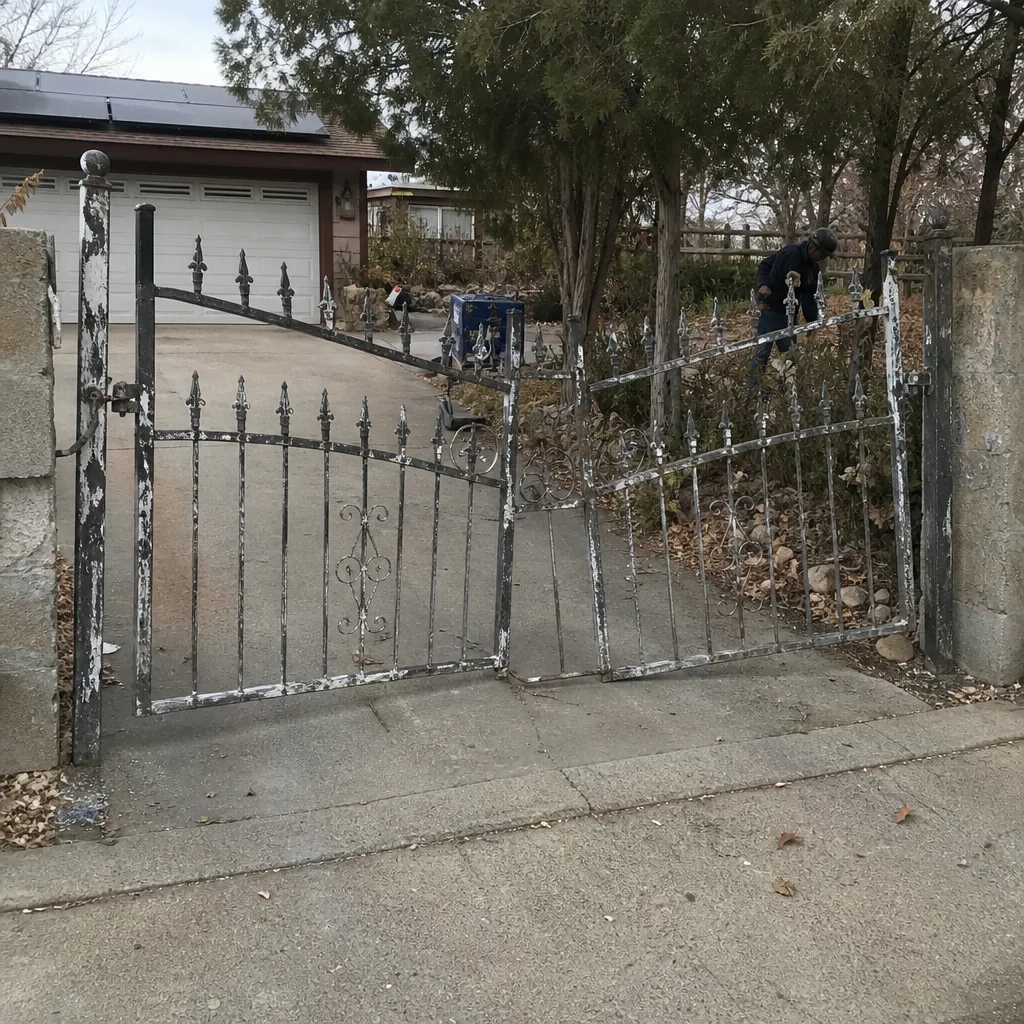 Before
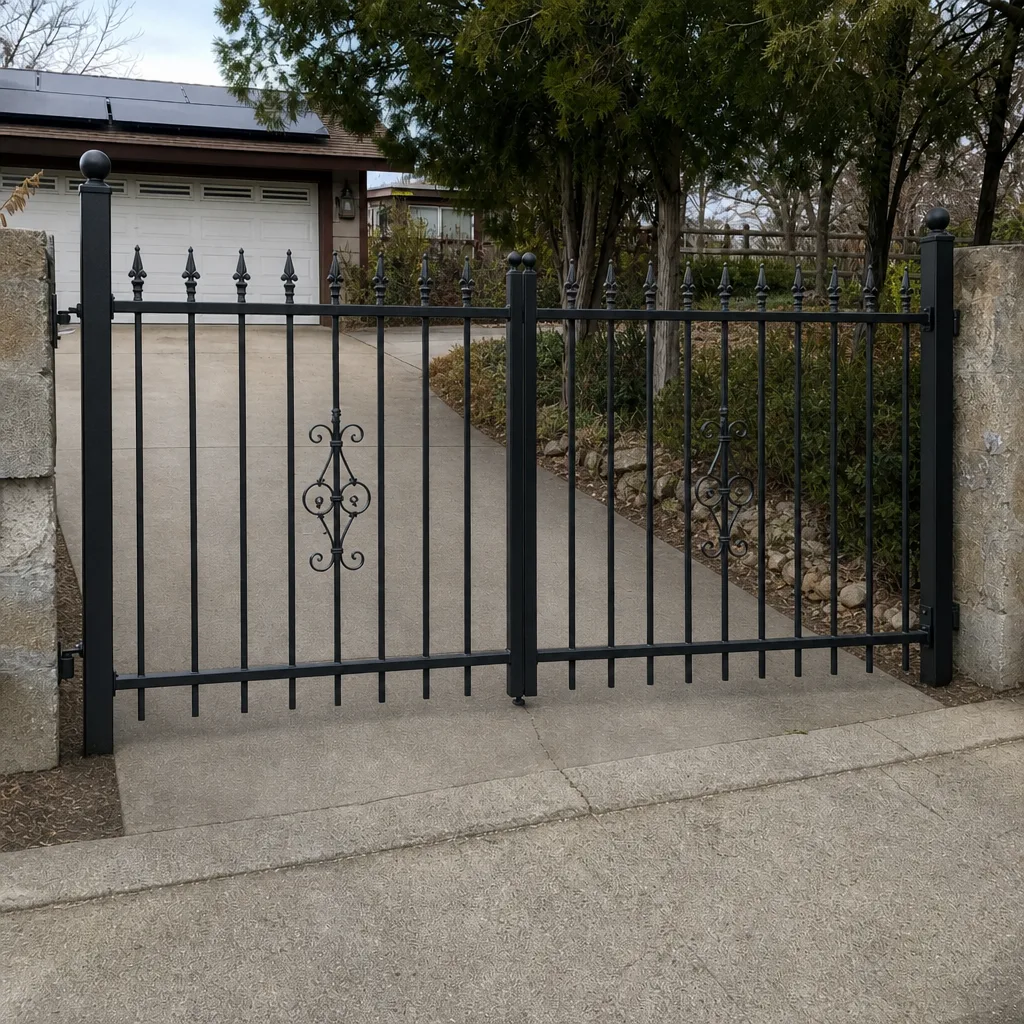 After
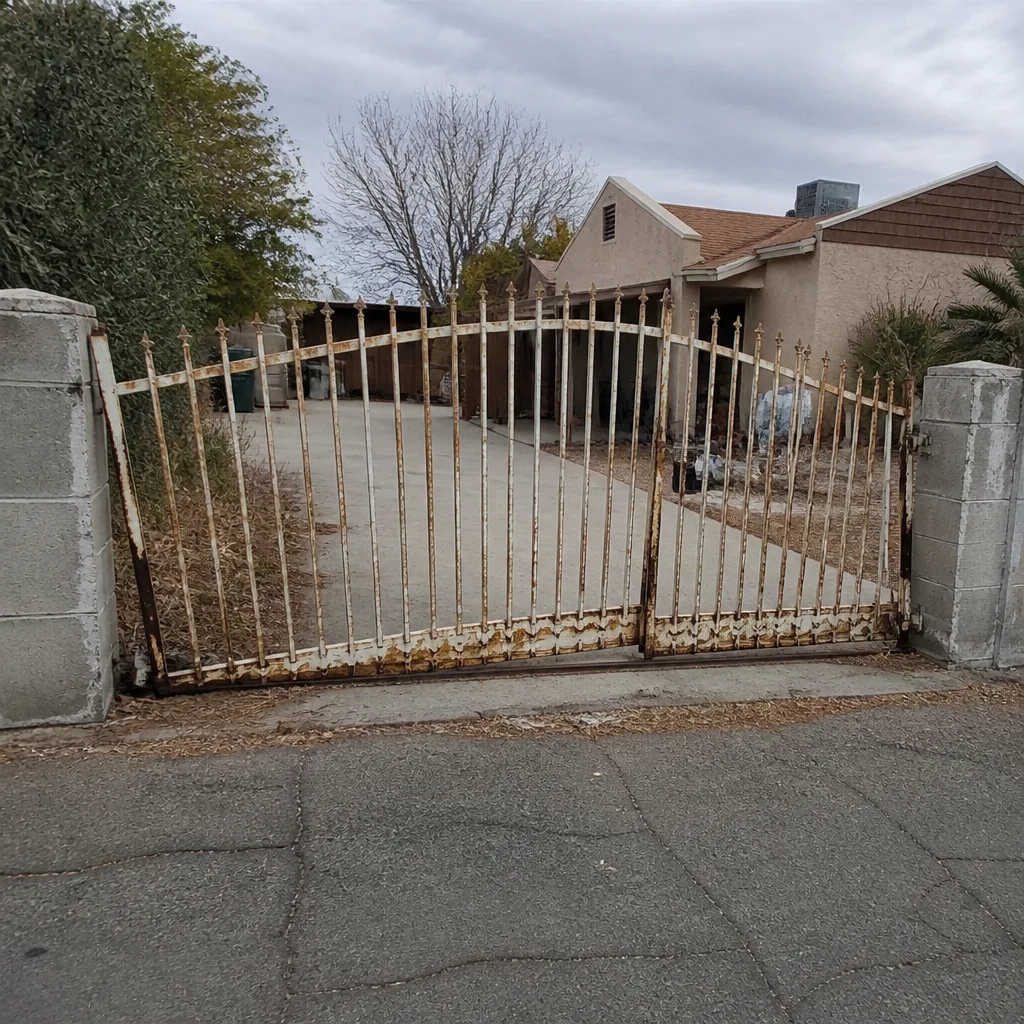 Before
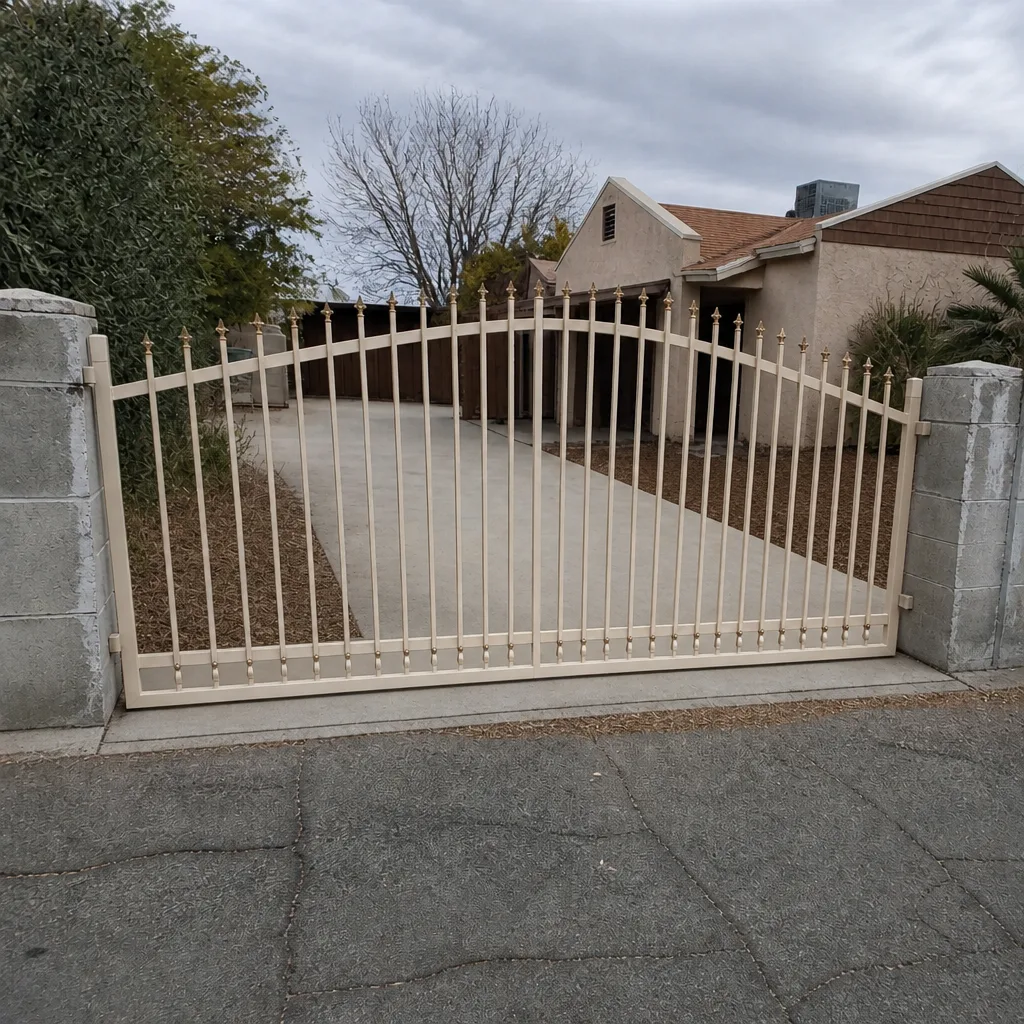 After
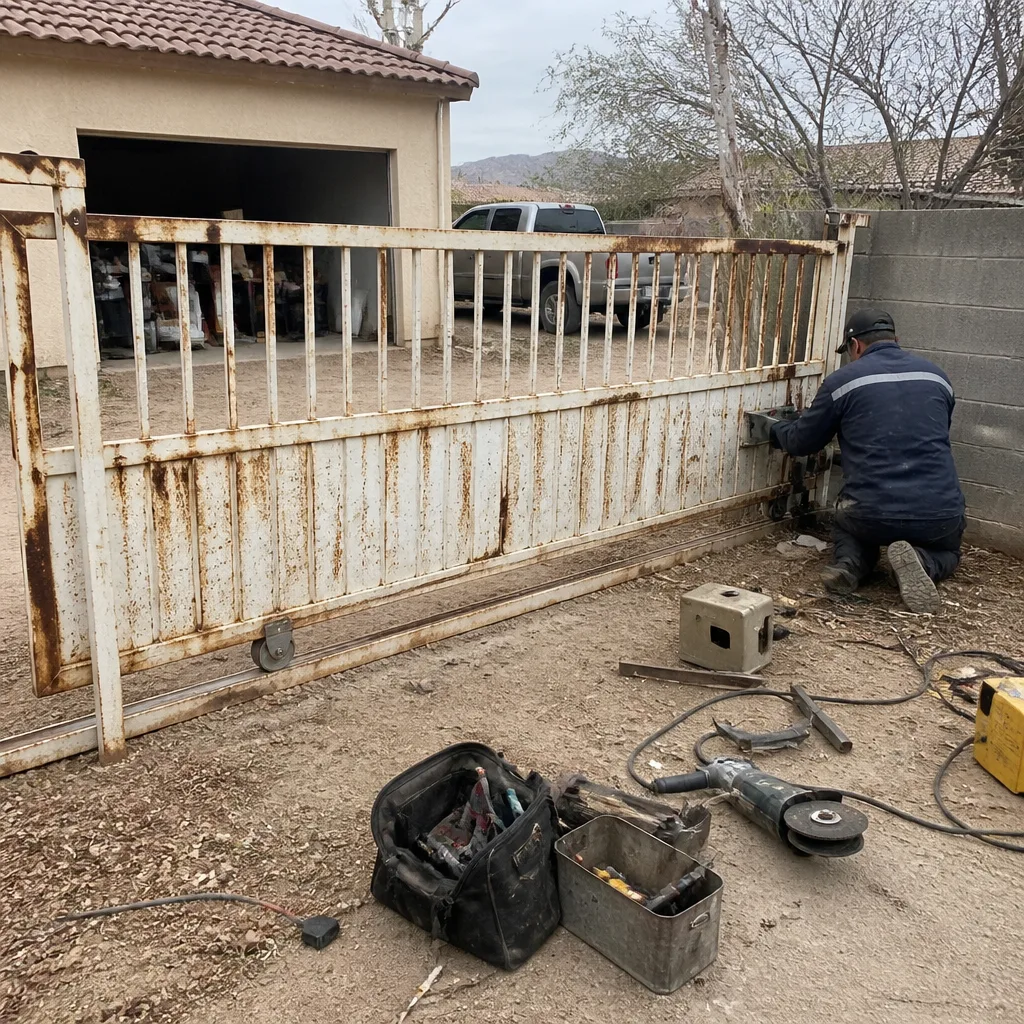 Before
 After
When to Call a Professional
Call a professional the moment your issue crosses into wiring, loop calibration, control board, force-limit adjustment, or multi-user credential management. Also call if the gate drags by hand, if the operator reverses unpredictably, if a photo-eye won’t clear, or if any low-voltage circuit shows signs of previous modification. Those scenarios are out of the safe DIY zone. If you’re unsure whether you’ve crossed the line, call and describe it – a quick conversation is free, and it’s cheaper than a voided warranty. Ironworks Gate Co. Boulder City offers free estimates in Boulder City – call (888) 276-7609. We’re trained on nine leading opener brands and most access control jobs finish in a single visit, with the price settled before we touch a bolt.
Frequently Asked Questions
Yes. Battery replacement in a standard keypad, remote, or receiver is explicitly covered under the safe DIY list and does not void the manufacturer’s warranty on LiftMaster, DoorKing, FAAC, or BFT products as long as you’re replacing the battery and nothing else. Follow the manufacturer’s instructions in the owner’s manual, and don’t force a housing that resists – if the housing won’t open cleanly, stop and call. Call (888) 276-7609 for an exact quote on a technician visit – estimates are free.
Often yes. Adding a keypad requires low-voltage wiring into the control board or an accessory terminal, and most manufacturers exclude “unauthorized wiring modification” from coverage. Even a simple keypad addition can void the board warranty if it’s wired outside the manufacturer’s published diagram. A trained technician performing the same addition keeps coverage intact because the work is documented and follows the spec. Call (888) 276-7609 – we’ll tell you honestly whether your planned addition is covered.
Typical residential access control repair in Boulder City runs in the $180-to-$420 range for a single-visit fix, depending on what’s involved – loop calibration, keypad replacement, or control board diagnostic. Multi-credential systems and commercial-grade telephone entry run higher. The exact price is quoted and agreed before we start work, and our $50 Off Any Repair Over $250 offer applies to most access control jobs. Call (888) 276-7609 for an exact quote – estimates are free.
A photo-eye is a beam across the gate opening that reverses the operator if the beam is broken by a person or vehicle. A loop detector is buried in the driveway and detects the metal mass of a vehicle sitting over it, which prevents the gate from closing on a car. Both are safety devices, both need testing, and both require calibration – but only the photo-eye is on the homeowner’s safe-to-clean list.
For safety and warranty issues on existing systems, most days yes – we run live phone coverage 24 hours a day, 7 days a week, and a technician can usually reach a Boulder City property same day for a repair call. Loop calibration and credential programming often need one visit, sometimes two depending on parts availability. Call (888) 276-7609 and we’ll give you an honest window before you commit.
Yes, and this is one of the more common situations we see in Boulder City. Previous modifications are the single biggest source of warranty issues on aging gates. We survey the wiring, correct anything that deviates from the manufacturer’s diagram, and document what we find so any future warranty work is defensible. Call (888) 276-7609 – a free second opinion on any existing estimate is one of our standing offers.
The Bottom Line
The DIY versus professional line on gate access control is set by liability and warranty, not confidence. You can safely own batteries, cleaning, PIN changes through the app, and photo-eye alignment checks. Everything beyond that – low-voltage wiring, loop detector calibration, control board work, force-limit adjustments, credential management – puts your manufacturer warranty at risk and creates exposure if a gate later malfunctions. In Nevada, that exposure lands on the homeowner. The right move on any task past the safe list is a certified specialist who can name their brands, show you loop readings, and put their guarantee in writing. That’s the standard we hold every Ironworks Gate Co. Boulder City job to, and it’s what separates a gate that works for 20 more years from one that quietly fails when you need it most.
Written by the team at Ironworks Gate Co. Boulder City.
If you’ve read this far and you’re not sure which column your job falls into, the answer is easy: call us at (888) 276-7609. We answer the phone 24 hours a day, 7 days a week, and a free estimate in Boulder City takes less time than reading the warranty fine print.