
Last updated November 17, 2026
 Wrought iron
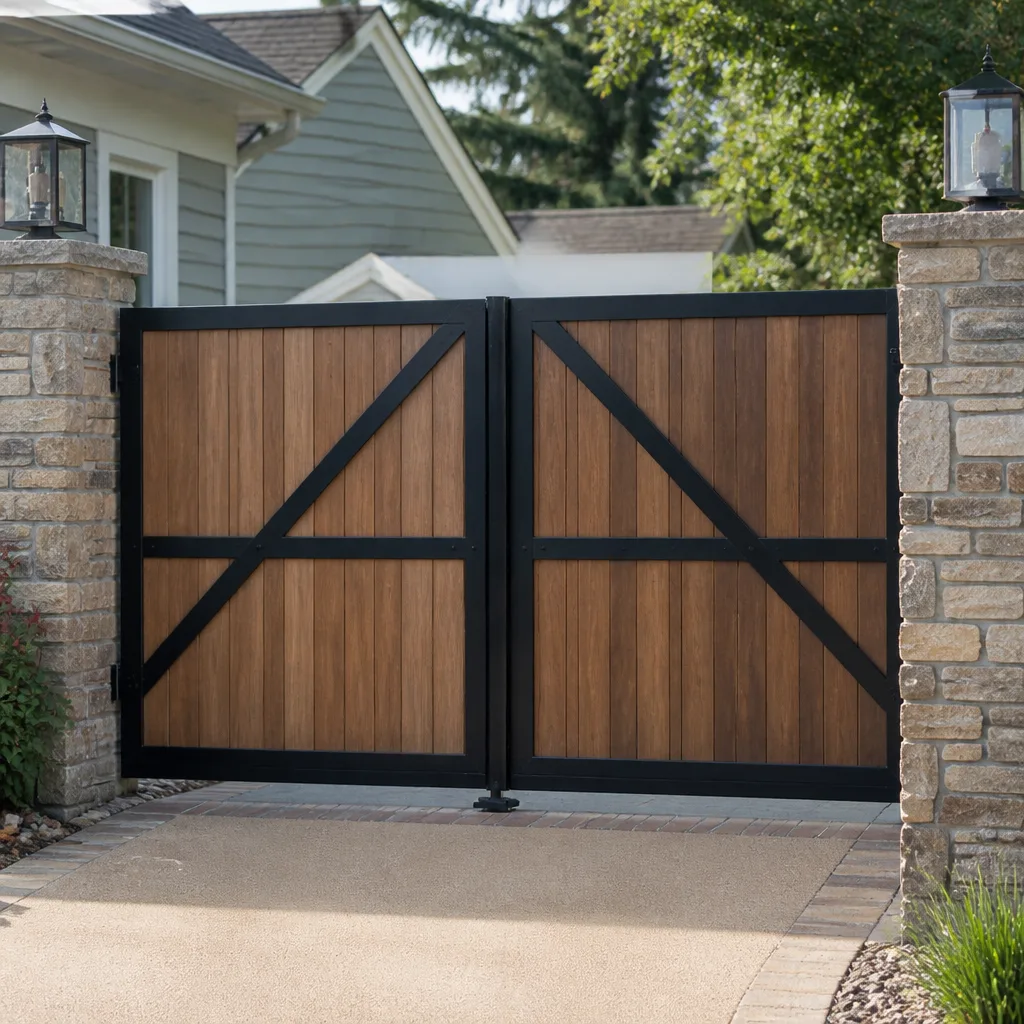 Wood & steel frame
 Farm & ranch
 Sliding driveway gates
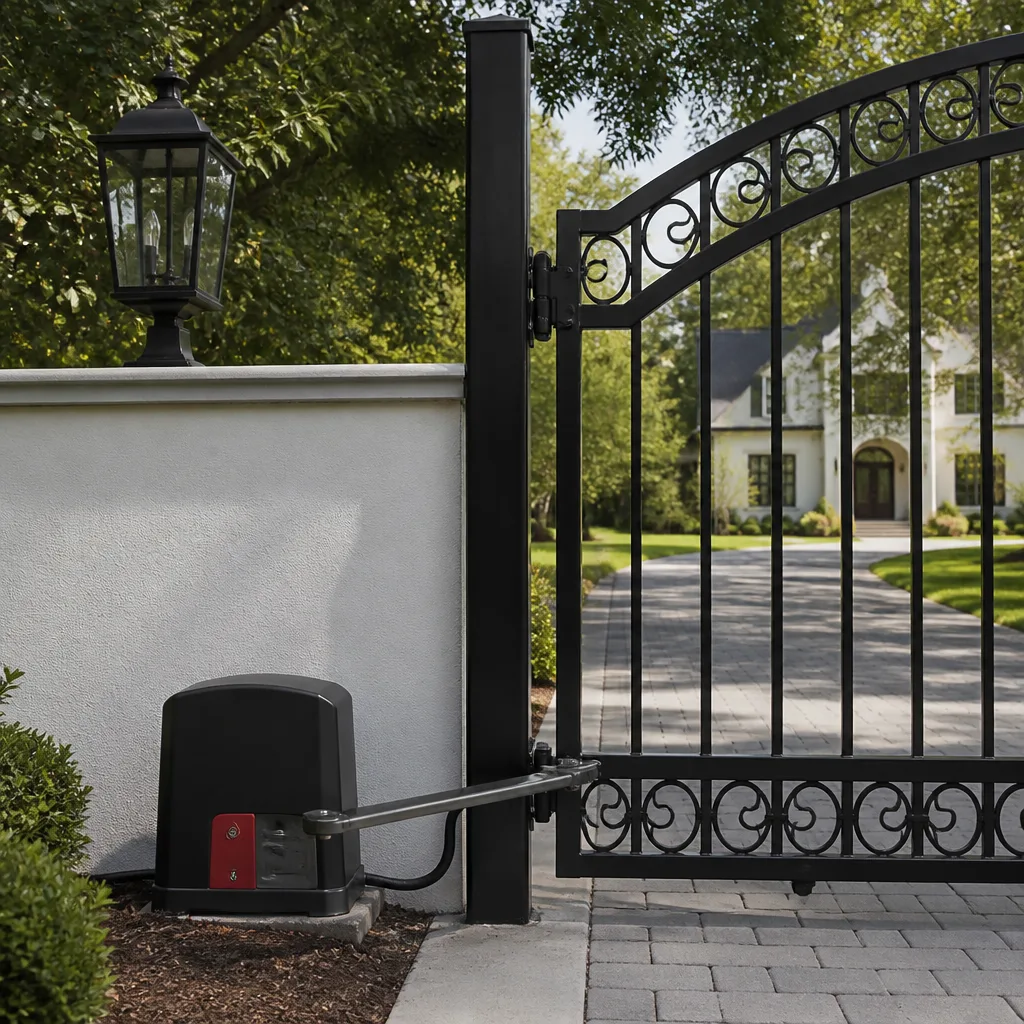 LiftMaster operators
Free on-site gate assessment - hinges, posts, and your LiftMaster or Nice gate operator checked before anything is quoted
The assessment is free and the quote is the invoice.
Get your free estimateGate Motor & Opener Maintenance Schedule: What to Do and When
Here’s the problem with almost every gate opener on a driveway in Boulder City: the chain, the hinge pins, and the limit switch wear on three completely different cycles, yet they get serviced on the same schedule. Someone sprays the chain once a year, wipes their hands, and calls it maintenance. That means the chain is usually over-serviced, the hinge pins are badly under-serviced, and the limit switch, the component that tells the motor when to stop, hasn’t been touched since the gate was hung. This guide lays out a component-by-component calendar built around actual wear cycles, so you know what to check monthly, quarterly, annually, and at the five-year mark, and why each interval matters. We’ll cover Boulder City’s desert heat and monsoon dust, lubrication truths, limit switch drift, and the honest dividing line between what you can do yourself and what belongs on a professional’s list.
Quick Answer
A gate opener maintenance schedule works best when it’s split by component, not by season. Check the safety edges, photo-eyes, and chain tension monthly; inspect hinges, rollers, and the manual release quarterly; have the limit switch and force sensitivity calibrated, the motor housing cleared of dust, and the battery backed up checked annually; and plan for a full mechanical service (bushings, sprockets, gearbox inspection, control board review) at the five-year mark. In Boulder City, add a pre-summer heat inspection in May and a post-monsoon dust and debris check in September, because the Mojave climate stresses automation in ways a coastal schedule never anticipates.
Styles & brands we work with
- Wrought iron
- Wood & steel frame
- Farm & ranch
- Sliding driveway gates
- LiftMaster operators
Table of Contents
- Why a Component-Based Schedule Beats a Generic One
- What to Check Monthly
- The Quarterly Inspection
- The Annual Professional Service
- The Five-Year Mark
- Lubrication: Which Product Goes Where
- Limit Switch and Sensitivity Calibration
- Boulder City Climate Adjustments
- What You Can Do vs. What a Pro Should Do
Why a Component-Based Schedule Beats a Generic One
The parts inside a gate opener have genuinely different lifespans. A steel roller chain under normal residential use in Boulder City might run several years before it needs replacement, but it needs tension checks monthly because stretch accumulates slowly and then fails suddenly. Hinge pins on a heavy estate gate take the load of every swing or slide, and they wear at the pin-to-bushing interface, which means by the time they squeal audibly they’ve already been wearing for months. The limit switch is electronic-mechanical: it drifts as set screws vibrate loose and metal contacts oxidize, usually long before it stops the gate entirely. Treat all three the same and you’ll either waste effort or miss the component that was actually about to fail.
In our experience across Boulder City, the gate that lasts 15 years isn’t the one with the most expensive motor. It’s the one where the homeowner learned to check three things monthly and let a professional handle the rest annually. The motor is almost never the first thing to fail. The chain, the hinges, and the calibration are.
Whether your opener is a FAAC, a Linear, or a Viking, the wear principles are the same. The intervals shift slightly with gate weight and cycle count, but the calendar structure holds.
What to Check Monthly: Safety Components and Tension
Monthly checks take about ten minutes and cover the components that either fail silently or fail dangerously.
- Test the safety edges and photo-eyes. With the gate in motion, wave a hand through the photo-eye beam. The gate should reverse immediately. If it doesn’t, stop using the opener until it’s fixed. This is the single most important monthly check.
- Check chain tension by hand. There should be a small amount of slack (roughly half an inch of deflection mid-span), not a tight wire and not a sagging loop. Over-tight chains load the sprocket bearing; over-loose chains slap and jump teeth.
- Look at the track or cantilever path. Debris, gravel, and desert grit collect fast. Clear it.
- Listen. Run the gate once and pay attention. A new grind, squeal, or hesitation is worth investigating before it becomes a breakdown.
- Check the manual release. It should move freely. A release that’s seized defeats its entire purpose in a power outage.
In Boulder City, dust from the open desert settles into the track and photo-eye lenses faster than in a greener climate. A quick wipe of the photo-eye lenses should be part of the monthly pass, not an afterthought. If your gate is a Mighty Mule or Ghost Controls residential model, the manual release check is especially worth doing monthly, because those units see more homeowner-level use.
The Quarterly Inspection: Hinges, Rollers, and Hardware
Quarterly is where the hinge pins and rollers get their attention. These are the load-bearing wear parts, and they degrade slowly enough that a quarterly look catches them before they cause a bind.
- Hinge pins and bushings: Check for play by rocking the gate manually. Any wobble means the bushing is worn. Lubricate with a heavy grease, not a spray.
- Rollers (sliding gates): Spin each roller by hand. It should turn freely. A roller that drags or wobbles is loading the motor unnecessarily and will burn the gearbox over time.
- Weld and frame inspection: Look at the mounting brackets and the operator arm for cracks or loosening bolts. Vibration loosens fasteners; a loose mounting plate throws off the geometry the motor was tuned for.
- Battery backup test (if equipped): Simulate a power loss and confirm the gate completes a cycle on battery. A backup that fails in a blackout is a security hole, not a backup.
This is also the right time to check the gate’s physical alignment. If the gate has dropped slightly on its hinges, the opener is now fighting gravity on every cycle. That silent friction is one of the most common causes of premature motor failure we see in Boulder City. When alignment drifts, the fix is a hinge adjustment, not a new opener, which is why catching it quarterly saves real money. For a full repair scope, our Gate Repair in Winchester page walks through what a proper alignment and hardware service includes.
The Annual Professional Service: Calibration and Deep Check
Once a year, the work shifts from inspection to calibration, and that’s where a professional visit earns its cost. The annual service should include:
- Cleaning and inspecting the motor housing and control board for dust, insects, and moisture intrusion.
- Recalibrating the limit switches so the gate stops at the exact open and closed positions.
- Testing and adjusting the force sensitivity (the crush-force setting) against the current gate weight and friction.
- Checking the gearbox and operator arm for wear, backlash, and lubrication.
- Verifying battery backup capacity and control board fault logs.
- Testing the full safety chain: photo-eyes, edges, and any loop detectors.
Force sensitivity recalibration matters more than people realize. The opener’s force limit is a safety setting, and it drifts as hinges wear and as the gate’s friction changes. A setting that was correct two years ago can either be dangerously high (a gate that won’t reverse on an obstruction) or too low (a gate that stalls on a hot day and reverses for no apparent reason). Annual recalibration keeps it where it belongs. This is also the moment to hand off brand-specific tuning to someone trained on your unit’s platform. Our Gate Motor & Opener in Winchester page covers what brand-specific calibration includes.
The Five-Year Mark: What Changes After Five Years
Around the five-year mark, the wear parts that were “fine” start to become the failure points. This is when a full mechanical service moves from optional to smart, because the cost of replacing a gearbox or control board on short notice is far higher than the cost of the inspection that catches it early.
- Gearbox inspection: Listen for growling or whining. Grease can break down over five years of desert heat, and a gearbox that runs dry will fail.
- Sprocket and chain replacement planning: A worn sprocket chews through a new chain in months. If either shows wear, plan on replacing the pair.
- Bushings: Hinge and roller bushings at five years are typically near end of life on a heavily used gate.
- Control board review: Look at fault history for early signs of failing capacitors or relay wear before a total board failure strands the gate open.
We regularly see Boulder City homeowners hit year five with a gate that suddenly “won’t close all the way” or “reverses on its own,” and it almost always traces back to a wear part that was on its way out for months. The five-year service catches that before it strands the gate.
Lubrication: Which Product Goes Where
This is where well-meaning maintenance does real damage. Different components need different lubricants, and using the wrong one accelerates wear instead of preventing it.
- Chains: Use a proper chain lubricant or a light machine oil that penetrates the links and stays put. Do not use WD-40 as a chain lubricant. It’s a solvent and light oil that flashes off and leaves the chain drier than before; used repeatedly, it strips the factory lubricant from the pins and accelerates the stretch you’re trying to prevent. A dry PTFE or chain-specific lube is the right choice.
- Hinge pins and bushings: Heavy chassis grease or a lithium grease. These are high-load, low-speed pivots and need a film that resists being squeezed out.
- Rollers (sliding gates): Light grease on the bearing, and keep the track itself clean and dry.
- Gearbox: Manufacturer-specified gear oil only, and usually only at the service interval. Don’t top off with the wrong weight.
- Limit switch set screws and electrical contacts: No oil. Keep them clean and dry. Lubricant here attracts dust that gums up the mechanism.
The single most common lubrication mistake in Boulder City is WD-40 on the chain. Dust sticks to it, the chain gets gritty, and the wear accelerates. The second most common is over-greasing a hinge until grit packs into the grease and turns it into grinding paste. Lubricate the right parts with the right products, and leave the rest alone.
Limit Switch and Sensitivity Calibration
The limit switch tells the opener when to stop, and the force sensitivity setting tells it how hard to push before it gives up and reverses. Both drift over time, and both fail in ways that cause different symptoms.
What limit switch drift looks like
- The gate creeps a few inches past the closed position, or stops short of fully open.
- The gate reverses on its own at the top of a cycle.
- A grinding sound at the end of travel where the motor is still trying to push past the limit.
- Intermittent operation where the gate opens fully but won’t close, or vice versa.
Limit switches drift because set screws vibrate loose and metal contacts oxidize. It’s not a failure so much as a gradual misalignment. The gate “works” for months while the travel limit creeps, then one day it doesn’t stop where it used to. Left uncorrected, the motor pushes against the end stop and either trips a fault or damages the mechanism.
Why force sensitivity drifts
The force setting is tuned to the weight and friction of your specific gate on the day it was installed. As hinges wear, that friction changes. If the setting was already near the top of its range, the gate may one day refuse to complete a cycle because the unit now reads normal friction as an obstruction. On the other side, a setting tuned too high means the gate won’t reverse when it should hit an obstacle, a genuine crush hazard. This is a calibration a professional should handle: it’s a matter of safety, not preference, and getting it wrong defeats the safety system that protects people and property. BFT and FAAC units in particular have precise force-limit procedures that need to be followed to spec, and that’s work for a trained technician, not a DIY calibration.
Boulder City Climate Adjustments: Heat and Monsoon Dust
A maintenance calendar built for a temperate climate misses the two forces that hit gate automation hardest in Boulder City: summer heat and monsoon dust.
Before summer heat peaks (May)
- Inspect the control board and wiring: Heat degrades capacitors and hardens insulation. A pre-summer electrical once-over catches the weaknesses that show up at 110 degrees.
- Check that the motor housing vents are clear. A control box packed with dust can’t shed heat, and the board cooks.
- Verify battery backup capacity: Heat shortens battery life. A backup that tested fine in spring may not carry a cycle by August.
- Recheck the force sensitivity. Heat expands metal and increases friction; a gate that’s marginal in spring may stall in July.
After monsoon season (September)
- Clear the track and photo-eyes. Monsoon winds drive fine dust into every crevice. Clean the safety lenses and the travel path.
- Inspect for water intrusion. Check the control board and any low-mounted connections for moisture.
- Re-inspect fasteners and mounts. The temperature swings from mid-summer to fall loosen bolts and shift alignment.
In our experience, Boulder City’s gates age roughly the equivalent of a temperate climate’s two years for every year of sun exposure. A calendar built around that reality is what separates a seven-year opener from a fifteen-year one. For context on how a full gate service addresses the climate angle, our Gate Installation in Winchester page explains how the right installation setup reduces maintenance burden over the long haul.
What You Can Do vs. What a Pro Should Do
Homeowners ask us where the line is, and the honest answer comes down to safety and tooling.
Homeowner-safe (with care)
- Monthly safety-edge and photo-eye functional tests.
- Visual inspection of the track, chain, and hinges.
- Cleaning dust and debris from the track, photo-eye lenses, and housing vents.
- Manual release check.
- Listening for new noises.
Professional territory
- Force sensitivity and limit switch calibration (safety-critical).
- Chain and sprocket replacement (load geometry and tension spec).
- Hinge, bushing, and alignment work (welding and heavy load).
- Control board, wiring, and electrical work.
- Gearbox repair.
The reason to draw this line honestly is that a lot of “DIY calibration” work ends in a gate that operates with a defeated safety system, which is far worse than an un-calibrated one. The reverse of that, though, is true too: the more of the small, safe checks you do monthly, the less the professional annual visit has to fix. Our Ironworks Gate Co. Boulder City home page lays out how our service scope covers the parts that need a trained hand.
Common Mistakes to Avoid
- Spraying WD-40 on the chain. It strips the factory lubricant, attracts desert dust, and accelerates wear. Use chain-specific lubricant.
- Servicing everything on one schedule. The chain, hinges, and limit switch wear on totally different cycles. A single annual pass misses the quarterly hinge wear and the monthly safety-edge check.
- Ignoring the safety edges until they fail. A photo-eye that “usually works” is a liability. Test it monthly, and don’t run the gate until a failed one is fixed.
- Assuming loud means “needs a new opener.” Noise almost always points to a hinge, roller, or alignment issue, not the motor. Diagnose before replacing.
- Skipping the pre-summer inspection. Boulder City heat is what turns marginal components into failures. The May check is the cheapest insurance you’ll buy all year.
- Letting the manual release seize. When the power’s out, a release that won’t move strands your gate and your car. Check it monthly.
- Guessing at force calibration. Over-tightening the force limit defeats the crush-protection system. Leave calibration to a technician trained on your brand.
See the difference
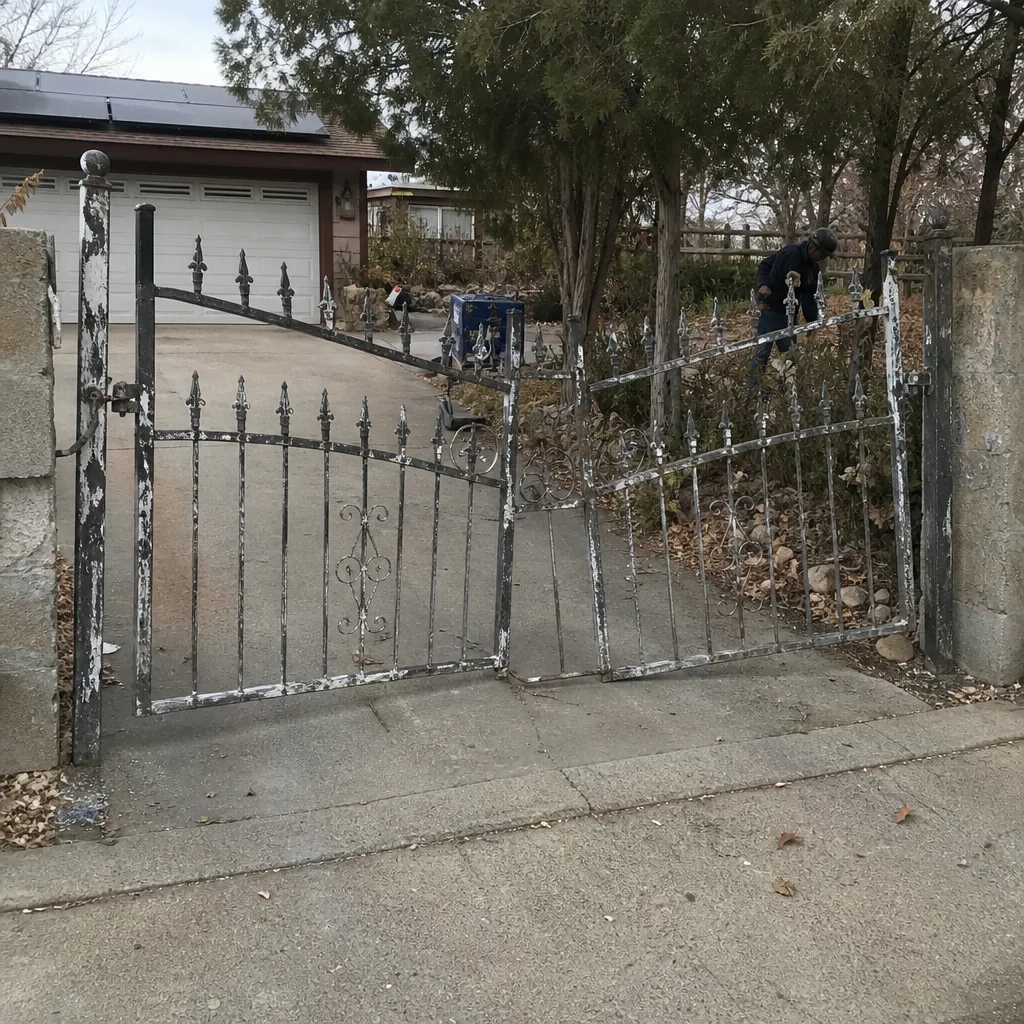 Before
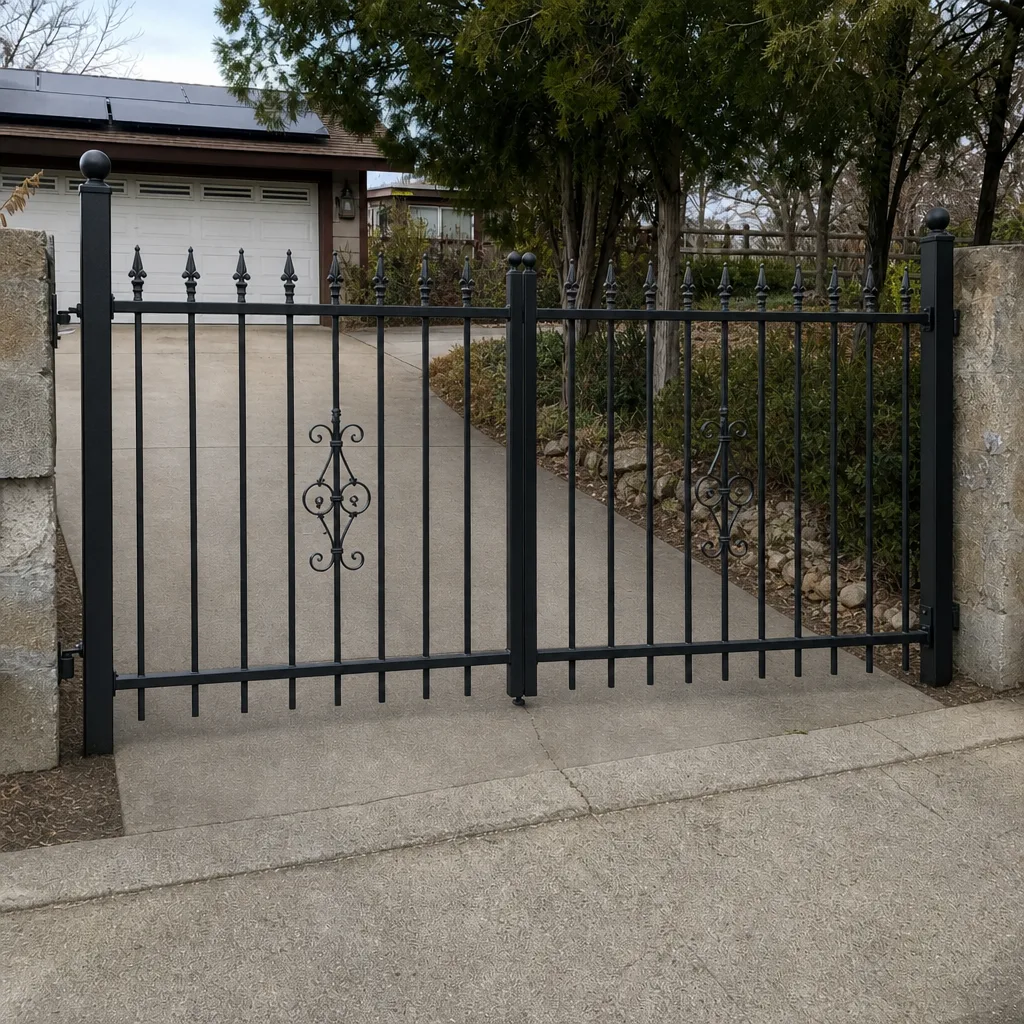 After
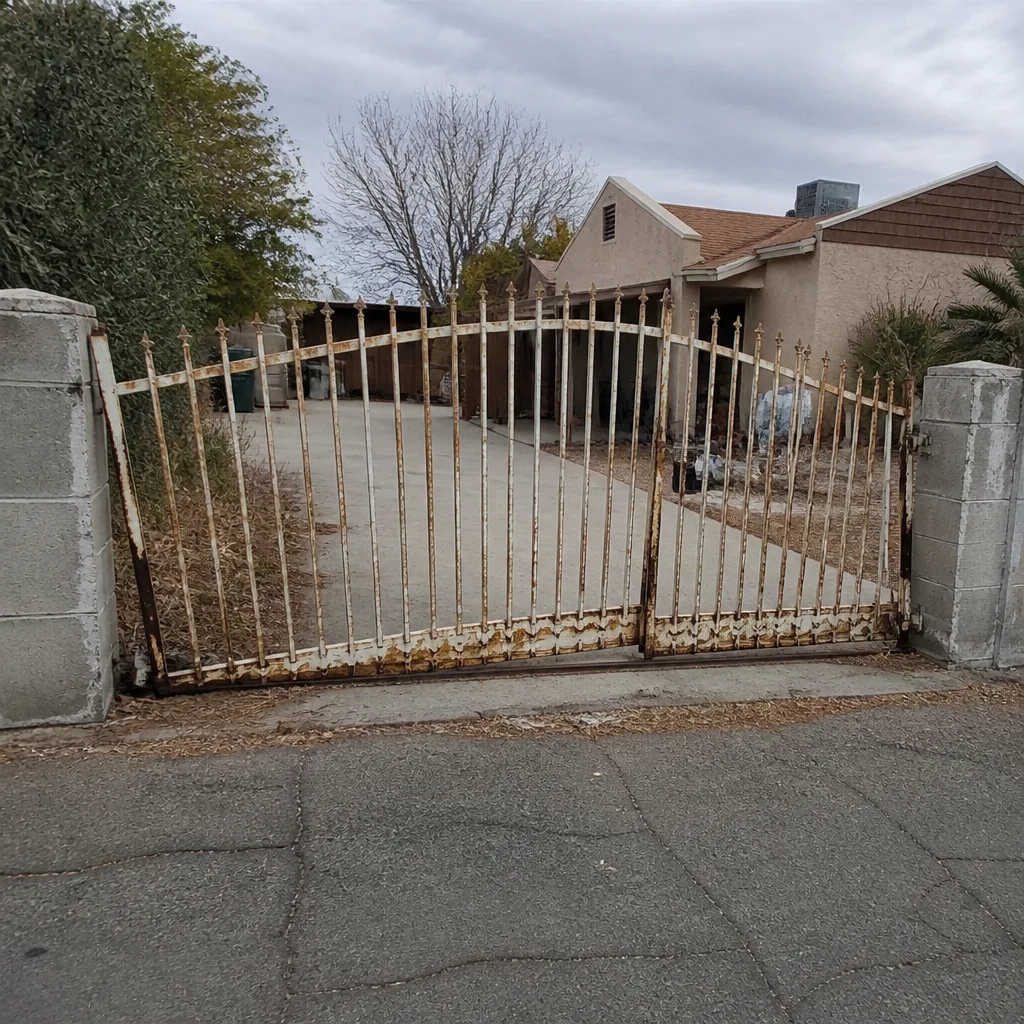 Before
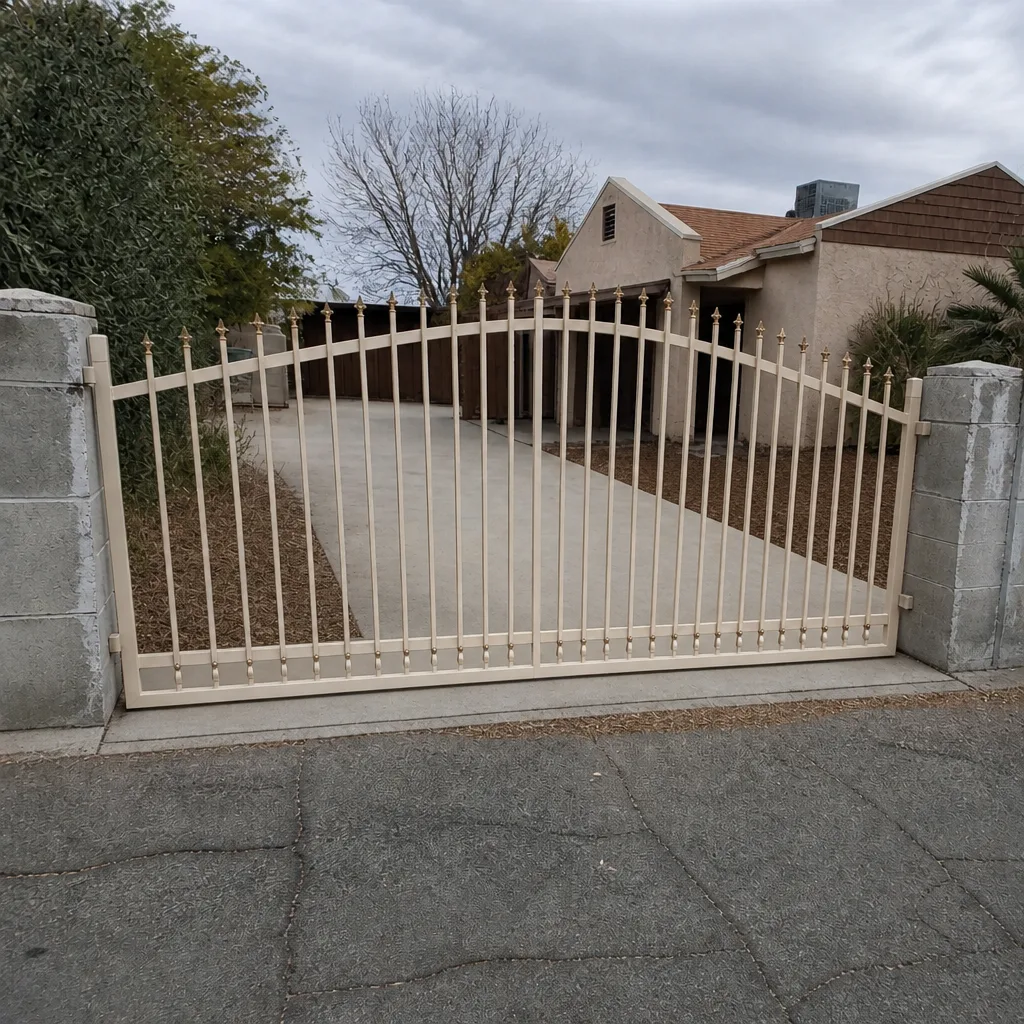 After
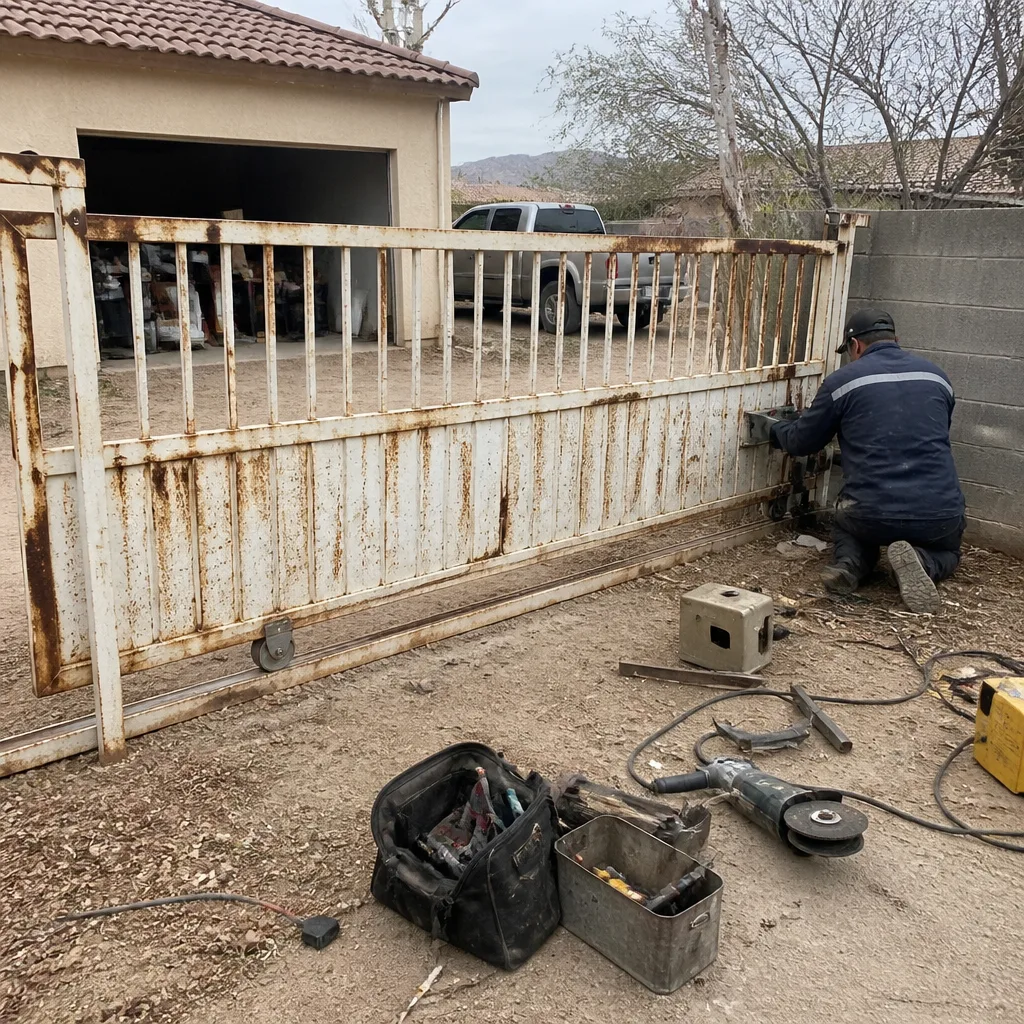 Before
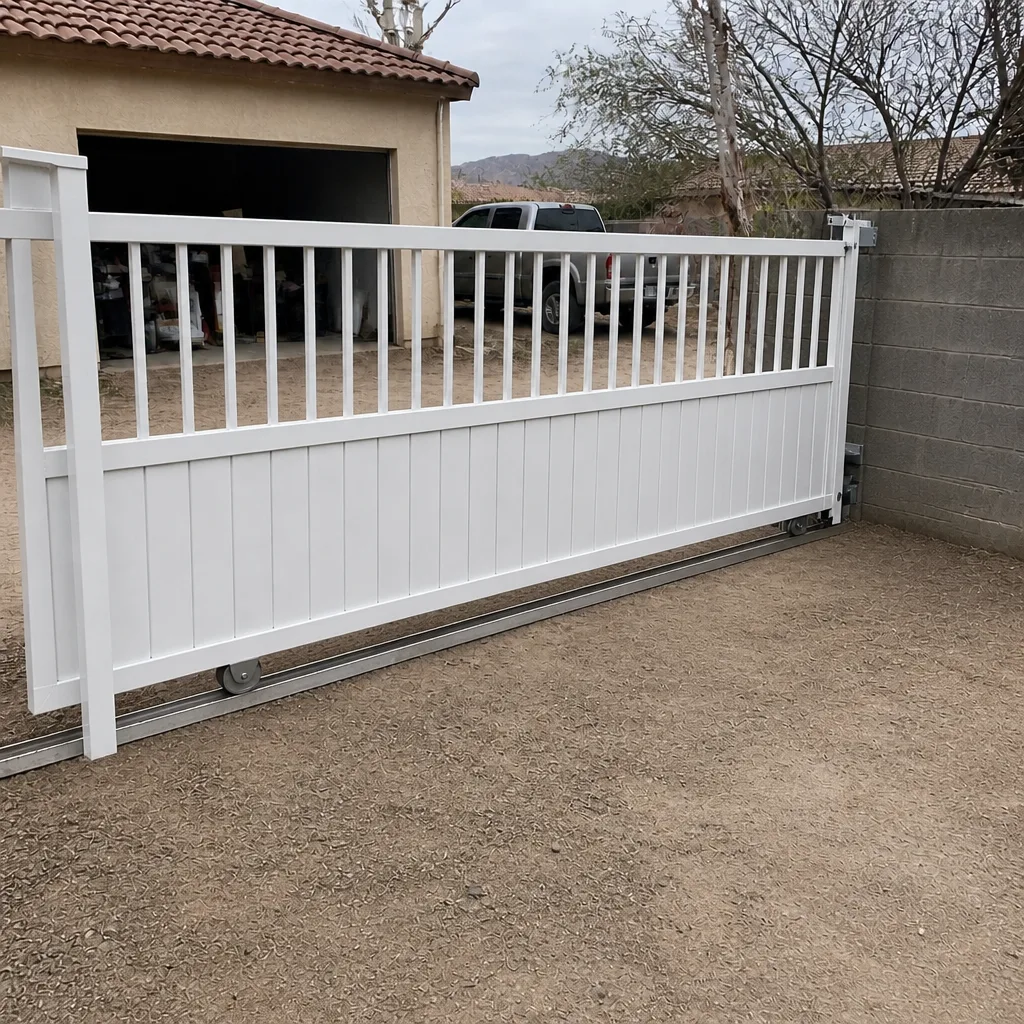 After
When to Call a Professional
Call a professional when the gate reverses on its own, stops short of full travel, or shows any change in force sensitivity, because those are calibration and safety issues, not maintenance tweaks. Call when you hear grinding or growling from the gearbox, when a hinge or roller has visible play, when the control board shows fault codes, or when a photo-eye or safety edge fails its monthly test. Call before summer if the gate hasn’t had an annual service, and call at the five-year mark for the full mechanical inspection even if it’s running fine. Ironworks Gate Co. Boulder City offers free estimates in Boulder City. Call (888) 276-7609 for a free estimate, and we’ll tell you what the gate actually needs, not what the calendar suggests.
Frequently Asked Questions
A gate opener should get monthly safety and tension checks from the homeowner, a quarterly hardware and hinge inspection, a professional annual calibration service, and a full mechanical service at the five-year mark. The intervals are driven by how differently the chain, hinges, and limit switch wear.
No. WD-40 strips the factory lubricant from chain pins and evaporates, leaving the chain drier than before. Use a chain-specific or dry PTFE lubricant, and keep WD-40 away from the chain entirely.
Self-reversal is usually a drifted force sensitivity setting or a worn hinge that increased friction until the opener reads normal resistance as an obstruction. It can also be a failing limit switch not stopping travel at the right point. It needs calibration, which is a professional job.
In Boulder City, add a pre-summer inspection in May (heat degrades control boards and batteries, and increases friction) and a post-monsoon dust and debris check in September. The desert dust settles into tracks and photo-eyes faster here than in a temperate climate.
Grinding or growling from the gearbox, a gate that hesitates or reverses mid-travel, a chain that jumps the sprocket, fault codes on the control board, and a manual release that won’t move are the common warning signs. Catching any of these early avoids a stranded-open gate.
A seasonal tune-up typically runs a modest flat fee, and many companies offer it as a standing service; Ironworks Gate Co. offers an $89 seasonal tune-up and a free second opinion on any written estimate. Call (888) 276-7609 for an exact quote, and the price is agreed before any work begins.
The Bottom Line
A gate opener lasts longer and costs less to own when its maintenance calendar follows actual wear cycles instead of a generic “check it once a year” habit. Check safety edges, tension, and the manual release monthly. Inspect hinges and rollers quarterly. Recalibrate limit switches and force sensitivity annually. Plan the full mechanical service at five years. Lubricate with the right product and never WD-40 on the chain. And in Boulder City, build the calendar around the heat and monsoon dust that age a gate faster than most schedules account for. Do the small checks yourself, hand the safety-critical work to a professional, and the gate that’s closing clean today will be closing clean in ten years. Call (888) 276-7609 for a free estimate on any maintenance or repair your gate needs.
Written by the team at Ironworks Gate Co. Boulder City.