
Last updated November 17, 2026
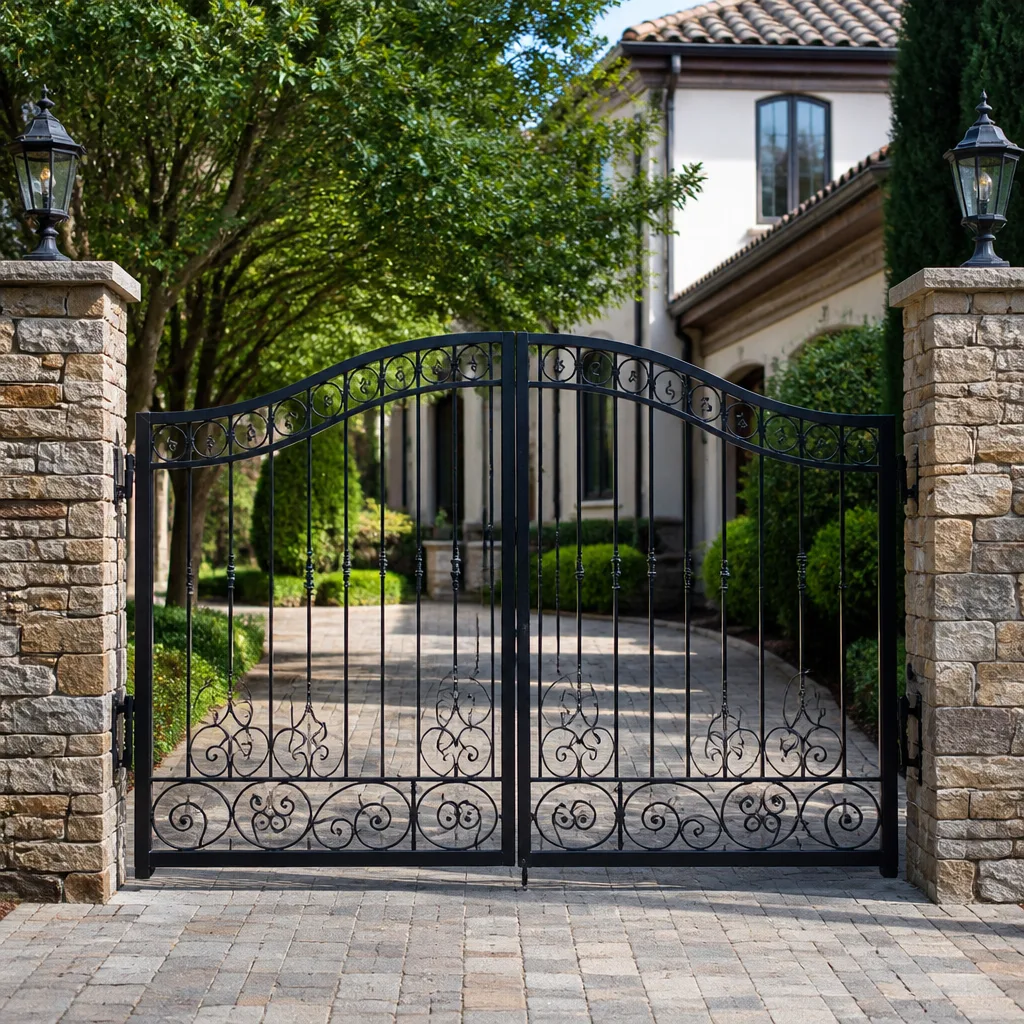 Wrought iron
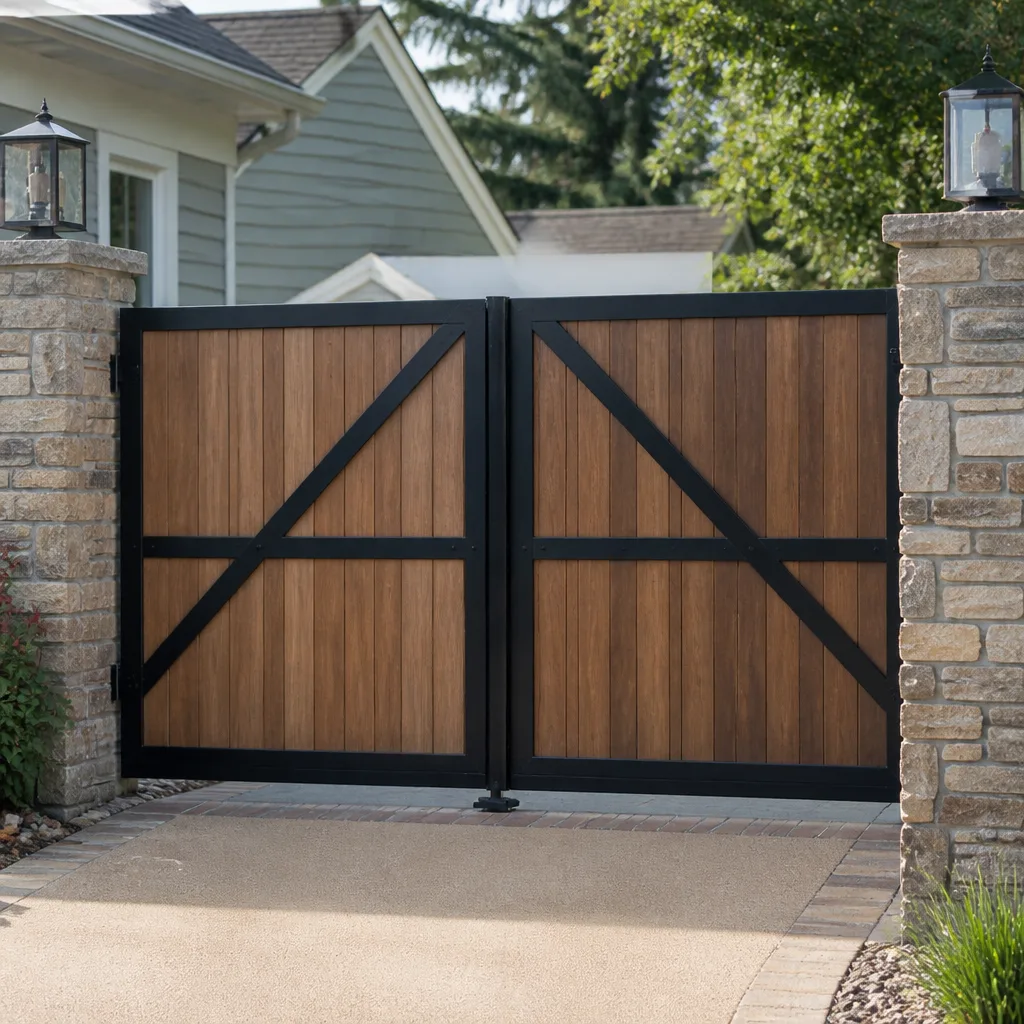 Wood & steel frame
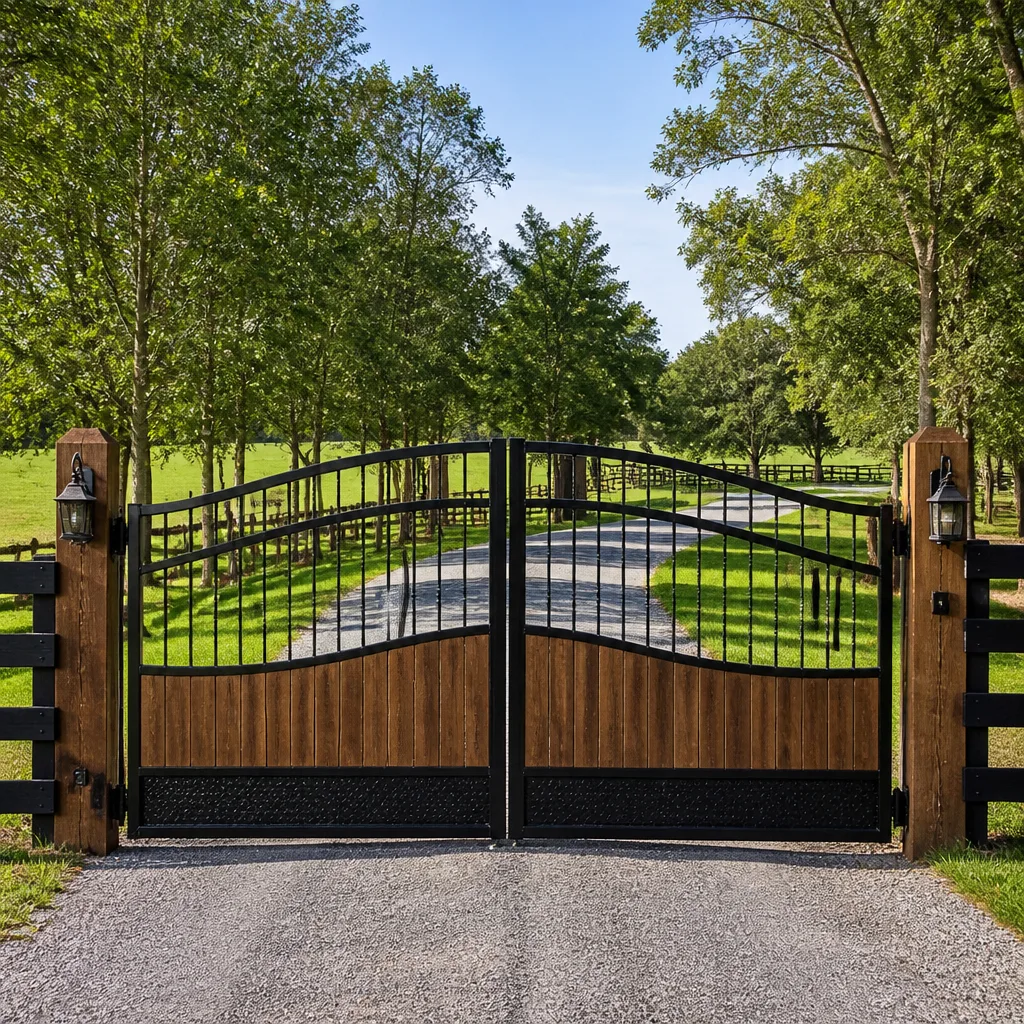 Farm & ranch
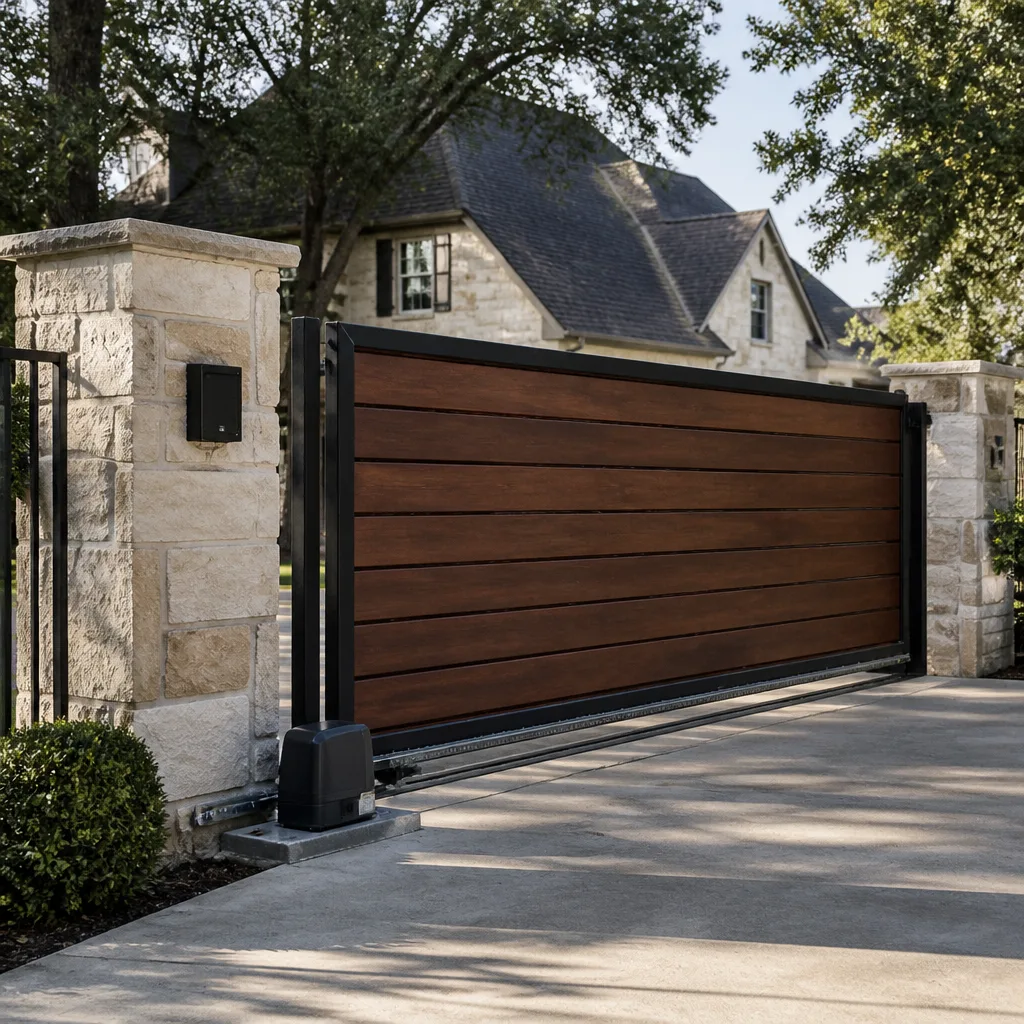 Sliding driveway gates
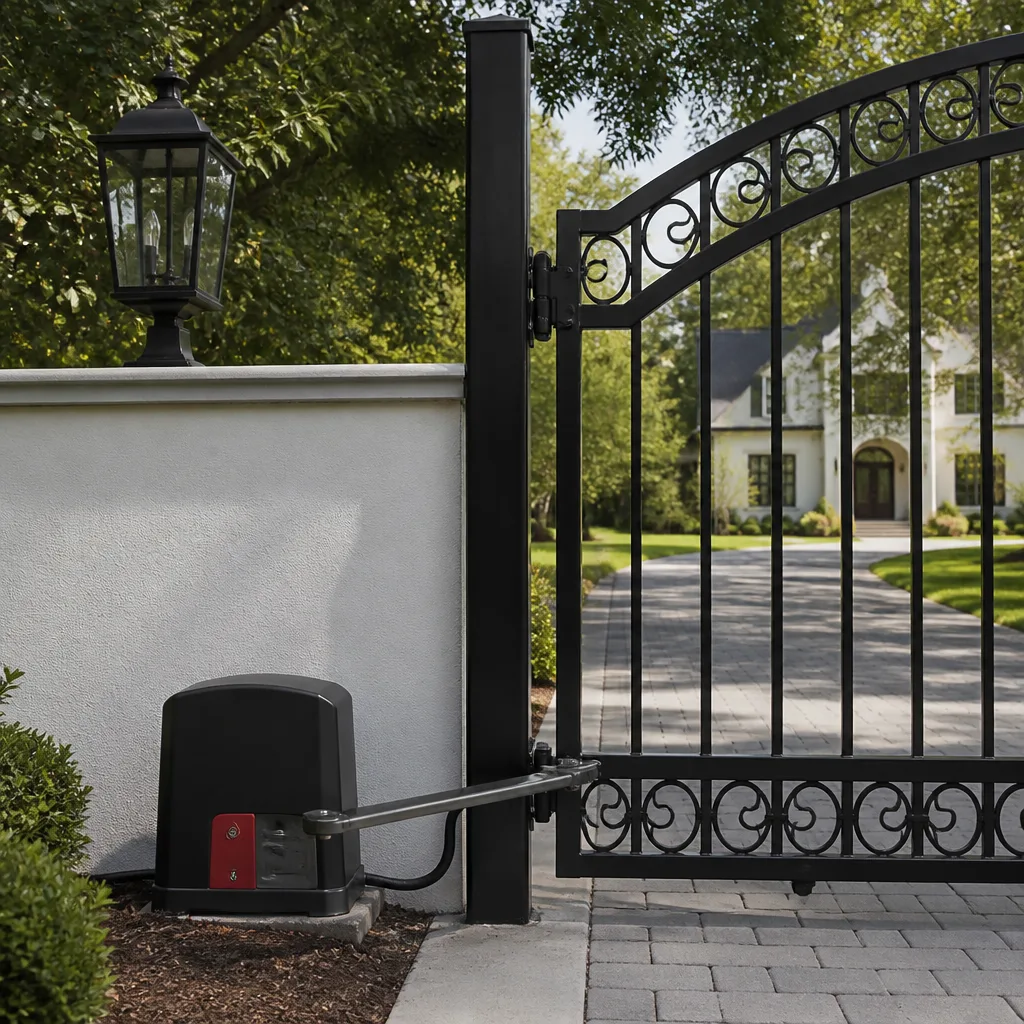 LiftMaster operators
Free on-site gate assessment - hinges, posts, and your LiftMaster or Nice gate operator checked before anything is quoted
The assessment is free and the quote is the invoice.
Get your free estimateThe Complete Guide to Gate Repair in Boulder City
A gate that opens slowly is not a minor annoyance. It is the first symptom of a motor working at 140% load, and in Boulder City’s summer heat, that gap between “slow” and “failed” is measured in weeks, not months. We’ve seen it more times than we can count: a homeowner mentions the sluggish swing in June, ignores it through July, and calls us in August with a motor that finally gave out. By then, what started as a tired hinge has usually taken the opener with it. This guide treats the gate as a system – hinges, welds, posts, motor, and controls working together – so you know exactly what you own and what it quietly costs you to ignore it.
Quick Answer
Gate repair in Boulder City typically runs $180 to $450 for hinge, weld, or balance work, and $250 to $700 once a motor or control board is involved. Most failures trace back to Boulder City’s extreme UV exposure, wide day-night temperature swings, and alkaline soil working on a gate for years before a single part lets go. Understanding which of those three root causes you’re dealing with is worth more than any price list, because it tells you what to fix now and what to plan for.
Styles & brands we work with
- Wrought iron
- Wood & steel frame
- Farm & ranch
- Sliding driveway gates
- LiftMaster operators
Table of Contents
- Why a Gate Is a System, Not a Collection of Parts
- How Boulder City’s Climate Ages a Gate Faster Than You’d Expect
- System Failure vs. Component Failure: Why the Misdiagnosis Doubles Your Bill
- What Nevada Code Lets You Touch, and What Requires a Licensed Contractor
- How to Read a Gate’s Wear Pattern and Predict the Next Failure
- Why Automation and Ironwork Repairs Must Be Done Together
- Matching the Right Motor to Your Gate: What We See on Nine Brands
- What Gate Repair Actually Costs in Boulder City
Why a Gate Is a System, Not a Collection of Parts
A driveway gate has five working systems: the frame and skin, the hinges and posts that carry the weight, the operator that moves it, the safety devices that watch it, and the access control that tells it what to do. When any one of those drifts out of tolerance, the other four start working harder to compensate. A hinge that wears a millimeter per year forces the motor to push at a slight angle. The motor draws more current. The control board heats up. A limit switch drifts out of position and the gate starts stopping a few inches short. That’s one hinge doing damage across four systems over two or three seasons.
This is the single most useful idea in this guide. A gate that’s been swinging on the same hinges for fifteen years has accumulated a chain of small compensations, and each one is invisible until the day it isn’t. In our experience, the homeowner who thinks in systems replaces a $40 hinge before it becomes a $250 motor repair. The homeowner who thinks in parts replaces the motor and then wonders why the new one fails in eighteen months. If you want to work through this the right way from the start, our Ironworks Gate Co. Boulder City home page walks through the full scope we handle, from welds to keypads.
- Frame and skin: The steel or iron structure. Rust, weld cracking, and settling are the main threats.
- Hinges and posts: The load-bearing path. When these drift, everything downstream suffers.
- Operator: Motor, gearbox, and drive. It reflects whatever the gate is doing to it.
- Safety devices: Photo eyes, edges, and loop detectors. The parts most often disabled and most dangerous when they are.
- Access control: Keypads, remotes, and receivers. The part that fails invisibly, giving no warning before it just stops responding.
How Boulder City’s Climate Ages a Gate Faster Than You’d Expect
Boulder City sits at roughly 2,500 feet, in high desert with brutal summer sun and a swing of 30 to 40 degrees between afternoon heat and cool nights. That daily expansion and contraction is a fatigue cycle, and a gate that cycles through it 365 times a year is doing real work that a gate in a mild coastal town never does. Weld seams crack. Powder coat fails. Steel hinges wear faster than their rated lifespan. The sun alone can take a powder coat from a clean finish to a chalky, checked surface in four to five summers, and once the coating fails, the steel underneath in Boulder City starts showing rust within one more season.
The soil matters just as much. Boulder City’s alkaline, calcareous ground – heavy in calcium carbonate as you get closer to the lake – moves with moisture and dries hard. A gate post set shallow, or set without proper footing, will shift a fraction of an inch every wet and dry cycle. Multiply that over a decade and your gate is out of plumb, which means the latch doesn’t line up, which means the operator fights the gate, which means everything works harder.
We regularly see this near the older homes toward the Historic District and along the streets up toward the lake, where the original posts are set in ground that’s been drying and shifting for thirty years. On the newer homes in the foothills, the UV exposure is the bigger problem, because there’s a lot less shade up there. Whatever your situation, the fix isn’t to replace the gate. It’s to address the post footing, reseal or recoat the metal, and re-tension the hinges. That’s the difference between a gate that lasts another two seasons and one that lasts another twenty. If you want to see how this work looks on the neighboring side of town, gate repair in Winchester runs into the same climate pressures.
System Failure vs. Component Failure: Why the Misdiagnosis Doubles Your Bill
A component failure is when one part has reached the end of its life: a hinge pin shears, a control board burns, a photo eye fails. The gate stops because a part broke. A system failure is when several parts have drifted out of tolerance until the gate can no longer function. The motor still runs, the hinges are intact, everything looks fine, but the gate won’t close reliably because the balance is off, the post has shifted, and the limit switch is set wrongly by a quarter inch. Telling these apart is the difference between a $200 fix and a $600 one, and getting it wrong the first time is what doubles the cost.
Here’s a simple check you can do at home. With the operator disengaged (most openers have a manual release key or lever), swing the gate by hand. It should move with light fingertip pressure and stay where you put it. If it feels heavy, if it drops, if it slams shut on its own, or if it swings past where you placed it, you’re looking at a system problem, not a part. A system problem needs to be corrected before any motor is replaced, or the new motor inherits the same stress.
- Disengage the operator. Use the manual release on your opener. Never work on a powered gate without doing this.
- Swing the gate by hand. It should move with one finger of pressure and hold its position.
- Listen for grinding or scraping. Any metallic noise means a hinge, pin, or latch is binding.
- Check the latch alignment. If the receiver and latch don’t line up cleanly, the post has moved or the gate is out of plumb.
- Document what you find. Note the date and what the gate did, so a technician can tell a slow-developing system drift from a sudden failure.
What Nevada Code Lets You Touch, and What Requires a Licensed Contractor
Nevada draws a line between what a homeowner can work on and what requires a licensed contractor, and it tracks pretty closely with the risk of the work. Painting, cleaning, and light lubrication are yours. Anything involving low-voltage troubleshooting, hinge replacement, weld work, or post resetting needs a licensed contractor, and anything connected to line voltage – the electrical feed to the operator, the photo eyes, and the safety loop wiring – needs to be done by someone licensed and insured to touch it. The Nevada State Contractors Board is the licensing authority, and the license number on a contractor’s estimate is worth checking, not just taking on faith.
Where we see homeowners get nervous is the safety edges and photo eyes. These low-voltage devices are the one part of the gate that protects people, and disabling them “just for a week” while a part is on order is one of the leading causes of gate injury. If a gate has a dead photo eye, don’t leave it in service. Have it repaired before anyone uses it.
Springs and cables on swinging and sliding gates store serious energy. Don’t touch those, don’t adjust them, and don’t cut them. We can’t emphasize this enough, because a released torsion spring or a flying cable is a genuinely dangerous event, not a difficult repair. This is the one part of the guide that doesn’t get homeowner instructions, and it’s on purpose. If something feels loose under load, stop and call. If you want a sense of what the licensed scope looks like in practice, gate installation in Winchester shows what a fully permitted gate install involves.
How to Read a Gate’s Wear Pattern and Predict the Next Failure
The most useful thing a homeowner can learn is how to read a gate’s wear pattern. A wear pattern is a set of visible signs telling you what’s already drifting, which tells you what will fail next if you leave it alone. We read these on every first visit, because the wear pattern is a better predictor than the age of the gate or the brand on the motor. A fifteen-year-old gate with clean wear marks and a straight post can be in better shape than a seven-year-old gate that’s been fighting a bad hinge for five of those years.
Start with the hinges. Look for bright metal showing through the finish, uneven gaps at the joints, and pooled rust at the pin. Bright metal means the pin is polishing the hinge under load. Next, look at the top and bottom rails of the gate: if the powder coat has chipped in a line, that’s a stress concentration and it will crack further. Then look at the ground under the latch. If the gate is dragging, there’s a wear mark or a divot. Finally, listen. A gate that has a rhythmic clunk when it moves is telling you about a loose hinge, not the motor.
- Shiny hinge pins: Hinge play starting. Address within the season or it eats the operator.
- Line of chipped powder coat on a rail: Weld stress. Re-weld and recoat before the crack opens.
- Drag marks or a worn path under the gate: Gate is out of plumb or the post is settling. Fix the footing, not the gate.
- Motor that heats up on a normal cycle: The gate is out of balance and the motor is compensating. Rebalance before the motor fails.
- Rhythmic clunk: Loose hinge or a worn bushing. Cheap now, expensive in six months.
Why Automation and Ironwork Repairs Must Be Done Together
This is the point where a lot of gate repairs quietly go wrong. The opener is the visible, mechanical part of the system – it’s what makes the noise, and it’s what most homeowners ask about first. But the opener’s entire job is to move a balanced gate against a predictable amount of friction. When the gate isn’t balanced, the opener can’t do its job, and the manufacturer knows this. Most opener warranties explicitly require the gate to be balanced, level, and correctly hung to honor a claim. Fix the opener while the gate is unbalanced and the warranty can be voided the moment the motor burns out, leaving you to pay for a replacement out of pocket.
In our experience, the fix that endures is the one that treats the hinge, post, weld, and operator as a single job. That’s why we send a technician who is equipped for both ironwork and automation on the same visit, trained on nine brands – LiftMaster, FAAC, BFT, Linear, Viking, Ghost Controls, DoorKing, Elite, and Mighty Mule – so the correct fix is made the first time, whatever is on your driveway. If your gate has a Ghost Controls or DoorKing operator on it, we don’t need a second trip to bring the right control board. We don’t list that to impress you; we mention it because the second trip is where the cost hides.
If you’re going to have the gate open for repair anyway, this is also the moment to have the safety devices and access control checked. Photo eyes drift, keypads lose their codes, and remotes stop syncing. Catching those now is far easier than catching them after the gate is closed back up. If the operator is a brand we don’t recognize from our core nine, we’ll tell you straight, and we’ll still do the ironwork and the balance. What we won’t do is guess at a motor we don’t have parts for.
Matching the Right Motor to Your Gate: What We See on Nine Brands
Boulder City homes run the full spectrum of gate automation, from simple swing openers on a single-car driveway to heavy sliding operators on estate properties toward the outskirts. We work on nine brands, and the choice of operator usually tells us more about the gate’s history than the owner does. A Mighty Mule on a heavy iron gate is usually a homeowner install from a decade ago, and that motor is doing more work than it was designed for. An Elite or DoorKing operator on the same gate is usually a professional installation, and the question becomes why a robust system is now failing, which almost always comes back to hinge wear, not the operator. A Ghost Controls unit on a light aluminum gate is a smart pairing if the gate is balanced and the post is sound, and a constant headache if either drifts.
Matching the motor to the gate isn’t about buying the biggest one. It’s about matching the motor’s rated capacity to the gate’s actual weight and travel, with a margin for wind and wear. A motor rated for 600 pounds on a 400-pound gate has margin. The same motor on a 550-pound gate has none, and every extra pound of friction from a worn hinge eats into the little margin it had. Our gate motor and opener in Winchester page goes into brand-by-brand detail. What matters here is simpler: your technician should be willing to tell you the motor you have is right for the gate, and not just sell you a new one.
What Gate Repair Actually Costs in Boulder City
Boulder City pricing runs a little above the national average on ironwork because the climate and soil mean more of the jobs involve post work, and a little below on simple automation because the installed base of swing gates here favors simpler, less expensive operators. Here’s the range we see, and it’s the range we quote to you before any work starts. The price is settled first, then the work begins. If the scope changes once the gate is open, we stop and re-quote before touching anything.
- Hinge repair or replacement: $180 – $320 per hinge, including labor and finish touch-up.
- Weld repair on gate frame or seam: $220 – $400, depending on access and paint prep.
- Gate balance and re-hang: $200 – $350, and this is what makes the motor last.
- Post reset or footing correction: $350 – $700, because it involves excavation and concrete.
- Control board or receiver replacement: $280 – $550, parts included, brand-dependent.
- Motor or operator replacement: $550 – $1,200 installed, size and brand dependent.
- Photo eye, safety edge, or loop repair: $180 – $400.
- Seasonal tune-up: $89 flat, one gate.
Those are ranges, not quotes, and the quote is what matters. We’ll give you one in writing, and we’ll stand behind it. If you’ve had a written estimate from another company, we’ll give you a free second opinion on it, which costs you nothing and often reveals a scope that was going to get expensive later. When you’re ready to book, call (888) 276-7609. A live person answers, day or night, because a gate that fails on a Saturday doesn’t wait until Monday.
Common Mistakes to Avoid
- Replacing the motor without checking balance. A new motor on an unbalanced gate inherits the same load and often fails inside two years. Check balance first, always.
- Disabling photo eyes “just for now.” In Boulder City, where gates often run near kids and pets, this is the single most dangerous shortcut. Repair it before the gate is put back in service.
- Pressure-washing a powder-coated gate. It drives water into every scratch and micro-crack. On Boulder City’s UV-aged coating, it speeds up rust. Rinse and hand-wash, don’t blast.
- Ignoring a post that’s drifted. A post out of plumb by a quarter inch is easy to fix. Once it’s off by an inch, the whole gate has to come down and reset.
- Letting a slow gate ride through summer. Slow is what a loaded motor feels like before it fails. If it’s noticeably slower than it was last year, it’s telling you something now.
- Welding without stripping the finish first. A weld over powder coat traps moisture and guarantees a rust line under the repair. Prep matters as much as the weld.
- Hiring on price alone. The lowest bid usually skips the balance check and the safety test. The gate closes, everyone’s happy, and the motor fails next summer.
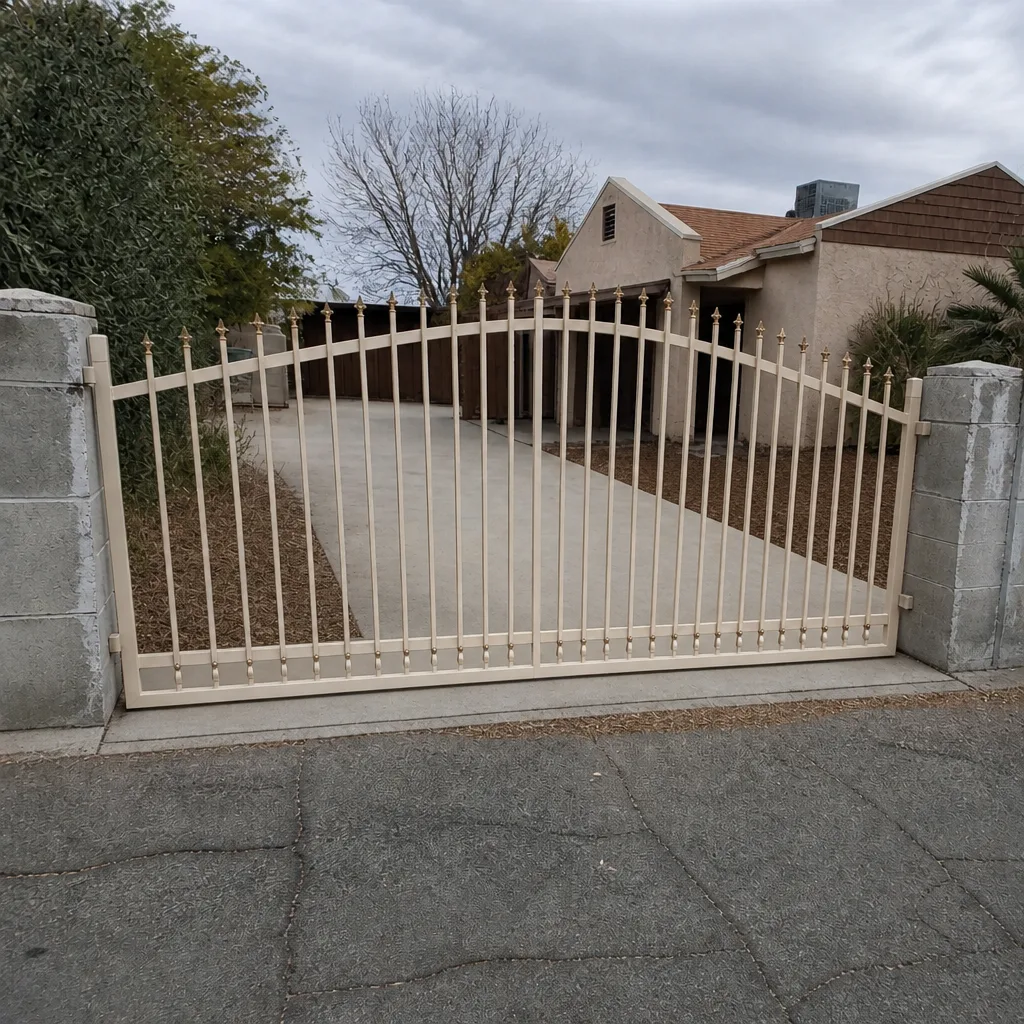
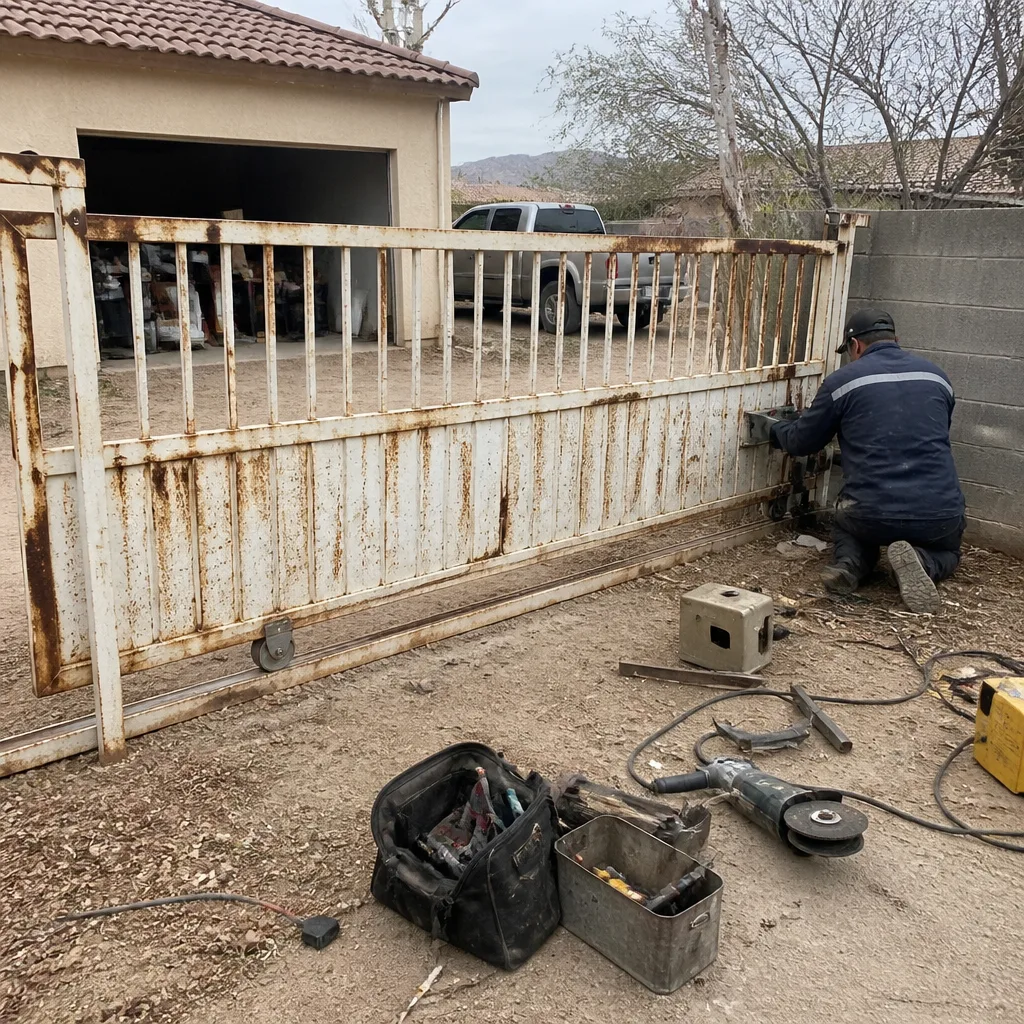
See the difference
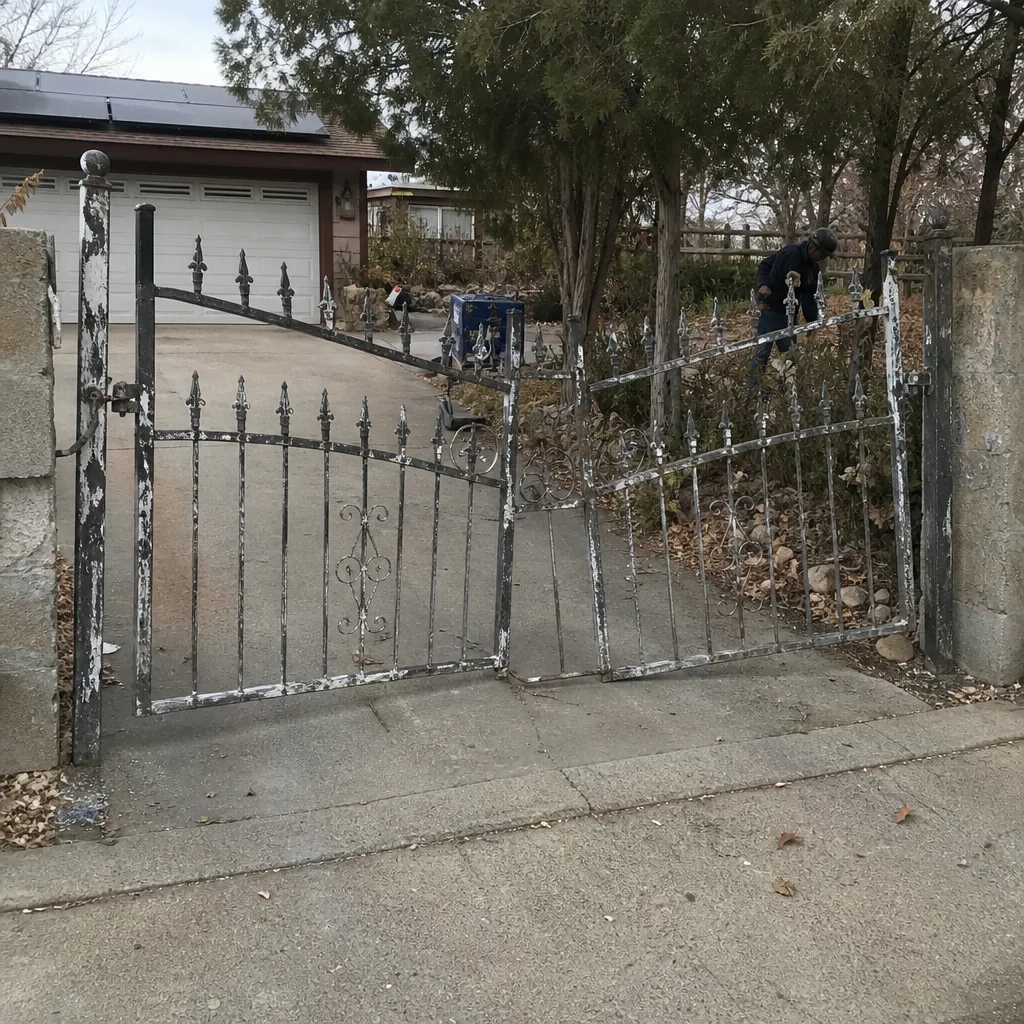 Before
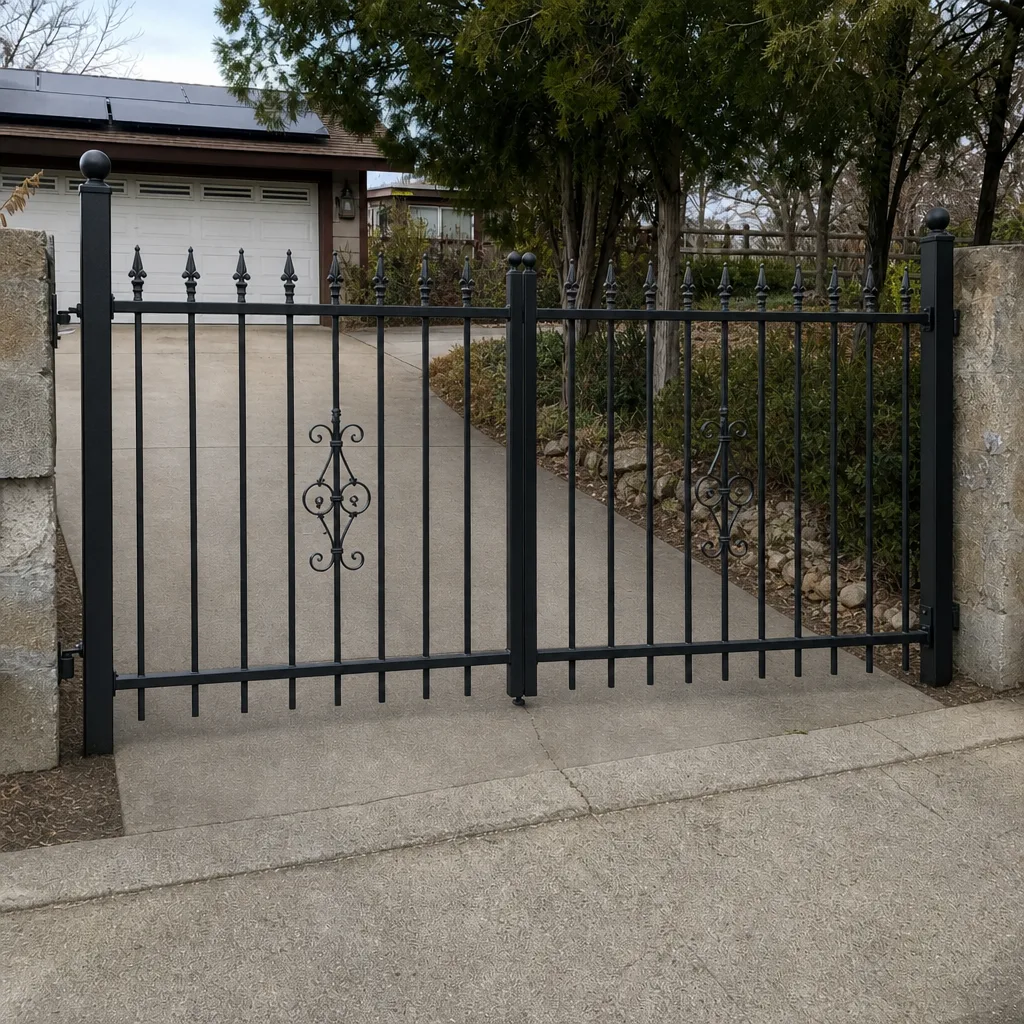 After
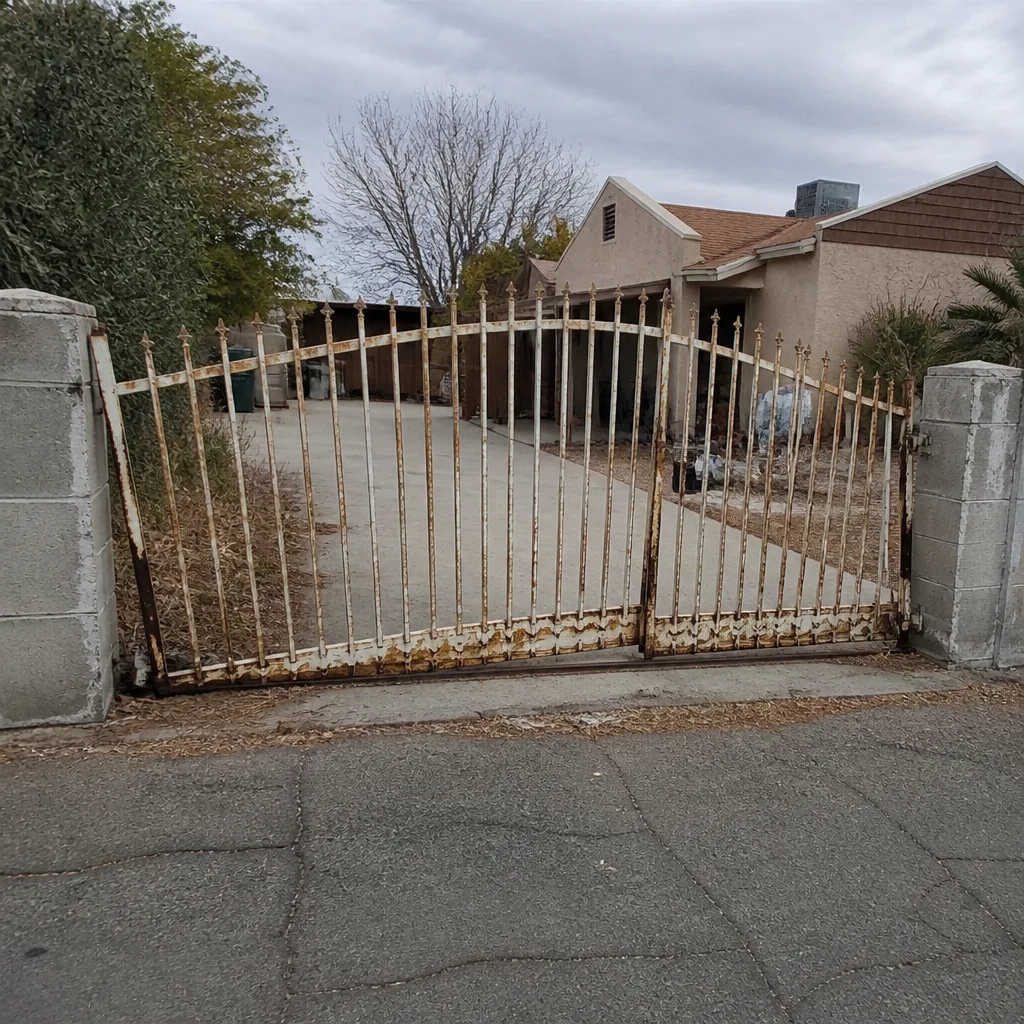 Before
 After
 Before
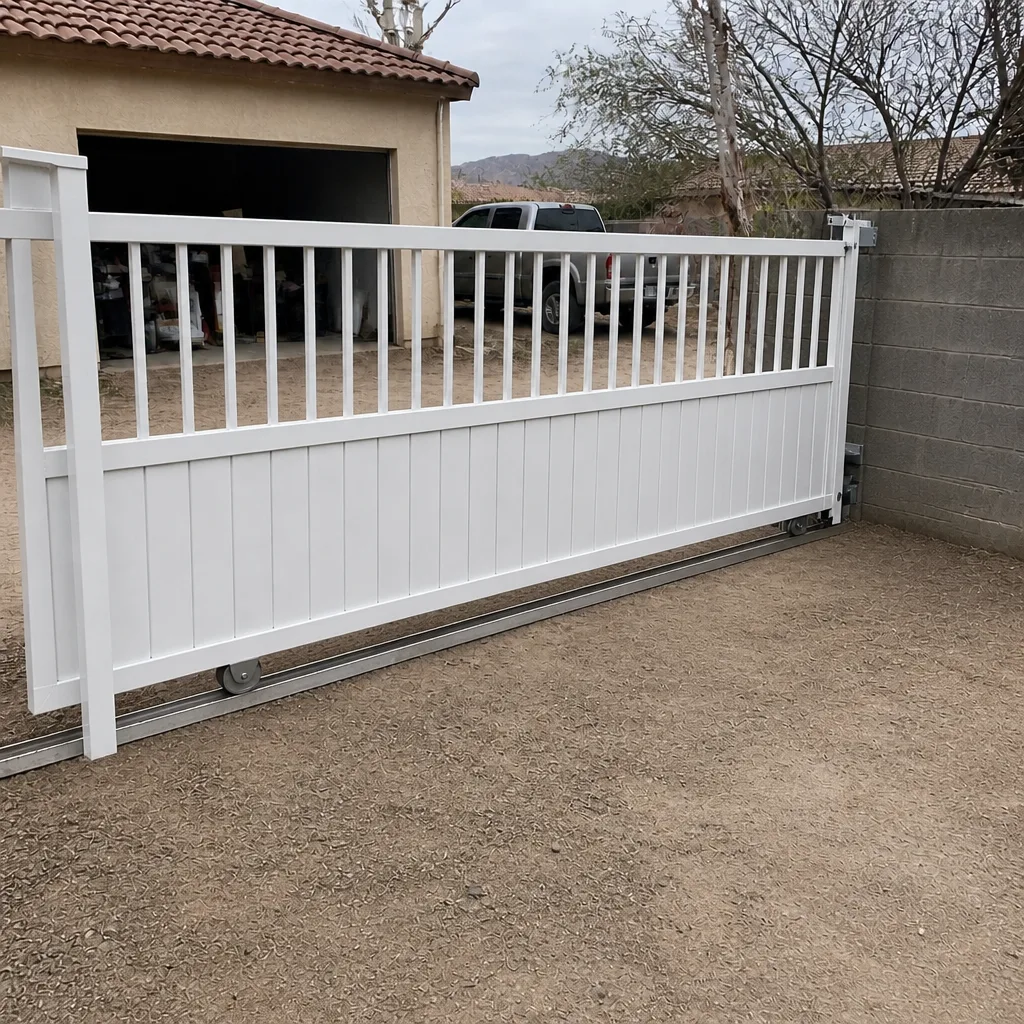 After
When to Call a Professional
Call us the same day if the gate won’t close, if a photo eye or safety edge has failed, if you hear a metallic clunk under load, or if the gate has become noticeably slower than it was last season. If a hinge is visibly loose, a weld is cracked, or the post has moved, that’s a scheduled repair, not an emergency, and it’s better done this week than a month from now. If a spring or cable looks wrong, don’t touch it, and don’t test it. Ironworks Gate Co. Boulder City offers free estimates in Boulder City, and we’ll tell you plainly what’s worn, what’s fine, and what to watch. Call (888) 276-7609 to get on the schedule or to get a straight answer.
Frequently Asked Questions
Most gate repairs in Boulder City run $180 to $450, with motor and control work climbing to $550 to $1,200. The wide range reflects how many jobs turn out to be a balance or post issue rather than a part failure. We quote the price before any work starts, so there’s no surprise on the bill. Call (888) 276-7609 for an exact quote; estimates are free.
For same-day service on repair and emergency calls, we do our best, and a live person answers at any hour. We can’t promise a specific arrival time until we’ve spoken, and we don’t want to guess. Call (888) 276-7609 and we’ll tell you honestly what’s available.
A gate that opens slowly in summer is usually fighting a worn hinge or an out-of-balance panel, and the motor is working harder to move it. Summer heat compounds this because the motor and control board run hotter and lose a little efficiency. Slow is a warning, not a nuisance. Have it checked before the motor fails.
We’re trained and equipped on nine gate automation brands, including Ghost Controls, DoorKing, Elite, and Mighty Mule, so the correct fix is usually made on the first visit. If your operator isn’t one we carry parts for, we’ll tell you straight and we’ll still handle the ironwork and the balance. Call (888) 276-7609 to confirm your model.
In most Boulder City cases, a gate with a sound frame and intact posts is worth repairing, and it’ll outlast a new one if the post footing is corrected and the coating is refreshed. Replacing a gate usually costs three to five times a good repair, and it doesn’t fix a settled post or a worn hinge. We’ll give you the honest answer on yours.
Every job we complete is backed by our 90-Day Done Right Promise, a written guarantee that if something we fixed isn’t right, we come back and make it right. No arguing, no extra charge, no paperwork to chase. If it isn’t right in ninety days, call (888) 276-7609.
The Bottom Line
A gate is a system, and the parts that fail first are almost always the parts you can’t see. Boulder City’s heat, UV, and alkaline soil compress the timeline on welds, hinges, and motor housings, which is why balance and post work deserve more attention than a new motor ever will. Read the wear pattern, fix the cause, and coordinate the ironwork and automation in one visit. That’s what saves the money. It’s also why the same job done once, correctly, is cheaper than the same job done twice. If you need a repair or a straight answer, Ironworks Gate Co. Boulder City is here, and we’ll be there when we say.
Call (888) 276-7609 for a free estimate on gate repair in Boulder City. A live person answers, day or night. Every job is protected by our 90-Day Done Right Promise, and current customers get $50 off any repair over $250, a free second opinion on any written estimate, an $89 seasonal tune-up, and a permanent 5% discount for seniors and veterans.
Written by the team at Ironworks Gate Co. Boulder City.